- How do air filters protect HVAC equipment and improve efficiency?
- What types of HVAC air filters are available?
- How often should homeowners change their HVAC air filters?
- What are the common mistakes when selecting or maintaining HVAC air filters?
- How to select the right HVAC air filter for your home
- Key Takeaways
- What 15 years of HVAC work taught me about air filters
- How Upright Construction & HVAC can help with your filter and system care
- FAQ
- Recommended
TL;DR:
- Proper HVAC air filters protect equipment from dust and debris while improving indoor air quality. Regular replacement based on household conditions prevents system strain, extends equipment life, and increases energy efficiency. Choosing the correct MERV rating and avoiding overly restrictive filters are essential for optimal system performance.
An HVAC air filter is defined as the component that cleans incoming air while shielding your heating and cooling equipment from dust, debris, and airborne particles. Most homeowners think of filters as an afterthought, but the role of air filter in HVAC systems is actually central to both equipment health and the air your family breathes every day. The MERV rating system, which runs from 1 to 20, gives you a standardized way to compare filter performance. Understanding how filters work, which type fits your home, and when to replace them can save you money and prevent costly repairs.
How do air filters protect HVAC equipment and improve efficiency?
An air filter sits between the return air duct and your HVAC unit, catching particles before they reach the blower, coils, and heat exchanger. Without it, dust and debris coat those components and cause real damage over time. This is the core mechanical reason why regular filter replacement matters so much.
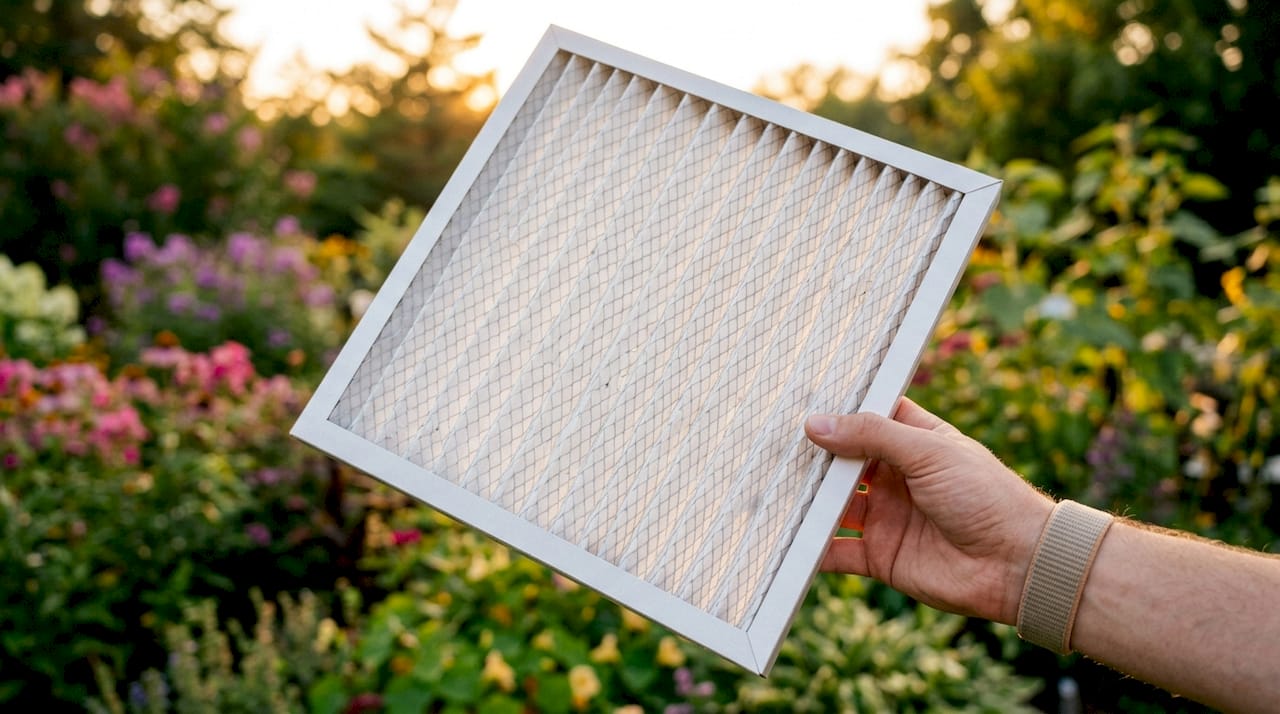
When a filter gets clogged, your system has to work harder to pull air through. That extra strain shows up on your energy bill and shortens the life of your blower motor. A dirty filter causes reduced airflow, blower motor overheating, frozen evaporator coils, and up to 15% higher electric consumption. That 15% increase is not a small number when you run your system for months at a time.
The good news is that the fix is simple. Replacing a dirty filter with a clean one can improve system energy efficiency by 5% to 15%. That improvement directly lowers your utility bills during peak heating and cooling seasons.
Here is what a clean filter does for your system every day:
- Keeps blower blades and coils free of dust buildup
- Maintains proper airflow so your home heats and cools evenly
- Reduces wear on the motor and mechanical parts
- Lowers the risk of frozen coils in summer and overheating in winter
- Helps your system reach set temperatures faster
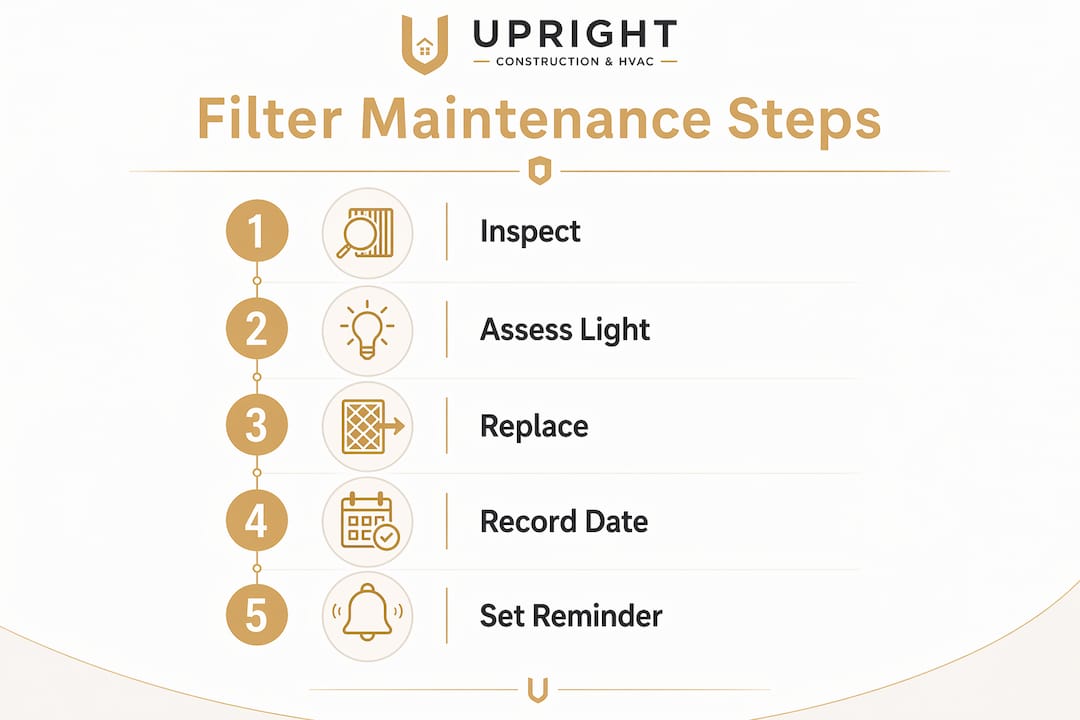
Pro Tip: Hold your filter up to a light source. If you cannot see light through the pleats, replace it immediately, regardless of when you last changed it.
What types of HVAC air filters are available?
The MERV scale ranges from 1 to 20, and where your filter falls on that scale determines what it catches and how much it restricts airflow. Choosing the right type is one of the most practical air filter maintenance tips you can act on.
Here is a clear breakdown of the main filter types and when to use each one:
| Filter type | MERV range | What it captures | Best for |
|---|---|---|---|
| Fiberglass (flat panel) | 1–4 | Large dust, lint, debris | Protecting equipment only; minimal air quality benefit |
| Pleated polyester | 8–11 | Dust mites, mold spores, pet dander | Most residential homes |
| High-efficiency pleated | 11–13 | Bacteria, fine particles, smoke | Allergy and asthma sufferers |
| HEPA-style (residential) | 14–16 | Very fine particles, viruses | Specialized medical or high-sensitivity households |
MERV 8 to 11 covers general household use well. MERV 13 is the sweet spot for finer particle capture like bacteria and smoke, making it the preferred choice for anyone with allergies or asthma. Ratings above 13 are typically used in hospitals and commercial buildings, not standard home HVAC systems.
Higher-efficiency filters do come with a trade-off. High-efficiency filters at MERV 11 and above have a larger surface area but trap more debris, which means they clog faster and need more frequent replacement. The air filtration system benefits you gain from better particle capture are real, but you have to stay on top of the replacement schedule to keep those benefits.
How often should homeowners change their HVAC air filters?
Filter replacement frequency is not one-size-fits-all. Your household conditions determine the right schedule more than any calendar rule.
The 90-day replacement interval is a maximum threshold for low-occupancy homes with no pets and no allergy concerns. For most families, that number comes down significantly. Homes with multiple pets often need 30-day replacement cycles to avoid coil damage from accumulated pet hair and dander.
| Household type | Recommended change interval |
|---|---|
| Single occupant, no pets, no allergies | Every 90 days |
| Average family, no pets | Every 60–90 days |
| One pet in the home | Every 60 days |
| Multiple pets or allergy sufferers | Every 20–45 days |
| High occupancy or heavy dust environment | Every 30 days |
The visual test is your most reliable guide. A saturated filter shows no light through its pleats when held up to a window or lamp. That is your signal to replace it, no matter what the calendar says.
Running a filter past its useful life does real damage. Reduced air quality, system strain, and component wear all follow. You can learn more about the downstream effects in this HVAC maintenance checklist that covers filter checks alongside other seasonal tasks.
Pro Tip: Check your filter on the first of every month. Set a phone reminder. During summer and winter peak seasons, check every two weeks instead.
What are the common mistakes when selecting or maintaining HVAC air filters?
The most expensive filter mistake is also the most common: buying the highest MERV rating available and assuming it is the best choice. Many homeowners assume the highest MERV is best, but this causes airflow problems and equipment damage when the HVAC blower cannot support that level of restriction. The effects of dirty air filters and overly restrictive filters look almost identical: reduced airflow, higher bills, and system strain.
Here are the mistakes that show up most often:
- Choosing too-high MERV ratings. A filter with a MERV rating beyond your blower’s capacity restricts airflow and can lead to coil freeze or heat exchanger overheating.
- Using cheap fiberglass filters without frequent changes. A MERV 1–4 filter offers almost no air quality benefit and still clogs with large debris.
- Running the system without any filter. This sends unfiltered air directly into the blower and coils, causing rapid buildup that leads to early system failure.
- Ignoring pressure drop. Every filter adds resistance. A filter that is too thick or too dense for your duct size creates a pressure imbalance that reduces comfort throughout the home.
- Skipping checks between scheduled replacements. A filter can clog faster than expected after a dusty renovation, a wildfire event, or a shedding season for pets.
The signs of a filter problem are not subtle. Weak airflow from vents, uneven room temperatures, and a system that runs longer than usual to reach the set temperature all point to a filter issue. Check the common HVAC repair challenges that often trace back to neglected filters.
How to select the right HVAC air filter for your home
Choosing the right filter starts with knowing your household and your system. These two factors together determine the correct MERV range and replacement schedule.
Start with your air quality needs. Homes with pets, allergy sufferers, or residents with asthma benefit from MERV 11 to 13 filters. Homes with no pets and no respiratory concerns do well with MERV 8 to 10. If you live near a freeway or in an area with seasonal wildfire smoke, moving up one MERV level is a reasonable step.
Next, check your HVAC system’s specifications. Your blower has a maximum static pressure rating, and your filter must stay within that limit. Installing a filter that is too restrictive increases energy consumption and shortens equipment lifespan. The blower nameplate or your system manual lists the maximum allowable filter resistance.
Budget matters too. A higher-efficiency filter costs more upfront but may reduce repair costs and energy bills over time. Factor in replacement frequency. A MERV 13 filter that you replace every 30 days costs more annually than a MERV 10 filter replaced every 60 days, even if the per-unit price is similar.
For homes with serious air quality concerns, pairing a good MERV-rated filter with a standalone air purifier gives you the best of both worlds. The HVAC filter handles large and medium particles. The purifier handles ultrafine particles and VOCs that even MERV 13 filters miss.
Pro Tip: Look up your blower’s nameplate data before buying a new filter type. The nameplate lists the motor’s rated airflow in CFM. Cross-reference that with the filter manufacturer’s pressure drop chart to confirm compatibility.
Key Takeaways
The role of air filters in HVAC systems is to protect equipment and improve indoor air quality, and both goals depend entirely on choosing the right filter and replacing it on schedule.
| Point | Details |
|---|---|
| Filters protect equipment | Clean filters prevent dust buildup on coils and blower parts, reducing wear and repair costs. |
| MERV 8–13 covers most homes | Choose MERV 8–11 for general use and MERV 13 for allergy or asthma households. |
| Replace on a household schedule | Change every 20–90 days depending on pets, occupancy, and air quality conditions. |
| Too-high MERV ratings cause damage | A filter beyond your blower’s capacity restricts airflow and can freeze coils or overheat the heat exchanger. |
| Energy savings are real | A clean filter improves system efficiency by 5% to 15%, which lowers utility bills noticeably. |
What 15 years of HVAC work taught me about air filters
I have been in HVAC for over 15 years, and I can tell you that the call I get most often is not about a broken compressor or a failed capacitor. It is about a system that stopped working because of a clogged filter. Every single time, the homeowner is surprised. They had no idea something that costs a few dollars could cause hundreds of dollars in damage.
The thing most articles get wrong is treating filter replacement like a seasonal task. I check my own filter monthly, and I tell every customer to do the same. A filter in a home with two dogs and a dusty Los Angeles summer can go from clean to clogged in three weeks. A fixed 90-day reminder misses that completely.
I also see a lot of homeowners buy the highest MERV filter they can find because they want the cleanest air possible. I understand that instinct. But if your blower cannot handle that level of restriction, you are trading air quality for a repair bill. The right filter is the one that matches both your household needs and your system’s actual capacity.
My honest advice: learn the light test, set a monthly reminder, and ask your HVAC technician what MERV range your specific blower supports. Those three habits will keep your system running longer and your air cleaner than any single filter upgrade ever could.
— Ernie M
How Upright Construction & HVAC can help with your filter and system care
Filter problems are one of the most common reasons homeowners call us, and they are also one of the most preventable.

At Upright Construction & HVAC, we have spent over 15 years helping Los Angeles homeowners get the right filter for their system and catch problems before they turn into expensive repairs. Whether you are dealing with weak airflow, uneven cooling, or a system that just does not seem right, our team can diagnose the issue and give you a straight answer. If you want to know exactly what filter your system needs or you suspect a filter-related problem, check out our guide to common HVAC repair challenges or reach out to schedule a service visit. We offer 24/7 support and transparent diagnostics with no guesswork on your end.
FAQ
What is the role of an air filter in an HVAC system?
An HVAC air filter traps dust, debris, and airborne particles before they reach the blower, coils, and heat exchanger, protecting equipment and improving indoor air quality. Without a functioning filter, those components accumulate buildup that causes strain, higher energy use, and early failure.
What MERV rating should I use for my home?
MERV 8 to 11 works well for most residential homes, while MERV 13 is recommended for households with allergy or asthma sufferers. Avoid ratings above 13 unless your HVAC blower is specifically rated to handle that level of airflow resistance.
How often should I change my HVAC air filter?
Change your filter every 90 days in a low-occupancy home with no pets, every 60 days with one pet, and every 20 to 45 days in homes with multiple pets or allergy sufferers. Always use the light test as a backup check regardless of your schedule.
What happens if I use a filter with too high a MERV rating?
A filter with a MERV rating beyond your blower’s capacity restricts airflow, which can cause evaporator coil freeze, heat exchanger overheating, and increased energy consumption. Always verify your system’s maximum static pressure rating before upgrading to a higher-efficiency filter.
Can a dirty filter damage my HVAC system?
A clogged filter causes blower motor overheating, frozen evaporator coils, and up to 15% higher electric consumption. Replacing it promptly with a clean filter restores airflow and can recover 5% to 15% of lost system efficiency.