- How do utility rebate programs for heating systems work step-by-step?
- What types of heating equipment qualify for utility rebates?
- How can homeowners and landlords maximize savings by stacking rebates?
- What are common challenges when applying for heating utility rebates?
- Where and how do you find heating utility rebates?
- Key Takeaways
- What I have learned after 15 years of navigating rebates with homeowners
- Upright Construction & HVAC and your heating rebate project
- FAQ
- Recommended
TL;DR:
- Utility rebates for heating help homeowners and landlords offset upgrade costs with cash, bill credits, or discounts. Properly following application steps and stacking incentives with federal and state programs can maximize savings and ensure eligibility.
Utility rebates for heating are defined as direct cash payments, bill credits, or point-of-sale discounts that utility companies offer homeowners and landlords to offset the cost of installing energy-efficient heating equipment. These programs are funded through utility energy efficiency budgets and regulated mandates, meaning the money is already set aside and waiting for qualified applicants. Rebate amounts typically range from $200 to over $2,500 depending on equipment type and efficiency rating. Understanding how utility rebates for heating work puts real money back in your pocket before your first heating bill even arrives.
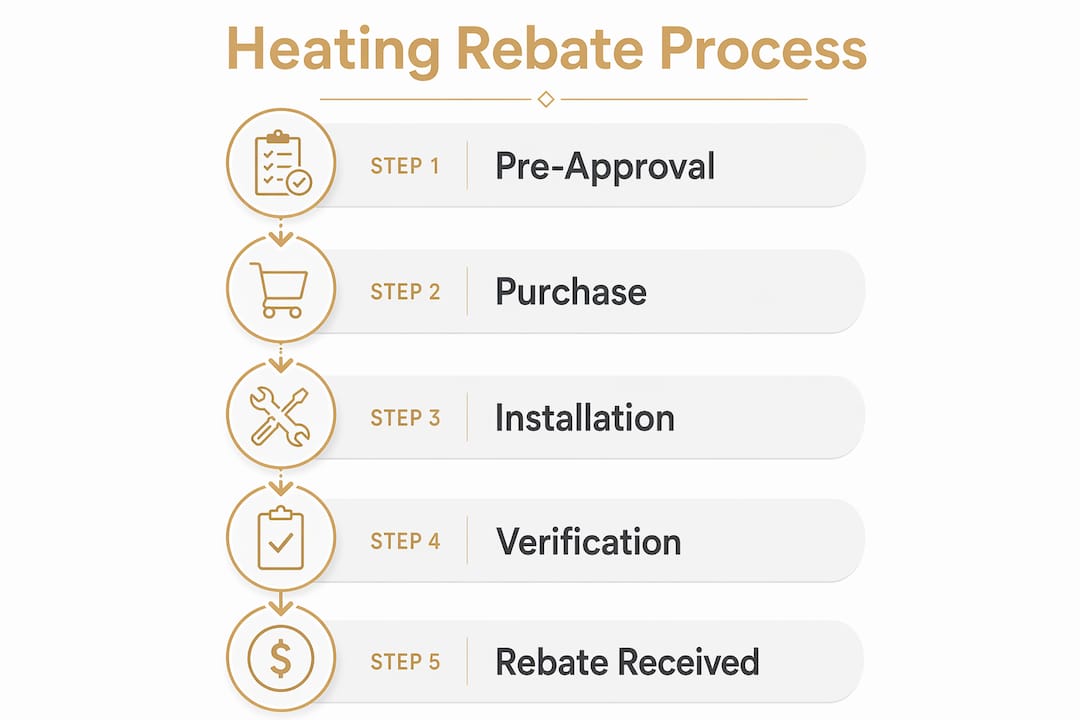
How do utility rebate programs for heating systems work step-by-step?
The rebate process follows a defined sequence, and skipping any step can cost you the entire incentive. Most programs require you to complete these stages in order.
Verify eligibility. Enter your zip code on your utility’s website or call their energy efficiency hotline. Confirm your property type, current heating system, and account standing all meet program requirements.
Get pre-approval before signing any contract. This is the step most homeowners miss. Written pre-approval must come before installation begins. Installing equipment first and applying afterward almost always results in disqualification.
Hire a utility-authorized contractor. Many programs require contractors enrolled in a defined utility partner network. Using a contractor outside that network voids your eligibility, regardless of equipment quality.
Complete the installation. Your contractor installs the approved equipment and documents everything: model numbers, efficiency ratings, and system sizing.
Submit required documents. You will typically need a paid invoice, equipment specification sheets, and an ACCA Manual J load calculation. Most rebate registrations are valid for 60 days from approval, and applications must be submitted within 30 days of project completion.
Receive your rebate. Delivery methods vary by program: a mailed check, a credit on your utility bill, or a point-of-sale discount applied directly at the time of installation.
Pro Tip: Ask your contractor to apply the rebate as a point-of-sale discount rather than a reimbursement. This reduces your out-of-pocket cost immediately instead of waiting 4–12 weeks for a check.
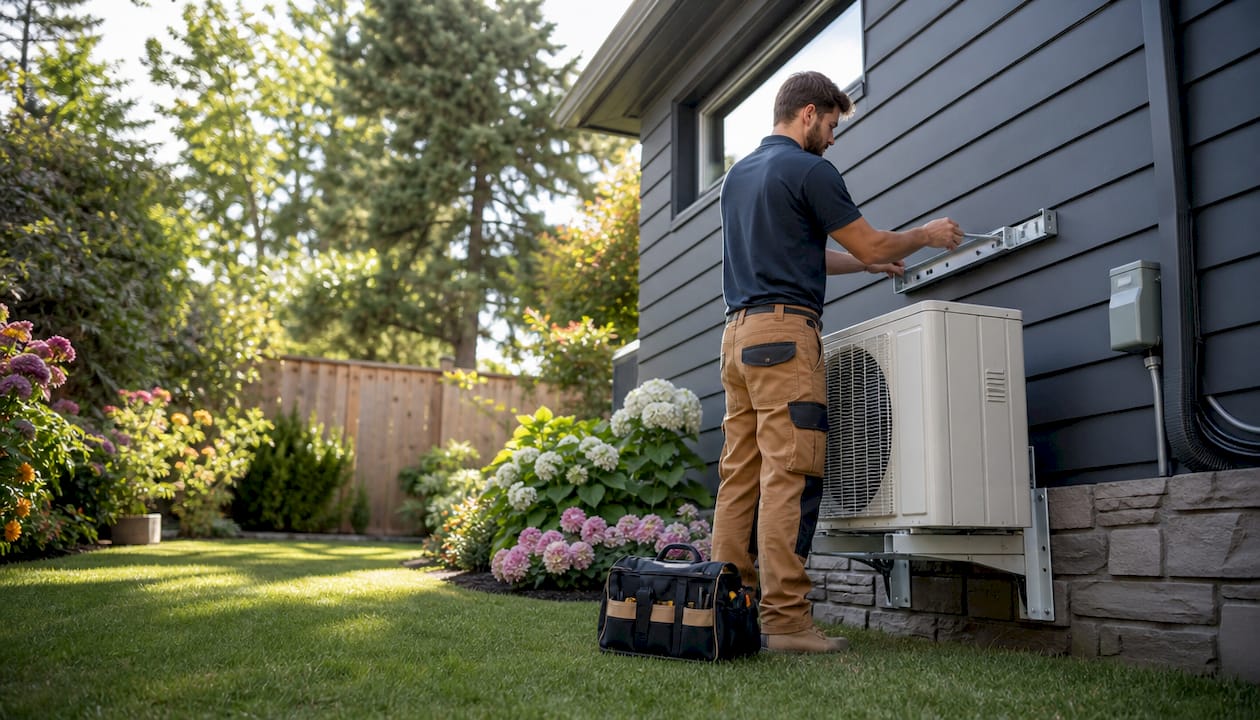
What types of heating equipment qualify for utility rebates?
Not every heating upgrade qualifies, and rebate amounts vary widely by technology and efficiency level.
Standard air-source heat pumps
Standard air-source heat pumps typically earn rebates of $500 to $2,000 from utility programs. These systems must meet minimum efficiency thresholds, usually defined by ENERGY STAR certification, to qualify.
Cold-climate heat pumps
Cold-climate rated models, designed to operate efficiently below freezing, fetch higher rebates of $1,000 to $3,000. Utilities reward these systems more generously because they reduce grid stress during peak winter demand.
Fuel-switching upgrades
Replacing oil, propane, or electric resistance heating with a heat pump often unlocks the largest rebates. Programs targeting fuel-switching offer $1,500 to $5,000 or more, and some income-qualified programs like Mass Save go up to $10,000. That range reflects how aggressively utilities want to move customers off fossil fuels and onto the electric grid.
How rebate amounts vary by utility type
| Utility type | Typical rebate range | Notes |
|---|---|---|
| Investor-owned utility | $500–$2,500 | Regulated programs, consistent availability |
| Municipal utility | $200–$1,500 | Varies widely by city budget |
| Electric cooperative | $300–$2,000 | Member-focused, often flexible rules |
| Income-qualified programs | $1,250–$10,000+ | Requires income verification |
ENERGY STAR certification is the baseline standard most utilities require. Equipment not on the utility’s approved product list will not qualify, even if it carries an ENERGY STAR label.
How can homeowners and landlords maximize savings by stacking rebates?
Stacking incentives means combining utility rebates with federal, state, and local programs to reduce your total project cost as much as possible. Rebates can be stacked as long as total incentives do not exceed the project cost.
The key programs to layer together include:
- Utility rebates. Available to all customers, including landlords, with no income restrictions.
- Federal IRA programs. The HEAR (High-Efficiency Electric Home Rebate Act) and HOMES programs provide additional rebates for income-qualified households upgrading to efficient heating.
- State-level incentives. Many states run their own programs on top of federal offerings. California, Massachusetts, and Connecticut have particularly active programs.
- Local tax incentives. Some cities and counties offer property tax exemptions or credits for energy-efficient upgrades.
- Manufacturer promotions. Equipment brands occasionally run seasonal rebates that stack on top of utility and government programs.
Successful stacking requires verifying each program’s eligibility rules and income requirements separately. One program’s rules do not automatically satisfy another’s.
Pro Tip: Have your contractor document every incentive source in writing before installation. Utilities and federal programs each have their own compliance checks, and a paper trail protects you if any program audits the project.
Utilities offer rebates because heat pumps help utilities align customer demand with grid management goals. That business motivation makes utility rebates more stable and longer-lasting than government-funded programs, which depend on annual budget cycles.
What are common challenges when applying for heating utility rebates?
The biggest rebate mistakes are avoidable. Most failed applications share the same root causes.
- Skipping pre-approval. Obtaining written pre-approval before installation is the single most critical step. No pre-approval means no rebate, regardless of equipment quality or contractor skill.
- Using a non-network contractor. Many utility programs require contractors enrolled in a defined partner network. Always verify your contractor’s participation before signing a contract.
- Missing the Manual J requirement. Applications without an ACCA Manual J load calculation are routinely rejected. This document proves the system is properly sized for your home.
- Late submissions. Most programs require document submission within 30 days of project completion. Missing that window forfeits the rebate.
- Incomplete invoices. Invoices must itemize equipment model numbers, efficiency ratings, and labor costs separately. A vague invoice triggers delays or denial.
Pro Tip: Request a sample rebate application from your utility before installation begins. Reviewing it in advance tells you exactly what documentation your contractor needs to prepare.
Understanding HVAC permit requirements also matters here. Many utilities cross-check rebate applications against permit records, so a missing permit can stall your rebate even after approval.
Where and how do you find heating utility rebates?
Locating the right program takes about 15 minutes if you know where to look.
- Your utility’s website. Search for “energy efficiency programs” or “rebates” in the site’s main navigation. Most investor-owned utilities maintain a dedicated rebate portal with equipment lists and application forms.
- Energy efficiency hotlines. Call the number on your utility bill and ask specifically about heating rebates. Representatives can confirm eligibility and walk you through pre-approval.
- Utility-authorized contractor networks. Contractors enrolled in utility programs often handle the application on your behalf. This is the fastest path to a point-of-sale discount.
- State energy office websites. State agencies maintain databases of active programs. California’s LADWP, for example, offers heat pump rebates up to $2,500 per ton for qualifying residential customers.
- Programs like Mass Save and Energize CT. These are among the most established utility-funded heating rebate programs in the country. They offer structured application portals, pre-approved contractor lists, and income-qualified tiers.
Application deadlines and rebate expiration periods vary by program. Some programs close when annual budgets run out, so applying early in the calendar year protects your spot. Contacting a knowledgeable local contractor like Upright Construction & HVAC is often the fastest way to identify every active program in your area and confirm your eligibility before funds run out.
Key Takeaways
Utility rebates for heating deliver the most value when homeowners secure pre-approval, use authorized contractors, and stack incentives from utility, federal, and state programs before installation begins.
| Point | Details |
|---|---|
| Pre-approval is mandatory | Obtain written utility pre-approval before any installation work begins to protect eligibility. |
| Rebate amounts vary by equipment | Air-source heat pumps earn $500–$2,000; cold-climate models and fuel-switching upgrades can reach $5,000 or more. |
| Stacking multiplies savings | Combine utility rebates with federal IRA programs and local incentives, provided total incentives do not exceed project cost. |
| Documentation drives approval | A Manual J load calculation, itemized invoice, and equipment specs are required for most utility rebate applications. |
| Authorized contractors matter | Using a contractor outside the utility’s partner network voids rebate eligibility, regardless of equipment installed. |
What I have learned after 15 years of navigating rebates with homeowners
After working with hundreds of homeowners and landlords across Los Angeles, I can tell you the rebate process is not complicated. It just requires doing things in the right order.
The mistake I see most often is excitement. A homeowner finds a great deal on a heat pump, calls a contractor, and schedules installation before checking with the utility. Three weeks later, they find out they missed the pre-approval window and lost $1,500 in rebates. That stings, and it is completely avoidable.
What I tell every client is this: treat the utility’s pre-approval like a building permit. You would not pour a foundation without a permit. Do not install a heating system without rebate pre-approval. The paperwork takes a few days. The savings last for years.
Stacking incentives is where the real opportunity lives. I have seen projects where a homeowner combined a utility rebate, a federal IRA credit, and a manufacturer promotion and covered nearly half the installation cost before financing a single dollar. That kind of outcome requires coordination, but it is not rare when you work with a contractor who knows the programs.
My honest advice: start the conversation with your utility and your contractor at the same time. Do not wait until you are ready to install. The earlier you engage, the more options you have.
— Ernie M
Upright Construction & HVAC and your heating rebate project
Navigating rebate paperwork while planning a heating upgrade is a lot to manage on your own. Upright Construction & HVAC has spent over 15 years working with Los Angeles homeowners and landlords on exactly this kind of project, and we know which programs are active, which contractors are authorized, and how to structure installations to qualify for the maximum available incentives.

We handle pre-approval applications, prepare the technical documentation utilities require, and install ENERGY STAR certified systems that qualify for utility, federal, and state programs. If your current system is aging or failing, reviewing common HVAC repair challenges is a smart first step before deciding between repair and a rebate-eligible replacement. We also offer HVAC financing options to cover any remaining cost after rebates are applied. Call us to schedule a consultation and find out exactly what your home qualifies for.
FAQ
What is a utility rebate for heating?
A utility rebate for heating is a direct cash payment, bill credit, or point-of-sale discount offered by your utility company to reduce the cost of installing an energy-efficient heating system. Rebate amounts typically range from $200 to over $2,500 depending on equipment type and efficiency.
Do I need pre-approval before installing a new heating system?
Yes. Most utility programs require written pre-approval before installation begins. Installing equipment first and applying afterward almost always results in disqualification from the rebate.
Can landlords qualify for utility heating rebates?
Utility rebates are available to all customers, including landlords, with no income restrictions. Federal programs like HEAR and HOMES may have income requirements, but utility rebates do not.
How long does it take to receive a utility heating rebate?
Processing times vary from immediate point-of-sale discounts to 4–12 weeks after application submission, depending on the utility and rebate delivery method.
Can I combine a utility rebate with a federal tax credit?
Yes. Utility rebates can be stacked with federal IRA programs and state incentives as long as the total incentives received do not exceed the total project cost. Coordinating with an authorized contractor helps confirm compliance with each program’s rules.