- 1. Dirty or clogged air filters: the most common HVAC issue
- 2. Thermostat malfunctions: causes and quick fixes
- 3. Understanding refrigerant leaks and their impact on cooling
- 4. Frozen evaporator coils: why they happen and what to do
- 5. Electrical failures: capacitors, contactors, and breakers
- 6. Short cycling: the silent compressor killer
- 7. Ductwork leaks and blower motor failures
- 8. Clogged condensate drain lines
- Key takeaways
- What I’ve learned after 15 years of HVAC repairs in Los Angeles
- How Upright Construction & HVAC can help you tackle these repairs
- FAQ
- Recommended
TL;DR:
- Dirty filters cause most HVAC failures and increase energy costs significantly. Regularly checking and replacing filters, along with basic system inspections, can prevent many common issues. Professional annual maintenance and understanding system design help homeowners avoid costly repairs and extend equipment lifespan.
Common HVAC repair challenges are system failures like clogged filters, thermostat malfunctions, refrigerant leaks, and electrical component breakdowns that directly raise your energy bills and kill your home’s comfort. After 15 years running Upright Construction & HVAC in Los Angeles, I’ve seen the same problems repeat themselves in home after home. The good news is that understanding these issues before they spiral gives you real power. You can catch problems early, avoid unnecessary service calls, and know exactly when to pick up the phone.
1. Dirty or clogged air filters: the most common HVAC issue
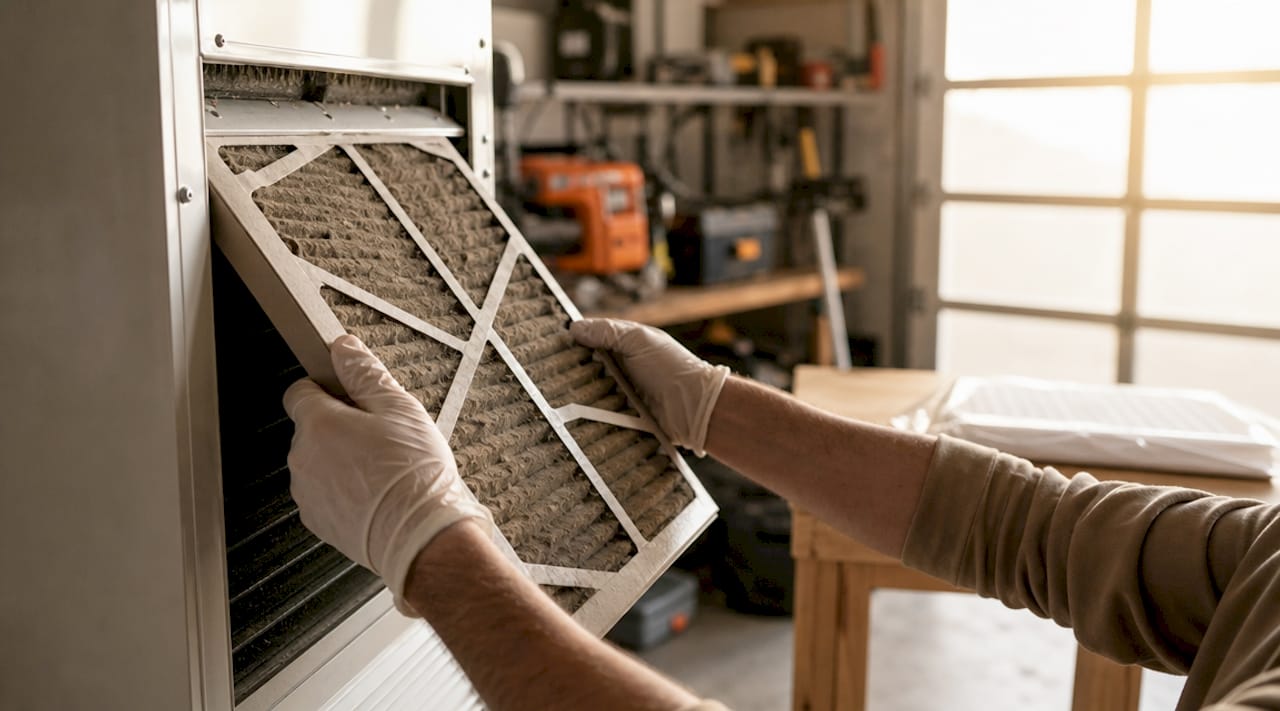
Dirty air filters cause roughly 40% of all HVAC service calls and can push your household energy bills up by 5 to 15%. That single number tells you everything about where to start when your system acts up. A clogged filter chokes airflow, forcing your blower motor to work harder than it was designed to. Over time, that strain leads to frozen evaporator coils, overheated motors, and full system shutdowns.
Most homeowners don’t realize how quickly filters load up, especially in Los Angeles where dust, pollen, and wildfire smoke are constant factors. A filter that looks fine from the outside can be completely blocked at the core. Checking your filter takes 30 seconds and costs nothing.
- Replace 1-inch filters every 30 to 60 days
- Replace thicker 4 to 5-inch media filters every 6 to 12 months
- Use MERV 8 to 11 rated filters for the best balance of airflow and particle capture
- Check regular filter replacement schedules to match your home’s specific needs
Pro Tip: Set a recurring phone reminder on the first of each month to check your filter. If you hold it up to a window and can’t see light through it, replace it immediately.
2. Thermostat malfunctions: causes and quick fixes
Thermostat problems account for about 20% of residential HVAC service calls, yet a large portion of those calls are resolved with a battery swap or a settings reset. The frustrating part is that a faulty thermostat mimics serious mechanical failures. Your system might not turn on, run constantly, or heat when it should cool. All of those symptoms point to the thermostat before they point to the compressor.
Common causes of thermostat failure include:
- Dead or weak batteries causing erratic readings
- Incorrect mode settings, such as “fan only” instead of “cool”
- Poor placement near heat sources like lamps or sunny windows, which skews temperature readings
- Outdated wiring connections that have loosened over time
Before calling a technician, replace the batteries, confirm the mode and temperature settings, and check that the thermostat is level on the wall. If your system still behaves oddly after those steps, read up on how thermostats truly work to understand whether a replacement or recalibration is the right call. A smart thermostat like the Ecobee SmartThermostat or Honeywell T6 Pro can also eliminate many of these issues entirely by self-diagnosing and alerting you to problems.
3. Understanding refrigerant leaks and their impact on cooling
Refrigerant leaks occur at a rate of 5 to 11% annually in residential systems, with repair costs ranging from $200 to $1,500 depending on the severity and refrigerant type. That cost range matters because many homeowners delay action, not realizing the damage compounds quickly. A system running 15 to 20% low on refrigerant consumes nearly twice the electricity while delivering only 60 to 70% of its normal cooling capacity. You pay more and get less.
Symptoms of a refrigerant leak are specific enough that you can spot them yourself:
- A hissing or bubbling sound near the indoor or outdoor unit
- Oily residue on refrigerant lines or around fittings
- Ice buildup on the evaporator coil or refrigerant lines
- Warm air blowing from vents despite the system running
Refrigerant handling is regulated under EPA Section 608, which requires certified technicians to recover, recycle, or reclaim refrigerants. Attempting to handle refrigerant yourself is both illegal and physically dangerous.
This is one area where DIY stops completely. A certified technician must locate the leak, repair it, and recharge the system to the manufacturer’s specification. Topping off refrigerant without fixing the source is money wasted.
4. Frozen evaporator coils: why they happen and what to do
Frozen evaporator coils are one of the most misunderstood frequent HVAC problems because they look dramatic but often have a simple cause. Frozen coils typically result from airflow restrictions, with a dirty filter being the most common trigger. When airflow drops, the coil gets too cold, moisture freezes on its surface, and the system shuts down to protect itself.
The fix starts with turning the system off and letting the coil thaw completely, which can take 2 to 24 hours depending on how thick the ice buildup is. While it thaws, check your filter. If the filter is clean and coils keep freezing, the problem may be a refrigerant issue or a failing blower motor, both of which need professional assessment. Running the system while the coil is frozen causes compressor damage, which is the most expensive repair on any HVAC system.
Pro Tip: Switch your thermostat to “fan only” mode while the coil thaws. This speeds up the process without running the compressor.
5. Electrical failures: capacitors, contactors, and breakers
Electrical control failures are among the most common air conditioning repairs we handle at Upright Construction & HVAC, and they catch homeowners completely off guard because the system simply stops with no warning. Capacitors store the electrical charge needed to start the compressor and fan motors. When a capacitor fails, the motor hums but won’t start, or the outdoor unit runs without the fan spinning. Contactors, which are essentially high-voltage switches, wear out from repeated cycling and can fail open or closed.
Before calling for service, run through this basic check sequence:
- Check your main breaker panel for a tripped breaker
- Locate the disconnect switch near your air handler or outdoor unit and confirm it’s in the on position
- Check the secondary breaker or fuse at the outdoor disconnect box
- Confirm the thermostat is set correctly and has fresh batteries
This 3-check protocol resolves a surprising number of “dead system” calls without any parts or labor cost. If the system still won’t start after those checks, a failed capacitor or contactor is the likely culprit. Both are inexpensive parts, but replacing them requires working inside a live electrical panel, so leave that to a licensed technician.
6. Short cycling: the silent compressor killer
Short cycling reduces compressor lifespan from 15 years to as few as 7 to 8 years, making it one of the most damaging HVAC system failures a homeowner can ignore. Short cycling means your system turns on, runs for 2 to 3 minutes, shuts off, and repeats. Each startup draws a surge of electricity and puts mechanical stress on the compressor bearings. Over months, that adds up to premature failure of the most expensive component in your system.
Causes include an oversized unit, a dirty filter, a faulty thermostat, or a failing capacitor. An oversized system is particularly common in Los Angeles because homeowners sometimes upgrade to a larger unit thinking bigger is better. A system that’s too large for the space cools the air too quickly, satisfies the thermostat before completing a full cycle, and short cycles constantly. Proper sizing, measured in BTUs per square foot, is the only fix for an oversized unit.
7. Ductwork leaks and blower motor failures
Duct leaks and blower motor wear are HVAC maintenance challenges that rarely announce themselves loudly. Instead, you notice that one room is always too hot, your energy bills creep up, or the system runs longer than it used to. These are the fingerprints of a duct system losing conditioned air into your attic or walls.
| Problem | Symptoms | Best fix |
|---|---|---|
| Duct leaks | Uneven room temperatures, high bills | Professional duct sealing with mastic or foil tape |
| Blower motor wear | Weak airflow, grinding noise, overheating | Motor inspection and lubrication or replacement |
| Dirty condenser coils | Reduced cooling, longer run times | Annual coil cleaning by a technician |
Dirty outdoor condenser coils reduce cooling capacity by 10 to 15% and accelerate compressor wear. Cleaning them once a year with a garden hose and coil cleaner is a simple task that pays for itself in energy savings. For blower motor issues, listen for grinding or squealing sounds during startup. Those sounds mean the bearings are failing and the motor needs attention before it seizes completely. You can find more detail on air handler issues that affect blower performance in homes across the Los Angeles area.
8. Clogged condensate drain lines
A clogged condensate drain line is one of those HVAC repair solutions that costs almost nothing if you catch it early and a lot if you don’t. Your air conditioner removes humidity from the air and drains that water through a condensate line. Algae, mold, and debris build up in that line over time, blocking the flow. Clearing a clogged drain with a wet/dry vac often resolves the issue in minutes.
Most modern systems have a float switch that shuts the system down when the drain pan fills up, preventing water damage to your ceiling or floor. If your system suddenly stops on a humid day and you notice water in the drain pan, a clogged condensate line is the first thing to check. Pour a cup of diluted bleach into the drain access port every few months to keep algae from forming in the first place.
Key takeaways
The most effective way to manage common HVAC repair challenges is to perform monthly filter checks, run a basic 3-check protocol before calling a technician, and schedule annual professional maintenance to catch refrigerant, electrical, and duct issues early.
| Point | Details |
|---|---|
| Filters drive most failures | Dirty filters cause 40% of service calls and raise energy bills by up to 15%. |
| Thermostats mimic big problems | Replace batteries and check settings before assuming a mechanical failure. |
| Refrigerant leaks need pros | EPA Section 608 makes DIY refrigerant handling illegal; always call a certified technician. |
| Short cycling destroys compressors | An oversized or malfunctioning system can cut compressor life nearly in half. |
| Basic checks save money | Verifying filters, thermostat settings, and disconnect switches resolves most “dead system” calls. |
What I’ve learned after 15 years of HVAC repairs in Los Angeles
The single most expensive mistake I see homeowners make is reactive troubleshooting. They wait until the system fails completely, then panic and approve repairs without understanding what went wrong or why. I’ve seen that approach cost homeowners thousands of dollars in misdiagnosed repairs that didn’t fix the actual problem.
What actually works is keeping a simple log of your system’s behavior. Note when it starts making a new noise, when a room stops cooling properly, or when your energy bill jumps without explanation. That history is gold for any technician who walks into your home. It cuts diagnostic time in half and prevents the guesswork that leads to unnecessary part replacements.
I also want to be honest about something most articles won’t say: a lot of HVAC problems are caused by the system itself being wrong for the house. An oversized unit installed by a previous contractor, undersized ductwork, or a thermostat placed in a bad location will create recurring problems no matter how well you maintain the system. If you’re dealing with the same issue every season, the root cause might be a design problem, not a maintenance problem. That’s worth a conversation with a trusted technician before you spend another dollar on repairs.
The homeowners I respect most are the ones who learn enough to ask the right questions. You don’t need to know how to fix a capacitor. You do need to know what a capacitor does and why it matters. That knowledge protects you.
— Ernie M
How Upright Construction & HVAC can help you tackle these repairs

At Upright Construction & HVAC, we’ve spent over 15 years helping Los Angeles homeowners work through exactly the kinds of problems described in this article. Our technicians use a structured diagnostic approach that starts with the same basic checks you’ve read about here, so you’re never paying for guesswork. Whether you’re dealing with a refrigerant leak, a failing capacitor, or a system that just won’t start, we bring the tools and experience to find the real cause fast. If you’re ready to stop guessing and get a straight answer, visit our air conditioner repair tips page or call us directly for same-day service across the Los Angeles area.
FAQ
What causes most HVAC breakdowns in homes?
Dirty air filters cause approximately 40% of all HVAC service calls, making them the single leading cause of system breakdowns. Thermostat malfunctions and refrigerant leaks follow as the next most frequent problems.
Can I fix a refrigerant leak myself?
No. Refrigerant handling is regulated under EPA Section 608, which requires a certified technician to perform any leak repair or refrigerant recharge. Attempting it yourself is illegal and physically hazardous.
How do I know if my HVAC is short cycling?
Short cycling means your system turns on and shuts off within 2 to 3 minutes repeatedly without completing a full cooling or heating cycle. Common causes include an oversized unit, a dirty filter, or a failing capacitor.
What should I check before calling an HVAC technician?
Run the 3-check protocol: verify your filter is clean, confirm thermostat settings and replace batteries, then check your main breaker and the disconnect switch near your indoor and outdoor units.
How often should I schedule professional HVAC maintenance?
Schedule a professional tune-up once a year, ideally in spring before cooling season or in fall before heating season. Annual maintenance catches refrigerant issues, electrical wear, and duct problems before they become expensive failures.