- How does an HVAC system work to maintain home comfort?
- What types of HVAC systems are common in homes?
- What are the main HVAC system components and their roles?
- How can you maintain your HVAC system for better performance?
- Key takeaways
- What 15 years of HVAC work taught me about your home’s comfort
- How upright construction & HVAC can help you stay comfortable
- FAQ
- Recommended
TL;DR:
- An HVAC system combines heating, ventilation, and air conditioning equipment to control indoor temperature, humidity, and air quality. Proper understanding and maintenance of this interconnected system help homeowners keep their homes comfortable, energy-efficient, and healthy year-round.
An HVAC system is defined as the combination of heating, ventilation, and air conditioning equipment that controls indoor temperature, humidity, and air quality inside your home. The acronym stands for Heating, Ventilation, and Air Conditioning. Most homeowners think of it as just a heater or AC unit, but it is actually one connected climate control system. Understanding how it works as a whole makes it much easier to spot problems, talk to technicians, and keep your home comfortable year-round.
How does an HVAC system work to maintain home comfort?
Your HVAC system works by moving air through a cycle of heating or cooling, filtering it, and distributing it through your home. Each function depends on the others. Here is how each part of that cycle operates:
Heating. A furnace burns fuel or uses electric resistance to heat air. A boiler heats water that circulates through radiators. A heat pump transfers heat instead of producing it, which makes it one of the most efficient options available today. Heat pumps can both heat and cool your home, which is why they are becoming more popular in residential settings.
Cooling. Your air conditioner does not create cold air. It removes heat from indoor air using refrigerant that cycles through an evaporator coil, compressor, and condenser. The refrigerant absorbs heat inside your home and releases it outside. What remains is cooler air that gets pushed back into your living space.
Ventilation. Ventilation introduces fresh outside air to replace stale indoor air, control moisture, and reduce contaminants. Without it, your home would accumulate carbon dioxide, odors, and humidity. Proper ventilation is what keeps the air you breathe actually clean.
Air distribution. A thermostat signals your HVAC equipment to turn on or off based on your temperature setting. An air handler or blower then pushes conditioned air through ducts and out through vents in each room. In ductless systems, a wall-mounted unit handles distribution directly in the room it serves.
Filtration. Air passes through a filter before it circulates. The filter traps dust, pollen, pet dander, and other particles. A clogged or poor-fitting filter reduces airflow and lets contaminants bypass the system entirely.
Pro Tip: Set your thermostat fan to “ON” instead of “AUTO” during high-pollution days. Continuous fan operation means air passes through your filter more often, which improves indoor air quality without running the full heating or cooling cycle.
What types of HVAC systems are common in homes?
Two main residential HVAC types exist: ducted central systems and ductless mini-splits. Each has real advantages depending on your home’s layout, age, and budget. The table below breaks down the most common options side by side.
| System Type | Installation | Efficiency | Upfront Cost | Best For |
|---|---|---|---|---|
| Central HVAC (ducted) | Requires ductwork | Moderate to high | Moderate | Homes with existing ducts |
| Ductless mini-split | No ducts needed | High (zoned control) | Higher per zone | Additions, older homes, rentals |
| Heat pump (ducted) | Requires ductwork | Very high | Moderate to high | Mild climates, energy savings |
| Window/portable AC | Minimal | Low | Low | Single rooms, temporary use |
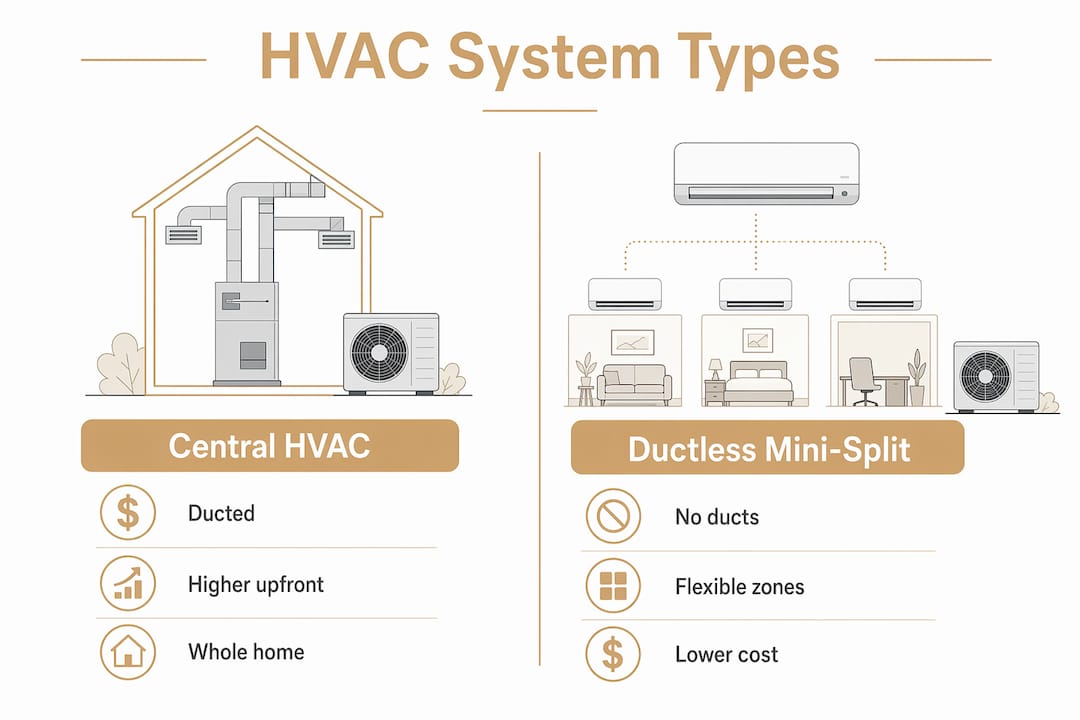
Central HVAC systems are the most common setup in American homes. They use a furnace or air handler connected to a network of ducts that deliver conditioned air to every room. The main drawback is that duct leaks can waste a significant amount of energy before air ever reaches you.
Ductless mini-splits serve individual zones without any ductwork. Each indoor unit connects to an outdoor compressor. They are ideal for home additions, garages, or older homes that were never built with ducts. The tradeoff is higher upfront cost per zone, though the long-term energy savings often offset that.
Heat pumps are worth a closer look if you live in a climate like Los Angeles where winters are mild. They move heat rather than generate it, which makes them far more efficient than a traditional gas furnace in moderate temperatures.
What are the main HVAC system components and their roles?
Understanding the key parts of your system helps you describe problems accurately when you call a technician. Here are the components that matter most:
- Furnace or heat pump. The heating source. A furnace burns gas or uses electricity to generate heat. A heat pump extracts heat from outdoor air even in cool weather.
- Air conditioner or cooling coil. The cooling source. The outdoor unit houses the compressor and condenser. The indoor evaporator coil absorbs heat from your air.
- Air handler. The air handler contains the blower motor that circulates air through your ducts. Learning about air handler basics helps you recognize when airflow problems start here rather than at the equipment itself.
- Thermostat. The control center. It reads your home’s temperature and tells the system when to run. A smart thermostat like a Nest or Ecobee can learn your schedule and reduce energy waste automatically.
- Ductwork and vents. The delivery network. Ducts carry conditioned air from the air handler to every room. Return vents pull air back to be filtered and reconditioned.
- Air filter. The first line of defense for air quality. Filters are rated by MERV score. A MERV 8 filter handles common household particles. A MERV 13 filter captures finer particles including smoke and some bacteria.
Pro Tip: When your home feels uncomfortable, troubleshoot by functional group: heating source, cooling source, air distribution, and controls. This approach saves time and helps you give your technician a clearer picture before they arrive.
Common signs of component trouble include uneven temperatures between rooms (often a duct or air handler issue), short cycling where the system turns on and off rapidly (often a thermostat or refrigerant issue), and unusual noises from the outdoor unit (often a compressor or fan motor problem).
How can you maintain your HVAC system for better performance?
Regular maintenance is the single biggest factor in how long your system lasts and how well it performs. Most HVAC problems that lead to expensive repairs start as small issues that were ignored. Here is a practical routine to follow:
Replace your filter on schedule. Check your filter every 30 days and replace it when it looks gray and loaded with debris. The right filter for your system matters as much as how often you change it. A filter that is too thick can restrict airflow just as much as a dirty one. Read more about choosing the right filter for your specific system.
Run your fan continuously during poor air quality events. The EPA recommends upgrading to MERV 13 filters and running your HVAC fan on continuous mode when outdoor air is polluted by wildfire smoke or smog. This keeps air cycling through your filter even when heating or cooling is not needed. In Los Angeles, this tip is especially relevant during fire season.
Schedule an annual inspection. A professional technician checks refrigerant levels, cleans coils, inspects electrical connections, and tests system controls. Catching a small refrigerant leak or a worn capacitor early costs far less than an emergency repair in July. Find out why annual inspections matter for your home’s long-term comfort.
Keep the outdoor unit clear. Trim shrubs and remove debris from around your condenser unit. Restricted airflow over the condenser coil reduces cooling efficiency and puts stress on the compressor.
Check your vents and registers. Make sure furniture or rugs are not blocking return air vents. Blocked returns force your system to work harder and can cause pressure imbalances that reduce comfort in certain rooms.
The efficiency of the refrigeration cycle depends on clean coils and proper airflow. Skipping maintenance does not just shorten equipment life. It raises your energy bill every single month.
Key takeaways
An HVAC system is a complete climate control system, and treating it as one connected unit is the most effective way to maintain comfort, air quality, and energy efficiency in your home.
| Point | Details |
|---|---|
| HVAC is one system | Heating, cooling, ventilation, and filtration all work together, not independently. |
| Know your system type | Central ducted, ductless mini-split, and heat pump systems each suit different homes and budgets. |
| Components have specific roles | The thermostat, air handler, filter, and coils each affect comfort in distinct ways. |
| Filter fit and fan mode matter | Correct filter size and continuous fan operation improve air quality beyond just filter replacement alone. |
| Annual maintenance pays off | Preventive inspections catch small problems before they become costly emergency repairs. |
What 15 years of HVAC work taught me about your home’s comfort
I have been in the HVAC business in Los Angeles for over 15 years, and the most common thing I hear from homeowners is some version of: “I thought it was just the AC.” That single misunderstanding leads to a lot of unnecessary frustration and expense.
When your home is too humid, too stuffy, or unevenly heated, the problem is rarely just one component. It might be a ventilation issue, a duct leak, or a filter that has not been changed in six months. Seeing your HVAC as a full climate system, not just a box that blows hot or cold air, changes how you approach every comfort problem in your home.
The other thing I see constantly is homeowners who are nervous to ask questions when a technician shows up. My advice: ask anyway. A good technician will explain what they found and why it matters. If they cannot or will not explain it clearly, that tells you something important about who you are working with.
Investing in a preventive maintenance plan is the single best financial decision most homeowners make for their HVAC system. The cost of one annual tune-up is almost always less than the cost of one emergency repair call. And the peace of mind that comes with knowing your system is ready for a Los Angeles summer is worth every dollar.
— Ernie M
How upright construction & HVAC can help you stay comfortable
At Upright Construction & HVAC, we have spent over 15 years helping Los Angeles homeowners get the most out of their heating and cooling systems. Whether you need a furnace inspection before winter, an AC tune-up before summer, or a full system evaluation, our team is ready to help.

We specialize in furnace repairs and heating fixes that get your system running right the first time. We also offer 24/7 emergency support for those moments when your system fails at the worst possible time. If you are in the Van Nuys area, our Van Nuys HVAC team is close by and ready to respond fast. Reach out today to schedule a professional evaluation and start protecting your home’s comfort.
FAQ
What does HVAC stand for?
HVAC stands for Heating, Ventilation, and Air Conditioning. It refers to the combined system that controls temperature, air quality, and humidity inside a home or building.
How often should i replace my HVAC filter?
Check your filter every 30 days and replace it when it appears gray or clogged. The EPA recommends replacing filters promptly and using MERV 13 rated filters for better air quality, especially during outdoor pollution events.
What is the difference between a heat pump and a furnace?
A furnace generates heat by burning fuel or using electric resistance. A heat pump transfers existing heat from outdoor air into your home, making it more energy-efficient in mild climates like Los Angeles.
How do i know if my HVAC system needs repair?
Common warning signs include uneven temperatures between rooms, short cycling where the system turns on and off frequently, unusual noises from the outdoor unit, and rising energy bills without a change in usage. Scheduling a yearly HVAC inspection catches most issues before they become serious.
Can i improve indoor air quality with my existing HVAC system?
Yes. Upgrading to a MERV 13 filter and switching your fan to continuous mode are two steps the EPA recommends to reduce indoor pollutant exposure. Proper filter fit and regular replacement are equally important for getting the best results from your system.