
- Common Causes When a Pilot Light Keeps Going Out
- How Do You Relight a Pilot Light Safely?
- What Quick Checks Can You Run Yourself?
- When Should You Call a Licensed HVAC Technician?
- How Do You Prevent Pilot Light Problems From Coming Back?
- What Do HVAC Technicians Check First?
- How Does a Bad Pilot Light Affect Your Furnace or Water Heater?
- What Can You Do Temporarily Before Repair?
- Ernie M’s Perspective: Practical Guidance and Reassurance
- How Upright Construction & HVAC Can Help
- Sources
- FAQ
- Recommended
Most of the time, a pilot light that won’t stay lit points to one of two things: a worn thermocouple or a clogged pilot orifice. Both are fixable. If you don’t smell gas and the outage seems occasional, relight it using the steps below. If you smell gas, see a yellow or sooty flame, or the pilot won’t stay lit after two relight attempts, shut off the gas and call a licensed technician instead of trying again.
TL;DR:
- Most pilot light outages are caused by a worn thermocouple or a clogged pilot orifice, which are fixable parts.
- If the pilot flame flickers or goes out frequently, check for drafts, negative room pressure, or venting issues that can disrupt combustion.
- Repeated relighting attempts beyond two times suggest a mechanical fault requiring professional diagnosis and repair.
- A yellow or soot-covered flame indicates combustion problems, and immediate professional help is necessary due to potential carbon monoxide risks.
- Regular maintenance, like cleaning the pilot orifice and replacing the thermocouple, can prevent recurring outages and extend appliance lifespan.
Common Causes When a Pilot Light Keeps Going Out
A furnace or water heater pilot that won’t behave is usually telling you something specific through how it fails. Get familiar with these five culprits and you’ll narrow down the problem before a technician even shows up.
- Thermocouple or thermopile failure. This small copper rod sits in the pilot flame and generates a tiny electrical signal that tells the gas valve it’s safe to stay open. Wear, corrosion, or a rod that’s shifted out of position is by far the most common reason pilots quit, with technicians attributing the majority of persistent outages to thermocouple faults.
- A clogged pilot orifice or tube. Dust, spider webs, and rust flakes narrow the tiny opening that feeds gas to the pilot. Less gas means a weaker flame that can’t heat the thermocouple enough to hold the valve open.
- Drafts and negative room pressure. A furnace closet near a drafty door, or a bathroom fan and exhaust hood pulling air out of the house, can starve the pilot of oxygen or blow the flame sideways, away from the thermocouple.
- Gas supply or valve problems. A partially closed shutoff valve, low incoming gas pressure, or a failing gas control valve can all cause a flame that lights but never burns strong enough to sustain itself.
- Venting or combustion issues. A blocked flue, a cracked heat exchanger, or exhaust that isn’t drafting properly can create unstable air pressure around the burner compartment, making the pilot flicker or die.
How Do You Relight a Pilot Light Safely?
If there’s no gas odor and you’ve decided to try relighting it yourself, follow this order every time. Skipping steps is how people end up with a pilot that won’t hold or, worse, a gas buildup.
- Check for a gas smell first. If you catch even a faint rotten-egg odor, stop immediately, ventilate the area, and don’t attempt to relight anything.
- Turn the appliance control knob to OFF and wait the time your owner’s manual specifies, usually five minutes, to clear any residual gas.
- Turn the knob to PILOT, press and hold it down, and light the pilot with a long lighter or match while continuing to hold the button.
- Hold for 30 to 60 seconds. This gives the thermocouple time to heat up enough to send a strong enough signal to the gas valve.
- Release the button slowly and watch the flame. If it stays lit and burns a steady blue, turn the knob to ON.
- If it goes out, try once more. If it fails a second time or dies the instant you release the button, stop. That’s a sign of a mechanical fault, not user error, and repeated relighting is a risk worth avoiding rather than a normal maintenance habit.
What Quick Checks Can You Run Yourself?
Before you call anyone, a few minutes of visual inspection can tell you whether you’re dealing with a five-dollar cleaning fix or a part that needs replacing.
- Look at the flame color and contact point. A healthy pilot burns steady blue and should envelop about 3/8 to 1/2 inch of the thermocouple tip. If the flame barely touches the rod or licks past it, that’s your answer.
- Check for soot, yellow tinting, or corrosion on the pilot assembly or thermocouple. Any of these point to a combustion problem, not just a dirty part.
- Think about airflow. Was a door open, an attic fan running, or a range hood on high when the pilot died? Drafts are notorious for outages that seem random but actually follow a pattern.
- Confirm the gas shutoff valve is fully open, and check whether other gas appliances in the home are acting up too, which points toward a supply issue rather than a local one.
As a rule of thumb: if the pilot dies within a few seconds of releasing the button, suspect the thermocouple. If it only happens on windy days or when the furnace closet door is open, look at drafts and venting first.
Pro Tip: A pilot flame that looks almost too intense, sometimes described as “cherry red” on the thermocouple tip, can actually be damaging the sensor over time just as much as a weak flame that never heats it enough. Neither extreme is normal.
For a broader rundown of furnace symptoms and fixes, our guide on quick fixes for home HVAC furnace problems covers issues beyond the pilot assembly.
When Should You Call a Licensed HVAC Technician?
Some signs mean you stop troubleshooting and pick up the phone, full stop.
- You smell gas. Leave the gas off, ventilate, contact your gas utility, and call a licensed technician immediately. Do not flip switches or light anything.
- The flame burns yellow or orange, or you see soot around the burner or exhaust. That’s a combustion problem, and it can point to carbon monoxide risk.
- The pilot won’t stay lit no matter how many times you relight it, or the whole appliance short-cycles on and off.
- You hear clicking, buzzing, or grinding from the gas valve or control area, or the unit is old enough that parts are showing their age.
- You simply can’t reach the pilot assembly safely or don’t feel confident handling gas components. There’s no shame in that. Our piece on DIY furnace repairs and when to call a pro breaks down exactly which tasks are safe for homeowners and which aren’t. If a gas odor is involved, our guide on what to do when your furnace smells like gas walks through the immediate safety steps.
How Do You Prevent Pilot Light Problems From Coming Back?
A pilot that keeps going out isn’t something to just live with. A properly functioning system should hold its flame through an entire heating season without you touching it.
- Have the pilot orifice and thermocouple cleaned during annual service. Buildup that’s invisible to the eye is often enough to weaken the flame.
- Seal drafts near the furnace or water heater closet, and avoid running powerful exhaust fans or range hoods that pull air from the same space.
- Ask about converting to electronic ignition. Standing pilots are being phased out for a reason. ENERGY STAR notes that modern ignition systems eliminate the standing-pilot maintenance headache entirely while improving overall efficiency.
- Replace a thermocouple proactively if you’ve noticed weak or discolored flames, rather than waiting for total failure.
- Book an annual combustion-safety and vent inspection. Correct system operation, the kind where a pilot simply never needs relighting, is well documented in technical building performance references covering proper equipment operation.
Technicians report thermocouple faults behind roughly 85% of the persistent outages they diagnose in field notes, which is why that’s usually the first part checked and often the first part replaced.
What Do HVAC Technicians Check First?
We follow a specific order on every pilot call, because guessing wastes your time and money.
- Visual inspection first: flame color, height, and soot before anything gets touched.
- Pilot geometry next: confirming the flame actually contacts the thermocouple tip correctly.
- Thermocouple seating and condition, since a loose or corroded connection mimics total failure.
- Millivolt testing when visual checks don’t explain it. This confirms whether the thermocouple output falls short of what the gas valve needs to stay open.
- Negative pressure testing. Backdrafting from exhaust fans or attic fans is an easy thing to miss, and it can make a perfectly good thermocouple look defective.
Most first visits end in a thermocouple swap, since it’s inexpensive and solves the majority of cases. If the new part doesn’t fix it, that’s when we look at the gas valve itself.
How Does a Bad Pilot Light Affect Your Furnace or Water Heater?
A pilot that keeps quitting isn’t just an inconvenience. Every outage means your furnace or water heater stops producing heat until someone notices and relights it, which on a water heater can mean cold showers for a day or more if nobody catches it right away.
Repeated cycling also stresses the gas valve and control components. A valve that’s constantly opening and closing as the pilot fails and gets relit wears out faster than one that operates normally through a full season. That turns a $150 thermocouple fix into a $600 gas valve replacement if it’s ignored long enough.
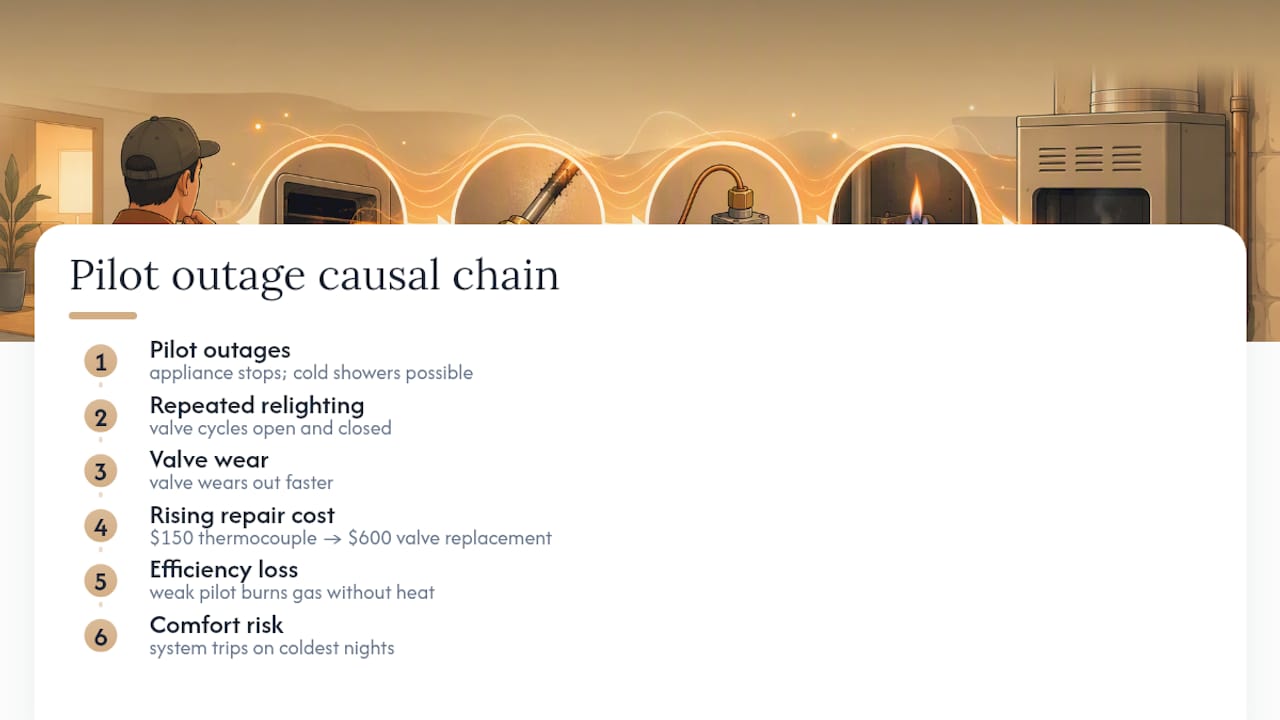
There’s an efficiency cost too. A weak or misaligned pilot flame burns gas without generating consistent, usable heat, and a furnace that short-cycles due to safety lockouts runs its blower more often without matching output. None of this shows up as a single dramatic spike on your utility bill, but it adds up over a winter of an appliance that’s essentially limping along instead of running clean.
There’s also a comfort cost that’s easy to underestimate. A furnace that keeps tripping its pilot safety switch on the coldest night of the year is a problem you’ll notice at the worst possible time, not during a convenient afternoon inspection.
What Can You Do Temporarily Before Repair?
If you’ve got a repair scheduled but need heat or hot water in the meantime, a few short-term steps can buy you time without creating new risk.
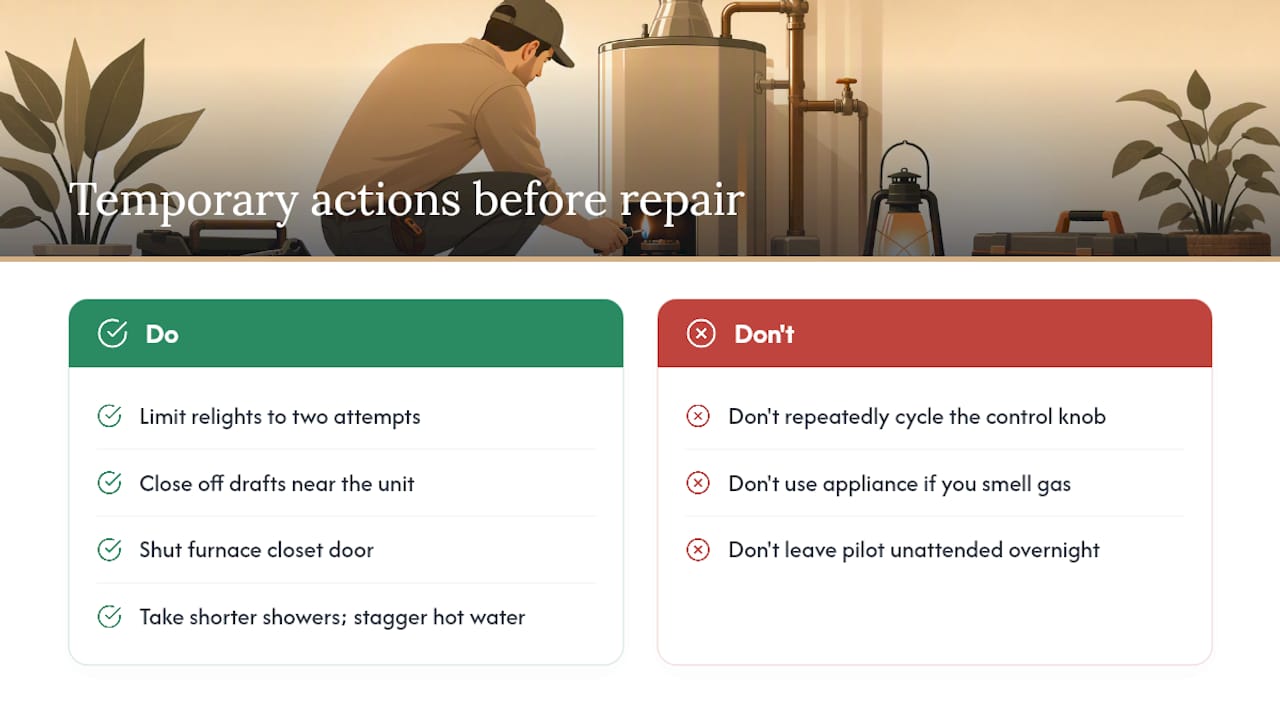
Keep relighting attempts to a minimum, no more than the two-try rule covered earlier, and space them out rather than repeatedly cycling the control knob. Constant relighting attempts can flood the area with unburned gas if something’s actually wrong with the valve.
Close off obvious drafts near the unit. Shut the furnace closet door, turn off a bathroom fan or range hood that shares airflow with that space, and see if the pilot holds longer. If drafts are your issue, this alone might get you through a few days.
For a water heater, some households temporarily switch to shorter showers or stagger hot water use across the day if the pilot is only holding for a few hours at a time. That’s a stopgap, not a fix, and it only works if there’s no gas smell involved.
Whatever you do, don’t leave a struggling pilot unattended overnight or while you’re away from home. If it’s unreliable enough that you’re using workarounds, it’s unreliable enough to need a technician’s attention soon, not eventually.
Ernie M’s Perspective: Practical Guidance and Reassurance
I’ve watched this exact scenario play out for over 15 years across Los Angeles homes: a homeowner relights the same pilot five times in a week before finally calling someone. Relighting once or twice safely is fine. Doing it nightly isn’t troubleshooting, it’s ignoring a part that needs replacing. If yours keeps coming back, seek professional 24/7 support to diagnose it properly rather than risking unsafe handling of gas components.
— Ernie M
How Upright Construction & HVAC Can Help
If your pilot keeps dying no matter what you try, you’re past the DIY stage. Licensed HVAC and construction contractors can serve homeowners, offering diagnostics that find the actual root cause, whether that’s a failing thermocouple, a gas valve on its way out, or negative pressure nobody thought to check.

We offer 24/7 emergency repair, so a pilot that dies at 9 p.m. on a Friday doesn’t mean a cold weekend. If you’re dealing with a gas odor, a pilot that won’t hold after repeated attempts, or a suspected gas-valve failure, those are exactly the situations where an on-site inspection beats another round of guesswork. Our team also runs ongoing maintenance plans that catch thermocouple wear before it turns into a no-heat emergency. If you’re ready to get it looked at, book a diagnostic visit through our HVAC repair page and we’ll get a technician out to your home.
Sources
- Thermocouple Testing Procedure
- Gas Furnace Pilot Light Guide: Troubleshooting, Relighting, and Safety – Pick Comfort
- Resideo technical guidance (pilot/thermocouple geometry and testing)
- How pilot lights work — HowStuffWorks
FAQ
How Do You Fix a Pilot Light That Keeps Going Out?
Clean the pilot orifice, confirm the flame properly contacts the thermocouple, and if the flame looks weak or discolored, have the thermocouple replaced since it causes most repeat outages.
How Do You Clean a Thermocouple on a Gas Heater?
Turn off the gas, let the assembly cool, then gently rub the thermocouple tip with fine sandpaper or steel wool to remove corrosion and wipe away any soot before relighting.
Why Does My Furnace Pilot Light Randomly Go Out?
Random outages usually trace back to drafts, negative room pressure from exhaust fans, or a thermocouple that’s marginal and fails intermittently rather than consistently.
What Could Cause a Water Heater Pilot Light to Keep Going Out?
The same core causes apply to water heaters: a worn thermocouple, a clogged pilot tube, or drafts in the utility closet, though a failing gas control valve is also common on older tanks.
Should I Keep Relighting the Pilot Myself?
Relighting once or twice following the correct steps is fine, but if it fails repeatedly or you smell gas at any point, stop and call a licensed technician like Upright Construction & HVAC instead of continuing to relight it.