
- What is the HVAC triage process and why does it matter?
- What are the critical intake questions used in HVAC triage?
- How does HVAC triage classify and prioritize calls?
- What does the HVAC troubleshooting process involve after triage?
- How can homeowners prepare for the HVAC triage process?
- Key Takeaways
- What I have learned after 15 years of HVAC triage calls
- Upright Construction & HVAC: structured triage, real results
- FAQ
- Recommended
TL;DR:
- The HVAC triage process quickly classifies service calls by urgency to ensure appropriate and cost-effective responses. Proper triage involves five key questions that determine whether a situation is an emergency, critical, or routine, reducing unnecessary costs and delays. Homeowners can improve efficiency by providing detailed information before calling, enabling faster, fairer service and avoiding false alarms.
The HVAC triage process is a structured system for classifying incoming service calls by urgency and safety risk before dispatching a technician. Think of it as the same logic emergency rooms use: not every problem needs a surgeon right now, and not every HVAC call needs an after-hours premium response. For homeowners and property managers, understanding this process means fewer surprise bills, faster help when it truly matters, and clearer communication with your service provider. Upright Construction & HVAC has used this approach for over 15 years to serve Los Angeles homeowners with both speed and fairness.
What is the HVAC triage process and why does it matter?
The HVAC triage process is defined as a rapid call classification method that sorts heating and cooling service requests into urgency levels before any technician is dispatched. The industry term for this structured intake system is service call triage, and it mirrors the prioritization logic used in medical and emergency dispatch settings.
The goal is simple: get the right response to the right problem at the right time. A gas leak with an elderly resident inside is not the same situation as a unit that runs a little louder than usual. Treating them the same wastes resources, drives up costs, and leaves real emergencies waiting longer than they should.
Proper triage also protects you financially. Emergency call premiums can be significant, and a well-run triage system reserves those responses for genuine safety events. That means routine issues get scheduled at standard rates instead of triggering costly after-hours dispatch fees.
What are the critical intake questions used in HVAC triage?
Five key triage questions guide every HVAC service call intake: system status, occupant vulnerability, indoor temperature, safety hazards, and how long the system has been down. The classification goal is to reach a decision within 60 seconds using these questions. That speed matters because it keeps dispatchers efficient and gets help moving faster for the calls that truly need it.
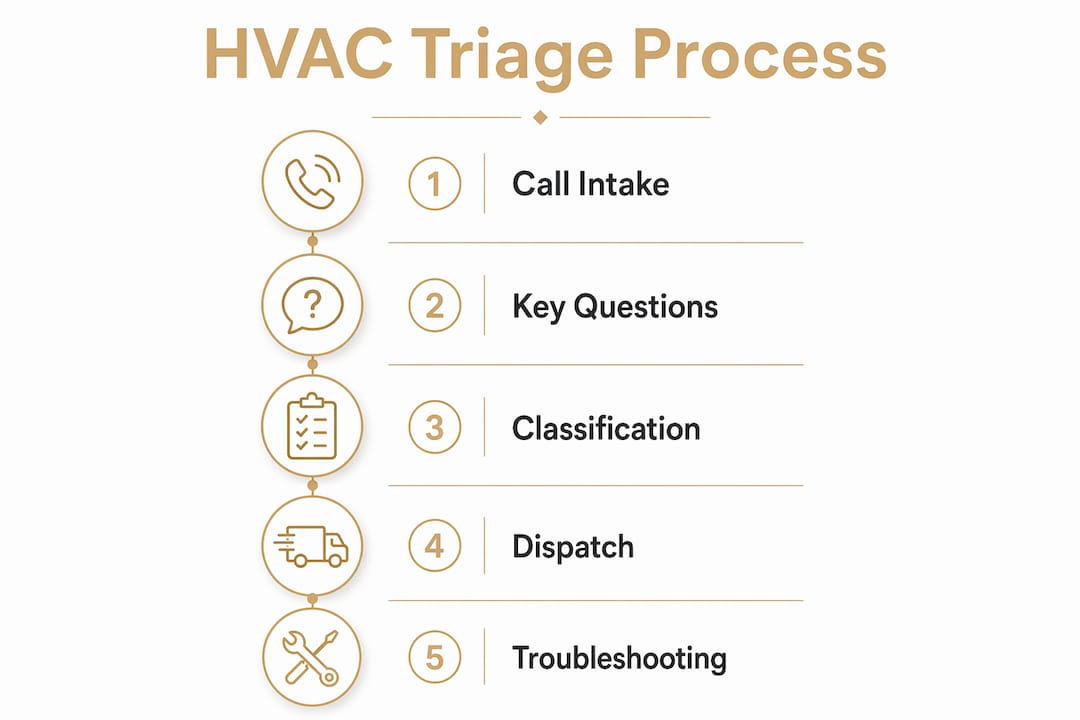
The questions are asked in a specific order, and that order is not accidental. Safety hazards come first as a gate: if there is a gas smell, carbon monoxide alarm, or active electrical hazard, the call may require 911 before any HVAC technician is involved. Only after clearing that gate does the dispatcher move to weather conditions, system status, and occupant risk.
Here is what a standard triage intake covers:
- Is your system completely down or just underperforming? A total shutdown in extreme heat or cold is far more urgent than reduced airflow.
- Are there any unusual smells, sounds, or visible damage? A burning smell or gas odor signals a potential safety emergency.
- Are infants, elderly residents, or people with medical conditions in the home? Vulnerable occupants raise the urgency level immediately.
- What is the current indoor temperature? A home at 95°F in july with no cooling is a different situation than one at 78°F.
- How long has the system been down? Duration affects both comfort risk and potential equipment damage.
Pro Tip: Before you call for service, walk through your home and note the indoor temperature, any unusual smells or sounds, and whether anyone in the household has a medical condition. Having those answers ready cuts your call time in half and helps the dispatcher classify your situation accurately.
How does HVAC triage classify and prioritize calls?
HVAC emergency triage classifies calls into three levels: Imminent (emergency), Critical, and Monitor (routine). Each level carries a defined response time and accounts for roughly a different share of total service calls.
| Triage Level | Share of Calls | Target Response Time | Example Scenario |
|---|---|---|---|
| Imminent / Emergency | 8–12% | Within 2 hours | Gas leak, no heat below 35°F with vulnerable occupants |
| Critical | 25–35% | Within 8 hours | AC failure during a heat advisory, system fully down |
| Monitor / Routine | 55–65% | Within 2 weeks | Minor performance loss, unusual noise, filter issue |
The distribution matters. Most calls, roughly 55–65%, are routine. That means the majority of homeowners who call in a panic about their HVAC system do not actually have an emergency. Proper classification reduces emergency premiums by 35–50% by routing those calls to standard scheduling instead of after-hours dispatch.
The Imminent level is reserved for life-safety events. Gas leaks or no heat below 35°F when vulnerable individuals are present trigger an immediate response. The Critical level covers situations where comfort and equipment are at serious risk but no immediate safety threat exists. The Monitor level handles everything that can wait without causing harm.
Pro Tip: If your system is underperforming but your home is still at a safe temperature and no one in the household is medically vulnerable, ask your provider to schedule a standard appointment. You will likely pay significantly less than an emergency rate.
What does the HVAC troubleshooting process involve after triage?
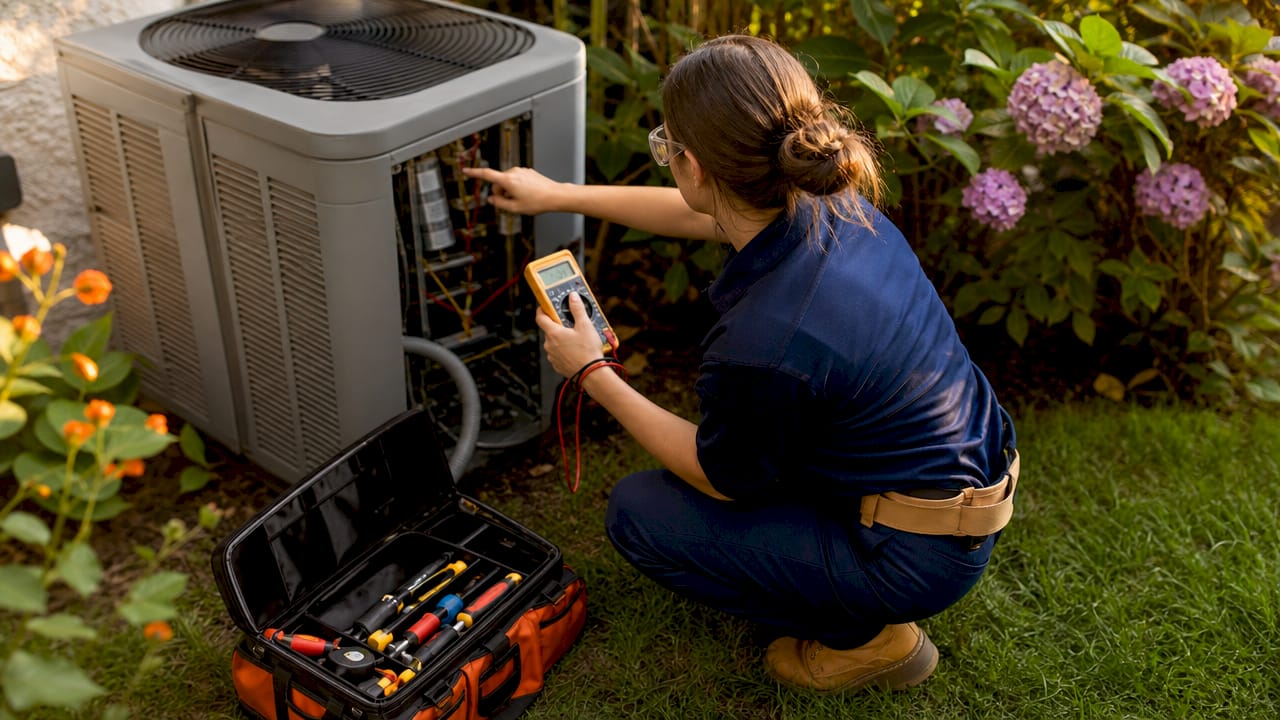
Once a call is classified and a technician is dispatched, the real diagnostic work begins. Proper HVAC troubleshooting follows a 5-step framework: verifying the reported symptoms, localizing the issue to a specific component or zone, reading system pressures and temperatures, converting those readings into diagnostic metrics, and identifying the root cause.
This is where triage pays off a second time. A technician who arrives already knowing the system is fully down, that the home has elderly occupants, and that the indoor temperature is 98°F can skip the exploratory questions and go straight to diagnosis. That saves time and reduces the chance of a misdiagnosis.
Experienced technicians rely on two key metrics during diagnosis:
- Superheat: The temperature difference between refrigerant vapor at the evaporator outlet and the refrigerant’s boiling point. High superheat often signals a low refrigerant charge or a restricted metering device.
- Subcooling: The temperature difference between the liquid refrigerant at the condenser outlet and the condensing temperature. Low subcooling can indicate a refrigerant undercharge or a failing condenser.
Technicians identify root causes using superheat and subcooling measurements within 5–10 minutes, avoiding costly guesswork. That speed is the direct result of systematic troubleshooting built on standardized diagnostic steps. Random part replacements without these measurements waste your money and often fail to fix the actual problem.
You can learn more about what happens when HVAC repair challenges arise and how technicians work through them systematically.
How can homeowners prepare for the HVAC triage process?
Your role in triage is more important than most homeowners realize. Accurate caller details improve triage and reduce overuse of emergency services. The dispatcher can only classify your call based on what you tell them, so vague or incomplete information leads to either over-dispatching (and a higher bill) or under-dispatching (and a longer wait).
Here is how to prepare before you call:
- Check your thermostat settings. Confirm the system is set correctly and the batteries are not dead. This rules out the most common non-issue before you dial.
- Note the indoor temperature. Use a thermometer or your thermostat display. The dispatcher will ask, and a specific number helps far more than “it feels hot.”
- Identify any unusual smells or sounds. Burning, sulfur, or chemical smells are safety flags. Clicking, banging, or hissing sounds help localize the problem.
- List any vulnerable occupants. Infants, elderly family members, or anyone with a respiratory or cardiovascular condition should be mentioned immediately.
- Record how long the issue has been present. A system that failed overnight is different from one that has been struggling for two weeks.
Homeowners who provide details on system behavior, unusual smells, and occupant conditions during calls enhance diagnosis speed and effective dispatching. That preparation also helps you avoid the trap of calling an emergency line for something that can wait. Many homeowners mistake any HVAC failure for an emergency, which leads to unnecessary after-hours charges. Knowing the triage levels helps you make a smarter call, literally and financially.
You can also reduce emergency calls over time by keeping up with HVAC maintenance records and scheduling regular inspections before peak seasons.
Key Takeaways
The HVAC triage process is the single most effective tool homeowners and property managers have for getting the right response at the right cost when a heating or cooling system fails.
| Point | Details |
|---|---|
| Triage classifies by urgency | Calls fall into Imminent, Critical, or Monitor levels with defined response times. |
| Five intake questions drive the process | System status, occupant vulnerability, temperature, safety hazards, and downtime duration determine urgency. |
| Most calls are routine | Roughly 55–65% of HVAC calls qualify as Monitor level and can be scheduled at standard rates. |
| Accurate information is your best tool | Specific details about smells, sounds, and occupants help dispatchers classify your call correctly. |
| Post-triage diagnostics use measurable metrics | Technicians use superheat and subcooling readings to identify root causes within minutes. |
What I have learned after 15 years of HVAC triage calls
The thing that surprises most homeowners is how often the “emergency” they called about turns out to be a routine issue. I have seen it hundreds of times. A homeowner calls in a panic at 10 p.m. because their AC stopped blowing cold air, and after a few triage questions, it turns out the filter is completely clogged or the thermostat battery died. That call does not need an emergency technician. It needs a filter change and a fresh AA battery.
What I tell every homeowner I work with is this: the triage process is not designed to dismiss your concern. It is designed to protect you. When you call with vague information, the dispatcher has to assume the worst, and that assumption costs you money. When you call with specific details, you get a faster, fairer response.
The other misconception I run into constantly is that triage slows things down. The opposite is true. A well-run triage call takes 60 seconds and gets the right technician moving immediately. Without it, dispatchers are guessing, technicians arrive unprepared, and diagnosis takes twice as long.
My advice: treat your HVAC service call the same way you would a call to your doctor. Be specific, be calm, and give the full picture. That one habit will save you money, get you faster service, and make the technician’s job easier when they arrive.
— Ernie M
Upright Construction & HVAC: structured triage, real results
When your heating or cooling system acts up, the last thing you need is confusion about what to do next. Upright Construction & HVAC brings over 15 years of structured triage and expert diagnostics to every service call in Los Angeles.

Our team uses the same classification framework described in this article: safety first, urgency second, and cost-conscious scheduling for everything that can wait. Whether you are facing a genuine emergency or a routine repair, we give you a straight answer and a fair price. Start with our guide to common HVAC repair challenges to understand what your system might be dealing with, or review the emergency cost factors that affect your bill before you call. We are available 24/7 and ready to help you make the right call, every time.
FAQ
What is the HVAC triage process in simple terms?
The HVAC triage process is a structured intake method that classifies service calls by urgency before dispatching a technician. It uses five key questions to determine whether a situation is an emergency, critical, or routine within 60 seconds.
How many triage levels does HVAC service use?
HVAC triage uses three levels: Imminent (emergency, respond within 2 hours), Critical (respond within 8 hours), and Monitor (schedule within 2 weeks). Each level reflects a different degree of safety risk and comfort impact.
What makes an HVAC call a true emergency?
A true HVAC emergency involves a life-safety risk such as a gas leak, carbon monoxide detection, or no heat below 35°F when infants, elderly residents, or medically vulnerable occupants are present.
How can I speed up my HVAC service call?
Have your indoor temperature, system status, any unusual smells or sounds, and a list of vulnerable occupants ready before you call. Specific details help dispatchers classify your call accurately and get the right technician moving faster.
Does proper triage actually save homeowners money?
A well-run triage process reduces emergency premiums by 35–50% by routing routine calls to standard scheduling instead of after-hours dispatch. Most HVAC calls, roughly 55–65%, qualify as routine and do not require emergency rates.
Recommended
- Understanding The Basics Of Air Handlers In HVAC Systems – Upright Construction & HVAC
- Home HVAC Furnaces: Top 8 Quick Fixes For Heating Problems With Home HVAC Furnaces – Upright Construction & HVAC
- What Is An HVAC System? A Homeowner’s Guide
- 4 Common Reasons For Cold Air Blowing From HVAC Heaters – Upright Construction & HVAC