- Quick Options for Financing Home Improvements
- How Each Remodeling Loan Option Actually Works
- How to Choose the Right Remodeling Financing
- What Do Interest Rates and Fees Look Like for Remodeling Loans?
- What Paperwork and Timeline Should You Expect?
- Combining Financing and Avoiding Common Pitfalls
- What I’ve Learned Coordinating Financing on Real Remodels
- Financing Your Remodel With Upright Construction & HVAC
- Sources
- FAQ
- Recommended
Most remodels fit one of six financing routes. Tap a HELOC or home equity loan for medium projects if you have equity to spare; use FHA 203(k) or Fannie Mae HomeStyle Refresh when you’re buying and rehabbing at once or tackling structural work; look at a Title I loan when equity is thin and the job is modest; and choose a personal loan when speed matters more than rate. HUD, your bank, and a contractor can each help you sort out the right fit.
TL;DR:
- Most homeowners should choose a HELOC or home equity loan for ongoing projects if they have sufficient equity, as these offer lower rates and flexible draws.
- Structural or large-scale remodels, including additions and ADUs, are best financed through FHA 203(k) or a cash-out refinance, which require appraisals and may take longer.
- Low-equity homeowners or those with modest jobs can consider Title I loans or personal loans, which vary in requirements, speed, and interest rates.
- Secured loans typically have lower interest rates but involve more paperwork and upfront fees compared to unsecured personal loans.
- Proper planning around permits, inspections, and lien waivers, along with early contractor involvement, helps avoid delays in funding and project stalls.
Quick Options for Financing Home Improvements
Here’s the short version of home improvement financing options, sorted by what actually drives the decision: how much equity you have, how fast you need money, and how big the job is.
- HELOC: Best for ongoing or phased projects; typically 80 to 85% combined loan to value; secured by your home; funds available in 2 to 6 weeks after appraisal.
- Home equity loan: Best for one lump-sum project with a fixed budget; secured, fixed rate, similar timeline to a HELOC.
- Cash-out refinance: Best for large remodels when current rates are favorable; replaces your existing mortgage, so check your rate before committing; appraisal required.
- FHA 203(k): Best for structural work or a purchase-plus-rehab scenario; Limited 203(k) covers non-structural repairs up to $75,000, while Standard 203(k) is for major rehab starting at a $5,000 minimum, and requires an approved consultant.
- Title I property improvement loan: Best for homeowners with limited equity; loans under $7,500 can be unsecured, with a single-family maximum around $25,000.
- Fannie Mae HomeStyle Refresh: Best for lighter cosmetic renovations tied to a refinance; finances up to 15% of the home’s after-improved value without the paperwork of a full renovation mortgage.
- Unsecured personal loan: Best when you need funds fast and don’t want to touch your mortgage; no collateral, but rates run higher.
Cash-out refinances and HELOCs both hinge on a fresh appraisal, which is where most delays and disputes over value happen.
How Each Remodeling Loan Option Actually Works
A HELOC works like a credit card secured by your house: you draw what you need, pay interest only on what’s outstanding, and the rate floats with the market. That flexibility is great for a remodel with moving costs, but a rate spike can turn a manageable payment into a strain. A home equity loan trades that flexibility for a fixed rate and a lump sum, which suits homeowners who already have a firm contractor bid in hand.
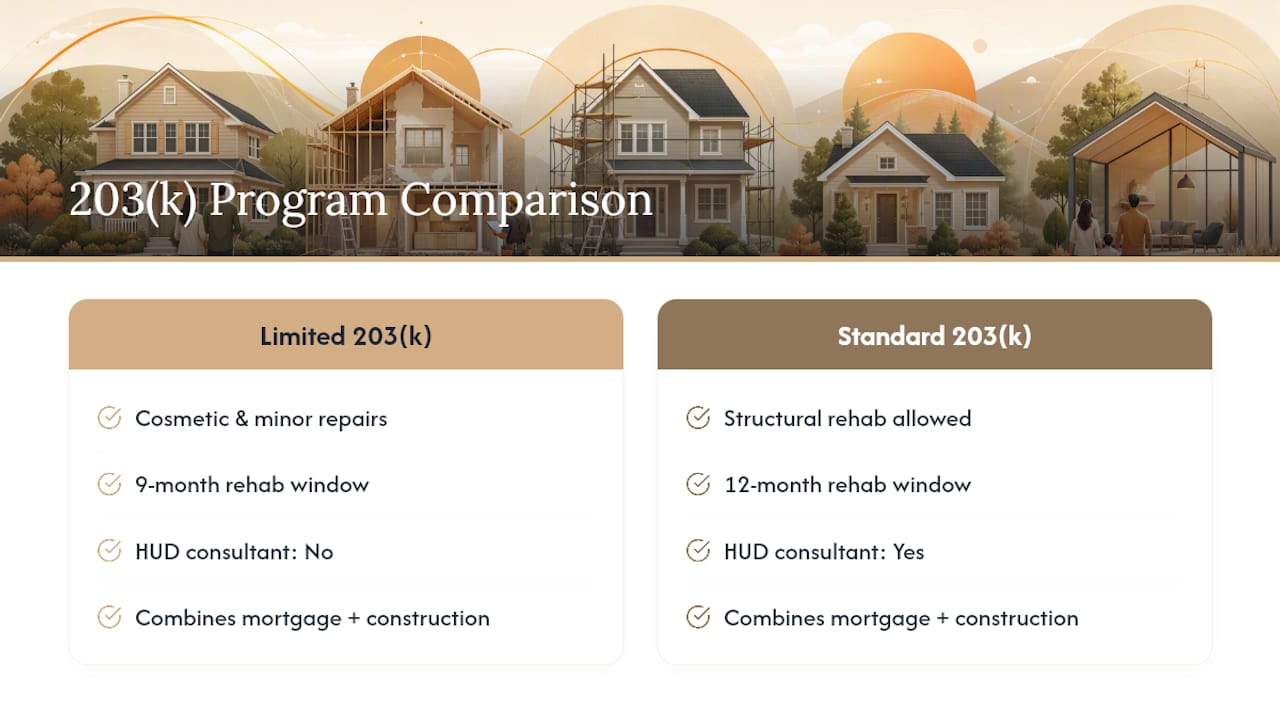
Cash-out refinancing replaces your whole mortgage, so it only makes sense if today’s rate is close to or better than what you’re currently paying. FHA’s 203(k) program splits into two tracks. Limited 203(k) handles cosmetic and minor repair work up to a specific dollar limit with a 9-month rehab window, while Standard 203(k) covers structural rehab, requires a HUD consultant, and stretches to 12 months. Both roll acquisition or refinance and construction costs into one mortgage, which often simplifies underwriting compared to juggling separate construction loans.
Title I loans stay unsecured below $7,500 but require a recorded lien above that threshold, with terms running up to 20 years. HomeStyle Refresh works well for lighter jobs, financed against future value rather than what your home is worth today. Personal loans skip collateral entirely, which speeds approval but usually costs more over the life of the loan.
How to Choose the Right Remodeling Financing
Match the financing to the job first, then filter by your own numbers.
- Size up the project. Cosmetic work in the $3,000 to $20,000 range often fits a personal loan or Title I. Kitchen and bath remodels from $20,000 to $100,000 usually call for a HELOC, home equity loan, or HomeStyle Refresh. Structural work, additions, or an ADU north of $100,000 points toward 203(k) or a cash-out refinance.
- Check your equity and credit. Low equity narrows you toward Title I or an unsecured loan; strong equity and a solid score open up HELOCs and home equity loans at better rates.
- Factor in your timeline. If your roof is failing now, a personal loan beats waiting on an appraisal.
- Weigh your current mortgage rate. If refinancing means giving up a rate you locked in years ago, a second-lien option like a HELOC or Title I loan protects that rate.
- Ask lenders and contractors direct questions: What’s the disbursement schedule? Who pulls permits? What happens with a change order mid-project? Get lien waivers in writing at every draw.
Pro Tip: Before signing anything, verify your lender is HUD-approved for Title I or 203(k) lending and confirm your 203(k) consultant is on HUD’s official roster. A consultant who isn’t approved can void the loan structure entirely.
For a realistic sense of what a mid-size project costs before you even talk financing, our kitchen remodel cost breakdown is worth a look.
What Do Interest Rates and Fees Look Like for Remodeling Loans?
Secured options generally beat unsecured ones on rate, but they come with more fees upfront.
- HELOCs and home equity loans typically post lower APRs than personal loans, plus appraisal and origination fees.
- Unsecured home improvement loans fund fastest but carry APRs that swing widely by credit tier, with amounts commonly from $3,000 to $100,000.
- FHA 203(k) loans add mortgage insurance premiums but bundle rehab costs into a single mortgage rate.
- Title I loans avoid a lot of the closing-cost stack that comes with a full refinance.
A $30,000 project financed over 5 years at a home-equity rate typically costs far less in total interest than the same $30,000 stretched over 15 years at a personal-loan rate, even with a lower monthly payment on the longer term. Homeowners with strong equity and good credit tend to land the best home-equity pricing, while those needing speed on an urgent repair pay a premium for that convenience through a personal loan.
What Paperwork and Timeline Should You Expect?
Every lender wants the basics: photo ID, proof of income, two years of tax returns, and proof of ownership or occupancy. Personal loans move fastest, sometimes funding within days. HELOCs, home equity loans, and cash-out refinances take a few weeks once an appraisal is scheduled and reviewed.
Title I loans carry no income limits, which helps homeowners who don’t fit conventional underwriting boxes, though lenders typically cap debt-to-income around 45% under program guidance. FHA 203(k) takes the longest of the bunch. Between consultant reports, inspections, and permit sign-offs, expect several weeks beyond a standard mortgage close before your contractor gets the green light to start.
Combining Financing and Avoiding Common Pitfalls
Plenty of homeowners layer financing. A Title I loan can sit as a second lien behind a first mortgage, and a HELOC can supplement a fixed home equity loan for a project with a moving budget. Just remember each additional loan affects your debt-to-income ratio and how underwriters view your total obligations.
The most common pitfall isn’t the financing itself. It’s timing. On a 203(k) job, permits have to be posted before a single hammer swings, and a missed inspection can freeze your draw schedule and stall the whole project. Protect yourself with a written contract, lien waivers at every draw, and payments staged to inspection milestones rather than handed over in one lump sum. If you’re using a Title I loan through a contractor’s in-house financing, confirm the dealer is HUD-approved before signing, since dealer approval delays are a real and avoidable snag.

What I’ve Learned Coordinating Financing on Real Remodels
Homeowners who move fastest through funding are the ones who document scope in writing before they call a lender, then schedule draws around real inspection dates instead of guessing. If your project involves permits, structural changes, or a lender-required inspection schedule, bring in a licensed contractor early. A reputable contractor can help Los Angeles homeowners line up financing, permits, and draw schedules so nothing stalls mid-project.
— Ernie M
Financing Your Remodel With Upright Construction & HVAC
Banks and HUD programs tell you what you can borrow. Upright Construction & HVAC helps you actually spend it without losing weeks to permit delays or missed draw inspections. A local contractor handling kitchen and bathroom remodels, ADU builds, and HVAC replacements can coordinate directly with your lender’s disbursement schedule and keep your consultant, inspector, and crew on the same calendar.

If you’re financing a project right now, our financing overview for Los Angeles homeowners walks through how we work with your loan structure from the first draw to the final walkthrough. Planning a kitchen? Start with kitchen remodeling or bathroom remodeling, and if the scope is smaller than a full renovation, One Day Doors & Closets offers a good look at how HomeStyle Refresh style financing pairs with lighter cosmetic updates. Ready to talk permits, draws, or a quote? Reach out through the financing page and get help walking your project timeline before signing anything.
Sources
- HUD: Section 203(k) rehabilitation mortgage insurance program
- FDIC guide: Property Improvement Loan Insurance (Title I) — program overview
- Fannie Mae: HomeStyle® Refresh program overview
- Wells Fargo: Home improvement loans
FAQ
How Hard Is It to Get a Remodeling Loan?
It depends heavily on the program. Personal loans and HELOCs move quickly if you have decent credit and equity, while FHA 203(k) loans take longer because they require a HUD-approved consultant and inspection milestones. Title I loans are easier to qualify for if your equity is limited, since they carry no income limits.
What Is the 30% Rule for Renovations?
The 30% rule is a budgeting guideline suggesting you avoid spending more than about 30% of your home’s value on renovations, to prevent over-improving relative to your neighborhood’s resale ceiling. It’s a rule of thumb, not a lending requirement, so individual loan programs won’t enforce it directly.
Is There a $10,000 Grant Available for Home Improvement in California?
There’s no single statewide grant amount that applies universally to California homeowners for general remodeling. Assistance programs vary by city, county, and household income, so check with your local housing authority or HUD’s resource pages directly rather than relying on a generic figure.
How Much Remodeling Can Be Done With $100,000?
At that budget you’re generally in range for a full kitchen and bathroom remodel, a mid-size addition, or a modest ADU, depending on your market and finishes. In Los Angeles specifically, our kitchen remodel cost guide breaks down where that money typically goes on materials, labor, and permits.
What Financing Does Upright Construction & HVAC Help Coordinate?
Upright Construction & HVAC doesn’t originate loans, but coordinates permits, draw schedules, and contractor timelines around whatever financing you secure, including HELOCs, 203(k), and personal loans. Details are available on our financing page.