Discover how HVAC inspections work and how they can save you money. Learn about the process, tools, and key insights for homeowners.
How HVAC Inspections Work: A Homeowner’s Guide
TL;DR:
- Scheduling regular HVAC inspections in spring and fall ensures issues are identified before peak demand periods, reducing emergency repairs.
- Technicians follow a systematic process, using specialized tools like leak detectors and pressure gauges to assess system safety and performance accurately.
Most homeowners schedule an HVAC inspection when something already sounds wrong. That’s backwards. Understanding how HVAC inspections work before there’s a problem is what separates a $150 maintenance visit from a $3,000 emergency repair. The process is more methodical than most people expect, and knowing what a technician actually does during a checkup helps you ask better questions, spot red flags, and make smarter decisions about your system. This guide walks you through every phase, from the tools used to what the results actually mean.
Key takeaways
| Point | Details |
|---|---|
| Inspections follow a set process | Technicians work through visual checks, performance tests, and safety reviews in a specific sequence. |
| Specialized tools drive accuracy | Multimeters, manifold gauges, and leak detectors reveal problems that a visual check alone would miss. |
| Low refrigerant means a leak | Refrigerant does not deplete on its own; low levels always point to a leak that must be repaired. |
| Shoulder season timing matters | Scheduling in spring or fall gives technicians more time and catches issues before peak demand hits. |
| Regular checks reduce emergency costs | Biannual inspections can reduce emergency repair costs by catching failures before they escalate. |
How HVAC inspections work, step by step
A proper HVAC inspection is not a technician glancing at your unit for ten minutes. It follows a systematic sequence that covers every major component. Technicians assess thermostats, filters, electrical connections, refrigerant levels, ductwork, and mechanical components as part of a structured protocol. Here is what that looks like from start to finish.
Power and safety check. Before anything else, the technician confirms the system is safely accessible and, depending on the task, may shut off power at the disconnect box. This protects both the technician and your equipment during hands-on component testing.
Visual inspection of the unit. The technician examines the outdoor condenser, the indoor air handler, and all visible components. They look for corrosion, physical damage, refrigerant oil stains (which often indicate a slow leak), and anything that looks worn or out of place.
Filter and airflow assessment. A clogged filter forces the blower motor to work harder and restricts airflow across the evaporator coil. The technician checks filter condition, measures static pressure in the ductwork, and looks for obstructions in return and supply vents.
Thermostat calibration and controls test. The technician verifies that the thermostat is reading temperature accurately and that the system responds correctly to heating and cooling calls. A miscalibrated thermostat can make a perfectly functional system seem like it’s underperforming.
Electrical connections and components. Loose or corroded electrical connections are a leading cause of premature component failure. Technicians measure voltage and amperage at the disconnect, capacitors, and contactors to confirm everything is operating within spec.
Refrigerant pressure testing. Using manifold gauges connected to the service ports, technicians measure both high and low side pressures. These readings tell them whether refrigerant levels are correct and whether the compressor is performing as expected.
Safety inspections. Professional inspections include safety checks for carbon monoxide, gas leaks, and electrical hazards that directly affect your family’s health. On gas furnaces, technicians also inspect the heat exchanger for cracks that can allow combustion gases into living spaces.
Pro Tip: Before the technician arrives, write down any symptoms you have noticed, such as unusual sounds, uneven temperatures, or higher-than-normal energy bills. This context can cut diagnostic time significantly and helps the technician prioritize which components to test first.
The tools technicians use and why they matter
Walking into an HVAC inspection with a screwdriver and a flashlight is not how accurate diagnostics happen. The tools a technician carries directly determine whether they find the real problem or just treat a symptom. Understanding what these tools do helps you evaluate whether the person working on your system actually knows what they are doing.
Electrical measurement tools
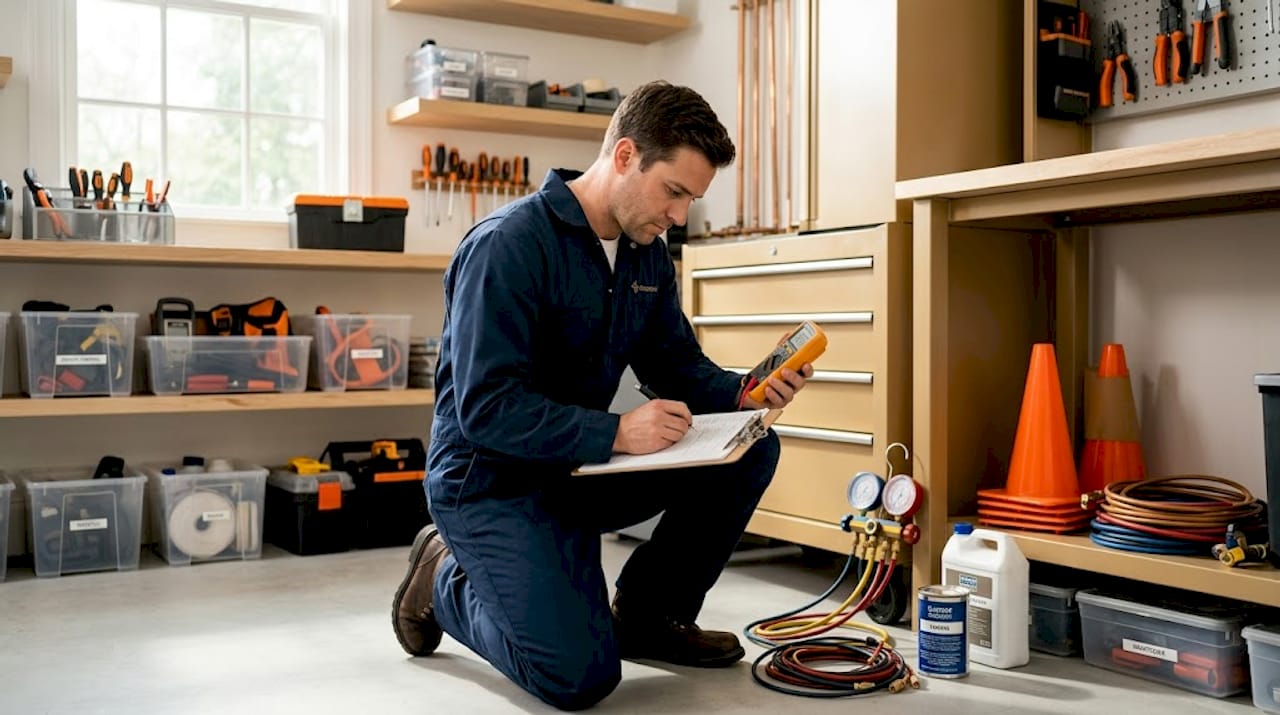
True RMS digital multimeters, digital manifold gauges, and electronic refrigerant leak detectors are the core of any professional HVAC toolkit. A True RMS multimeter matters specifically because HVAC motors produce non-sinusoidal waveforms. A standard multimeter will give you an inaccurate reading on those loads, which can lead to misdiagnosis of a perfectly healthy motor.
Refrigerant and pressure tools
Digital manifold gauges have replaced analog gauges in most professional kits because they calculate superheat and subcooling automatically. These calculations are what tell a technician whether the refrigerant charge is correct for current conditions, not just whether pressure looks “normal” on a dial.
Leak detection technology
Electronic refrigerant leak detectors can identify refrigerant concentrations down to parts per million and use adjustable sensitivity to avoid false readings. This matters because a micro-leak that loses a fraction of an ounce per year can cause compressor damage over time. UV dye is sometimes injected into the system as a secondary method. Under a UV light, the dye glows wherever refrigerant has escaped, even in spots a detector probe cannot physically reach.
Here is a summary of the primary tools and their roles:
| Tool | What it measures | Why it matters |
|---|---|---|
| True RMS digital multimeter | Voltage, amperage, resistance | Accurate readings on HVAC motor loads |
| Digital manifold gauge | High and low side refrigerant pressure | Calculates superheat and subcooling automatically |
| Electronic leak detector | Refrigerant concentration in air | Detects micro-leaks down to parts per million |
| Micron gauge | Vacuum level during evacuation | Confirms system is moisture-free before recharge |
| Anemometer | Airflow velocity at vents | Identifies duct leaks and airflow imbalances |
| Infrared camera | Surface temperature variation | Spots heat loss, duct leaks, and moisture intrusion |
Proper calibration of diagnostic tools and certified technician expertise are critical to avoid misdiagnosis and maintain environmental compliance. An uncalibrated manifold gauge can read normal pressure on a system that is actually undercharged, sending a homeowner home with a false sense of security.
Pro Tip: Ask your technician whether they hold EPA Section 608 certification before they connect any gauges to your system. This certification is legally required for anyone who handles refrigerants, and it confirms they have the training to handle them correctly.
Reading your inspection results
An inspection report is only useful if you understand what it is telling you. Most homeowners scan the summary, see “passed” or “needs attention,” and stop there. But the details tell a different story.
The most common issues found during a typical inspection include:
- Dirty or restricted filters that reduce airflow and force the system to run longer cycles
- Low refrigerant charge almost always caused by a leak somewhere in the system
- Weak capacitors that cause motors to struggle starting, which draws excess current and shortens compressor life
- Duct leaks that send conditioned air into your attic or crawlspace instead of your living areas
- Corroded electrical contacts that create resistance, generate heat, and eventually fail completely
- Short cycling where the system turns on and off rapidly, which prevents proper dehumidification and strains components
Refrigerant is in a closed loop and low levels indicate leaks that must be located and repaired, not simply topped off. This is one of the most misunderstood findings in any inspection report. Adding refrigerant without fixing the leak is like filling a tire with a nail in it. You will be in the same position in three months, and the refrigerant that escaped has already done environmental damage.
For repair versus replacement decisions, two practical guidelines apply. The $5,000 rule suggests that if the cost of a repair exceeds $5,000, replacement often makes more financial sense. The 20-degree rule applies to older systems: if your system is more than 20 years old, major repairs rarely provide long-term value compared to a new, energy-efficient unit.
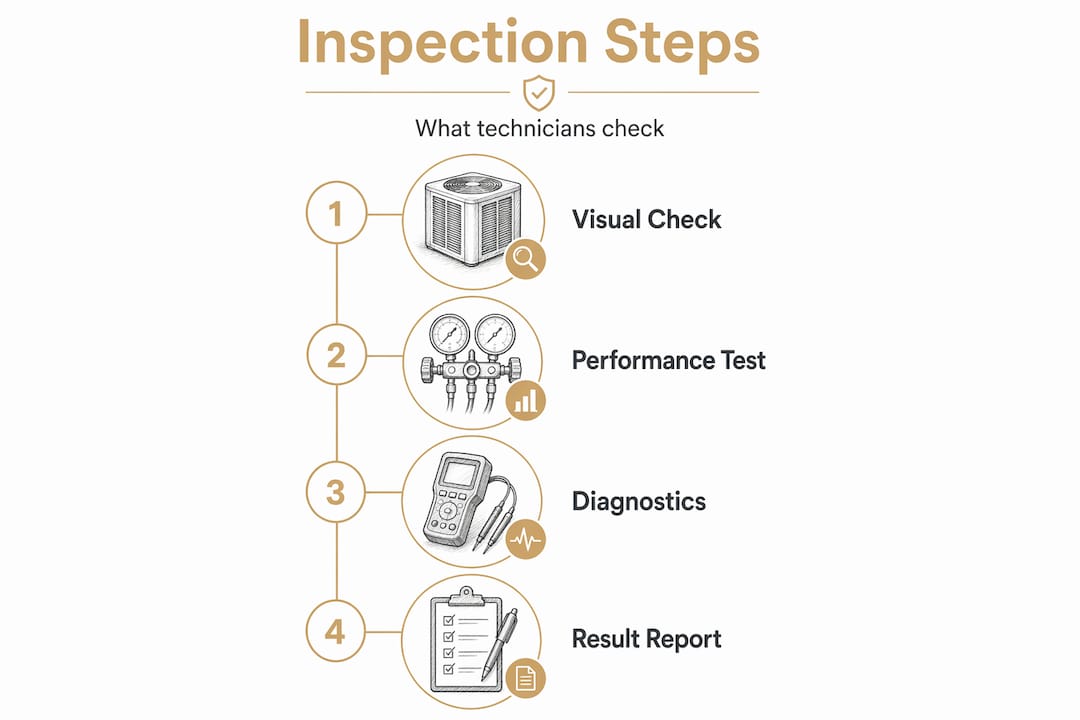
Biannual inspections identify potential safety hazards such as cracked heat exchangers and faulty electrical connections that most homeowners would never detect on their own. A cracked heat exchanger on a gas furnace is particularly serious because it can allow carbon monoxide to enter your home’s air supply. This is not a “monitor it and see” situation. It requires immediate action.
If your inspection reveals common air handler issues, understanding what each failure means helps you prioritize repairs intelligently rather than feeling pressured into decisions on the spot.
When to schedule your HVAC inspection
Timing an HVAC inspection correctly is nearly as important as having one at all. Scheduling during shoulder seasons like spring and fall gives technicians the time to perform thorough diagnostics rather than rushing between emergency calls during a heat wave. When demand is low, you also get better scheduling flexibility and more focused attention from your technician.
The general schedule that works for most homeowners looks like this:
- Spring inspection: Focus on the cooling system before summer heat arrives. Check refrigerant charge, clean condenser coils, test electrical components, and verify thermostat calibration.
- Fall inspection: Focus on the heating system before temperatures drop. Inspect the heat exchanger, test ignition systems, check gas connections, and verify carbon monoxide safety.
- Heat pumps: Because heat pumps run year-round in both heating and cooling modes, they experience more wear than a dedicated furnace or AC. Consider a third light inspection mid-year, especially for systems older than five years.
- Older systems: Any system over 10 years old benefits from more frequent monitoring. Components are closer to end of life, and catching a failing capacitor or motor bearing early can buy you another season or two before replacement.
Regular inspections also protect your manufacturer warranty. Many HVAC warranties require documented annual or biannual maintenance by a licensed technician. Skipping inspections does not just increase breakdown risk. It can void the coverage you paid for when you bought the equipment.
Pro Tip: Book your spring inspection in March and your fall inspection in September. You beat the rush, get your preferred technician, and typically avoid higher diagnostic rates that come with peak-season demand.
Scheduling inspections in shoulder seasons not only improves inspection quality but also extends equipment lifespan by catching minor problems before they compound under peak load. The cost difference between a $150 maintenance visit and a $2,500 compressor replacement is dramatic proof of that logic.
My honest take on what homeowners get wrong
By Ernie M
After spending years watching technicians diagnose systems and talking to hundreds of homeowners about their HVAC frustrations, the pattern I see most often is not neglect. It is good intentions applied in the wrong direction.
The refrigerant misconception is the most persistent one I encounter. Homeowners hear “low refrigerant” and immediately ask how often they should be topping it off. The answer is never, if the system is properly sealed. Refrigerant operates in a closed loop and does not get consumed. When it’s low, there is a leak somewhere. The fix is finding and sealing that leak, not scheduling a recurring top-off like an oil change.
The second thing I see constantly is homeowners closing vents in unused rooms to “save energy.” I understand the logic, but closing vents creates pressure imbalances that strain the blower motor and push conditioned air into unconditioned spaces through duct leaks. You are not saving energy. You are accelerating wear and routing your paid-for cooling into your attic.
What I have seen work, over and over, is pairing a shoulder season inspection with a technician you trust who uses proper equipment. The homeowners I know who have avoided expensive emergency calls share one trait: they treat inspections as a ritual, not a reaction. They come in knowing what was flagged last time, they ask specific questions, and they make decisions based on data rather than pressure. That posture makes all the difference.
— Ernie M
Schedule your inspection before the season hits

Upright Construction & HVAC has been serving Los Angeles homeowners for over 15 years, and the most expensive calls we receive are the ones that a timely inspection would have prevented. Whether your system is running fine or throwing up warning signs, a professional inspection gives you a clear picture of where things stand before the heat or cold makes it urgent.
If your inspection has already flagged issues, our air conditioner repair guidance walks you through what to expect next. For homeowners concerned about what a breakdown could cost, our breakdown of emergency HVAC cost factors gives you the full picture. We offer 24/7 support, transparent diagnostics, and seasonal maintenance plans built around the Los Angeles climate. Reach out today and get ahead of the season instead of scrambling during it.
FAQ
What does an HVAC inspection include?
A thorough HVAC inspection covers the thermostat, air filter, electrical connections, refrigerant charge, ductwork, mechanical components, and safety checks for carbon monoxide and gas leaks. Technicians follow a systematic protocol that includes visual inspection, pressure testing, and electronic leak detection.
How often should I get an HVAC inspection?
Most homes benefit from two inspections per year: one in spring before the cooling season and one in fall before heating season. Heat pumps and systems older than 10 years may need more frequent checkups due to higher wear rates.
Why does my technician check refrigerant levels?
Low refrigerant always indicates a leak in the closed system, not normal depletion. Technicians use electronic leak detectors and pressure tests to locate the source so it can be sealed, rather than simply recharging the system.
What HVAC diagnostic tools do technicians use?
The core tools include a True RMS digital multimeter for electrical measurements, digital manifold gauges for refrigerant pressure, and electronic leak detectors that identify refrigerant concentrations down to parts per million. Infrared cameras and anemometers are also used for thorough inspections.
When is the best time to book an HVAC inspection?
Spring and fall are the optimal times. Scheduling during these shoulder seasons means technicians are less rushed, appointments are easier to book, and any issues found can be fixed before your system faces peak demand.