
- Key Takeaways
- How a Furnace Ignitor Works in the Ignition Sequence
- Types of Furnace Ignitors and What They’re Made Of
- Warning Signs of a Bad Furnace Ignitor
- What Causes an Ignitor to Fail?
- How to Test a Furnace Ignitor Safely
- Can You Replace a Furnace Ignitor Yourself?
- How Long Does a Furnace Ignitor Last, and What Does Replacement Cost?
- Maintenance That Extends Ignitor Life
- Rather Leave It to a Licensed Pro? Here’s What We Do
- Sources
- FAQ
- Recommended
A furnace ignitor is the small electrical component that lights the fuel inside your furnace so it can produce heat, usually a hot surface ignitor (HSI) made of silicon nitride that glows red hot to ignite gas. If your furnace won’t start, first check the thermostat setting and breaker. If you see no orange glow through the sight window or spot a visible crack, shut off power to the unit before touching anything. Upright Construction & HVAC handles this exact call every week during the Los Angeles heating season.
- Check thermostat is set to “heat” and above room temperature
- Verify the breaker or furnace switch hasn’t tripped
- Look through the sight glass for a glow (don’t open panels with power on)
- Shut off power at the switch or breaker before any hands-on inspection
Quick fact: a healthy hot surface igniter typically heats to 1,800–2,500°F within 15 to 30 seconds of getting power. No glow in that window usually means trouble.
Key Takeaways
A furnace ignitor lights the fuel that heats your home, and its failure, whether from age, vibration, or a power surge, is the most common reason a furnace won’t produce heat.
| Point | Details |
|---|---|
| Know your ignitor type | Hot surface ignitors are the most common in modern furnaces and glow visibly when working. |
| Material determines lifespan | Silicon carbide lasts 3–7 years; silicon nitride lasts 7–15 years and resists cracking better. |
| Test before you assume | A working ignitor reads roughly 50 to 400 ohms on a multimeter with power off. |
| Match the OEM part exactly | Wrong mounting or lead length causes lockouts even with a good replacement part. |
| Call Upright Construction & HVAC for the fix | Upright diagnoses, matches OEM parts, and verifies the full ignition sequence on every visit. |
How a Furnace Ignitor Works in the Ignition Sequence
The ignitor doesn’t act alone. It’s one link in a chain of safety checks your furnace runs through every single time it fires up, and understanding that sequence explains why a dead ignitor brings the whole system to a halt.
Here’s the order of operations on a typical gas furnace:
- The thermostat calls for heat and sends a signal to the control board.
- The inducer motor spins up to clear the heat exchanger and confirm proper venting.
- The control board sends power to the ignitor, which begins heating (or sparking).
- Once the ignitor reaches temperature, the gas valve opens and fuel flows across it.
- The flame sensor detects combustion and tells the board to keep the gas valve open.
- The blower motor kicks on to push warm air through your ducts.
The ignitor sits right next to the burner assembly, close enough that gas passing over it catches immediately, and just ahead of the flame sensor downstream. Energy specifically to cut fuel waste and reduce safety risks from a pilot burning around the clock.
Interlocks throughout this sequence prevent gas from ever flowing without confirmed ignition. If the flame sensor doesn’t detect a flame within a few seconds of the gas valve opening, the board shuts everything down and tries again, or locks out entirely.
Pro Tip: If your furnace tries to start two or three times, then gives up and blows cold air, that repeated retry pattern almost always points to an ignitor that’s heating too slowly or not at all.
Types of Furnace Ignitors and What They’re Made Of
Modern furnaces use one of a few ignition methods, and knowing which one you have tells you what to expect when something goes wrong.
- Hot surface ignitor (HSI): the most common type in furnaces built in the last few decades; a ceramic element heats up and ignites gas directly.
- Direct spark ignition (DSI): uses a high-voltage spark instead of a glowing element, similar to a gas grill igniter.
- Intermittent pilot (IPI): lights a small pilot flame only when heat is called for, then shuts it off.
- Standing pilot: an older design that keeps a small flame burning continuously; rare in furnaces built after the 1990s.
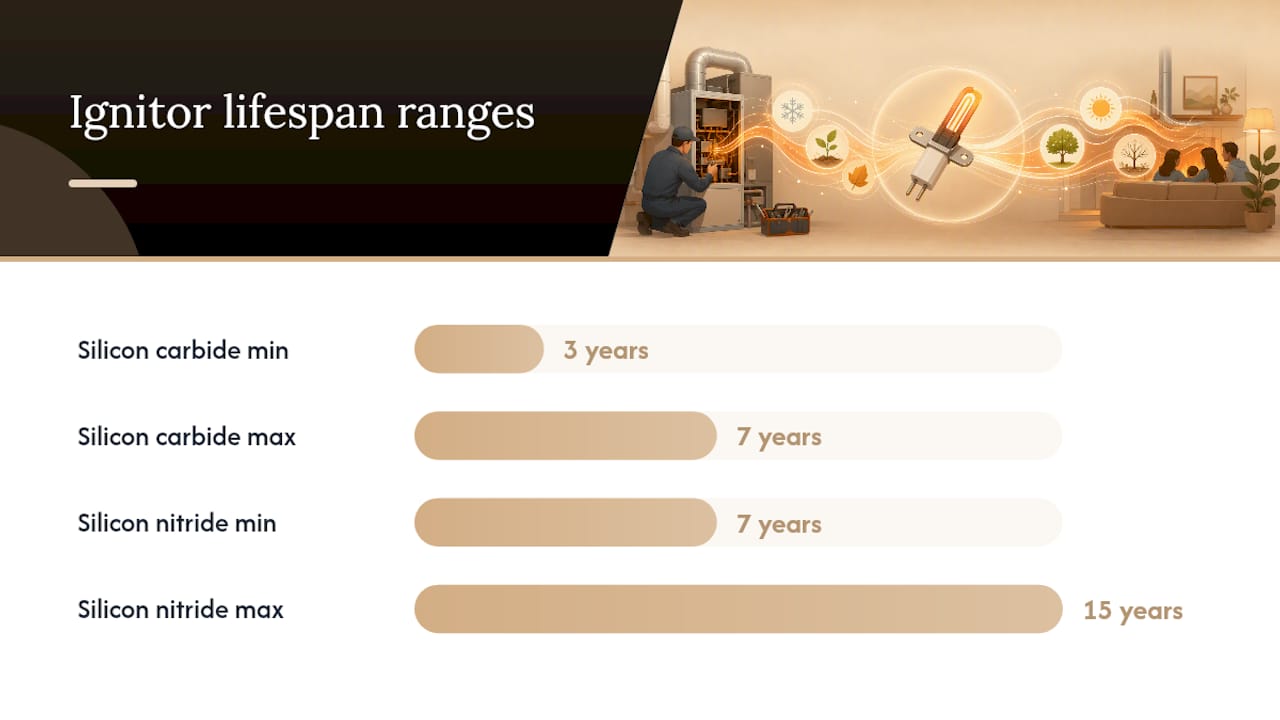
Material matters more than most homeowners realize. Silicon carbide ignitors typically last 3 to 7 years, while silicon nitride ignitors run 7 to 15 years. Nitride has become the preferred material industry-wide because it resists cracking under thermal shock and vibration far better than carbide, which means fewer no-heat calls in the middle of a cold snap.
Pro Tip: If your technician mentions upgrading from carbide to nitride during a repair, ask about it. It costs a little more upfront but often means one less emergency service call over the life of your furnace.
Warning Signs of a Bad Furnace Ignitor
Most ignitor failures announce themselves clearly if you know what to watch for. Before assuming the ignitor is the problem, rule out the basics: check the thermostat batteries and confirm the breaker hasn’t tripped. Once those check out, look for these symptoms.
- The furnace won’t start at all, or the blower runs but no heat follows.
- Through the sight glass, the element stays dark instead of glowing orange or white hot.
- Ignition seems slow or delayed, taking noticeably longer than usual to catch.
- The system short cycles, starting and shutting off repeatedly within a few minutes.
- Cold air blows from the vents when the thermostat is calling for heat.
- You can see visible cracks, chips, or discoloration on the ceramic element itself.
- Wiring leads near the ignitor look loose, frayed, or disconnected.
- Your furnace displays a repeated error code or goes into lockout mode.
Any one of these alone might not confirm a bad ignitor, but two or three together usually do.
What Causes an Ignitor to Fail?
Ignitors fail for predictable reasons, and knowing which cause applies to your situation helps you decide what to do next.
- Age and thermal fatigue: repeated heating and cooling cycles create micro-cracks over years of use.
- Vibration: loose mounting brackets let the element shake against its housing.
- Power surges: electrical spikes can burn out the resistive element instantly.
- Loose wiring: connectors that work free over time cause intermittent or no power.
- Contamination: dust and combustion byproducts coating the element reduce its efficiency and lifespan.
Homeowners can address loose connectors and dust buildup during routine care. Electrical issues, power surges, and anything tied to gas flow belong to a licensed technician, and Angi’s HVAC research confirms loose connections and surges rank among the top failure causes reported by homeowners.
How to Test a Furnace Ignitor Safely
Before you touch anything inside your furnace cabinet, shut off power at the switch and at the breaker, and let the unit cool for several minutes. Wear gloves and eye protection since ceramic elements are fragile and can shatter. Take a quick photo of how the wires connect before you disconnect anything, so you can put it back exactly the way you found it.
- Open the panel and visually inspect the ignitor for cracks, chips, or dark scorch marks.
- Check that the mounting bracket is tight and the element isn’t touching metal it shouldn’t.
- Unplug the ignitor’s wiring connector completely.
- Set your multimeter to the low ohms setting and touch a probe to each terminal.
- Compare your reading against the expected range.
A working ignitor typically reads between about 50 and 400 ohms of resistance. A reading of zero, infinite resistance, or “OL” on your meter’s display means the element is broken internally, even if it looks fine from the outside.
Pro Tip: If your meter reads within range but the furnace still won’t ignite, the problem is more likely the control board or gas valve, not the ignitor. That’s a sign to call a technician rather than keep swapping parts.
Stop and call a professional if you see cracked gas lines, smell gas, aren’t comfortable working near the burner assembly, or get a confusing reading you can’t explain.
Can You Replace a Furnace Ignitor Yourself?
If you’re handy with a multimeter and comfortable pulling a panel, replacing a confirmed bad ignitor is within reach for some homeowners. Before you commit, run through this checklist:
- Do you have the exact OEM part number, not just a “compatible” universal ignitor?
- Can you match the mounting bracket style (flat, angled, or 90-degree) and lead wire length precisely?
- Are you comfortable working around a live gas line and confirming the burner lights correctly after reassembly?
The risks are real. Mounting the new element more than about 1/8 inch from the burner surface, or using the wrong lead length, causes unreliable ignition or immediate lockout even with a perfectly good part. If any of this sounds uncertain, or you’re dealing with a no-heat emergency, that’s exactly when Upright Construction & HVAC’s team steps in.
How Long Does a Furnace Ignitor Last, and What Does Replacement Cost?
Lifespan comes down almost entirely to material. Silicon carbide ignitors generally last 3 to 7 years before thermal fatigue cracks the element, while silicon nitride versions run 7 to 15 years thanks to better resistance to thermal shock and vibration.
| Material | Typical Lifespan |
|---|---|
| Silicon carbide | 3–7 years |
| Silicon nitride | 7–15 years |
Replacement cost varies by region and access difficulty, but generally covers the part plus an hour or so of diagnostic and labor time. Furnaces with hard-to-reach burner compartments, or units needing a full combustion-sequence check afterward, tend to run higher than a straightforward swap.
Maintenance That Extends Ignitor Life
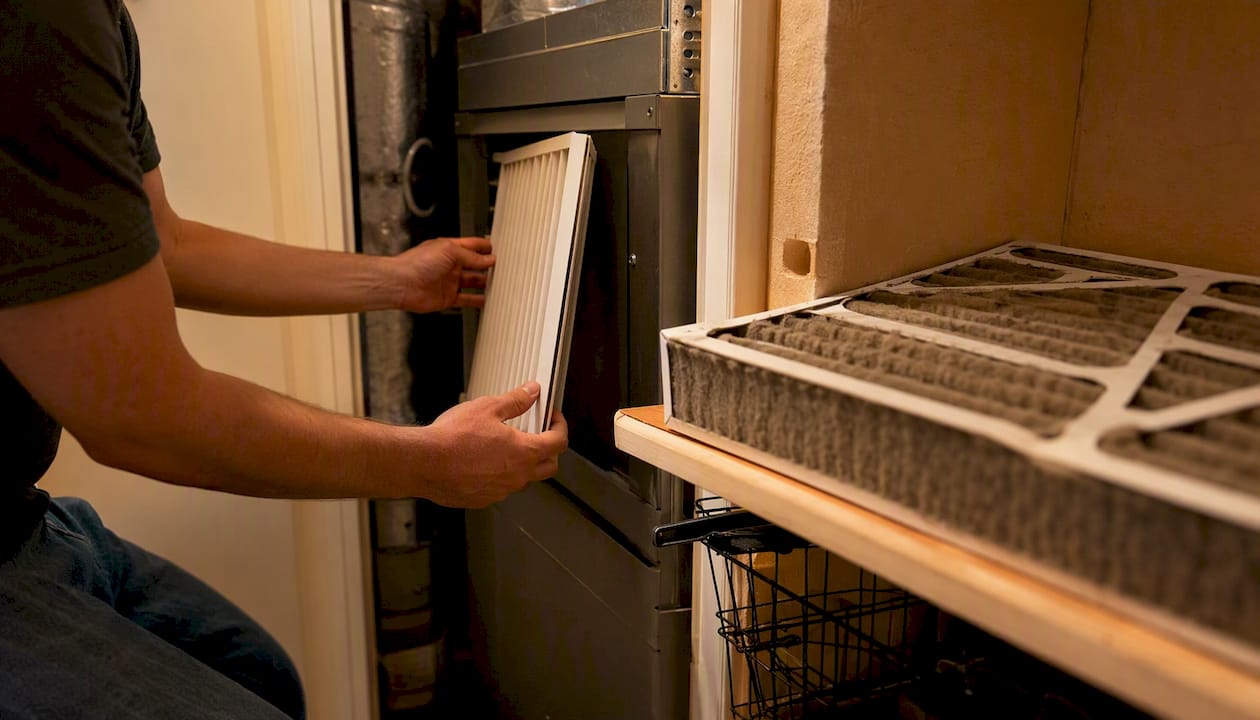
A little routine care goes a long way toward avoiding a no-heat call in January. Replace or clean your air filter every one to three months, since a clogged filter forces the system to work harder and raises internal temperatures. Keep the area around the furnace free of dust and stored boxes, and during your annual tune-up, have a technician check that wiring connectors are snug and the mounting bracket hasn’t loosened from vibration.
One thing not to do: never wipe or scrub the ignitor element yourself. The ceramic is more fragile than it looks, and cleaning it is a job for a professional who knows how to inspect it without cracking it.
A note from Ernie M
Safety comes first, always. In 15-plus years serving Los Angeles homes, our team at Upright Construction & HVAC has learned that the right OEM part, mounted correctly, and clear communication with the homeowner beats guesswork every time.
Rather Leave It to a Licensed Pro? Here’s What We Do
If everything above tells you this isn’t a weekend project, you’re not wrong to feel that way. A furnace ignitor sits right next to a gas burner, and getting the mounting or part number wrong causes more lockouts than it solves. When Upright Construction & HVAC comes out for an ignitor issue, we run a full safety diagnostic, match the exact OEM part for your model, mount it to spec, and verify the entire combustion sequence before we leave, not just swap the piece and go.

Most calls get same-day diagnostics, and we give you a clear estimate before any work starts. Our team runs 24/7 for genuine no-heat emergencies, which matters a lot during a cold front. Before you call, have your furnace model number handy, note any error codes you’ve seen, and snap a photo of the ignitor through the sight glass if you can. It saves time on-site. Ready to get it fixed right the first time? Start with our HVAC repair service in Los Angeles and we’ll get someone out to you.
Sources
- HVAC Basics — Igniter
- Angi — How to tell if furnace ignitor is bad
- National HVAC Parts — Hot surface igniter testing guide
FAQ
What is the average cost to replace a furnace ignitor?
Cost depends on the part and local labor rates, but it generally covers the ignitor itself plus diagnostic and installation time; harder-to-access furnaces or additional troubleshooting raise the total.
How do I know if my furnace ignitor is bad?
Look for no glow through the sight glass, slow or failed ignition, short cycling, or cold air from the vents, and confirm with a multimeter reading outside the 50 to 400 ohm range.
Can I replace a furnace ignitor myself?
If you can match the exact OEM part number and mounting configuration and are comfortable working near the burner assembly, it’s possible, but incorrect mounting causes lockouts even with the right part, so many homeowners choose to call a licensed technician instead.
What is the average lifespan of a furnace ignitor?
Silicon carbide ignitors typically last 3 to 7 years, and silicon nitride ignitors last 7 to 15 years, with nitride holding up better against vibration and thermal cycling.
Recommended
- Home HVAC Furnaces: Top 8 Quick Fixes For Heating Problems With Home HVAC Furnaces – Upright Construction & HVAC
- Troubleshooting Common Electric Furnace Issues In Los Angeles – Upright Construction & HVAC
- Single Vs. Two Stage Furnace: Pros And Cons – Upright Construction & HVAC
- HVAC Sequencer Failures Detect And Resolve Fast & Reliable – Upright Construction & HVAC