- Key Takeaways
- How do you spot AC emergency scams in Los Angeles?
- What should you do in the first 30 minutes of an AC emergency?
- How do you verify an HVAC contractor in California?
- What does an emergency AC repair cost in LA, and what are the red flags?
- What should you do if you were scammed by an HVAC contractor?
- How Upright Construction & HVAC handles AC emergencies
- Sources
- FAQ
- Recommended
If your AC fails in Los Angeles, stop before you pay anyone. Verify the technician’s CSLB C-20 license online or by phone, refuse any demand for large cash upfront, and document everything before work begins. That single rule knocks out a huge share of the scams we see in LA.
Here is what to do right now:
- Pull up the CSLB license lookup and confirm the technician holds an active C-20 license.
- Photograph your outdoor unit, the model and serial number plate, and any visible damage before anyone touches it.
- Ask for a written scope of work and a price estimate. Sign nothing and pay nothing until you have both in hand.
- If you want a licensed, insured local team on-site fast, call Upright Construction & HVAC. We answer 24/7.
- If you feel pressured or threatened, call the LA County Department of Consumer and Business Affairs (DCBA) or your local police non-emergency line.
Key Takeaways
Verifying a CSLB C-20 license and demanding a written estimate before payment are the two actions that prevent most AC emergency scams in Los Angeles.
| Point | Details |
|---|---|
| Verify the C-20 license | Check the contractor’s CSLB license number online or at 800-321-2752 before work starts. |
| Cap your down payment | California limits contractor down payments to a small portion of the job or up to a certain fixed amount, whichever is less. |
| Demand a written estimate | Never sign or pay anything without a written scope of work and itemized price in hand. |
| Document everything | Photograph the unit, record serial numbers, and keep all receipts and permit paperwork. |
| Upright Construction & HVAC | Licensed, insured, 24/7 emergency service in LA with written estimates and permit handling on every job. |
How do you spot AC emergency scams in Los Angeles?
Recognizing HVAC fraud in the middle of a heat wave is harder than it sounds. The pressure is real, the house is hot, and someone is standing at your door with a clipboard. Here are the scam types that show up most often in LA, and the fast signals that tell you something is wrong.
Refrigerant-only (recharge) scams. A tech charges your system, collects $300–$500, and leaves without diagnosing the actual leak. Two weeks later, the AC fails again. Red flags: no written diagnosis, no leak test mentioned, cash only.
Bait-and-switch replacements. A low diagnostic fee gets the tech inside. Once they’re there, they declare the system “dead” and push an immediate full replacement, often at an inflated price. Ask for the failed part in writing and a second opinion before agreeing to any replacement.
Oversized-unit upsells. Some dishonest contractors push a larger unit than your home needs, claiming it’s the only fix. A properly sized unit is calculated by load, not by what’s on the truck. If a tech can’t explain why a specific tonnage is right for your square footage, that’s a problem.
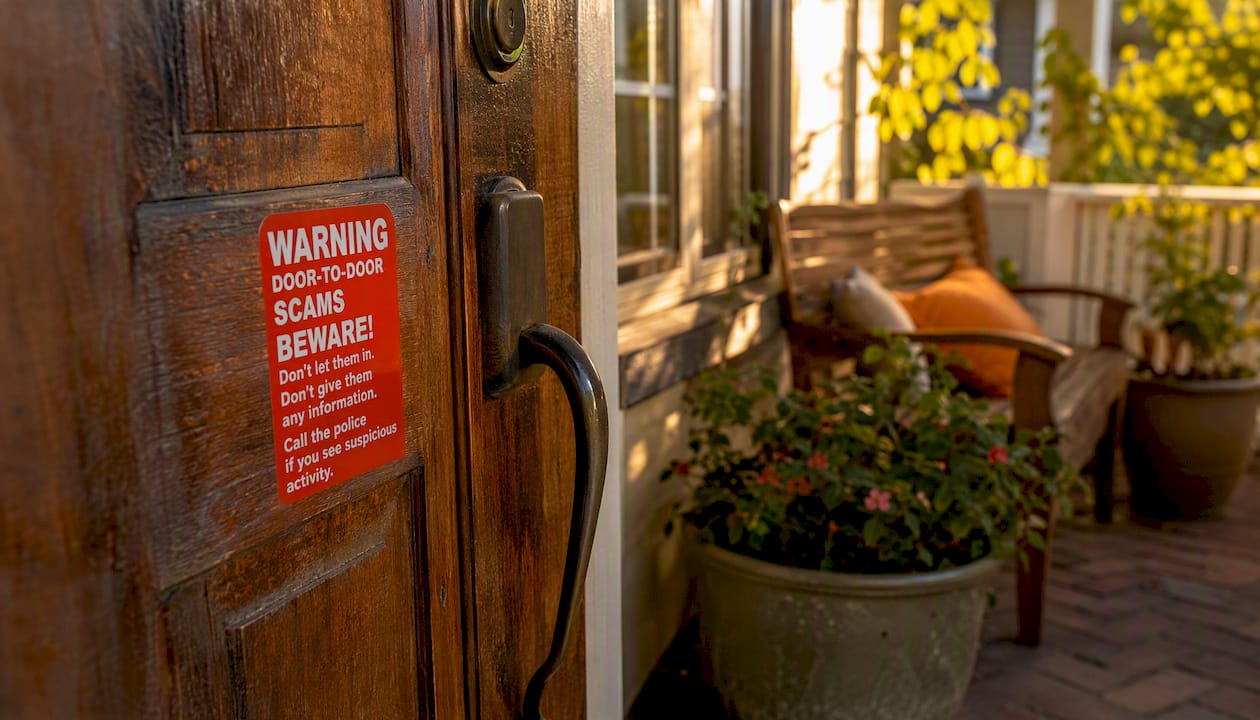
Door-to-door and “we’re in the neighborhood” offers. Legitimate HVAC companies don’t knock on doors uninvited. If someone shows up unsolicited after a storm or a heat advisory, be skeptical. HVAC contractor red flags like this one are worth knowing before an emergency hits.
Price gouging after disasters. After the LA wildfires or a major heat event, unlicensed operators flood the market. The DCBA’s post-disaster guidance specifically warns about this and outlines your rights.
Pro Tip: A bid that seems impossibly low is a setup, not a deal. The CSLB warns that an abnormally low bid often signals omitted work or a contractor planning to demand more money mid-job.
What should you do in the first 30 minutes of an AC emergency?
This is the checklist I’d hand my own neighbor. You can complete every step before a technician arrives.
Basic triage first:
- Check your thermostat settings and replace the battery if it’s been more than a year.
- Inspect the circuit breaker for a tripped HVAC breaker and reset it once.
- Check the air filter. A clogged filter can shut a system down entirely.
- Look at the outdoor unit. Is the fan spinning? Is there ice on the refrigerant lines?
Document before anyone arrives:
- Photograph the model number and serial number plate on both the indoor air handler and the outdoor condenser.
- Take a short video of the unit’s current condition, including any error codes on the thermostat.
- Note the approximate age of the system. This matters when a tech tries to push a full replacement.
Choosing who to call:
- Call at least two reputable, licensed services. LA County recommends getting three bids for any contractor job.
- When you call, ask directly: “What is your CSLB license number?” A legitimate company gives it without hesitation.
- Ask what the diagnostic fee covers and whether it applies toward the repair cost.
- Request a written estimate before any work starts. This is non-negotiable.
When the tech arrives, ask these questions:
- “Can I see your CSLB license and proof of insurance?”
- “What exactly is wrong, and can you show me the failed component?”
- “What is the total cost, broken down by labor and parts?”
- “Will you pull a permit if this requires a replacement?”
In LA, a reasonable emergency response time from a local licensed company is typically two to four hours. If a tech is pressuring you to sign or pay before you’ve had time to read anything, that’s your cue to stop.
Pro Tip: California is a two-party consent state for recorded conversations. If you want to record a phone call or in-person interaction, tell the technician you’re doing so. Most honest contractors won’t care.
How do you verify an HVAC contractor in California?
This is where most homeowners skip steps they shouldn’t. A business card with a license number printed on it is not verification. You have to check it yourself.
Step-by-step verification:
- Go to the CSLB website or call 800-321-2752. Enter the license number and confirm it is active, classified as C-20 (HVAC), and held by the person or company standing in front of you.
- Ask for a certificate of liability insurance and a workers’ compensation certificate. If a worker is injured on your property and the contractor has no workers’ comp, you can be held liable.
- For any equipment replacement, ask whether a permit is required. In most LA jurisdictions, replacing a condenser or air handler requires a permit and a city inspection. A contractor who skips permits removes the third-party check that protects you at resale and with your insurer.
- Confirm the physical business address. A P.O. box or a vague “serving the LA area” answer is a red flag.
California contractor rules at a glance:
| Requirement | California Rule |
|---|---|
| License required | Jobs costing $1,000 or more |
| Written contract required | Work over $500 |
| Maximum down payment | 10% of job cost or $1,000, whichever is less |
| Three-day cancellation right | Applies to most home-improvement contracts |
| HVAC license class | C-20 (Warm-Air Heating, Ventilating, and Air-Conditioning) |
Sources: CSLB HVAC consumer guidance and LA County DCBA contractor rules.
Trust signals worth accepting:
- A verifiable physical address with a real Google Maps listing
- References from jobs in your neighborhood or city
- A detailed invoice that lists parts by model number, labor hours, and rate
- Permit documentation handed to you at job completion
For more detail on vetting credentials, the reliable HVAC contractor guide walks through each step with LA-specific context.
What does an emergency AC repair cost in LA, and what are the red flags?
Pricing is where recognizing HVAC fraud gets practical. You don’t need to know every part cost. You need to know what a reasonable range looks like and which pricing behaviors signal a problem.
A standard diagnostic fee in LA runs roughly $75–$150 for a licensed company, sometimes waived if you proceed with the repair. Labor rates for emergency calls typically run higher than standard rates. Common repairs like a capacitor replacement, a contactor swap, or a refrigerant recharge with a leak test fall in a range that a reputable tech will itemize clearly. If a quote is a single lump sum with no breakdown, ask for the line items.
Red flags to watch for during pricing:
- A quote that seems far below what two other companies said. The CSLB notes that abnormally low bids often signal omitted work or a setup for mid-job price increases.
- A demand for full payment before work begins. California law caps down payments at 10% or $1,000 for most jobs.
- Items added to the invoice after the job that weren’t on the original estimate.
- Vague warranty language like “we stand behind our work” with no written terms, no duration, and no parts coverage specified.
- Cash-only demands. Legitimate contractors accept checks or cards and provide receipts.
After a disaster like a wildfire or major storm, price gouging becomes a real risk. Document every quote you receive, including the date, the company name, and the license number. The ENERGY STAR rebate finder is worth checking if you’re facing a full replacement. Utility and government rebates can make a properly permitted high-efficiency unit more affordable than a suspiciously cheap private deal. For a deeper breakdown of what drives emergency pricing, the HVAC emergency cost factors guide covers the main variables.
What should you do if you were scammed by an HVAC contractor?
Act fast. The sooner you file, the more options you have.
Step-by-step reporting:
- Call your bank or credit card company first if you paid by card. Dispute the charge immediately and explain the situation. Card disputes have time limits, and acting within 24–48 hours gives you the strongest position.
- File a complaint with the CSLB at 800-321-2752 or online at cslb.ca.gov. Bring your contract, receipts, photos, permit records, and the contractor’s license number. CSLB can investigate, suspend licenses, and help you file a bond claim if the contractor is bonded.
- Contact LA County DCBA for local consumer counseling and complaint support. Their post-disaster scam page lists current contact options and walks you through the process.
- File a police report if you believe you were defrauded. This creates an official record that supports your CSLB complaint and any civil action.
- Consider small-claims court for amounts up to $12,500 (California’s limit for individuals). You don’t need an attorney. Bring every document: the contract, photos, receipts, and any text or email exchanges.
What to collect as evidence:
- The written contract or any written estimate you received
- All receipts and payment records
- Photos of the work before, during, and after
- The contractor’s license number and business name as it appeared on their vehicle or card
- Any text messages, voicemails, or emails
CSLB guidance consistently emphasizes that keeping copies of contracts, receipts, and permit paperwork is the single most important thing you can do to support a complaint or bond claim.
Most contractor problems are preventable when homeowners verify credentials before work starts. But if you’re past that point, these channels exist specifically to help you recover.
How Upright Construction & HVAC handles AC emergencies
I started Upright Construction & HVAC because I saw too many LA homeowners get taken advantage of during emergencies. Fifteen-plus years in this market taught me that transparency isn’t a selling point. It’s the baseline.
Here’s exactly what happens when you call us for an emergency:
- 24/7 response. We answer around the clock. You’ll speak to someone who can dispatch a technician, not a voicemail.
- On-site diagnostics first. Our tech identifies the actual problem before quoting anything. We don’t guess, and we don’t upsell based on assumptions.
- Written estimate before we touch anything. You see the scope, the parts, and the labor cost in writing. You approve it. Then we work.
- Permit handling. If your repair or replacement requires a permit, we pull it. We give you the permit number on your work order.
- Documentation at every step. Photos before and after, serial numbers recorded, final inspection completed. You keep copies of everything.
Pro Tip: Write down the license number the tech gives you and verify it on the CSLB site while they’re doing the diagnostic. It takes two minutes and confirms you have the right person on the job.
The owner’s perspective on why this matters
Emergencies strip away your ability to think slowly. The heat is real, the kids are uncomfortable, and someone is standing at your door with a solution. That’s exactly when scammers operate. My honest advice: the two actions that protect you most are verifying the CSLB license before you agree to anything and insisting on a written estimate before any work starts. Everything else in this guide builds on those two steps.
Upright Construction & HVAC is ready when your AC fails
When your AC goes down in LA, you need a team that shows up fast and operates transparently. Upright Construction & HVAC brings 15-plus years of local experience, a valid C-20 license, full insurance, and a written estimate on every job. No cash-only demands, no mystery pricing, no pressure.

For immediate emergency AC repair in Los Angeles, call us now or visit our site. We’ll dispatch a licensed technician, give you a written scope before we start, and handle permits when required. If you want to review your AC repair options before calling, that page walks through what to expect from a legitimate repair visit.
Sources
These are the agencies and pages you’ll actually use. Bookmark them now.
- After the Disaster: Avoiding Scams and Bad Deals – Consumer & Business
- Contractors State License Board
FAQ
How do you avoid HVAC scams in Los Angeles?
LA County recommends getting at least three bids for any contractor job.
What counts as an AC emergency?
An AC failure qualifies as an emergency when indoor temperatures reach dangerous levels, particularly for elderly residents, young children, or anyone with a heat-sensitive medical condition. A system that produces no cooling at all, a refrigerant leak, or a complete electrical failure are the most common true emergencies.
What is the 3-minute rule for air conditioners?
The 3-minute rule refers to waiting at least three minutes after shutting off an AC before restarting it, which protects the compressor from pressure damage. It’s a basic protective step, not a repair fix.
What are the most common contractor scams right now?
The most frequent scams in LA include refrigerant-only recharges without leak diagnosis, bait-and-switch full replacements after a low diagnostic fee, door-to-door solicitations after storms, and price gouging during heat emergencies. Cash-only demands and refusal to provide a written estimate are the fastest signals that something is wrong.
Can I get my money back if I was scammed by an HVAC contractor?
Yes, in many cases. Dispute the charge with your bank or credit card company immediately, file a complaint with the CSLB at 800-321-2752, and contact LA County DCBA for local support. Small-claims court handles cases up to $12,500 for California individuals and does not require an attorney.