
- How does a compressor work in the HVAC refrigeration cycle?
- What are common signs and causes of HVAC compressor problems?
- Why is compressor replacement so expensive, and when does it make sense?
- How can homeowners protect their compressor and extend its life?
- Key Takeaways
- What I’ve learned after 15 years of diagnosing compressor problems
- Upright Construction & HVAC keeps your compressor running right
- FAQ
- Recommended
TL;DR:
- The compressor in HVAC systems pumps refrigerant through the cycle by compressing vapor into high-pressure gas, enabling heating and cooling. Regular maintenance, such as filter changes and coil cleaning, extends compressor life and prevents costly failures. Addressing root causes early and ensuring proper diagnostics avoid unnecessary replacements and save money.
The role of compressor in HVAC is to pump refrigerant through your system by compressing low-pressure vapor into high-pressure, high-temperature vapor, making heating and cooling physically possible. Without it, refrigerant sits still and your system moves no heat at all. The compressor is also the most power-intensive component in your entire HVAC unit, which means it takes the hardest hit when something goes wrong. Understanding how it works, what breaks it, and how to protect it can save you thousands of dollars in avoidable repairs.
How does a compressor work in the HVAC refrigeration cycle?
The compressor is the engine of the vapor compression refrigeration cycle, the process every central air conditioner and heat pump uses to move heat. It creates a pressure difference that forces refrigerant to flow through the system in a continuous loop. That pressure difference is what makes heat absorption and heat rejection possible.
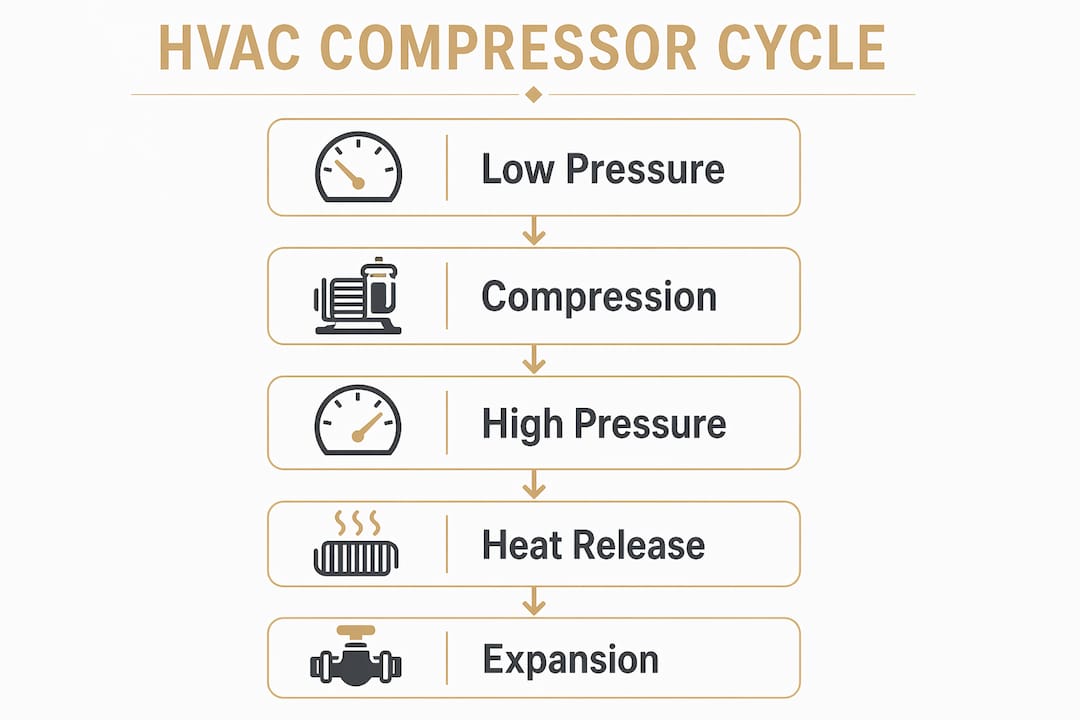
Here is how the full cycle works, step by step:
- Evaporator absorbs heat. Warm indoor air passes over the evaporator coil. The refrigerant inside absorbs that heat and turns into a low-pressure vapor.
- Compressor receives the vapor. That low-pressure vapor travels to the compressor, which squeezes it tightly. Compression raises both the pressure and the temperature of the refrigerant gas significantly.
- Condenser rejects the heat. The now hot, high-pressure vapor moves to the outdoor condenser coil. Heat releases into the outside air, and the refrigerant cools into a liquid.
- Expansion valve drops the pressure. The liquid refrigerant passes through an expansion device, which drops its pressure and temperature sharply.
- Cycle repeats. The cold, low-pressure refrigerant returns to the evaporator and the loop starts again.
The compressor raises refrigerant pressure and temperature, enabling heat rejection outdoors. That single action drives every other step in the cycle.
One critical detail most homeowners never hear: liquid refrigerant must never enter the compressor. Liquid entering the compressor causes catastrophic mechanical damage, a condition called liquid slugging. This is why proper refrigerant charge and good airflow across the evaporator coil matter so much.
Pro Tip: If your system runs but the air coming out feels lukewarm, the compressor may not be building enough pressure. That is a job for a certified technician, not a DIY fix.
What are common signs and causes of HVAC compressor problems?
Catching a compressor problem early is the difference between a $200 repair and a $2,500 replacement. The symptoms are usually clear once you know what to look for.
Warning signs to watch for:
- Warm air blowing from vents even when the thermostat is set to cool
- Unusual noises such as grinding, clanking, or rattling from the outdoor unit
- The system short cycles, meaning it turns on and off too quickly
- The circuit breaker trips repeatedly when the AC runs
- No compressor sound when cooling is demanded, even though the fan runs
Each of these symptoms points to a compressor under stress or already failing. Short cycling is especially telling because it forces the compressor to restart constantly, which generates heat and wears out internal components faster than normal operation.
The most expensive mistake homeowners make is assuming the compressor is dead when it is not. Capacitor failure mimics compressor failure almost perfectly. A bad capacitor prevents the compressor from starting, which looks and sounds identical to a failed compressor. Replacing a capacitor costs around $150. Replacing a compressor costs many times more. A proper electrical diagnosis, including capacitor, winding, and contactor tests, must happen before any replacement decision.
System-created failures like poor airflow and dirty filters are the most common root causes of compressor stress. The compressor itself is often the victim, not the original problem. Dirty condenser coils, blocked return vents, and low refrigerant charge all force the compressor to work harder than it was designed to.
Pro Tip: Before calling for a compressor replacement, ask your technician to check the capacitor and run a full electrical diagnostic first. That one question could save you over $1,000.
Why is compressor replacement so expensive, and when does it make sense?
The compressor is the single most costly component to replace in a residential HVAC system. Replacement typically costs between $1,200 and $2,800, depending on the unit size, refrigerant type, and labor involved. That price range makes the repair decision genuinely complicated for most homeowners.
The table below shows how to think through the replacement decision based on unit age and condition.
| Unit age | Refrigerant type | Recommended action |
|---|---|---|
| Under 5 years | R-410A or R-32 | Replace compressor, likely under warranty |
| 5–10 years | R-410A or R-32 | Evaluate repair cost vs. remaining system life |
| 10–12 years | R-22 (Freon) | Consider full system replacement |
| Over 12 years | Any | Full system replacement is usually the better value |
Units older than 10–12 years present a real financial risk when compressor replacement is considered. The rest of the system has the same age and wear, so a new compressor goes into an aging unit that may fail elsewhere within a few years. Refrigerant type adds another layer. R-22 was phased out and is no longer produced, making it expensive and increasingly scarce. A system running R-22 that needs a compressor is almost always better served by a full replacement.
Replacing a compressor without fixing root causes like dirty coils or airflow restrictions leads to premature failure again. That means paying the full replacement cost twice. Any honest technician will address the underlying system issues before installing a new compressor.
How can homeowners protect their compressor and extend its life?
The compressor lasts longer when the rest of the system is clean and well maintained. Most compressor failures trace back to conditions that homeowners can directly control. Regular maintenance of airflow and filters significantly reduces compressor overheating and pressure damage.
Maintenance habits that protect your compressor:
- Change air filters every 1–3 months. A clogged filter restricts airflow across the evaporator coil, which can cause the refrigerant to return to the compressor without fully evaporating. That leads directly to liquid slugging.
- Clean the outdoor condenser coil annually. Dirt and debris on the condenser coil trap heat and force the compressor to work harder. A garden hose rinse each spring makes a real difference.
- Keep at least 2 feet of clearance around the outdoor unit. Shrubs, fencing, and stored items restrict airflow and raise operating temperatures.
- Schedule a professional tune-up every year. A certified technician checks refrigerant charge, electrical connections, and coil condition. These checks catch small problems before they reach the compressor.
- Listen for changes in sound. A healthy compressor hums steadily. Grinding, rattling, or clicking sounds are early warnings worth acting on quickly.
The HVAC maintenance checklist for homeowners covers these steps in detail and gives you a clear schedule to follow through the year. Staying on that schedule is the single most effective thing you can do to avoid a compressor replacement.
Pro Tip: Set a phone reminder each spring to rinse your condenser coil before cooling season starts. That five-minute task protects a component that costs thousands to replace.
One often-overlooked point: ensuring clean airflow and proper refrigerant charge prevents the two most common causes of compressor damage. Both are things a qualified technician can verify in a single visit. Skipping annual service to save $100 is a trade that rarely works out in the homeowner’s favor.
Key Takeaways
The compressor is the most critical and expensive component in your HVAC system, and protecting it through consistent maintenance is far cheaper than replacing it.
| Point | Details |
|---|---|
| Compressor drives the entire cycle | It compresses refrigerant vapor to create the pressure difference that moves heat in and out of your home. |
| Misdiagnosis is a costly risk | Capacitor failure looks identical to compressor failure; always get a full electrical diagnostic first. |
| Replacement costs are high | Compressor replacement runs $1,200–$2,800, making it impractical for units older than 10–12 years. |
| Root causes must be fixed first | Replacing a compressor without fixing airflow or coil issues causes the new unit to fail prematurely. |
| Simple maintenance extends compressor life | Changing filters, cleaning coils, and annual tune-ups are the most effective ways to protect your compressor. |
What I’ve learned after 15 years of diagnosing compressor problems
I’ve walked into hundreds of homes where the homeowner was convinced they needed a new compressor. Nine times out of ten, the real problem was something simpler. A bad capacitor. A clogged filter that had been there for eight months. A condenser coil so packed with cottonwood seeds it could barely breathe. These are not compressor failures. They are maintenance failures that got blamed on the compressor.
The part that frustrates me most is how often homeowners get quoted for a full compressor replacement before anyone checks the capacitor. That diagnostic step takes ten minutes and costs almost nothing. Skipping it is either lazy or dishonest, and either way it costs the homeowner real money.
What I tell every customer is this: your compressor is tough. It is built to run for 15 years or more if the system around it is maintained. The compressor does not fail in isolation. Something else in the system creates the conditions that wear it down. Fix those conditions first, and the compressor takes care of itself.
If your system is under ten years old and you are getting a compressor replacement quote, push back. Ask for the full diagnostic report. Ask what caused the failure. If the technician cannot answer that question clearly, get a second opinion. Understanding the common HVAC repair challenges that lead to compressor stress puts you in a much stronger position when you are sitting across from a technician with a repair estimate in hand.
— Ernie M
Upright Construction & HVAC keeps your compressor running right
Compressor problems do not have to mean compressor replacement. At Upright Construction & HVAC, we run a full diagnostic before recommending any major repair, because the right fix starts with the right diagnosis.

Our team has served Los Angeles homeowners for over 15 years, and we know how to find the real cause of a compressor problem, not just the most expensive one. Whether you need a preventative maintenance plan to protect your system year-round or an urgent diagnostic when something sounds wrong, we are available 24/7. We work transparently, explain every finding in plain language, and never recommend a replacement when a repair will do the job. Call us or schedule online and let us protect the heart of your HVAC system.
FAQ
What does the compressor do in an HVAC system?
The compressor pressurizes low-pressure refrigerant vapor, raising its temperature so heat can be released outdoors. This process drives the entire refrigeration cycle that cools or heats your home.
How do I know if my HVAC compressor is failing?
Common signs include warm air from vents, unusual noises from the outdoor unit, short cycling, and circuit breaker trips. A certified technician should run electrical diagnostics to confirm compressor failure before any replacement is ordered.
Is it worth replacing an HVAC compressor?
Replacement makes sense for units under 10 years old with a valid warranty or a compatible refrigerant type. For units older than 10–12 years, a full system replacement usually offers better long-term value than a compressor-only repair.
Can a dirty filter damage the compressor?
A clogged filter restricts airflow across the evaporator coil, which can cause liquid refrigerant to reach the compressor and cause serious mechanical damage. Changing filters every 1–3 months is one of the most direct ways to protect the compressor.
How long does an HVAC compressor last?
A well-maintained compressor typically lasts 15 years or more. Regular filter changes, annual coil cleaning, and professional tune-ups are the key factors that determine how long it runs reliably.