
- TL;DR Summary for Those in a Hurry:
- The 78-Degree Setting: The Surprising Truth About the Best AC Temperature
- Feel Cooler for Free: How Fans and Blinds Are Your AC's Best Friends
- Your AC is Suffocating: Why a $15 Filter Change Saves You 15%
- Give Your Outdoor Unit a Break: A 5-Minute Cleanup for Better Cooling
- The Hidden Power-Booster: How a Failing Capacitor Cripples Your AC
- Stop Paying to Cool Your Attic: Finding and Sealing Air Leaks
- Is a New AC Worth It? A Simple Guide to SEER Ratings
- A recap of the top 3 free fixes, the 2 most important DIY tasks, and when to call a pro
TL;DR Summary for Those in a Hurry:
- Boost AC Efficiency by ensuring key components like capacitors are in good condition, since they help the system start smoothly and run at optimal performance.
- Capacitors support the compressor and fans, and a failing one can make your AC work harder, increasing energy use and wear.
- Regular maintenance checks and replacing weak capacitors can restore proper operation and lower utility costs.
- Knowing how capacitors impact performance helps you troubleshoot issues faster and avoid unexpected breakdowns.
- Taking proactive steps improves cooling output, extends system life, and keeps your home more comfortable.
Does the sound of your air conditioner kicking on make you picture dollar bills flying out the window? You’re not alone. Many homeowners wonder, why is my electricity bill so high in summer? It’s a frustrating cycle, often paired with the nagging fear that your AC will quit on the hottest day of the year. But what if that high bill wasn’t an inevitable part of summer?
The truth is, you have more power to reduce air conditioning costs than you might think. True efficiency isn’t about one expensive, complicated fix. According to the Department of Energy, it’s often a system of small, simple adjustments that work together. From how you use your blinds to a five-minute maintenance check you can easily do yourself, each tweak chips away at that intimidating energy bill.
These easy wins range from simple habits to overlooked maintenance that makes a huge difference. By making these changes, you not only save money but also extend the life of your unit. Often, the biggest boost to AC efficiency comes from one of its smallest and most critical parts—the component that powers it all.
The 78-Degree Setting: The Surprising Truth About the Best AC Temperature
When your house feels stuffy, it’s tempting to crank the thermostat way down, hoping it will cool faster. But your AC doesn’t have a “high” or “low” speed—it just runs until it hits the target temperature you’ve set. This is called the setpoint temperature . Setting it to 68°F instead of 78°F won’t cool the room any quicker; it will just force the unit to run much longer through multiple AC cycles, wasting a significant amount of electricity.
So, what is the best temperature for AC efficiency? For the ideal balance of comfort and savings, the Department of Energy recommends a setpoint of 78°F when you are home. Your AC’s job is to remove heat, and the smaller the difference between the indoor and outdoor temperatures, the less work it has to do. Every degree you raise the thermostat eases the strain on your system and lowers your energy consumption.
To truly reduce air conditioning costs , let the temperature climb even higher when you’re away. Setting it 7-10 degrees warmer for eight hours a day can cut cooling expenses by up to 10%. While a smart thermostat vs programmable thermostat can do this automatically, a manual adjustment works just as well. But the number on the dial isn’t the only thing that matters; there are ways to make 78°F feel even cooler.
Feel Cooler for Free: How Fans and Blinds Are Your AC’s Best Friends
Making a 78-degree setting feel comfortable is easier than you think. When using ceiling fans with air conditioning , you create a gentle wind-chill effect. While the fan doesn’t actually lower the room’s temperature, the moving air helps you feel several degrees cooler. This simple trick allows you to raise the thermostat by as much as four degrees, saving significant energy without sacrificing comfort. (Just make sure your fan spins counter-clockwise in the summer to push air down!)
At the same time, you can stop your AC from fighting an unnecessary battle against the sun. Think of how quickly a car interior heats up on a sunny day; your windows do the same thing to your rooms. This is an effect called solar heat gain , and it forces your AC to work overtime. One of the most effective ways to improve home cooling is to simply close the blinds or curtains on sun-facing windows during the day, blocking that incoming heat before it ever gets in.
Together, these two free strategies create a powerful one-two punch. Fans help you feel comfortable, while closed blinds reduce the amount of heat your AC has to remove in the first place. But blocking external heat and moving air around is only part of the puzzle. Your system also needs to be able to breathe freely to work efficiently.
Your AC is Suffocating: Why a $15 Filter Change Saves You 15%
If your AC can’t breathe, it can’t work efficiently. The single most important step for proper ac unit airflow is checking your air filter. Its job is to trap dust, pollen, and pet dander, but over time it gets clogged. Forcing air through a dirty filter is like trying to breathe through a thick blanket—your system has to strain, wasting electricity and driving up your bill. According to the Department of Energy, replacing a dirty, clogged filter with a clean one can lower your air conditioner’s energy consumption by up to 15%.
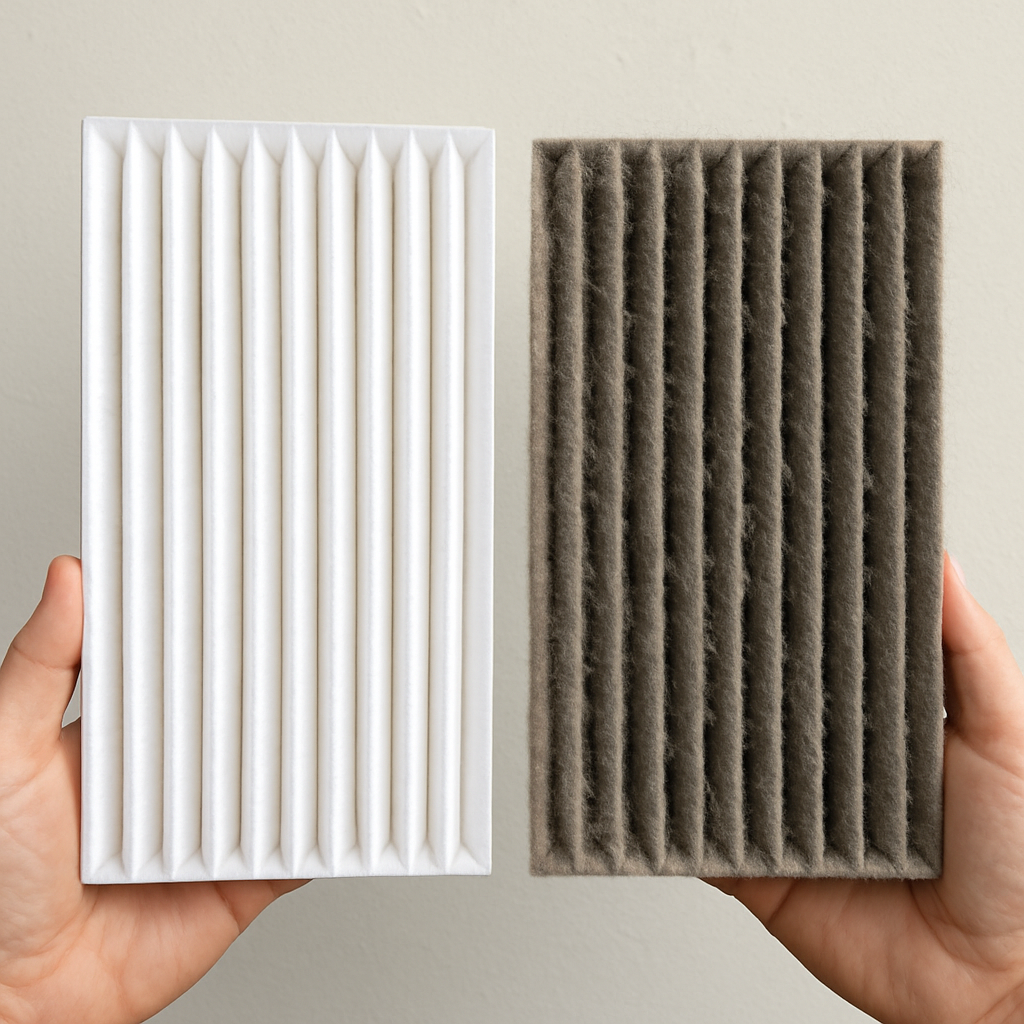
Finding this filter is easier than you think. It’s typically in one of two places: either inside a slot on your indoor unit (the large metal cabinet in a closet, attic, or basement) or behind a large grille on a wall or ceiling, known as an air return vent. Once you find it, slide the old filter out. The size dimensions (like 16x25x1) are always printed on the cardboard frame, making it simple to buy the correct replacement at any hardware store. As the image shows, the difference between a clean and clogged filter is dramatic.
This simple check is one of the most powerful ac maintenance tips for summer . Get into the habit of looking at your filter once a month. At a minimum, you should change it every 90 days, but if you have pets or live in a dusty area, you may need to do it monthly. Keeping this airway clear is a core part of how to make your air conditioner run more efficiently. With the indoor unit breathing easy, it’s time to give the outdoor unit the same attention.
Give Your Outdoor Unit a Break: A 5-Minute Cleanup for Better Cooling
That big, noisy metal box—your outdoor AC unit—has one crucial job: to release all the heat it has pulled from your house. Think of the metal fins that wrap around it as its way of sweating. If those fins are clogged with dirt, cottonwood fluff, or grass clippings, your AC can’t release heat efficiently. It’s like being forced to wear a winter coat in July, causing the system to run longer and struggle to cool your home.
The fix is surprisingly simple and is one of the most effective ac maintenance tips for summer. First, make sure you have at least two feet of clear space around the entire unit. Trim back any bushes, pull weeds, and clear away leaves that might be blocking airflow. Then, with the AC turned off at your thermostat, take a regular garden hose and gently rinse the fins from top to bottom. Use a light spray—never a power washer, which can easily bend the delicate metal.
This quick chore pays off immediately. A clean outdoor unit helps prevent one of the most common summer complaints: the ac running but not cooling house effectively. By allowing it to release heat properly, you’re not only boosting its cooling power but also reducing the strain on the system, which can prevent costly breakdowns on the hottest days of the year. While clean fins help your unit run efficiently, another small, hidden part is responsible for giving it the power to start up in the first place.
The Hidden Power-Booster: How a Failing Capacitor Cripples Your AC
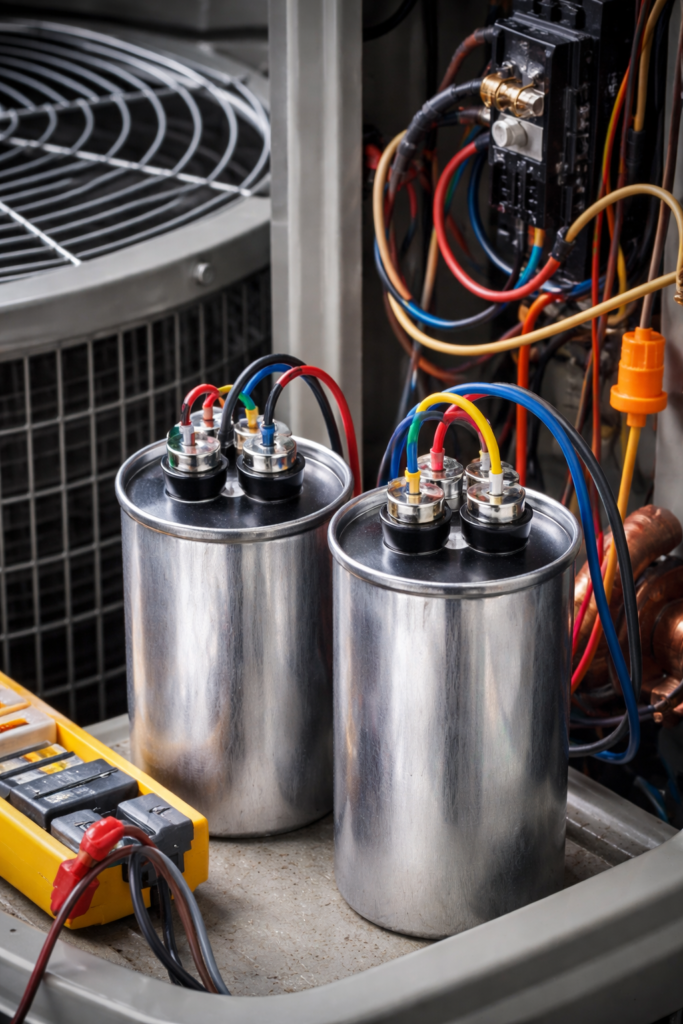
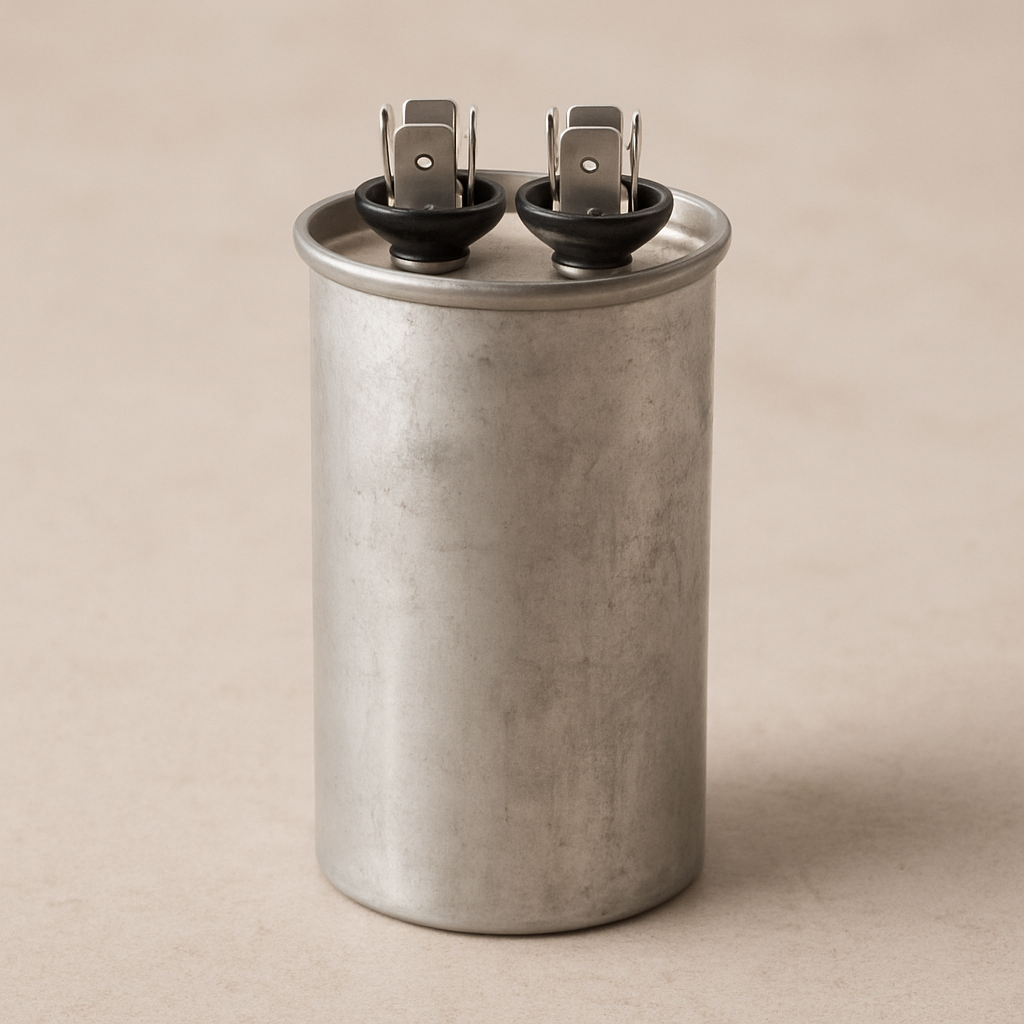
Inside your outdoor unit, there’s a small, can-shaped part called a capacitor. Its job is to give the fan motor and compressor a powerful jolt of energy to get them started, much like giving a heavy merry-go-round a big shove to overcome inertia. Without this initial kick, the powerful motors that are the heart of your AC system simply can’t get going. A strong start is the first step to an efficient cooling cycle.
Have you ever heard your outdoor unit hum or buzz for a few seconds before the fan finally starts—or doesn’t start at all? That’s the classic sign of a weak capacitor. The motor is receiving power but doesn’t have the “push” it needs to begin spinning. This symptom is central to troubleshooting common hvac problems and is a clear warning sign that a component is on its last legs, often contributing to your ac running but not cooling house.
Ignoring this hum can be a costly mistake. Each time the motor strains to start, it risks overheating and burning out. This turns what is typically an inexpensive professional repair into a potential four-figure motor replacement. A healthy capacitor helps boost ac efficiency by ensuring the entire system starts up smoothly and without damaging strain, protecting your investment in the long run.
Crucially, because a capacitor stores a high-voltage electrical charge much like a battery, replacing it is strictly a job for a qualified HVAC technician. Never attempt to handle or replace this component yourself. While some problems like a bad capacitor need a pro, many of the biggest energy losses are hiding in plain sight, often right above your head.
Stop Paying to Cool Your Attic: Finding and Sealing Air Leaks
That wasted cool air is often escaping through the network of ducts hidden in your attic, ceilings, and walls. Think of your ductwork as a highway system for cold air; if that highway has cracks and potholes, you’re losing precious cargo before it ever reaches its destination. According to the Department of Energy, the average home can lose up to 30% of its cooled air to these leaks. This forces your AC to run longer and harder, effectively cooling your attic instead of your living room, which is one of the biggest hidden costs for homeowners.
Finding these energy vampires is one of the simplest ways to improve home cooling. Start with a visual check to ensure all your vents are open and unblocked for proper ac unit airflow. To hunt down hidden drafts, carefully light an incense stick and hold it near the edges of your windows, doors, and where pipes enter the wall. If the smoke flickers or gets pulled in a direction, you’ve found a leak that’s siphoning away your comfortable air. Sealing these gaps with caulk or weatherstripping is an easy DIY project that pays for itself.
Ultimately, your AC is only as good as your home’s “envelope”—the shell of walls, windows, and insulation that’s meant to hold the conditioned air inside. By sealing leaks, you’re improving your home’s ability to retain the cold, allowing your AC to do its job more efficiently. But if you’ve sealed your home tight and your old unit is still gulping down electricity to keep up, it might be time to consider if the machine itself is the problem.
Is a New AC Worth It? A Simple Guide to SEER Ratings
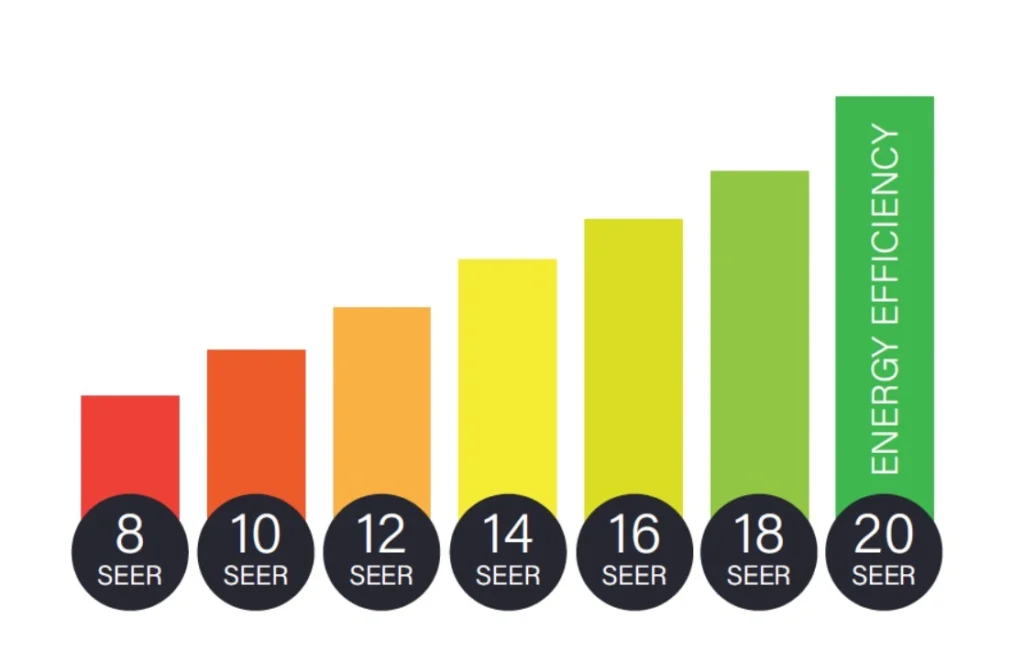
Deciding if you need a new air conditioner can feel overwhelming, but one simple number can help clear things up: the SEER rating. Think of a unit’s SEER (Seasonal Energy Efficiency Ratio) rating just like a car’s “miles-per-gallon” (MPG). The higher the SEER number, the more cooling you get for each unit of electricity you pay for. An old clunker of an AC might have a SEER rating of 10 or less, while modern, high-efficiency units can be 20 or higher. This rating is the key to understanding how to reduce air conditioning costs in the long run.
The trade-off is simple: a unit with a higher SEER rating typically costs more upfront, but it pays you back over time with lower energy bills. For instance, upgrading from an aging SEER 10 unit to a modern SEER 16 model can cut your cooling energy consumption by over 30%. Over the 15-year lifespan of an AC, those savings can easily cover the initial price difference and then some, putting money back into your pocket every summer.
Of course, replacing your AC is a major decision. If your unit is over a decade old and struggling to keep up, looking into a new, higher-SEER model is a smart investment. But whether you’re considering an upgrade or just want to get the most out of your current system, the most powerful changes start with the simple fixes you can do today.
A recap of the top 3 free fixes, the 2 most important DIY tasks, and when to call a pro
You no longer have to feel powerless when your summer energy bill arrives. Before, your air conditioner might have seemed like an expensive, mysterious box. Now, you understand the simple relationship between heat, airflow, and electricity, and you have the power to influence all three. You’ve gone from being a passenger, just paying for the ride, to being in control of your home’s comfort and efficiency.
Putting these AC maintenance tips into action is the next step to lower bills and boost AC efficiency. To make it easy, here is your simple action plan:
- This Week: Set your thermostat to 78°F, use fans to create a wind chill, and close blinds against the sun.
- This Month: Check and replace your air filter and clear away any leaves or debris from your outdoor unit.
- This Year: Schedule a professional tune-up and know when to ask about key components, like the capacitor.
By taking these small steps, you’re not just saving money—you’re ensuring your home stays a cool, comfortable refuge all summer long.
Capacitors play a crucial role in how well your AC runs — keeping them healthy boosts AC efficiency, reduces energy waste, and prevents performance issues. Routine checks and timely replacement are key to better cooling and lower costs.
FAQ: