
- What documents should you collect for HVAC maintenance records?
- Physical vs. digital: which system works best for HVAC records?
- How to set up your HVAC maintenance log step by step
- How do good HVAC records save you money and prevent breakdowns?
- Key takeaways
- Why i tell every homeowner to start their HVAC log today
- Let upright construction & HVAC help you stay on track
- FAQ
- Recommended
TL;DR:
- Organizing HVAC maintenance records involves compiling, updating, and storing all service documentation to monitor system performance. Proper records help detect early issues, ensure warranty compliance, and reduce energy costs by enabling consistent maintenance. A hybrid system using both a physical binder and digital backups is recommended for effective record keeping.
Organizing HVAC maintenance records means systematically compiling, updating, and storing all service documentation for your home’s heating and cooling systems. Most homeowners skip this step until something breaks, and that’s exactly when disorganized records cost real money. A well-kept HVAC service history tells you what was repaired, what parts were replaced, when your warranty expires, and whether your system is trending toward failure. The tools you need are simple: a physical binder, a Google Sheets spreadsheet, or a dedicated app like Housecall Pro or ServiceTitan. The habit is what matters most.
What documents should you collect for HVAC maintenance records?
Your HVAC maintenance documentation starts with gathering every piece of paper or digital file tied to your system. Most homeowners have more than they realize, scattered across email inboxes, kitchen drawers, and old folders.
Here is what to collect and keep:
- Equipment details: Brand, model number, serial number, and installation date for every unit including your furnace, air handler, condenser, and thermostat. This information lives on a metal plate attached to the unit itself.
- Receipts and invoices: Every service call, repair, and parts replacement. These prove warranty compliance and help you spot if a technician is recommending work that was already done.
- Technician notes and diagnostic readings: Refrigerant levels, static pressure, and carbon monoxide readings are critical to spot issues early. These numbers create a performance baseline so you can see when something shifts.
- Warranty documents: Manufacturer warranties and any extended service agreements. Tracking warranty expiry and vendor repairs in a centralized system prevents unnecessary out-of-pocket expenses.
- EPA refrigerant compliance records: EPA Section 608 requires technicians to provide invoices noting refrigerant added, with homeowners responsible for keeping those records. Federal regulations require you to retain refrigerant records for at least three years. That is not optional.
- Filter change logs: Date and filter type every time you swap a filter. This one small habit reveals patterns in air quality and system strain.
The goal is one complete picture of your system’s life. When a technician arrives and asks “when was this last serviced?”, you should be able to answer in under 30 seconds.
Physical vs. digital: which system works best for HVAC records?
The best system for organizing HVAC maintenance logs is the one you will actually use. Both physical and digital methods work. The real question is which fits your daily habits.
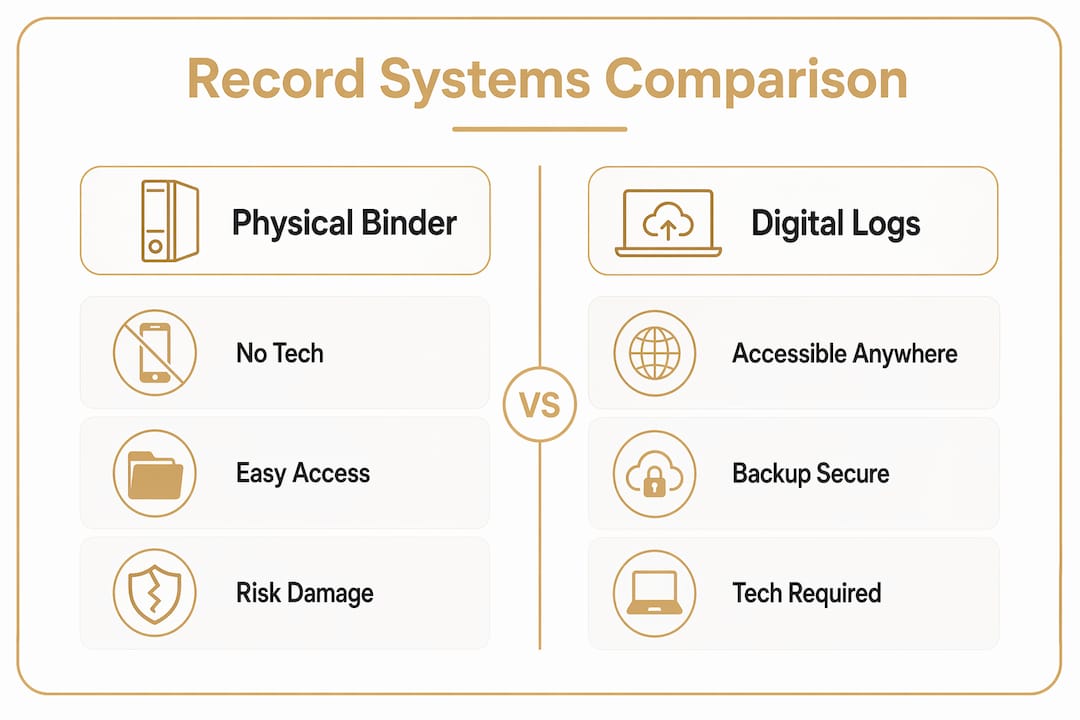
| Method | Pros | Cons |
|---|---|---|
| Physical binder | No tech required, easy to hand to a technician | Can be lost, damaged, or destroyed in a fire |
| Google Sheets or Excel | Free, searchable, shareable with technicians | Requires consistent updating and internet access |
| Dedicated apps (Housecall Pro, ServiceTitan) | Automated reminders, cloud backup, professional format | Some apps are designed for contractors, not homeowners |
| Home management apps (Centriq, HomeZada) | Built for homeowners, tracks appliances and warranties | Monthly subscription cost |
| Hybrid (binder + digital backup) | Redundant and resilient, best of both worlds | Slightly more effort to maintain both |
A simple, well-maintained spreadsheet updated promptly after each service call is more effective than a complex app you never open. Facility management experts consistently emphasize consistency over complexity. That finding applies directly to homeowners too.
The hybrid approach is what Upright Construction & HVAC recommends to clients in Los Angeles. Keep a physical binder near your HVAC unit with printed invoices and equipment specs. Back everything up in a Google Drive folder organized by year. If your house floods or burns, your records survive. If a technician needs to see your history on the spot, hand them the binder.
Pro Tip: Label your binder tabs by year, not by service type. When you need to find a record, you almost always remember the year it happened, not whether it was a “repair” or a “tune-up.”
One more thing worth knowing: most professional HVAC companies keep digital service histories linked to your address. If you have gaps in your records, call your previous service provider and ask for a summary. You can rebuild a missing history faster than you think.
How to set up your HVAC maintenance log step by step
Setting up your HVAC service record keeping system takes about two hours the first time. After that, each update takes five minutes.
Gather everything you have. Pull every invoice, receipt, and warranty document related to your HVAC system. Check your email for digital copies. Check your filing cabinet, your junk drawer, and your phone’s photo gallery.
Record your equipment details first. Go to each unit and photograph the data plate. Write down the brand, model, serial number, and installation date. This is your foundation. Every other record connects back to this equipment.
Create a log template. Each entry should include: date of service, reason for service, technician name and company, work performed, parts replaced, diagnostic readings, cost, and next recommended service date. Consistent timestamped logging of these elements is what separates a useful log from a pile of receipts.
Backfill what you can. Enter past service records using your invoices. If records are missing, contact your previous HVAC provider and request a digital service summary. Most companies will provide this at no charge.
Set a calendar reminder. Schedule a 10-minute “records update” appointment within 48 hours of every service call. Do not wait until the end of the year. Details fade fast.
Store and back up. Place physical documents in a labeled binder. Scan or photograph every invoice and save it to a dedicated cloud folder. Google Drive and Dropbox both offer free storage that is more than enough for HVAC records.
Share access with your household. If you share the home with a partner or family member, make sure they know where the records live. HVAC emergencies do not always happen when you are home.
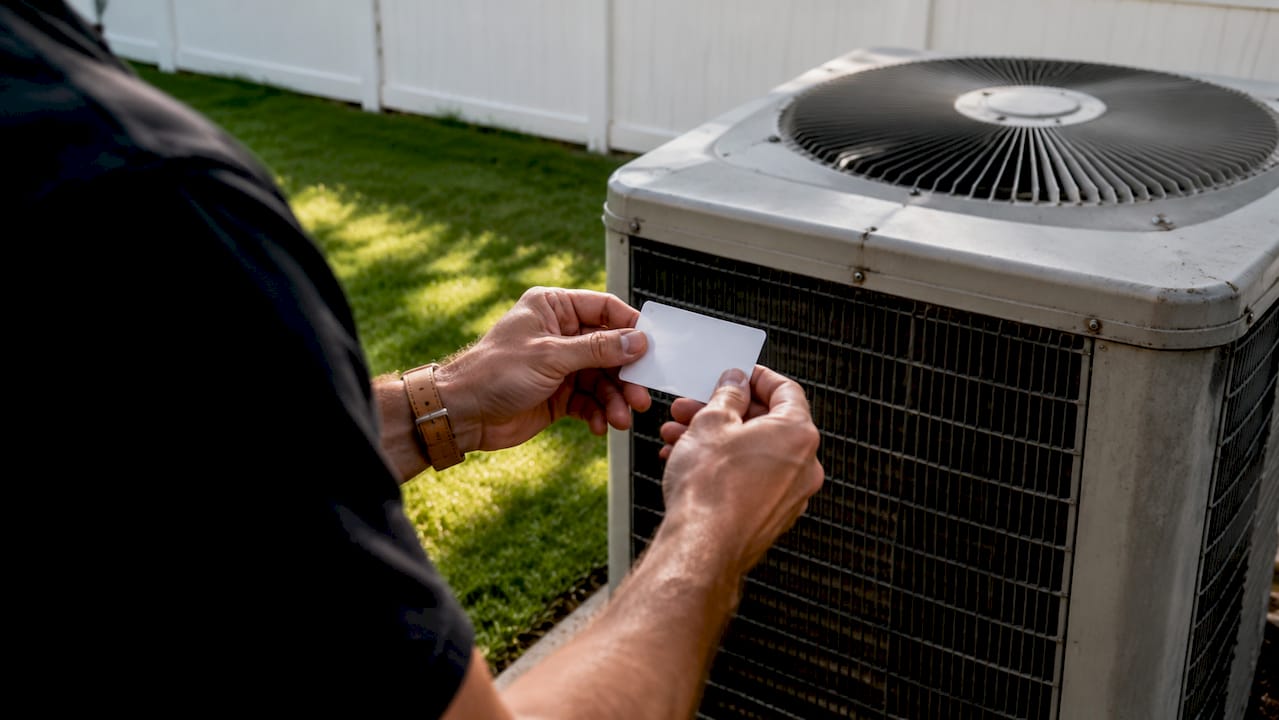
Pro Tip: Attach a small laminated card to your HVAC unit with the equipment model, serial number, and your service provider’s phone number. Technicians love this, and it saves time every single visit.
Understanding why HVAC maintenance matters goes hand in hand with keeping records. The log is only as useful as the maintenance it documents.
How do good HVAC records save you money and prevent breakdowns?
Well-organized HVAC service history management pays off in three concrete ways: lower energy bills, avoided repair costs, and warranty protection.
Poorly maintained HVAC units use up to 25% more energy, adding roughly $600 annually to the average household’s energy costs. That number reflects what happens when no one is tracking filter changes, refrigerant levels, or service intervals. A log that shows consistent maintenance keeps your system running at rated efficiency.
Here is how your records work for you beyond energy savings:
- Early warning detection: Tracking diagnostic readings over time reveals trends. If refrigerant levels drop slightly each year, that points to a slow leak before it becomes a system failure. Tracking refrigerant and CO readings creates performance baselines that make early failure detection possible.
- Warranty compliance: Most manufacturer warranties require documented annual maintenance. Without proof of service, a warranty claim can be denied. Your log is your evidence.
- Smarter technician conversations: When a technician recommends a repair, you can pull up your history and ask informed questions. “You replaced that capacitor 18 months ago. Why does it need replacing again?” That kind of question changes the dynamic.
- Regulatory compliance: Federal law requires homeowners to retain refrigerant-related service records for at least three years. Records must be accessible at the equipment location. Failing this requirement carries real legal exposure.
- Planned preventive maintenance: Your log tells you when filters are due, when the last tune-up happened, and when your system is approaching the end of its expected service life. Preventive HVAC maintenance scheduled from accurate records costs far less than emergency repairs.
Knowing the signs your HVAC needs replacement becomes much easier when you have years of documented performance data to reference.
Key takeaways
Organized HVAC maintenance records protect your equipment, your wallet, and your legal standing as a homeowner.
| Point | Details |
|---|---|
| Collect the right documents | Gather invoices, equipment specs, diagnostic readings, warranties, and EPA refrigerant records. |
| Choose a system you will use | A simple spreadsheet updated consistently outperforms a complex app you ignore. |
| Log every service call promptly | Record date, technician, work done, readings, cost, and next service date within 48 hours. |
| Back up everything digitally | Store scanned records in Google Drive or Dropbox so they survive any physical loss. |
| Use records to save money | Documented maintenance prevents warranty denial, catches early failures, and cuts energy waste. |
Why i tell every homeowner to start their HVAC log today
I have been in the HVAC business in Los Angeles for over 15 years, and I can tell you the homeowners who sleep best at night are the ones with a binder or a folder that actually has something in it.
I have walked into homes where the system is 12 years old and the owner cannot tell me when it was last serviced. That puts us both in a tough spot. I have also walked into homes where the owner hands me a neat log with every service date, every refrigerant reading, and every part we ever replaced. That second visit goes faster, costs less, and ends with a much clearer picture of what the system needs next.
The most common objection I hear is “I’ll start doing that after the next service.” That day never comes. The best time to start is right now, even if your first entry is just the equipment model number and today’s date. Build from there.
A home maintenance log is not just about your HVAC system either. The same habit applies to your garage door, your water heater, and your roof. Once you build the practice, it carries over. Homeowners who track their home maintenance records consistently spend less on emergency repairs across the board.
You do not need a perfect system. You need a consistent one.
— Ernie M
Let upright construction & HVAC help you stay on track
Keeping records is easier when your service provider makes it simple. Upright Construction & HVAC serves homeowners across Los Angeles with transparent, documented service visits that give you exactly what you need for your maintenance log.

Every visit from our team includes a written summary of work performed, diagnostic readings, and recommended next steps. You walk away with the documentation already done. If your system needs attention now, our air conditioner repair guidance covers what to expect and how to prepare. For ongoing support, our HVAC maintenance plans keep your system serviced on schedule and your records current all year long. Call us at any time. We are available 24/7.
FAQ
What should HVAC maintenance records include?
HVAC maintenance records should include equipment details, service invoices, technician notes, diagnostic readings, warranty documents, and EPA refrigerant compliance records. Every entry should capture the service date, work performed, parts replaced, and the next recommended service date.
How long do i need to keep HVAC records?
Federal regulations require homeowners to retain refrigerant-related service records for at least three years. Warranty documents and major repair invoices should be kept for the full life of the equipment.
Is a digital or paper system better for HVAC records?
A hybrid approach works best. Keep physical invoices in a labeled binder near your unit and back them up digitally in Google Drive or Dropbox. Consistency matters more than the format you choose.
What if i have no records for my current HVAC system?
Contact your previous HVAC service provider and request a digital service history linked to your address. Most companies keep these records and will provide a summary at no charge.
How do organized records save money on HVAC costs?
Documented maintenance protects manufacturer warranties, prevents duplicate repairs, and helps catch early failures before they become expensive breakdowns. Poorly maintained units can use up to 25% more energy, costing roughly $600 more per year in energy bills.