
- What tools and materials should you gather first?
- How to prepare your outdoor and indoor units
- Should you replace air filters before the technician arrives?
- How to organize your documentation before the service visit
- Common mistakes that undermine your tune-up preparation
- Key takeaways
- What 15 years of tune-ups taught me about homeowner prep
- Schedule your professional tune-up with upright construction & HVAC
- FAQ
- Recommended
TL;DR:
- Proper HVAC tune-up preparation involves clearing access, replacing filters the day before, and organizing documentation. These steps enable the technician to perform a more thorough inspection, improving system performance and longevity. Preparing in advance helps identify issues early and ensures the maintenance process is efficient and effective.
HVAC tune-up preparation steps are the homeowner actions you take before a professional technician arrives to maximize the value of every service visit. Skipping these steps is one of the leading causes of emergency AC failures and costly repairs. When you clear access, replace filters, and gather your paperwork ahead of time, your technician can focus entirely on diagnosing and servicing your system rather than working around obstacles. The result is better performance, lower energy bills, and a system that lasts years longer. This guide walks you through exactly what to do before the technician rings your doorbell.
What tools and materials should you gather first?
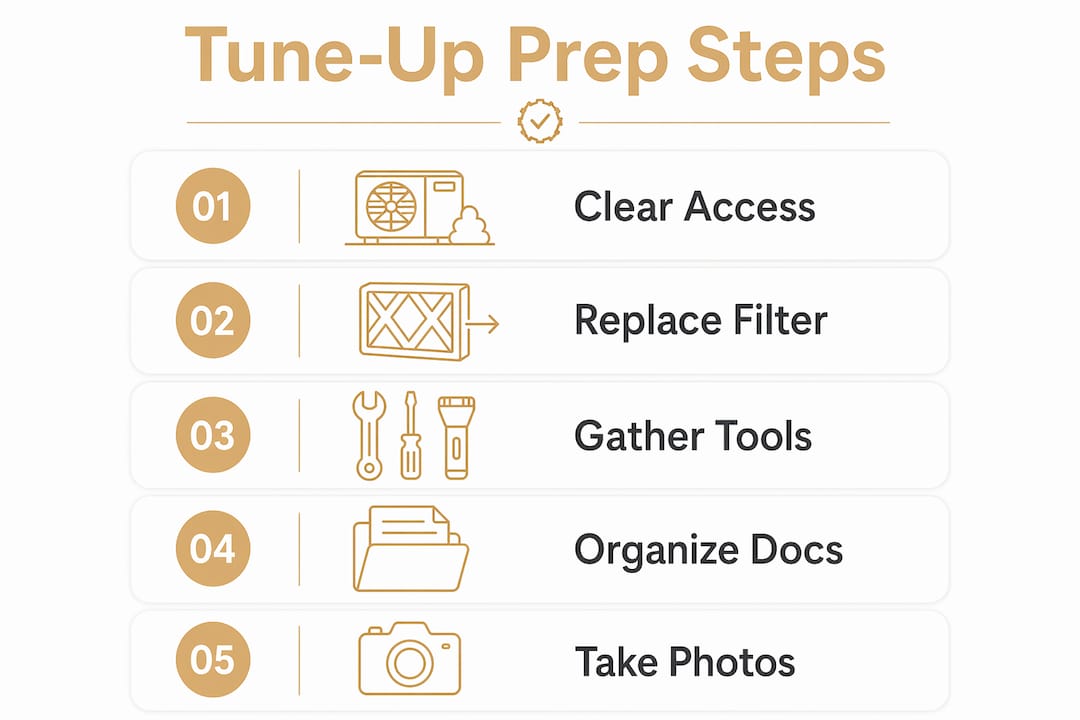
Preparation starts with having the right supplies on hand before your appointment day. You do not need a toolbox full of equipment. A short list of common items covers almost everything.
Here is what to gather:
- Replacement air filters in the correct size for your system (check the filter frame for dimensions)
- Fresh thermostat batteries (AA or AAA, depending on your model)
- A garden hose with a gentle spray nozzle for rinsing the outdoor condenser
- Work gloves and safety glasses if you plan to handle any DIY cleaning around the unit
- Previous maintenance invoices and warranty documents for your technician’s reference
| Item | Why You Need It |
|---|---|
| Replacement air filter | Allows a fresh install the day before service |
| Thermostat batteries | Confirms accurate temperature readings during inspection |
| Garden hose | Gentle coil rinse without damaging aluminum fins |
| Maintenance records | Helps technician verify warranty and service history |
| Gloves and eye protection | Protects you during any light DIY prep work |
Pro Tip: Write down your filter size on a sticky note and keep it on your utility closet door. You will never buy the wrong size again.
Having previous service invoices ready for the technician speeds up the visit and confirms your warranty is still valid. Verifying contractor licensing and EPA certification before the appointment also protects you from unqualified service.
How to prepare your outdoor and indoor units
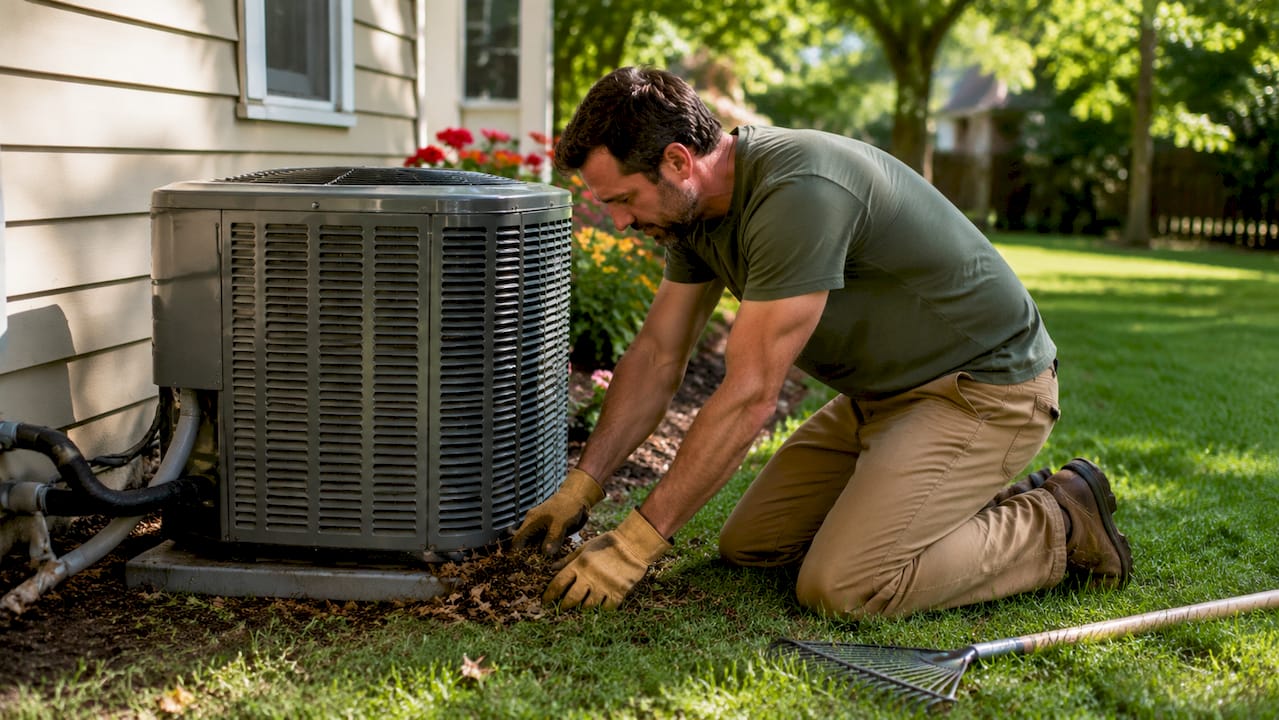
Clearing the area around your HVAC equipment is one of the most practical steps you can take. It costs you nothing but 15 minutes, and it gives your technician immediate, safe access to every component.
Follow these steps before your appointment:
- Clear 2–3 feet around the outdoor condenser. Remove leaves, branches, overgrown shrubs, and any stored items. Clearing this space takes roughly 15 minutes and directly improves the technician’s ability to inspect refrigerant lines, electrical connections, and the fan motor.
- Rinse the condenser coils gently. Use a garden hose on a low-pressure setting and spray from the inside out. Pressure washers damage aluminum fins, and bent fins reduce airflow permanently, raising your operating costs over time.
- Shut off power to the outdoor unit before rinsing. Locate the disconnect box near the condenser and flip it off. Safety first, always.
- Move stored items away from the indoor air handler. Many homeowners stack boxes or holiday decorations near the furnace or air handler in the garage or utility closet. Clear at least 2 feet on all sides.
- Check the condensate drain line. Look for standing water or visible algae near the drain pan. Mention anything unusual to your technician so they can flush the line during the visit.
Pro Tip: Take a quick photo of your outdoor unit and air handler before the technician arrives. If anything looks different after the visit, you have a clear before-and-after reference.
A thin 0.05-inch dust layer on evaporator coils reduces HVAC efficiency by up to 21%. That single fact explains why clearing access and allowing a thorough coil cleaning matters so much.
Should you replace air filters before the technician arrives?
Air filter replacement is the single most impactful task a homeowner can do to preserve HVAC performance. The timing of that replacement, however, matters more than most people realize.
Replace your filter the day before the appointment, not weeks before. Replacing filters the day before lets the technician see your system running under real operating conditions. A filter that has been clean for three weeks gives a false picture of how your system normally performs.
Here is what to know about filter types and timing:
- Basic fiberglass filters (MERV 1–4): Inexpensive but catch only large particles. Replace monthly.
- Pleated filters (MERV 8–13): The most common choice for residential systems. Replace every 60–90 days.
- High-efficiency filters (MERV 14+): Best for allergy sufferers, but they restrict airflow in systems not designed for them. Confirm compatibility with your technician.
Changing filters every 60–90 days is the most effective way to prevent blower motor strain and early compressor wear. A clogged filter forces the blower to work harder, which raises your energy bill and shortens the life of the motor.
Check your filter monthly by holding it up to a light source. If you cannot see light through it, replace it immediately regardless of how recently you installed it. Learn more about filter replacement schedules to build a consistent habit that protects your system year-round.
How to organize your documentation before the service visit
A well-prepared homeowner saves the technician time and gets a more thorough inspection in return. Paperwork may feel like a minor detail, but it changes the quality of the visit.
Gather and organize the following before the technician arrives:
- Previous HVAC service invoices. These show what was repaired, replaced, or flagged during past visits. Your technician can spot patterns, like a refrigerant charge that keeps dropping, which points to a leak.
- Manufacturer warranty documents. Some repairs are still covered. Knowing this before the visit prevents you from paying out of pocket for something the warranty handles.
- A written list of any issues you have noticed. Unusual sounds, warm spots in certain rooms, higher-than-normal utility bills, or a system that short-cycles are all worth mentioning. Write them down so you do not forget during the visit.
- Thermostat settings and battery status. Test your thermostat the morning of the appointment. Thermostat set points between 75°F and 78°F with ceiling fan use reduce mechanical wear by avoiding excessive cycling. Fresh batteries confirm the readings your technician sees are accurate.
- Pet and household management. Secure pets in a separate room and let household members know a technician will be working in utility areas. Distractions slow the visit and can create safety risks.
Understanding why annual HVAC inspections matter helps you see this documentation step as part of a larger system, not just a one-time task.
Common mistakes that undermine your tune-up preparation
Even well-meaning homeowners make a few predictable errors that reduce the value of their tune-up. Knowing these in advance puts you ahead of the curve.
Blocking technician access. Clutter around the air handler or condenser is the most common problem Upright Construction & HVAC technicians encounter. A cramped workspace slows the inspection and can cause steps to be skipped.
Using a pressure washer on the condenser. This mistake is more common than you would think. The aluminum fins on a condenser coil are fragile. Bent fins restrict airflow and cause long-term efficiency loss that no tune-up can fully reverse.
Replacing filters too far in advance. Installing a fresh filter three weeks before the appointment hides how your system actually runs day to day. The day-before rule exists for a reason.
Not requesting written service readings. Ask your technician to provide post-service written readings such as superheat, subcooling, and static pressure. These numbers create a documented baseline you can compare against future visits to catch declining performance early.
Skipping seasonal scheduling. The Department of Energy recommends scheduling professional HVAC maintenance twice yearly, in spring and fall. Regular maintenance can help systems last 40% longer compared to neglected units. That is not a small number.
“The homeowners who get the most out of every tune-up are the ones who show up prepared. Fifteen minutes of prep work on your end translates directly into a more thorough inspection on ours.”
You can also review a seasonal home maintenance schedule to build HVAC prep into your broader annual home care routine.
Key takeaways
Thorough HVAC tune-up preparation requires clearing unit access, replacing filters the day before service, and organizing documentation so your technician can diagnose accurately and work efficiently.
| Point | Details |
|---|---|
| Gather supplies in advance | Have filters, thermostat batteries, and a garden hose ready before appointment day. |
| Clear 2–3 feet around units | Remove debris and stored items from both the outdoor condenser and indoor air handler. |
| Replace filters the day before | A fresh filter installed one day prior shows real operating conditions for accurate diagnosis. |
| Organize paperwork | Bring prior invoices, warranty documents, and a written list of any system issues you have noticed. |
| Request written readings | Ask for superheat, subcooling, and static pressure data to build a documented service history. |
What 15 years of tune-ups taught me about homeowner prep
I have been doing this work in Los Angeles for over 15 years, and I can tell you with confidence that the homeowners who prepare get better results. Not because the technician works harder for them, but because preparation removes the obstacles that slow a thorough inspection down.
I remember a client in Encino who had been scheduling tune-ups every year but never saw much improvement in her energy bills. When our team arrived, we found the condenser buried in overgrown bougainvillea and the air handler surrounded by storage boxes. The previous technicians had done what they could, but they never had full access. Once she cleared the space and started following the steps in this guide, her system ran noticeably better within one season.
The documentation piece surprises most homeowners. When you hand a technician a folder with your last three service invoices, they can spot a pattern in five minutes that would otherwise take a full diagnostic hour to uncover. That saves you money directly.
My honest advice is this: treat your HVAC prep the way you treat an oil change. You would not skip checking the tire pressure and fluid levels before a long road trip. Your HVAC system deserves the same respect, especially before a Los Angeles summer hits.
— Ernie M
Schedule your professional tune-up with upright construction & HVAC
Following these preparation steps puts you in the best possible position for a productive service visit. The next step is making sure a qualified, licensed technician handles the rest.

Upright Construction & HVAC has served Los Angeles homeowners for over 15 years with EPA-certified technicians, transparent diagnostics, and 24/7 support. Before peak cooling and heating seasons arrive, scheduling early protects you from the common HVAC repair challenges that catch unprepared homeowners off guard. Our team brings the tools, the training, and the documentation practices described in this guide to every single visit. Call Upright Construction & HVAC today to book your seasonal tune-up and protect your home’s comfort all year long.
FAQ
What are the basic HVAC tune-up preparation steps?
The core steps are clearing 2–3 feet around both units, replacing your air filter the day before the appointment, gathering maintenance records and warranty documents, and testing your thermostat. These actions take roughly 15–30 minutes total and significantly improve the quality of the technician’s inspection.
How often should i schedule a professional HVAC tune-up?
The Department of Energy recommends twice-yearly professional maintenance, once in spring before cooling season and once in fall before heating season. Systems on this schedule can last up to 40% longer than neglected units.
Should i replace my air filter before the HVAC technician arrives?
Replace it the day before, not weeks in advance. A filter installed one day prior lets the technician assess your system under normal operating conditions, which leads to a more accurate diagnosis of any underlying issues.
What documents should i have ready for my HVAC technician?
Bring previous service invoices, manufacturer warranty papers, and a written list of any unusual sounds, temperature inconsistencies, or higher utility bills you have noticed. This information helps the technician identify patterns and verify warranty coverage before starting work.
What written data should i request after a tune-up?
Ask your technician for readings on superheat, subcooling, and static pressure. These technical service readings create a documented baseline that makes future comparisons easy and confirms the service was thorough.