- 1. Priority scheduling when you need it most
- 2. Waived diagnostic fees and repair discounts
- 3. Biannual tune-ups that extend your system’s life
- 4. Energy savings of 15 to 20 percent
- 5. Warranty protection you did not know you needed
- 6. Improved indoor air quality
- 7. Predictable maintenance costs with no surprises
- 8. How contracts compare to pay-per-visit service
- 9. What to look for in a quality contract
- 10. Which homeowners benefit most
- Key takeaways
- What I have learned after 15 years of HVAC service agreements
- How Upright Construction & HVAC can help you get started
- FAQ
- Recommended
TL;DR:
- HVAC service contracts provide priority scheduling, repair discounts, and biannual tune-ups that extend system life. They also ensure warranty protection, energy savings, and predictable yearly costs, making them a smart investment for homeowners. Enrolling early, especially between February and April, maximizes value and minimizes future expenses.
An HVAC service contract is a formal maintenance agreement between a homeowner and a licensed contractor that covers scheduled tune-ups, priority repair access, and discounted service calls for a fixed annual fee. These plans, sometimes called HVAC maintenance plans or service agreements, are the most reliable way to protect a Carrier, Trane, or Lennox system from preventable breakdowns while keeping energy bills predictable. For homeowners in Los Angeles and across high-demand climate zones, understanding the specific hvac service contract benefits before signing can mean the difference between a smart investment and an expensive surprise.
1. Priority scheduling when you need it most
When a heat wave hits Los Angeles in July, every HVAC company’s phone rings at once. Contract members move to the front of the line. Priority service gives members same-day or next-day response, while non-members typically wait three to seven days. That gap is not just uncomfortable. It can mean spoiled food, health risks for elderly family members, and nights in a hotel.
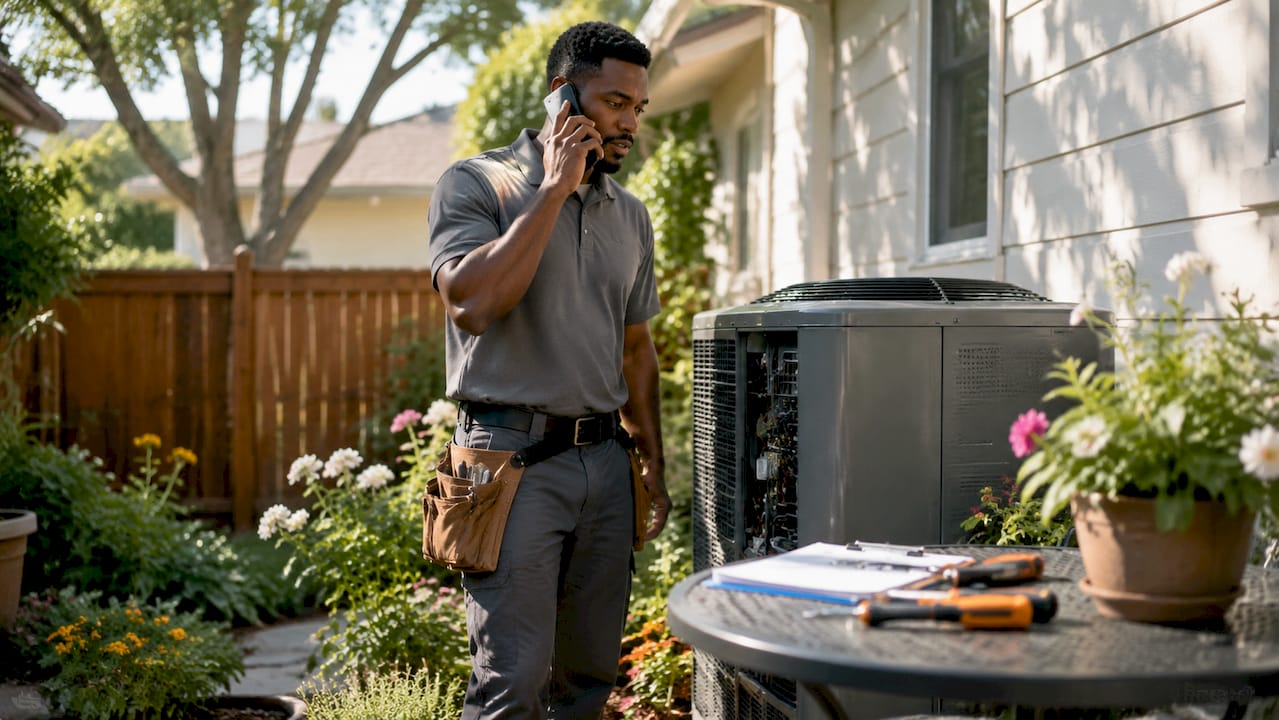
Premium plans include guaranteed emergency response windows, which is a feature worth paying for in climates where summer temperatures regularly exceed 95°F. A single avoided emergency call can justify the entire annual contract cost.
2. Waived diagnostic fees and repair discounts
Every service call starts with a diagnostic fee. Typical diagnostic fees range from $85 to $150, and contract members often have these waived entirely. On a single repair visit, that saves $150 to $300 before any parts or labor are even discussed.
Beyond waived fees, premium plans include 15 to 20% discounts on parts and labor. For a repair that costs $600 without a contract, that discount puts $90 to $120 back in your pocket. Over two or three service calls in a year, the math works strongly in the homeowner’s favor.
3. Biannual tune-ups that extend your system’s life
Most homeowners do not realize how much a twice-yearly tune-up changes the long-term math on their HVAC investment. Biannual tune-ups can extend equipment lifespan by 5 to 15 years, deferring replacement costs that typically run $5,000 to $15,000. That is not a small number.
A standard HVAC tune-up covers coil cleaning, filter replacement, refrigerant pressure checks, and electrical component testing. Each of those tasks directly prevents the kind of compressor or heat exchanger failure that turns a $200 repair into a full system replacement. Skipping them is like skipping oil changes and wondering why the engine seized.
4. Energy savings of 15 to 20 percent
A dirty coil or restricted airflow forces your system to work harder to reach the same temperature. Regular maintenance reduces household energy consumption by 15 to 20% by keeping coils clean and airflow unrestricted. For a Los Angeles home spending $200 per month on cooling, that is $30 to $40 saved every single month.
Over a full year, those savings often exceed the cost of the contract itself. This is one of the most underappreciated HVAC maintenance plan benefits because it shows up quietly on your utility bill rather than as a dramatic repair avoided.
Pro Tip: Ask your contractor to show you before-and-after static pressure readings during each tune-up. A measurable improvement in airflow is proof the visit actually improved your system’s efficiency.
5. Warranty protection you did not know you needed
Most Carrier, Trane, and Lennox manufacturer warranties require documented annual maintenance to remain valid. Proof of maintenance is essential to honor warranty claims worth $5,000 or more. Without a written service record, a manufacturer can legally deny a major warranty claim.
A quality service contract solves this automatically. Every visit generates a detailed written report that documents what was inspected, what was adjusted, and what was found. That paper trail is your insurance policy against a denied warranty claim on a compressor or heat exchanger.
Maintenance plans and warranties serve different roles. The warranty covers defect-related repairs. The maintenance plan prevents failures from happening in the first place. Both are necessary, and they work together.
6. Improved indoor air quality
A well-maintained HVAC system does more than heat and cool. It filters dust, allergens, and pollutants from the air your family breathes every day. Clogged filters, dirty evaporator coils, and blocked drain lines all degrade air quality and can trigger allergy and asthma symptoms.
Contract visits include filter checks, coil cleaning, and drain line clearing as standard tasks. For families with children, elderly members, or anyone with respiratory conditions, this benefit is not optional. Clean air is a direct health outcome of preventive HVAC maintenance.
7. Predictable maintenance costs with no surprises
One of the most practical HVAC service agreement perks is budget certainty. Annual plans cost $150 to $500 depending on tier, with basic plans covering one tune-up and standard plans covering two visits plus discounts. You know exactly what you will spend before the year starts.
Compare that to the unpredictability of pay-per-visit service, where a single emergency call can cost $300 to $600 before any repairs begin. Contracts convert that unpredictability into a fixed, manageable line item in your household budget.
8. How contracts compare to pay-per-visit service
Here is a direct look at how the two approaches stack up for a typical homeowner:
| Factor | Service contract | Pay-per-visit |
|---|---|---|
| Annual tune-up cost | Included | $80 to $150 per visit |
| Diagnostic fee | Often waived | $85 to $150 per call |
| Repair discount | 15 to 20% off | Full retail price |
| Emergency response | Same or next day | 3 to 7 day wait |
| Warranty documentation | Automatic written report | Varies by contractor |
| Annual cost estimate | $150 to $500 | $400 to $800+ |
The cost savings with HVAC contracts become clear when you add up two tune-ups, one diagnostic fee, and a single repair discount in a year. Most homeowners recover the contract cost within the first service call.
Pro Tip: Enroll in a contract between February and April. Contractors are less busy, and enrollment pricing spikes 5 to 10% in May and June as demand increases heading into summer.
9. What to look for in a quality contract
Not all plans deliver equal value. A contract worth signing should include specific, named tasks at every visit.
A strong contract covers:
- Refrigerant pressure checks at every visit
- Electrical component testing including capacitors and contactors
- Coil cleaning for both evaporator and condenser coils
- A detailed written report after every visit
- A guaranteed emergency response time in writing
- Repair discount percentages stated clearly in the agreement
- No multi-year lock-in without a cancellation clause
Plans priced below $120 annually often rely on aggressive upselling of unnecessary repairs to subsidize the low entry cost. If the price seems too good, read the fine print carefully before signing.
10. Which homeowners benefit most
Service contracts are not one-size-fits-all. The homeowners who get the clearest financial return fall into specific categories:
- Systems aged 5 to 15 years. These systems are past the new-equipment honeymoon but not yet at replacement age. Repair discounts and tune-ups deliver maximum value here. Check signs your system may need replacement before committing to a long-term plan.
- New systems under manufacturer warranty. Documented maintenance is required to keep the warranty valid. A contract is the easiest way to stay compliant.
- High-demand climate zones. In Los Angeles, Phoenix, or Miami, systems run hard for six to eight months a year. Priority service and frequent tune-ups pay off faster in these markets.
- Homeowners without DIY skills. If you are not comfortable checking refrigerant levels or testing capacitors yourself, a contract replaces that gap with professional coverage.
- Homeowners planning to stay long-term. If you are selling within 12 months, the ROI window is short. For everyone else, the compounding value of extended equipment life makes the math work clearly.
Key takeaways
HVAC service contracts deliver the most value when they combine priority access, documented maintenance, and repair discounts into a single predictable annual cost.
| Point | Details |
|---|---|
| Energy savings are real | Regular maintenance cuts energy use by 15 to 20%, often covering the contract cost. |
| Warranty compliance matters | Documented visits protect $5,000-plus warranty claims from being denied. |
| Priority service has dollar value | Avoiding a 3 to 7 day wait during a heat wave can justify the full annual fee. |
| Price signals quality | Plans under $120 per year often rely on upselling rather than genuine service value. |
| Best enrollment window | Sign up between February and April to avoid the 5 to 10% summer price spike. |
What I have learned after 15 years of HVAC service agreements
Most homeowners I talk to think of a service contract as an optional add-on, like extended warranty coverage on a new appliance. I used to hear that framing constantly. After 15 years running Upright Construction & HVAC in Los Angeles, I see it differently now.
The homeowners who avoid the most expensive surprises are not the ones with the newest equipment. They are the ones with consistent, documented maintenance records. I have seen a 12-year-old Trane system outlast a 6-year-old unit that was never serviced, simply because one family treated maintenance as a priority and the other treated it as optional.
The other thing I tell people is this: do not evaluate a contract purely on price. A $150 plan that skips refrigerant checks and gives you no written report is not a bargain. It is a liability. The written report after every visit is the single most undervalued feature in any contract, because it is the document that saves you when a warranty claim gets disputed.
What I genuinely believe is that a good service contract is not a cost. It is the cheapest form of home insurance you can buy for a system that costs $10,000 to replace. The peace of mind alone is worth something. The energy savings, the avoided repairs, and the warranty protection make it worth a lot more.
— Ernie M
How Upright Construction & HVAC can help you get started
If you are ready to stop guessing about your HVAC system’s health, Upright Construction & HVAC offers tailored maintenance plans built for Los Angeles homeowners. Our plans include biannual tune-ups, priority emergency response, repair discounts, and full written documentation after every visit to keep your manufacturer warranty intact.

Whether your system is a newer Carrier unit still under warranty or a 10-year-old Trane that needs consistent attention, we match the plan to your system and your budget. Explore our maintenance plans in Los Angeles or get practical guidance on what to do when repairs come up at our AC repair tips page. Our team is available 24/7, and we bring the same transparency to every visit that has kept our customers coming back for over 15 years.
FAQ
What does an HVAC service contract typically include?
A quality contract covers biannual tune-ups, refrigerant pressure checks, electrical component testing, coil cleaning, and a written report after each visit. Premium plans add priority scheduling and 15 to 20% discounts on parts and labor.
How much does an HVAC service contract cost per year?
Annual plans range from $150 for basic single-visit coverage to $500 for premium plans with priority service and repair discounts. Most homeowners recover the cost within one or two service calls.
Do I need a service contract if my HVAC is still under warranty?
Yes. Most Carrier, Trane, and Lennox warranties require documented annual maintenance to remain valid. Without a service record, manufacturers can deny claims worth thousands of dollars.
Are HVAC service contracts worth it for older systems?
Systems aged 5 to 15 years gain the most direct financial benefit from repair discounts and tune-ups, since they are past the new-equipment phase but not yet at replacement age. The savings on a single avoided repair often cover the full contract cost.
When is the best time to sign up for an HVAC service contract?
Enroll between February and April. Contract pricing rises 5 to 10% in May and June as demand spikes heading into summer, so early enrollment locks in the best rate before peak season.