
- How to recognize an AC problem that needs emergency repair
- What to expect during a fast emergency AC repair visit
- How to find emergency AC repair that responds fast in Los Angeles
- What to do while you wait for the repair crew
- Common mistakes that make AC emergencies worse
- Key takeaways
- What I’ve learned after 15 years of emergency AC calls in Los Angeles
- Get fast emergency AC repair from Upright Construction & HVAC
- FAQ
- Recommended
TL;DR:
- Emergency AC repair in Los Angeles involves prompt, skilled service with stocked trucks to quickly restore cooling during extreme heat. Recognizing true emergencies such as no cooling, electrical odors, water leaks, or system shutdowns ensures urgent professional attention; most repairs are completed within two hours through structured diagnosis, flat-rate pricing, and local dispatch. Calling a provider with live operators and immediate availability, especially one prioritizing vulnerable households, minimizes wait time and prevents further system damage and health risks.
Emergency AC repair is the process of restoring your home’s cooling as quickly as possible through prompt, skilled service with the right parts already on the truck. In Los Angeles, where summer temperatures regularly push past 100°F, a broken air conditioner stops being an inconvenience within hours and becomes a genuine health risk. The good news is that locally dispatched emergency HVAC service providers can often reach your door in under two hours, with technicians equipped to complete most repairs on the first visit. This guide walks you through how to recognize a true AC emergency, what to expect when help arrives, and exactly how to find fast air conditioning repair without wasting time on hold.
How to recognize an AC problem that needs emergency repair
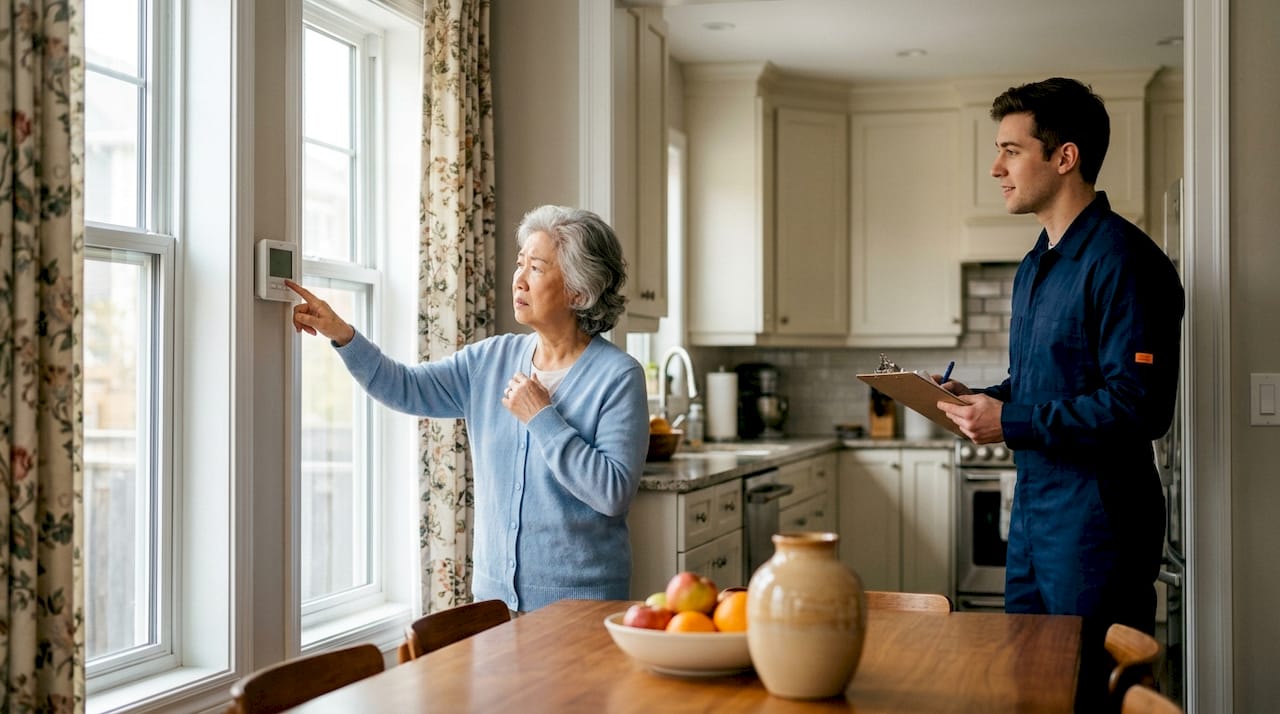
A true AC emergency goes beyond discomfort. HVAC professionals define four clear triggers: complete loss of cooling, electrical or burning odors, refrigerant or water leaks, and sudden system shutdowns that won’t restart. Each of these signals a failure that can worsen rapidly if you keep running the unit.
Here is what to watch for:
- No cooling at all. If your system runs but blows warm air, or shuts off entirely, your home will heat up fast. In Los Angeles, indoor temperatures can climb to dangerous levels within a few hours on a hot day.
- Burning or electrical smells. These point to overheating motors, melting wiring, or electrical shorts. Turn the system off immediately and call for urgent AC repair.
- Water pooling around the unit. A small amount of condensation is normal. Standing water or active dripping near the air handler or furnace cabinet signals a blocked drain line or a frozen evaporator coil that has thawed and overflowed.
- Refrigerant hissing or ice buildup. A hissing sound combined with ice on the refrigerant lines means a refrigerant leak. This is both a health concern and a system-damaging condition.
- Repeated tripped breakers. If your AC keeps tripping the circuit breaker, the electrical draw is dangerously high. Do not keep resetting it without a professional inspection.
The health stakes in Los Angeles are real. Heat exhaustion can set in within hours for elderly residents, young children, and anyone with a chronic health condition. Experts stress that these situations go beyond discomfort and require immediate professional attention, not a wait-and-see approach.
Pro Tip: Before you call, check your thermostat batteries and your circuit breaker. A tripped breaker or dead batteries account for a surprising number of “emergency” calls. If those are fine, you have a real problem that needs a technician.
For a deeper look at which symptoms cross the line into urgent territory, the guide on urgent AC repair needs at Upright Construction & HVAC covers the most common warning signs in plain language.
What to expect during a fast emergency AC repair visit
Knowing what happens when the technician arrives takes a lot of the stress out of the situation. A well-run emergency HVAC service call follows a clear sequence, and the whole process is faster than most homeowners expect.
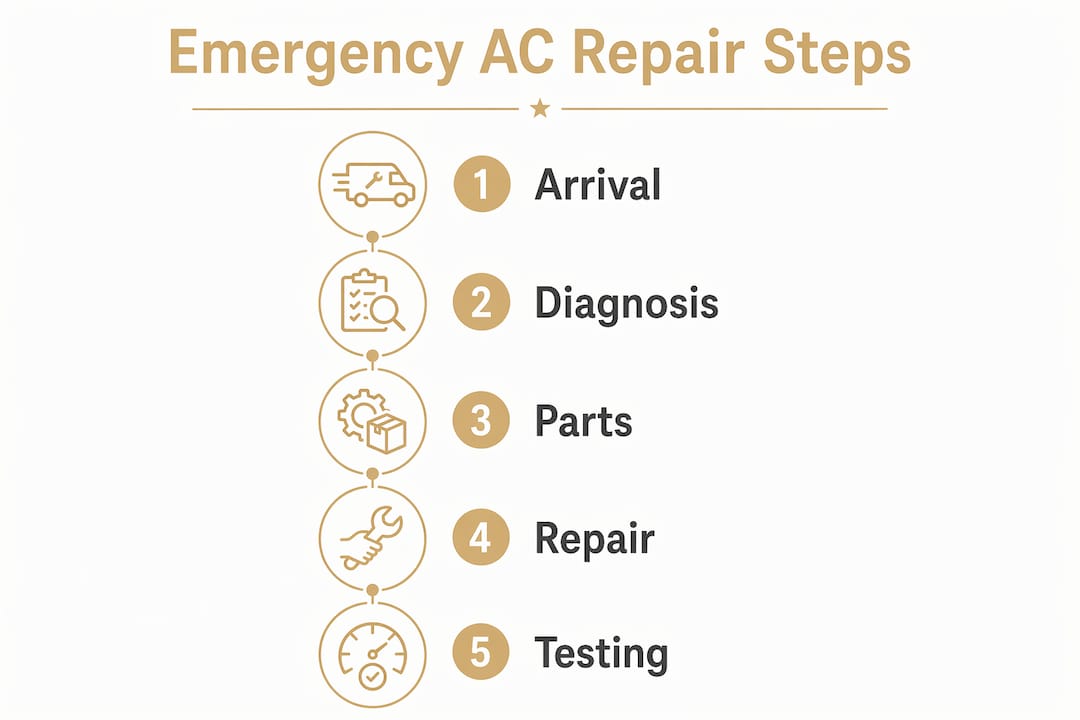
- Arrival and initial assessment. The technician checks your thermostat settings, electrical connections, and outdoor unit before opening anything up. This takes about 10 to 15 minutes and rules out simple causes.
- Diagnosis. Using gauges, multimeters, and visual inspection, the technician identifies the failed component. Common culprits are capacitors, contactors, blower motors, and refrigerant leaks.
- Explanation and pricing. A reputable provider gives you a flat-rate price before touching anything. Many providers offer emergency dispatch at standard flat rates with no overtime surcharges, and some offer financing options up to 18 months interest-free. That means no surprise bill at the end.
- Repair. Well-stocked service trucks carry common universal parts including capacitors, contactors, and blower motors, which means most repairs are completed on the first visit without a return trip.
- System test. The technician runs the system through a full cooling cycle, checks airflow at the vents, and confirms the thermostat is responding correctly before leaving.
| Stage | Typical time |
|---|---|
| Arrival to diagnosis | 10 to 20 minutes |
| Parts retrieval (if on truck) | 0 to 15 minutes |
| Repair and reassembly | 20 to 60 minutes |
| System test and sign-off | 10 to 15 minutes |
Most same-day AC service calls wrap up in under two hours from the moment the technician walks in. That timeline holds for the most common failures. Major component replacements like a compressor or full coil swap take longer and may require a scheduled follow-up.
Pro Tip: Ask the dispatcher upfront whether the technician’s truck carries the parts for your specific system brand. Giving your AC model number when you call saves time and helps the dispatcher send the right tech.
How to find emergency AC repair that responds fast in Los Angeles
This is where most homeowners lose time. Calling the wrong provider during a heat emergency means sitting on hold, waiting for a callback from a call center in another state, or getting a “next available appointment” that is two days out. Here is how to avoid that.
Providers with direct local dispatch and live operators answering 24/7 consistently deliver faster response times than companies routing calls through automated systems or national answering services. When you call, you want to reach a real person who can immediately check technician availability in your zip code.
What to look for when you call:
- A live person answers immediately. If you hit an automated menu at 11 p.m. on a hot night, hang up and call someone else.
- Local dispatch confirmed. Ask directly: “Are your technicians based in Los Angeles?” A local team means shorter drive times and familiarity with your neighborhood.
- Stocked trucks. Ask whether the technician carries common parts. Mobile warehouses stocked with AC components allow most repairs in a single visit, which cuts your downtime in half.
- Flat-rate pricing before work starts. Any reputable provider gives you a price before they begin. If they can’t quote you until after the repair, that is a red flag.
- Valid contractor’s license. In California, HVAC technicians must hold a C-20 license. Ask for the license number and verify it at the California Contractors State License Board website.
One detail most homeowners don’t know: communicating vulnerability factors when you call, such as having elderly residents, young children, or pets in the home, can move your request to the front of the dispatch queue. Reputable companies prioritize these households during extreme heat events. Say it clearly when you call.
Many providers in the Los Angeles area commit to response times under two hours, with some reaching 60-minute arrivals for urgent calls. That kind of speed is only possible with local technicians and real-time dispatch.
What to do while you wait for the repair crew
The period between your call and the technician’s arrival is when heat-related health risks are highest. These steps protect your household while you wait.
- Move vulnerable people to the coolest room. Interior rooms on lower floors stay cooler longer. Close blinds and curtains on sun-facing windows to block radiant heat.
- Stay hydrated. Drink water consistently, not just when you feel thirsty. Heat exhaustion develops faster than most people realize, especially in older adults.
- Use battery-powered or plug-in fans. Fans don’t cool air, but they move it across skin and slow the rate at which your body overheats.
- Consider temporary relocation. Indoor temperatures can rise to dangerous levels within hours during a Los Angeles heatwave. A nearby mall, library, community center, or even a neighbor’s home with working AC is a legitimate option for elderly family members or young children.
- Do not run the broken AC unit. If your system is making strange noises, smells, or tripping breakers, running it risks further damage to the compressor or electrical components.
If anyone in your home shows signs of heat exhaustion, including heavy sweating, dizziness, nausea, or confusion, call 911 immediately. AC repair can wait. A medical emergency cannot.
Common mistakes that make AC emergencies worse
Most of the damage and extra cost homeowners face after an AC emergency comes from a handful of avoidable errors.
- Continuing to run a failing system. Running compromised systems like those with frozen coils or failing compressors causes deeper damage and turns a $300 repair into a $1,500 one. Turn it off and wait for the technician.
- Delaying the call because of cost concerns. The longer a failing component runs, the more it damages surrounding parts. A capacitor that fails and is left running will burn out the compressor motor. Call early.
- Ignoring warning smells. Burning odors and refrigerant smells are safety signals, not just inconveniences. Treat them as you would a gas smell: take them seriously and act immediately.
- Choosing providers without stocked trucks. A technician who diagnoses your problem but has to order parts means a second visit, more time without cooling, and often a higher total bill.
Pro Tip: Keep a photo of your AC unit’s model and serial number in your phone. When you call for quick AC repair near me, having that information ready helps the dispatcher confirm parts availability before the technician even leaves the shop.
You can find a practical checklist of AC repair tips on the Upright Construction & HVAC website that covers both emergency and non-emergency situations.
Key takeaways
Fast emergency AC repair in Los Angeles requires a locally dispatched technician with a stocked truck, direct phone access, and flat-rate pricing to restore cooling in a single visit.
| Point | Details |
|---|---|
| Recognize true emergencies | No cooling, burning smells, water leaks, and repeated breaker trips all require immediate professional attention. |
| Expect a structured repair visit | Diagnosis, flat-rate quote, on-site repair, and system test typically complete within two hours. |
| Choose local direct dispatch | Providers with live operators and local technicians reach you faster than national call centers. |
| Communicate vulnerability factors | Mentioning elderly, children, or pets in the home can move your call to priority dispatch. |
| Stop running a broken system | Continuing to run a failing AC causes deeper damage and significantly higher repair costs. |
What I’ve learned after 15 years of emergency AC calls in Los Angeles
I’ve been doing this work for a long time, and the calls that break my heart are the ones where a homeowner waited two days before calling because they weren’t sure if the problem was “bad enough.” By the time we arrived, the compressor was gone and the repair bill was three times what it would have been on day one.
Here is my honest advice: if your AC stops cooling during a Los Angeles summer, that is an emergency. You don’t need to wait until someone in your home is sick to make the call. The cost of a service call is always less than the cost of a full system replacement, and it is nothing compared to a hospital visit.
The other thing I tell every homeowner is to call a company where a real person answers. I know it sounds basic, but the number of people who spend 45 minutes navigating automated menus during a heat event is genuinely alarming. At Upright Construction & HVAC, we answer live because we know that when your AC goes down in July, you don’t have time to leave a voicemail.
Stocked trucks matter more than most people realize. Our technicians carry the parts that cover the vast majority of common failures. That means one visit, not two. And flat-rate pricing means you know the cost before we start. No surprises, no pressure.
— Ernie M
Get fast emergency AC repair from Upright Construction & HVAC
When your AC fails in the middle of a Los Angeles heat wave, Upright Construction & HVAC is ready to respond. Our licensed technicians are locally based, available 24 hours a day, and arrive in fully stocked trucks built to handle the most common repairs on the first visit.

We offer flat-rate pricing with no emergency surcharges, so you know exactly what you’re paying before any work begins. Our team prioritizes households with elderly residents, young children, or pets to get cooling restored as fast as possible. For immediate service, visit our emergency AC repair page or call us directly to speak with a live dispatcher right now. You can also review HVAC emergency cost factors if you want to understand pricing before you call.
FAQ
What counts as a true AC emergency?
Complete loss of cooling, burning or electrical odors, active water leaks, and repeated circuit breaker trips all qualify as true AC emergencies requiring immediate professional attention. Minor issues like reduced airflow or slightly warmer air can typically wait for a scheduled appointment.
How fast can I get emergency AC repair in Los Angeles?
Many local providers commit to arrival within 120 minutes, with some reaching your home in under 60 minutes for urgent calls. Response speed depends on choosing a provider with local technicians and direct dispatch rather than a national call center.
Will I pay extra for emergency or after-hours AC service?
Reputable providers offer flat-rate emergency pricing with no overtime surcharges, even for nights, weekends, and holidays. Always confirm the pricing structure before the technician begins work.
Should I keep running my AC if it’s acting up?
No. Stopping a failing system early reduces overall repair costs and prevents further damage to components like the compressor. Turn it off and call a technician immediately.
How do I speed up dispatch during a heat emergency?
Tell the dispatcher if your household includes elderly residents, young children, or pets. Companies routinely prioritize vulnerable households during extreme heat events, which can move your call to the front of the queue.
Recommended
- Fast And Reliable AC Repair In Glendale Call Today – Upright Construction & HVAC
- How To Choose The Best AC Repair Service In Los Angeles – Upright Construction & HVAC
- 5 Signs Your AC Needs Immediate Repair – Upright Construction & HVAC
- Proven Cost-Effective AC Repair Solutions – From Los Angeles HVAC Experts – Upright Construction & HVAC