- What are the main services HVAC contractors provide?
- How do HVAC contractors determine the right system for your home?
- What specific tasks happen during HVAC system installation?
- What responsibilities do HVAC contractors have beyond installation and repairs?
- Key takeaways
- What I have learned after 15 years of HVAC work in Los Angeles
- Trusted HVAC contractor services in the Los Angeles area
- FAQ
- Recommended
TL;DR:
- An HVAC contractor is a licensed expert who installs, maintains, and repairs heating, ventilation, and air conditioning systems to ensure comfort and energy efficiency. They perform system sizing, installation, and ongoing maintenance using industry-standard calculations, and their responsibilities include testing, documentation, and proper insurance coverage. Hiring a qualified contractor who follows proper procedures prevents costly mistakes and guarantees long-term system performance.
An HVAC contractor is a licensed professional who installs, maintains, and repairs heating, ventilation, and air conditioning systems to keep your home comfortable and energy efficient year-round. Understanding what does an HVAC contractor do helps you make smarter decisions when hiring, budgeting, or troubleshooting a system problem. These professionals handle everything from sizing a new furnace to diagnosing a refrigerant leak, and their work directly affects your monthly energy bills and indoor air quality. At Upright Construction & HVAC, we have spent over 15 years in the Los Angeles area doing exactly this work, and I want to give you a clear picture of what you should expect.
What are the main services HVAC contractors provide?
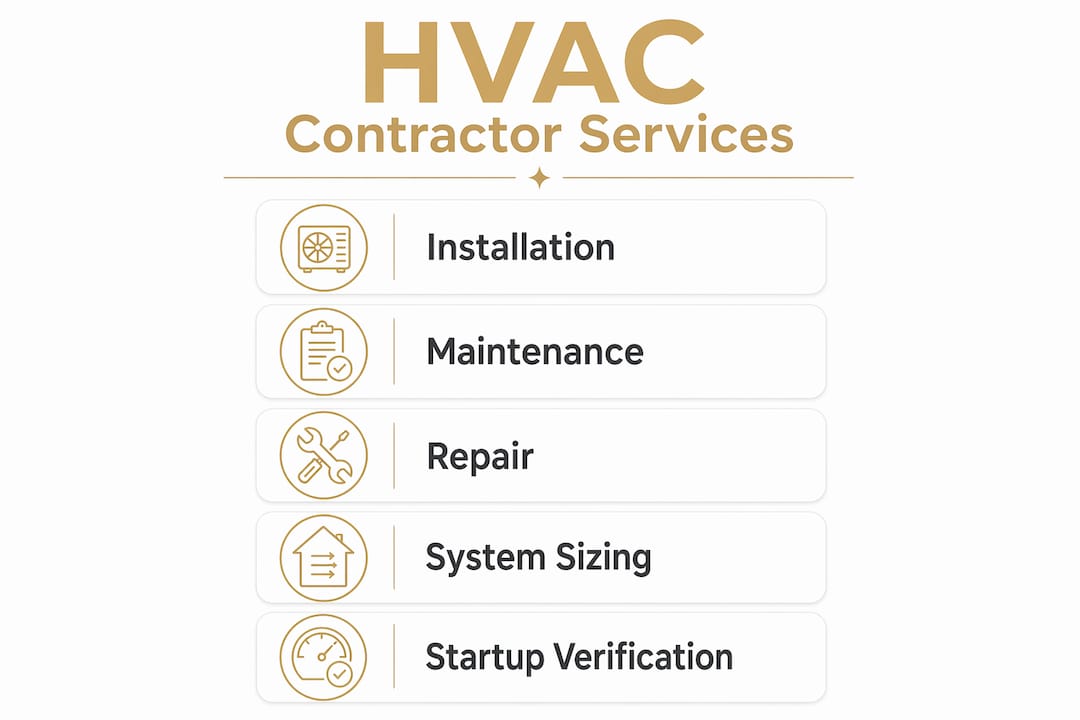
An HVAC contractor’s core responsibilities cover three distinct service categories: installation, maintenance, and repair. Each category involves specific tasks that require both technical training and hands-on experience.
Installation services
Installation is the most complex service an HVAC contractor performs. The process starts with evaluating your existing system and the structure of your home, then removing old equipment and replacing it with properly sized units. Installation work also includes updating ductwork, refreshing electrical wiring, connecting refrigerant lines, and completing final inspections before the system goes live.
Maintenance services
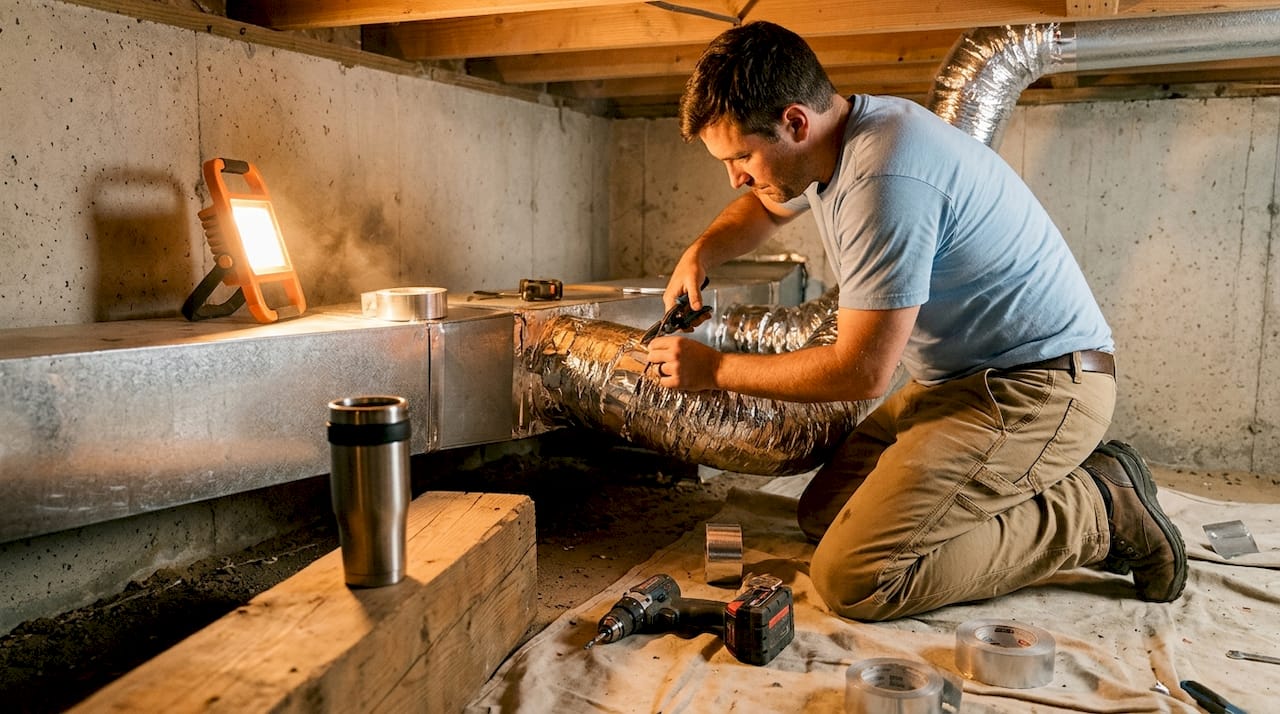
Routine maintenance is where most homeowners get the most value per dollar spent. A licensed contractor will inspect all major components, clean coils and drain lines, replace air filters, check refrigerant levels, and test controls for proper operation. These preventive steps improve efficiency and catch small problems before they become expensive failures.
Repair services
Repair work covers everything from a tripped circuit breaker to a failed compressor. Contractors troubleshoot symptoms, identify faulty components, and replace or rebuild what is broken. Many HVAC companies, including Upright Construction & HVAC, offer emergency repair services around the clock because heating and cooling failures rarely happen at a convenient time.
Pro Tip: Schedule maintenance visits in spring for your cooling system and fall for your heating system. Catching issues before peak season means faster service, lower costs, and no emergency calls on the hottest day of the year.
How do HVAC contractors determine the right system for your home?
Choosing the right equipment is not a guessing game. Qualified contractors use three industry-standard manuals published by ACCA (Air Conditioning Contractors of America) to size systems and design ductwork with precision.
Manual J is the industry standard for calculating how much heating and cooling a home actually needs. It accounts for over 30 variables including insulation levels, window area, ceiling height, local climate data, and air infiltration rates. The result is a BTU load number that tells the contractor exactly how powerful the equipment needs to be.
Manual S takes that load number and selects the specific equipment model that matches it. This step prevents a common and costly mistake: oversizing. An oversized air conditioner cools a room too quickly, shuts off before removing humidity, and cycles on and off repeatedly. That short-cycling wastes energy and wears out the equipment faster.
Manual D then designs the duct system to deliver the right amount of airflow to every room in the house. It accounts for duct friction, fitting losses, static pressure limits, and return air capacity. A system sized correctly by Manual J but connected to poorly designed ducts will still underperform.
| Method | Purpose | What happens without it |
|---|---|---|
| Manual J | Calculates home heating and cooling load | Equipment is over or undersized, wasting energy |
| Manual S | Selects equipment matched to the load | Wrong unit size causes short-cycling and humidity problems |
| Manual D | Designs ductwork for proper airflow per room | Rooms run hot or cold despite correct equipment size |
Pro Tip: Ask any contractor you interview whether they perform a Manual J load calculation before recommending equipment. If they size the system by square footage alone or by matching the old unit, that is a red flag worth taking seriously.
What specific tasks happen during HVAC system installation?
The physical installation process is more involved than most homeowners realize. A trained HVAC installer works through a structured sequence of tasks to make sure the system operates correctly from day one.
- Fabricate and install ductwork. Supply ducts, return ducts, and exhaust pathways are measured, cut, and sealed to the duct design specifications. Leaky ducts can waste 20 to 30 percent of conditioned air before it reaches the living space.
- Mount major equipment. Air handlers, furnaces, heat pumps, and outdoor condensing units are positioned, leveled, and secured according to manufacturer requirements and local building codes.
- Run refrigerant piping. Copper refrigerant lines connect indoor and outdoor units. Contractors follow EPA Section 608 standards for handling refrigerants, which requires certification to purchase and work with regulated substances.
- Install thermostats and electrical connections. Control wiring, low-voltage connections, and line-voltage electrical work are completed and verified against the system’s wiring diagrams.
- Perform startup verification. This final step is where quality installation is confirmed. The contractor measures airflow rates, checks temperature differentials across the coil, verifies controls sequencing, and confirms the system matches manufacturer specifications. Powering on the equipment is not the same as verifying it runs correctly.
This sequence matters because skipping or rushing any step creates problems that show up weeks or months later, often after the crew has moved on to the next job.
What responsibilities do HVAC contractors have beyond installation and repairs?
The role of an HVAC contractor extends well past turning a wrench. Several administrative and coordination duties are just as important as the physical work.
- Testing, adjusting, and balancing (TAB). Proper TAB confirms that airflow across the entire system is balanced within plus or minus 10 percent of the design specifications. Without this step, some rooms get too much air and others get too little, regardless of how well the equipment was installed.
- Commissioning documentation. Contractors provide startup reports, equipment data sheets, and TAB results. These documents are required for manufacturer warranties and may be needed for building permits or energy compliance inspections.
- Trade coordination. On larger projects, HVAC contractors coordinate with electricians, plumbers, and general contractors to define who is responsible for which tasks. Clear scope boundaries prevent disputes and gaps in the work.
- Insurance coverage. Licensed HVAC contractors carry liability insurance and workers’ compensation. Commercial projects often require $1 to $2 million in general liability coverage. For homeowners, hiring an insured contractor protects you from financial liability if a worker is injured on your property.
These responsibilities separate a professional contractor from an unlicensed handyman. When you hire someone without proper documentation and insurance, you absorb the risk.
Key takeaways
A licensed HVAC contractor delivers far more than equipment installation. The full scope of the role covers system design, physical installation, testing, documentation, and ongoing maintenance.
| Point | Details |
|---|---|
| Core services | Contractors install, maintain, and repair heating, cooling, and ventilation systems. |
| Proper sizing matters | Manual J, Manual S, and Manual D together prevent oversizing, undersizing, and airflow imbalance. |
| Startup verification | Confirming airflow, temperature splits, and controls is what separates a correct install from one that just powers on. |
| Beyond the wrench | TAB reports, commissioning documents, and insurance are contractor responsibilities that protect homeowners. |
| Ask the right questions | Request proof of Manual J calculations, certifications, and insurance before signing any contract. |
What I have learned after 15 years of HVAC work in Los Angeles
Here is something I tell every homeowner I meet: the most expensive HVAC mistake is not buying the wrong brand. It is hiring someone who skips the sizing and design process entirely.
I have walked into homes where a previous contractor installed a brand-new system that ran constantly, never reached the set temperature, and left the house humid in summer. Every time, the root cause was the same. Nobody did a Manual J calculation. Nobody designed the duct system. The installer matched the old unit’s tonnage, bolted in the new equipment, and called it done.
Startup verification is another area where I see corners cut regularly. There is a real difference between “it runs” and “it runs correctly.” Checking airflow rates, measuring temperature differentials, and confirming controls sequencing takes an extra hour or two. Some contractors skip it because the homeowner cannot see it happening. I think that is a serious breach of professional responsibility.
When you are comparing contractor estimates, do not just look at the bottom line price. Ask whether a load calculation is included. Ask who performs the TAB and whether you receive documentation. Ask to see their license number and proof of insurance. A contractor who answers those questions confidently and specifically is one worth trusting.
The contractors who do this work right are not the cheapest option. But they are the ones whose systems are still running efficiently five and ten years later without constant service calls.
— Ernie M
Trusted HVAC contractor services in the Los Angeles area
If you are ready to stop guessing about your heating and cooling system and want a licensed professional who follows the full process from load calculation to startup verification, Upright Construction & HVAC is here to help.

Our team of licensed HVAC technicians serves homeowners across the Van Nuys area and greater Los Angeles with installation, routine maintenance, and emergency repair services. We carry full liability insurance, provide commissioning documentation, and back our work with clear service warranties. Whether you need a new system installed or your current one diagnosed and repaired, call us for a free consultation. We will give you straight answers and a transparent estimate with no surprises.
FAQ
What does an HVAC contractor do on a service call?
During a service call, an HVAC contractor inspects the system, diagnoses the problem, and repairs or replaces faulty components. The visit typically includes checking refrigerant levels, testing electrical connections, and verifying that the system operates within manufacturer specifications.
How do I know if my HVAC contractor is qualified?
A qualified HVAC contractor holds a valid state license, carries liability and workers’ compensation insurance, and can demonstrate certifications such as EPA Section 608 for refrigerant handling. Ask for their license number and verify it with your state licensing board before signing a contract.
What can HVAC contractors fix?
HVAC contractors can fix heating and cooling problems including failed compressors, refrigerant leaks, broken heat exchangers, faulty thermostats, clogged drain lines, and ductwork leaks. They also address airflow imbalances and electrical faults within the HVAC system.
Why does proper system sizing matter so much?
An oversized or undersized system wastes energy, causes humidity problems, and wears out faster due to short-cycling. Manual J load calculations use over 30 home-specific variables to determine the exact BTU capacity needed, preventing these problems from the start.
How often should I schedule HVAC maintenance?
Most manufacturers and contractors recommend maintenance twice per year: once in spring before cooling season and once in fall before heating season. Regular maintenance extends equipment life, maintains efficiency, and keeps manufacturer warranties valid.
Recommended
- Understanding The Basics Of Air Handlers In HVAC Systems – Upright Construction & HVAC
- HVAC Contractor Van Nuys CA | Licensed C20 | Upright HVAC
- Home HVAC Furnaces: Top 8 Quick Fixes For Heating Problems With Home HVAC Furnaces – Upright Construction & HVAC
- HVAC Contractor Van Nuys, CA | Upright Construction & HVAC