
- Key Takeaways
- Role of emergency HVAC technician: core responsibilities
- What qualifications make a technician ready for emergencies
- Common emergencies and how technicians respond
- How to prepare for and work with an emergency technician
- My honest take on emergency HVAC repair
- Get expert emergency HVAC help when it counts
- FAQ
- Recommended
TL;DR:
- Emergency HVAC technicians swiftly diagnose and repair urgent heating or cooling failures to ensure safety and comfort during crises.
- They possess specialized certifications like NATE and EPA Section 608, and respond promptly under pressure with clear communication and comprehensive knowledge.
When your heat goes out at midnight in January, or your AC quits on the hottest day of the summer, you do not have time to Google what a standard service call looks like. The role of emergency hvac technician is built around exactly that moment. These are not the same professionals who show up for a scheduled tune-up. They carry different skills, hold specific certifications, and train to solve problems fast under pressure. This guide breaks down who they are, what they actually do, and how you can work with one effectively the next time your system fails at the worst possible time.
Key Takeaways
| Point | Details |
|---|---|
| Emergency technicians are specialists | They diagnose and repair urgent HVAC failures faster than standard service calls allow. |
| NATE certification matters most | Certified technicians prevent repeat failures and resolve complex electrical or refrigerant issues correctly the first time. |
| Speed of response protects health | Loss of heating or cooling can threaten vulnerable people at home, making fast technician response a safety issue. |
| Homeowners should prepare information | Having your system model, symptoms, and thermostat readings ready cuts diagnostic time significantly. |
| Not every repair call is an emergency | Understanding when to call 24/7 service versus scheduling saves money and gets the right help faster. |
Role of emergency HVAC technician: core responsibilities
The first thing to understand is that emergency HVAC technicians are problem solvers under a clock. A standard technician might spend an hour reviewing your system history and scheduling a part. An emergency technician walks in knowing they need a working answer in minutes, not days.
Here is what their job actually involves on a residential call:
- Rapid system diagnosis. Structured diagnostic checklists reduce diagnostic time by up to 60% during HVAC emergencies. Experienced technicians know which systems to check first: thermostat, power supply, airflow, and refrigerant pressure.
- Immediate safety assessment. Before touching components, they check for gas leaks, electrical faults, or refrigerant exposure that could harm your household.
- Temporary versus permanent repairs. Sometimes a capacitor swap restores cooling in 20 minutes. Other times, a compressor failure means a temporary workaround tonight and a full replacement tomorrow. A good technician explains which situation you are in before they start.
- Code compliance under pressure. Even urgent repairs have to meet local building and safety codes. Cutting corners to save time now creates liability and safety hazards later.
- Documentation. Fast, documented communication and technician accountability reduces overall system downtime. Every emergency call should produce a written record of what was found and what was done.
What separates HVAC technician job duties in emergency settings from routine work is the mental shift. Standard maintenance is methodical. Emergency response is triage. The technician prioritizes the most dangerous or most disruptive problem first, then addresses supporting issues in sequence.
Pro Tip: Before the technician arrives, write down the exact symptoms you noticed: odd noises, error codes on your thermostat, when the problem started, and whether any recent weather or power events preceded the failure. This cuts the diagnostic phase significantly.
What qualifications make a technician ready for emergencies
You should never assume that any licensed HVAC professional is trained for emergency calls. The skills required go well beyond knowing how to service equipment on a normal day.
NATE certification is the most recognized credential in the industry. It confirms that a technician has verified knowledge of refrigeration cycles, electrical safety, and system diagnostics, specifically the areas most likely to come up in an emergency. Hiring certified technicians during emergencies prevents costly, recurring issues because the repair is built on standardized expertise rather than guesswork.
Beyond certification, the qualities that matter in a real emergency include:
- Electrical system knowledge. Many HVAC failures trace back to faulty capacitors, tripped breakers, or wiring issues. A technician without strong electrical grounding will misdiagnose these every time.
- Refrigerant handling certification. EPA Section 608 certification is legally required to handle refrigerants. Any technician working on your cooling system should carry it.
- Communication under stress. Certified emergency technicians combine technical skill with customer service to communicate clearly during stressful calls. You should be able to understand what went wrong, what was fixed, and what to watch for next.
- Reliable response time. A technician who promises emergency service but shows up six hours later is not truly an emergency provider. Verify response time commitments before you need them.
The best emergency HVAC technicians I have spoken to describe their job as 80% diagnosis and 20% repair. If you find the real problem fast, the fix usually follows quickly. The dangerous ones are those who start replacing parts before they understand what actually failed.
Knowing how to become an HVAC technician qualified for emergencies takes years of field experience in addition to classroom training. When you are vetting a company, ask directly how long their technicians have been doing emergency residential calls. That number matters more than a company’s years in business.
Common emergencies and how technicians respond
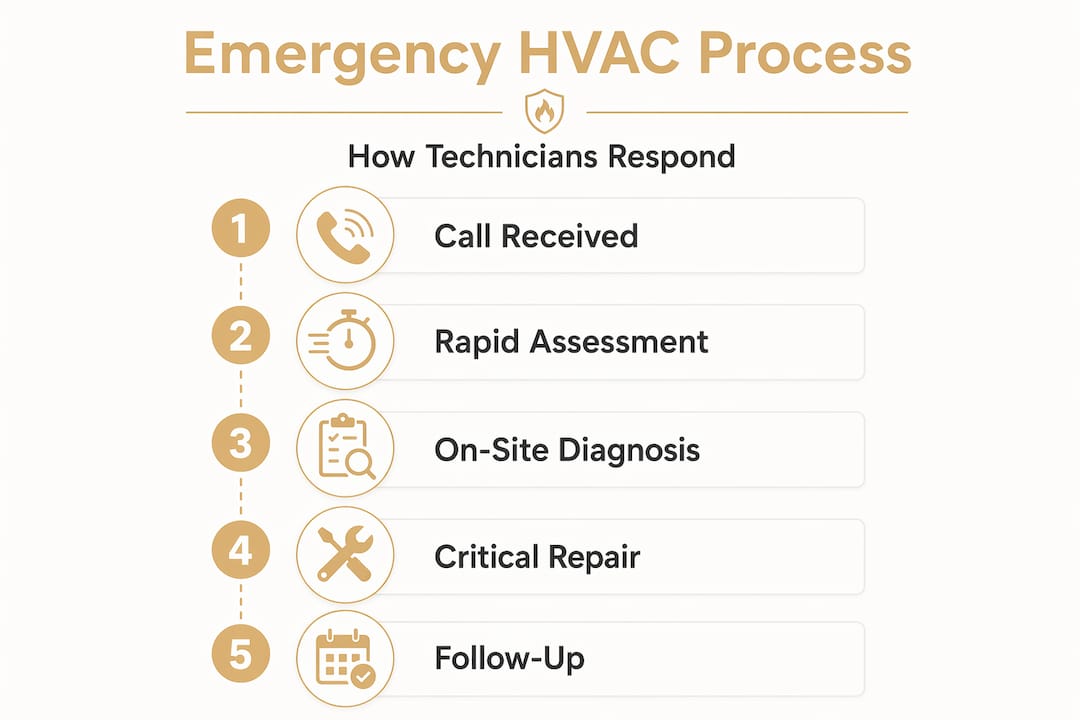
Understanding what an emergency HVAC call actually looks like step by step takes the fear out of a bad situation. Here are the most common scenarios homeowners face and how a qualified technician handles each one.
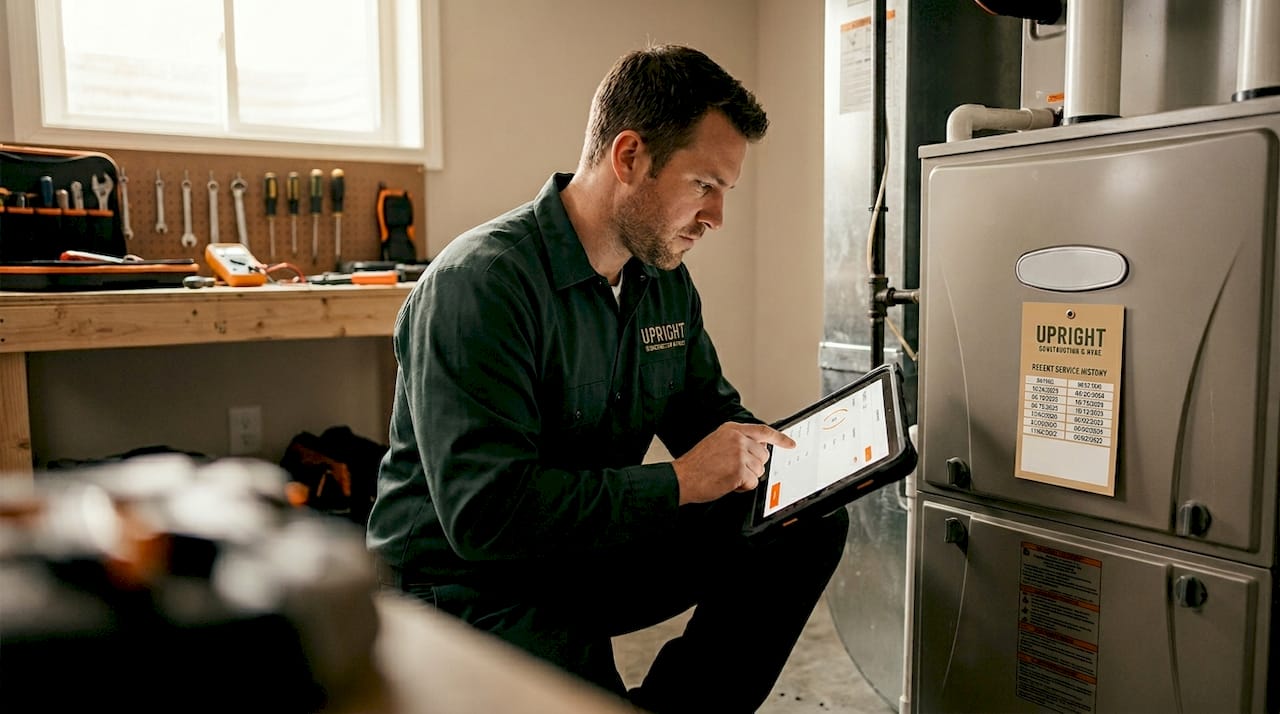
Scenario 1: No heat during freezing temperatures. Extreme indoor temperatures pose real health risks for infants, elderly, or ill family members. This qualifies as a genuine emergency. The technician checks the furnace ignitor, gas valve, and heat exchanger first. A failed ignitor is often a 30-minute repair. A cracked heat exchanger requires shutdown for safety and a longer fix.
Scenario 2: Air conditioning failure in a heat wave. The technician checks the capacitor and compressor first, then looks for refrigerant pressure issues. Emergency repairs often involve diagnosing compressor and capacitor failures and refrigerant leaks during off-hours.
Here is a step-by-step of a typical compressor or capacitor call:
- Technician confirms the system is receiving power and thermostat settings are correct.
- They test the capacitor with a multimeter. A failed capacitor reads flat.
- If the capacitor is the culprit, it is replaced on the spot. Most technicians carry common capacitor sizes in their van.
- If the compressor itself has failed, the technician explains replacement costs and timelines honestly.
- A temporary cooling alternative may be suggested for that night if the repair cannot be completed immediately.
Scenario 3: Refrigerant leak. The technician identifies the leak source, evacuates the affected lines safely, repairs the breach, and recharges the system. This is not a DIY situation. Refrigerant handling requires certification and specialized equipment.
Scenario 4: Electrical fault causing full system shutdown. Escalation delays are the most preventable cause of serious HVAC damage. A qualified technician uses digital tools to trace the fault, document it, and escalate if a broader electrical issue in your home is involved.
The key statistic to keep in mind: the first five minutes of failure are critical. Confirming what failed, which zones are affected, and what the temperature is at the time prevents the problem from cascading into a full system breakdown.
How to prepare for and work with an emergency technician
Being a prepared homeowner makes a real difference in how fast your system gets back online. There are practical things you can do before the technician even arrives.
- Know your system basics. Find the model number and brand of your HVAC unit and write it down somewhere accessible. This lets the technician pull up technical specs and part compatibility before walking through your door.
- Describe symptoms clearly. Note when the problem started, what changed, whether you heard unusual sounds, and what your thermostat reads. Providing this context upfront helps technicians narrow down the problem before they arrive.
- Verify credentials before booking. Check for a valid contractor license, NATE certification if possible, and reviews that specifically mention emergency calls. For Los Angeles homeowners, our AC repair tips include a checklist for vetting emergency providers quickly.
- Understand emergency pricing. After-hours rates are standard in emergency HVAC services. Ask about the service call fee and labor rate upfront. A reputable company will not hide these from you.
- Keep the work area clear. Give the technician unobstructed access to your indoor and outdoor units. This alone can shave 15 minutes off their arrival to first diagnosis.
Pro Tip: If your HVAC system is older than 15 years and has required more than two emergency repairs in the past year, ask the technician honestly whether repair or replacement makes more financial sense. A trustworthy professional will tell you the truth even if it means a longer job for them.
24/7 dispatch models with certified technicians provide the most reliable coverage in high-demand climates. When choosing an emergency HVAC provider, confirm they operate this model rather than forwarding calls to an on-call technician who may or may not respond quickly.
My honest take on emergency HVAC repair
I have seen homeowners make the same mistake repeatedly: they call whoever answers first when their system fails. That urgency is understandable. But the wrong technician in an emergency does not just fail to fix the problem. They often make it worse.
In my experience, the most expensive HVAC repairs I have seen came directly after rushed, informal emergency calls where the technician replaced parts without diagnosing the actual failure. The homeowner paid twice: once for the wrong repair and once for the real fix. Hiring certified technicians is critical because informal or rushed repairs lead to repeat failures and higher long-term costs.
What I believe separates a truly great emergency technician is not just technical knowledge. It is honesty under pressure. The best ones tell you clearly what they found, what they fixed, and what they could not address in one visit. That transparency is what separates a one-time fix from a lasting repair. If a technician cannot explain the problem in plain language, that is a warning sign worth taking seriously.
— lc
Get expert emergency HVAC help when it counts
When your system fails at 2 a.m. on a hot Los Angeles night, you need more than a warm body with tools. You need a certified, experienced technician who shows up prepared.

Uprightch has provided emergency HVAC services across Los Angeles for over 15 years, with certified technicians available around the clock for heating and cooling failures. Whether you are dealing with a compressor failure, refrigerant leak, or complete system shutdown, our team carries the parts, certifications, and experience to get your home comfortable again fast. Check out our furnace quick fixes for heating emergencies, or go straight to our 24/7 emergency repair page to book a certified technician now. Transparent pricing and same-night dispatch are part of every call.
FAQ
What does an emergency HVAC technician do?
An emergency HVAC technician diagnoses and repairs urgent heating and cooling failures that cannot wait for a regular scheduled appointment. Their primary job is restoring safe, functional temperature control in your home as quickly as possible.
How is an emergency HVAC technician different from a regular one?
Emergency technicians are trained for rapid diagnosis under pressure and typically carry a wider inventory of common parts in their service vehicle. They respond outside normal business hours and prioritize speed and safety over scheduled workflow.
When should I call emergency HVAC services?
Call emergency HVAC services when the loss of heating or cooling poses a health or safety risk, such as extreme indoor temperatures affecting vulnerable household members. Refrigerant leaks, electrical faults, and complete system shutdowns also qualify as true emergencies.
What certifications should an emergency HVAC technician have?
Look for NATE certification and EPA Section 608 certification at minimum. NATE confirms verified knowledge of refrigeration and electrical systems, while EPA Section 608 is legally required for any technician handling refrigerants.
How can I speed up the repair process during an emergency call?
Have your HVAC system model number, a clear description of symptoms, and your thermostat readings ready before the technician arrives. This information cuts diagnostic time and helps the technician arrive prepared with the right parts.
Recommended
- Home HVAC Furnaces: Top 8 Quick Fixes For Heating Problems With Home HVAC Furnaces – Upright Construction & HVAC
- Understanding The Basics Of Air Handlers In HVAC Systems – Upright Construction & HVAC
- Essential Tips When Your Air Conditioner Needs Repairs – Upright Construction & HVAC
- 4 Common Reasons For Cold Air Blowing From HVAC Heaters – Upright Construction & HVAC