
- Why are my AC vents not cooling the house?
- Does your thermostat setting cause warm air from vents?
- What mechanical problems stop cool air from reaching vents?
- How do duct problems cause uneven or weak cooling?
- Key Takeaways
- What 15 years of AC calls taught me
- When Upright Construction & HVAC can help
- FAQ
- Recommended
TL;DR:
- Restricted airflow from dirty filters or blocked vents causes most AC cooling issues.
- Thermostat errors, refrigerant leaks, and mechanical failures also prevent vents from delivering cold air effectively.
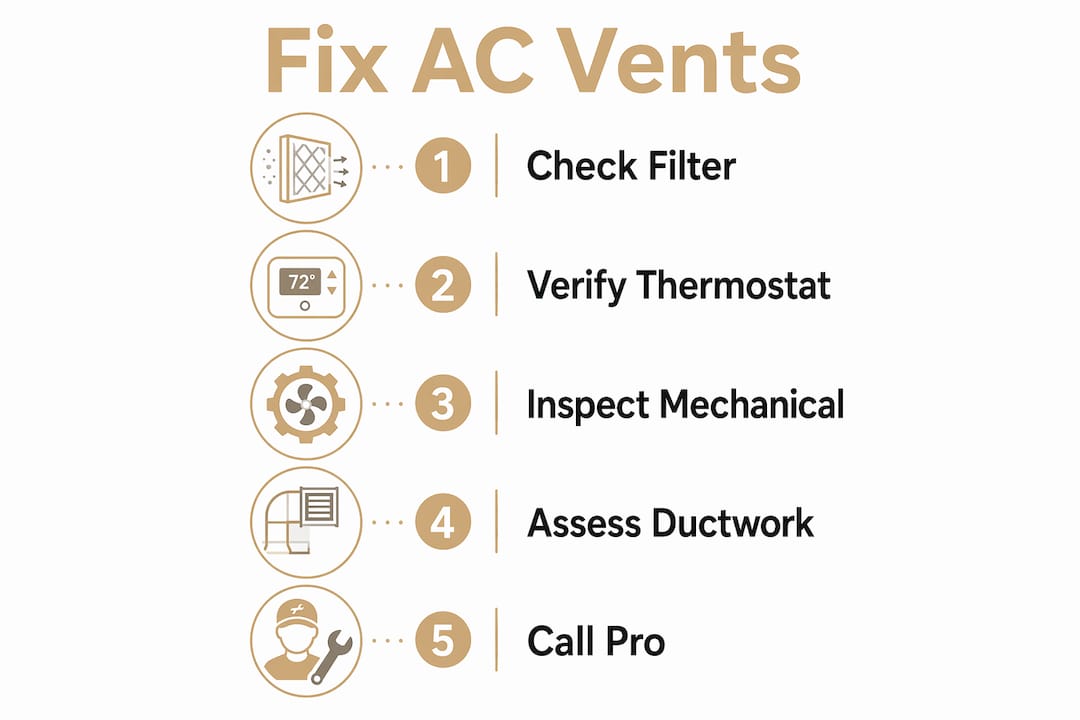
Air conditioning vents fail to deliver cool air for four main reasons: restricted airflow, incorrect thermostat settings, refrigerant leaks, or failed mechanical components. Understanding why ac vents not cooling is the first step to getting your home comfortable again. Most of these problems have clear warning signs, and several can be checked before you ever pick up the phone. At Upright Construction & HVAC, we’ve diagnosed these exact issues in Los Angeles homes for over 15 years, and the causes are almost always the same handful of culprits.
Why are my AC vents not cooling the house?
Restricted airflow is the single most common reason your vents stop delivering cold air. The HVAC industry calls this an “airflow restriction,” and it starts at the air filter. Clogged air filters are the leading cause of AC not blowing cold air, and a 1-inch fiberglass filter can clog in as little as 3–4 weeks during peak summer use. A clogged filter forces your system to work harder while delivering less. The result is warm air at the vents, higher energy bills, and eventually a frozen evaporator coil.
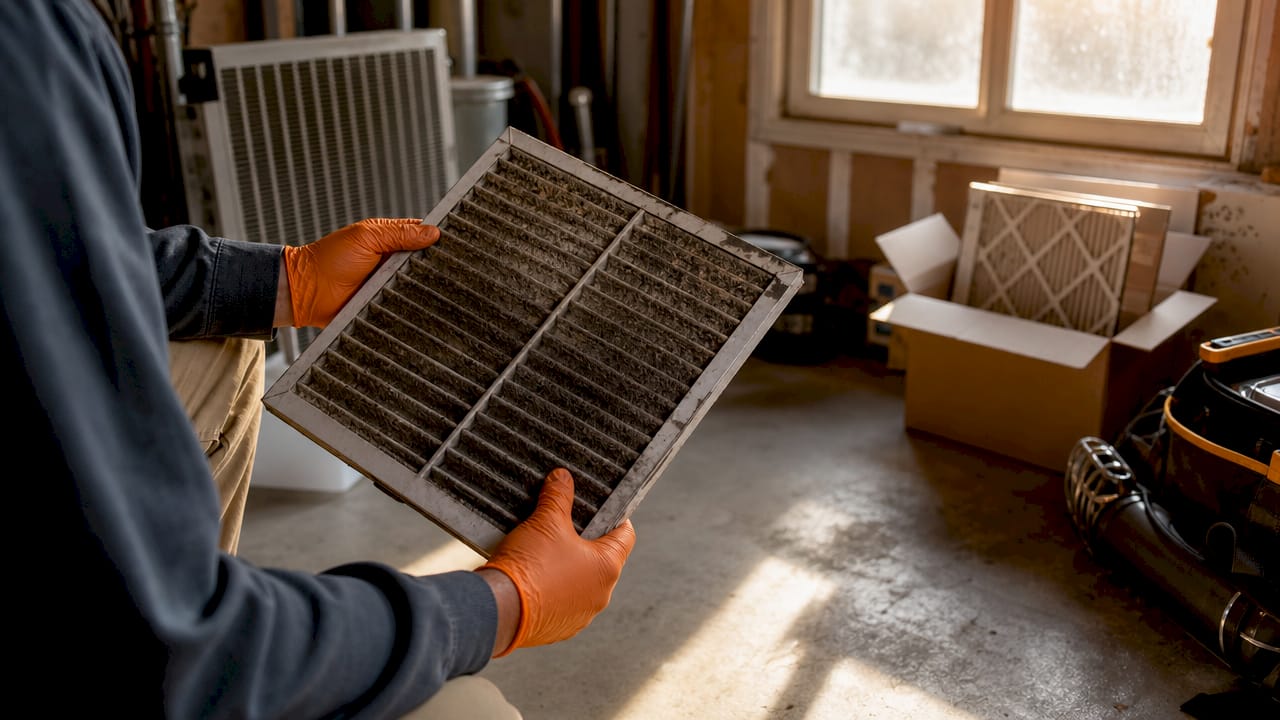
Blocked vents make the problem worse. Furniture, rugs, or pet beds placed over supply or return vents cut off the air your system needs to circulate. Your AC keeps running, but the air has nowhere to go. The system strains, efficiency drops, and rooms stay warm.
Here are the most common airflow restriction causes to check first:
- Dirty or clogged air filter (replace every 3–4 weeks in summer)
- Closed supply vents in unused rooms
- Furniture or rugs blocking return air grilles
- Collapsed or kinked flexible duct near a vent
- Ice buildup on the evaporator coil from prolonged restriction
Filter replacements cost under $15. That’s the cheapest fix in HVAC, and it solves a surprising number of calls we get every summer.
Pro Tip: Check your air filter every month from june through september. Hold it up to a light source. If you can’t see light through it, replace it immediately.
Does your thermostat setting cause warm air from vents?
Thermostat errors cause more “AC not cooling” calls than most homeowners expect. The thermostat must be set to “Cool” mode with the target temperature at least 3–5 degrees below the current room temperature. If the mode is set to “Heat” or “Fan Only,” the system blows air without cooling it. That warm air from the vents is not a mechanical failure. It’s a settings issue.
The fan setting matters just as much. When the fan is set to “On” instead of “Auto,” it runs continuously, even when the compressor is off. You feel air moving, but it’s not chilled. Switching the fan to “Auto” fixes this immediately.
Watch for these thermostat warning signs:
- Screen is blank or unresponsive (check batteries first)
- Temperature reading seems off compared to a separate thermometer
- System short-cycles, turning on and off every few minutes
- Cooling cycle never seems to finish, even on hot days
Older thermostats can lose calibration over time. A miscalibrated thermostat tells the system the room is cooler than it actually is, so the compressor shuts off too early. If your thermostat is more than 10 years old and you’ve ruled out filter and vent issues, replacing it is a low-cost fix worth trying before calling for a full diagnostic.
What mechanical problems stop cool air from reaching vents?
Refrigerant leaks, frozen coils, failed capacitors, and dirty outdoor units are the four mechanical problems most likely to kill your cooling. Each one has a distinct signature, and knowing which you’re dealing with saves time and money.
Refrigerant leaks
Refrigerant does not get used up during normal operation. Low refrigerant always means a leak, and that leak must be found and sealed by an EPA-certified technician before any recharge. Topping off refrigerant without fixing the leak is a waste of money. The refrigerant will escape again, and you’ll be back to warm air within weeks.
Frozen evaporator coils
Frozen evaporator coils form when airflow is restricted or refrigerant is low. Ice acts as insulation on the coil, blocking heat exchange entirely. The tell-tale sign is ice on the copper refrigerant lines near your indoor air handler. When this happens, turn the system off and let the coil thaw completely before restarting. Running the system with a frozen coil can damage the compressor.
Failed capacitors
A failed capacitor is the most common electrical component failure in residential AC systems. The capacitor starts the compressor and fan motors. When it fails, you’ll hear a hum from the outdoor unit but the fan won’t spin. Capacitor replacement is inexpensive when caught early, but ignoring it can burn out the motor entirely.
Dirty outdoor condenser unit
A condenser coated with debris from dust, pollen, or cottonwood cannot release heat effectively. The system runs constantly but never reaches the set temperature. Gently rinsing the condenser fins with a garden hose (from the inside out) once a season makes a real difference.
Signs pointing to these mechanical issues include:
- Warm air from all vents despite correct thermostat settings
- Ice visible on refrigerant lines or the air handler
- Outdoor unit humming but fan not spinning
- System runs non-stop without cooling the space
- Burning smell or unusual mechanical noise from either unit
Pro Tip: Never attempt a DIY refrigerant recharge. Handling refrigerant without EPA certification is illegal and dangerous. Call a certified HVAC technician the moment you suspect a leak.
How do duct problems cause uneven or weak cooling?
Ductwork problems are the hidden cause behind many “why is my AC warm in one room but fine in another” complaints. Leaking or disconnected ducts dump conditioned air into attics, crawlspaces, or wall cavities before it ever reaches the vent. The system works fine. The air just never arrives where you need it.
Duct sizing and balance matter too. Undersized ducts restrict airflow to certain zones, creating hot spots even when the rest of the house feels comfortable. Poorly balanced systems push too much air to some rooms and not enough to others.
A useful homeowner check: measure the temperature at a supply vent and at the nearest return grille. A difference of 14–20 degrees Fahrenheit between supply and return indicates the system is working correctly. A smaller gap points to low refrigerant, a dirty coil, or duct leaks reducing efficiency.
Check these duct issues yourself before calling a pro:
- Inspect visible duct connections in the attic or basement for gaps or disconnections
- Look for flexible ducts that are kinked, crushed, or sagging
- Feel along accessible duct runs for air escaping at seams
- Check that all dampers (the adjustable plates inside ducts) are open in rooms that feel warm
When gaps are large or ducts run through unconditioned spaces, professional duct sealing or replacement is the right call. Sealing duct leaks is one of the highest-return HVAC repairs a homeowner can make. You can learn more about common HVAC repair challenges that overlap with duct performance issues.
Key Takeaways
Dirty air filters, thermostat errors, refrigerant leaks, and duct problems are the four causes behind nearly every case of AC vents not cooling effectively.
| Point | Details |
|---|---|
| Check the filter first | Replace 1-inch filters every 3–4 weeks in summer; this fix costs under $15. |
| Verify thermostat settings | Set mode to “Cool” and fan to “Auto” before assuming a mechanical failure. |
| Refrigerant leaks need a pro | Low refrigerant always means a leak; only an EPA-certified technician can fix it legally. |
| Measure supply vs. return temp | A 14–20°F difference confirms proper AC function; less indicates a performance problem. |
| Duct leaks waste conditioned air | Inspect visible ducts for gaps and crushed sections before scheduling a full diagnostic. |
What 15 years of AC calls taught me
I’ve been walking into homes with warm vents for a long time, and the honest truth is that most calls could have been avoided with one simple habit: checking the air filter monthly. I can’t count how many times I’ve arrived at a house in july, pulled out a filter that looks like a gray wool blanket, and had the homeowner tell me they hadn’t changed it since last fall. Swap the filter, and the system starts cooling within the hour.
The calls that genuinely worry me are the ones where a homeowner has been resetting a tripped circuit breaker repeatedly. Repeated breaker trips signal a serious electrical fault. Reset it once. If it trips again, stop and call a professional. That’s not a thermostat issue or a filter issue. That’s a fire risk.
The other mistake I see constantly is homeowners waiting too long. A frozen coil or a humming outdoor unit that won’t spin are not “wait and see” problems. They get more expensive the longer they sit. If you’ve checked the filter, confirmed the thermostat settings, and the system still isn’t cooling, that’s the moment to call. The 5 signs your AC needs immediate repair are worth knowing before a small problem becomes a $2,000 repair.
My advice: do the easy checks yourself. Replace the filter, verify the thermostat, clear the vents, and look at the outdoor unit. If none of that fixes it, you’ve already ruled out the cheap causes and you can call a technician with confidence.
— Ernie M
When Upright Construction & HVAC can help
Upright Construction & HVAC has served Los Angeles homeowners for over 15 years, diagnosing everything from clogged filters to failed compressors. Our certified technicians handle the full range of AC cooling problems, including refrigerant leak detection, capacitor replacement, coil cleaning, and duct repairs.

Professional diagnostic visits typically run $80–$200, and catching a problem early keeps major repair costs from climbing into the thousands. An HVAC service contract covers routine maintenance and priority scheduling, so small issues get found before they become expensive ones. If you need fast help in the Los Angeles area, our team is available 24/7 for emergency AC repair with same-day response.
FAQ
Why are my AC vents blowing warm air?
The most common causes are a clogged air filter, incorrect thermostat settings, or a refrigerant leak. Check the filter and thermostat first before calling a technician.
How do I know if my AC has a refrigerant leak?
Signs include warm air from all vents, ice on the copper refrigerant lines, and a system that runs constantly without cooling. Refrigerant does not deplete on its own, so low levels always indicate a leak requiring an EPA-certified technician.
What does a 14–20°F temperature difference at vents mean?
A 14–20°F gap between supply and return vent temperatures confirms your AC is functioning correctly. A smaller difference points to low refrigerant, a dirty coil, or duct leaks reducing performance.
Can a dirty outdoor unit cause AC air flow issues?
Yes. A condenser coated with dust, pollen, or debris cannot release heat properly, causing the system to run non-stop without reaching the set temperature. Rinsing the fins with a garden hose once a season helps maintain heat transfer.
When should I call a professional instead of troubleshooting myself?
Call a professional if the circuit breaker trips more than once, if you see ice on refrigerant lines, if the outdoor fan won’t spin, or if the system makes burning smells or unusual mechanical noises. These symptoms indicate problems beyond basic homeowner checks.
Recommended
- Boost AC Efficiency How Capacitors Transform Performance – Upright Construction & HVAC
- 5 Signs Your AC Needs Immediate Repair – Upright Construction & HVAC
- Emergency AC Repair: Find Fast Help In Los Angeles
- 4 Main Common AC Problems In Los Angeles Homes – Tips On Dealing With Them – Upright Construction & HVAC