Learn how to choose a reliable HVAC contractor in 2026 with our step-by-step guide. Protect your investment and ensure comfort at home!
How to Choose a Reliable HVAC Contractor in 2026
- Key Takeaways
- How to choose a reliable HVAC contractor
- Evaluating reputation and customer feedback
- Comparing estimates and understanding fair pricing
- Questions to ask before you hire
- What to expect during the site visit
- My honest take on hiring an HVAC contractor
- Why Upright Construction & HVAC is worth a call
- FAQ
- Recommended
TL;DR:
- Choosing a reliable HVAC contractor involves verifying credentials, obtaining multiple detailed estimates, and ensuring proper system sizing through Manual J calculations. References, reputation, and clear communication are essential, as cuts in quality often lead to costly failures later. Conducting a thorough site visit and asking critical questions help ensure your home’s comfort, safety, and long-term energy efficiency.
Picking the wrong HVAC contractor is one of the most expensive mistakes a homeowner can make. A bad installation can cut your system’s lifespan in half, void your manufacturer warranty, and leave you with repair bills you never saw coming. When you need to choose a reliable HVAC contractor, you’re not just hiring someone to swap out equipment. You’re trusting them with your home’s comfort, your family’s safety, and thousands of dollars. This guide gives you a clear, no-nonsense process so you walk into that hiring decision with confidence.
Key Takeaways
| Point | Details |
|---|---|
| Verify credentials first | Check for an active state license, EPA 608 certification, and proof of liability insurance before anything else. |
| Get at least three written estimates | Compare equipment specs, permit costs, and labor warranties — not just the bottom-line price. |
| Ask about Manual J load calculations | A contractor who skips proper system sizing risks short cycling and long-term efficiency loss. |
| Watch for lowball bids | A bid 25-35% below market often hides missing permits, weak warranties, or under-qualified labor. |
| Expect a thorough site visit | A professional 60-90 minute site visit before any estimate is a sign of serious, qualified work. |
How to choose a reliable HVAC contractor
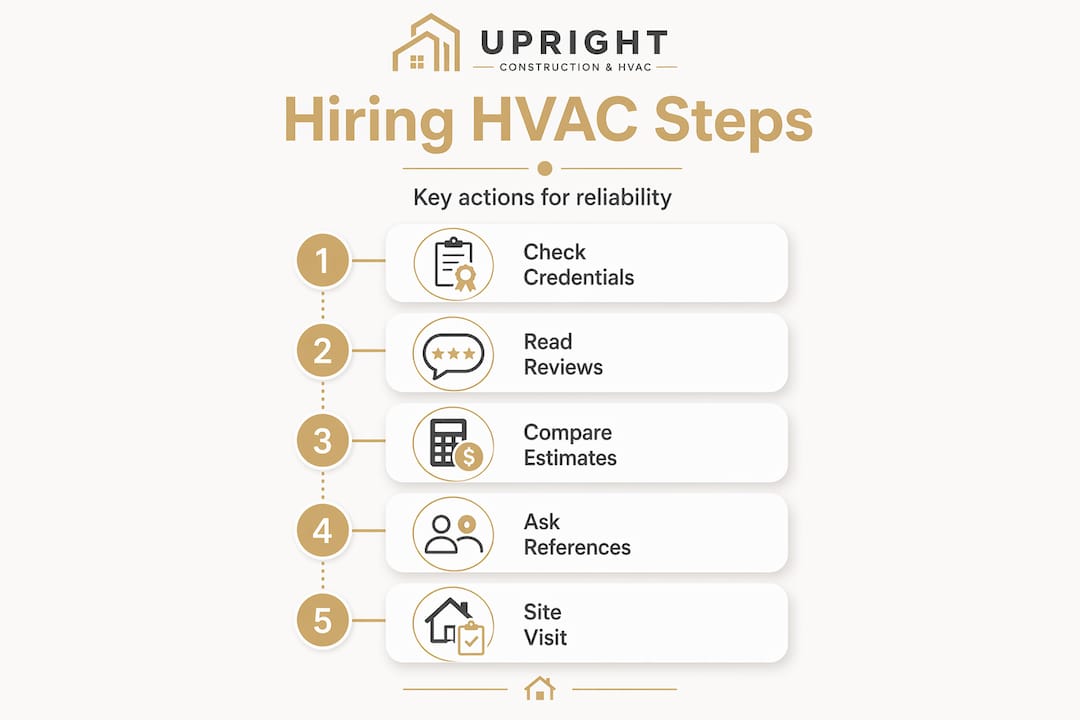
Most homeowners start their HVAC search by typing “best HVAC contractors near me” into Google and calling whoever has the flashiest ad. That approach almost always leads to regret. A truly reliable contractor checks seven core boxes before you ever discuss pricing: an active state license, at least $1 million in liability insurance, workers’ compensation coverage, EPA Section 608 certification, a NATE-certified technician on the crew, 50 or more reviews averaging 4.0 or better, and a documented practice of pulling permits.
Each of these matters for a specific reason. The state license confirms the contractor has met your jurisdiction’s legal standards for HVAC work. Liability insurance and workers’ comp protect you financially if something goes wrong on your property. And EPA 608 certification means the technician is legally qualified to handle refrigerants, which are regulated substances.
NATE certification deserves special mention. The North American Technician Excellence credential tests real-world competency, not just textbook knowledge. A crew with a NATE-certified technician is far less likely to make the sizing and installation errors that cause systems to fail early.
Pro Tip: Before you call a single contractor, visit your state contractor licensing board’s website. Most states offer a free online lookup tool where you can confirm a license is active, check its expiration date, and see if any complaints have been filed.
Here is a quick checklist to run through before you even reach out:
- Active state HVAC contractor license (verified online)
- General liability insurance of at least $1 million
- Workers’ compensation insurance
- EPA Section 608 refrigerant handling certification
- NATE-certified technician on staff
- Permit pulling as a standard practice
- 50+ reviews with an average rating of 4.0 or higher
Evaluating reputation and customer feedback
Credentials tell you a contractor is qualified. Reviews tell you whether they actually do good work. These are two different things, and you need both.
When reading online reviews for your HVAC contractor vetting process, pay attention to volume, recency, and how the company responds to criticism. A contractor with 200 reviews averaging 4.3 stars is a stronger signal than one with 15 reviews averaging 5.0 stars. Anyone can collect a handful of glowing testimonials. Consistent performance over hundreds of jobs is harder to fake.
Recent reviews matter more than older ones. A company can change ownership, lose key technicians, or let service quality slip. Focus on reviews from the past 12 to 18 months. If you notice the contractor ignores negative reviews or responds defensively, that tells you something real about how they handle problems after the job is done.
Referrals from neighbors and friends remain one of the most reliable ways to find trustworthy HVAC service. Especially when those referrals come from people who had similar work done. A neighbor who had a full system replacement last summer can tell you things no online review will, including whether the crew was respectful, whether the price stayed the same as the quote, and whether the contractor followed up afterward.
According to industry experience, installation quality impacts longevity more than equipment brand. A mediocre brand installed correctly will almost always outperform a premium brand installed sloppily. That’s why reputation matters so much. Look for contractors with 10 or more years of local residential service, clear flat-rate pricing, and a habit of putting the scope of work in writing before any job starts. Written scope and experience are among the strongest predictors of quality work.
Pro Tip: Ask any contractor you’re seriously considering for two or three references from jobs completed in the last six months. Specifically ask for references where the scope was similar to yours. Then actually call those homeowners.
Comparing estimates and understanding fair pricing
Never accept the first estimate you receive. Getting at least three written quotes is the single most effective way to protect yourself from overpaying or from hiring someone who cuts corners.
A legitimate residential HVAC replacement can range from $4,500 to $15,000 depending on your home’s size, the system’s efficiency rating, and your location. That wide range is why comparing estimates carefully is so critical. The number on the page means nothing without understanding what is and is not included.
Here is what every written estimate should break down clearly:
| Estimate Element | What to Look For |
|---|---|
| Equipment model and SEER rating | Specific make, model, and efficiency rating listed |
| Labor costs | Hours estimated and technician qualifications noted |
| Permit fees | Permit cost listed as a separate line item |
| Materials and supplies | Refrigerant, ductwork, hardware listed explicitly |
| Labor warranty | Duration and what it covers spelled out in writing |
| Maintenance plan options | Optional, but a sign of a contractor invested in long-term service |
Detailed written estimates are a mark of professionalism. If a contractor hands you a single-line quote with just a total dollar amount, that’s a red flag. You have no way of knowing what you’re actually getting.
Be especially careful with quotes that come in significantly lower than the others. A bid that is 25 to 35% below competitors almost always signals a problem: lower-tier equipment, missing permits, a short or nonexistent labor warranty, or subcontracted labor from crews the company doesn’t fully control. Lowest price contractors frequently cut these corners, which leads to premature system failure and unexpected out-of-pocket costs within a few years.
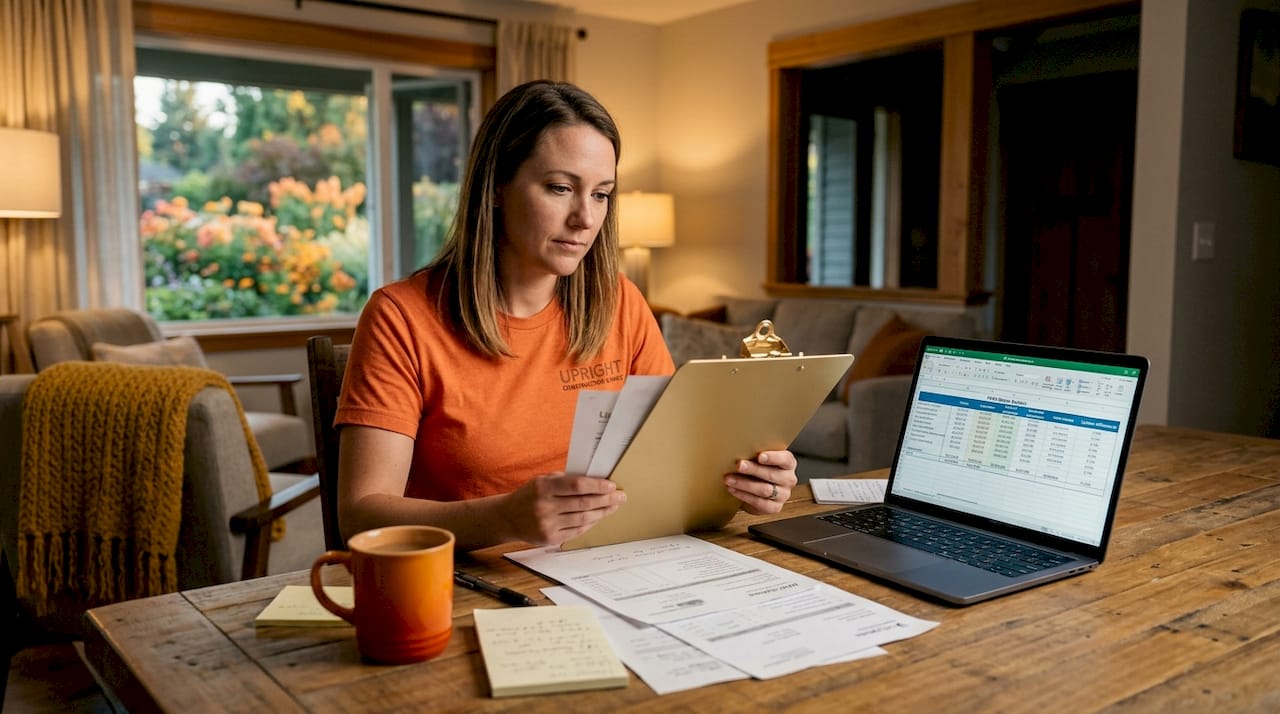
Pro Tip: When comparing quotes, build a simple spreadsheet with each line item side by side. You’ll quickly spot where one contractor is leaving out permit costs or offering a shorter labor warranty than the others. That spreadsheet often makes the right choice obvious.
Questions to ask before you hire
A professional contractor will answer your questions directly and confidently. Evasiveness or annoyance at being questioned is a serious warning sign. A trustworthy contractor welcomes scrutiny because they have nothing to hide.
Here are the questions to ask every contractor you’re considering:
- Can you provide your state license number and proof of insurance right now?
- Will you pull all required mechanical permits for this job?
- Do you perform a Manual J load calculation to size the system correctly?
- What labor warranty do you offer, and what exactly does it cover?
- Will your own employees handle the installation, or do you subcontract?
- Who do I contact if something goes wrong after installation?
- Do you offer ongoing maintenance plans or service agreements?
- What brands do you work with, and why do you recommend them for my home?
Question three deserves extra attention. Manual J load calculation is an industry-standard engineering process that accounts for your home’s insulation, window placement, floor plan, and local climate to determine the exact system size you need. A contractor who skips this step and just replaces your old unit with the same size is guessing. Oversized systems short-cycle, waste energy, and fail faster. Undersized systems run constantly and never fully condition your space.
Question five matters more than most homeowners realize. When a contractor subcontracts the installation, they often lose direct oversight of the work quality. Ask who specifically will show up at your home and what their qualifications are.
What to expect during the site visit
If a contractor offers to quote your job without seeing your home, walk away. A reputable contractor always conducts a thorough on-site inspection before providing an estimate. Expect the visit to take 60 to 90 minutes for a full system evaluation.
During that visit, a qualified technician should assess several things:
- Ductwork condition, sizing, and any visible leaks or obstructions
- Insulation levels in the attic, walls, and crawl spaces
- Airflow patterns and existing thermostat placement
- Electrical panel capacity if the new system requires higher amperage
- Current system’s age, condition, and reason for failure or replacement
A professional site visit should conclude with the contractor walking you through a written proposal that explains every line item. You should never feel rushed or pressured to sign on the same day. A contractor who pushes for an immediate decision is more interested in closing a sale than in doing right by your home.
After installation, expect a final walkthrough where the technician tests the system, confirms airflow across every room, reviews thermostat settings with you, and answers any questions. Good contractors schedule a follow-up check within 30 days. That follow-up is how you know they stand behind their work.
My honest take on hiring an HVAC contractor
I’ve been in the HVAC and construction business in Los Angeles for over 15 years, and the pattern I see most often is homeowners choosing the cheapest bid and then calling me a year later when something has gone wrong. I don’t say that to sell my services. I say it because it’s genuinely painful to watch someone spend thousands of dollars fixing a problem that a better initial decision would have prevented.
In my experience, the credentials matter, but they’re just the starting point. What really tells me whether a contractor is worth trusting is how they communicate. Do they explain things clearly without making you feel dumb for asking? Do they put everything in writing without you having to chase them for it? Do they seem genuinely invested in getting the sizing right for your specific home?
The contractors I’ve seen do the most damage are the ones who show up with a low number and a lot of confidence. Confidence without transparency is a warning sign. The right contractor will give you written labor warranties without hesitation, because they know their work will hold up.
My advice: vet thoroughly, ask every question on this list, and trust your gut when something feels off. A good contractor doesn’t pressure you. They earn your trust by being clear, honest, and prepared.
— Ernie M
Why Upright Construction & HVAC is worth a call
If you’re searching for a contractor you can actually trust in the Los Angeles area, Upright Construction & HVAC has been doing this work for over 15 years with full licensing, EPA certifications, and NATE-qualified technicians on every crew. Every estimate we provide is written, itemized, and explained line by line so you know exactly what you’re paying for.

We serve homeowners throughout Los Angeles, including Van Nuys, Reseda, and surrounding neighborhoods. Whether you need a full system replacement, a repair, or a second opinion on a quote you’ve already received, we’re here to help without pressure. Our team also offers emergency HVAC repairs and maintenance plans that protect your investment long after installation day. For trusted residential service in the Reseda area and beyond, reach out to Upright Construction & HVAC for a no-pressure consultation. We’ll give you a straight answer and a detailed proposal, every time.
FAQ
What credentials should an HVAC contractor have?
Every HVAC contractor you consider should hold an active state license, EPA Section 608 certification, general liability insurance of at least $1 million, and workers’ compensation coverage. NATE certification for technicians is a strong additional indicator of real-world skill.
How many estimates should I get before hiring?
Get at least three written estimates after each contractor has completed a full site inspection. This gives you enough data to compare equipment specs, labor warranties, and permit inclusion side by side rather than guessing at value.
Why does Manual J load calculation matter?
Manual J load calculation determines the correct system size for your specific home by accounting for insulation, layout, windows, and climate. Skipping it leads to an oversized or undersized system, which wastes energy and shortens equipment life.
What does a lowball HVAC estimate usually mean?
A quote that comes in 25 to 35% below other bids usually signals missing permits, lower-grade equipment, a short or missing labor warranty, or subcontracted labor. Choosing based on the lowest price is one of the most common causes of early system failure.
Should I ask for references before hiring an HVAC contractor?
Yes. Ask for two or three references from jobs completed in the past six months, specifically from homeowners who had work similar to yours. Actually calling those references is one of the most reliable steps in the HVAC contractor vetting process.