
- TL;DR Summary for Those in a Hurry:
- Why Your AC Has Its Own Personal Safety Switch
- The 2 Common Disconnect Types: A Visual Guide
- When Should a Homeowner Safely Use the Disconnect Switch?
- Fused vs. Non-Fused: Does It Matter for You?
- Common Signs of a Failing Disconnect: What to Look For
- Your Quick Guide to AC Disconnect Safety
TL;DR Summary for Those in a Hurry:
- AC Disconnect Switch is the outdoor shut‑off next to your air conditioner that lets you safely cut power right at the unit, not just at the main breaker.
- It’s required by electrical codes so technicians (and you) can visibly confirm power is off before service, reducing shock risk.
- The guide explains common types (lever or pull‑out), when a homeowner can safely use the disconnect (e.g., cleaning or resetting the AC), and when to leave work to a pro.
- It also covers fused vs non‑fused switches, signs of failing hardware, and basic safety tips.
- Bottom line: know where your AC disconnect is, how to use it safely, and call a certified technician for unsafe issues.
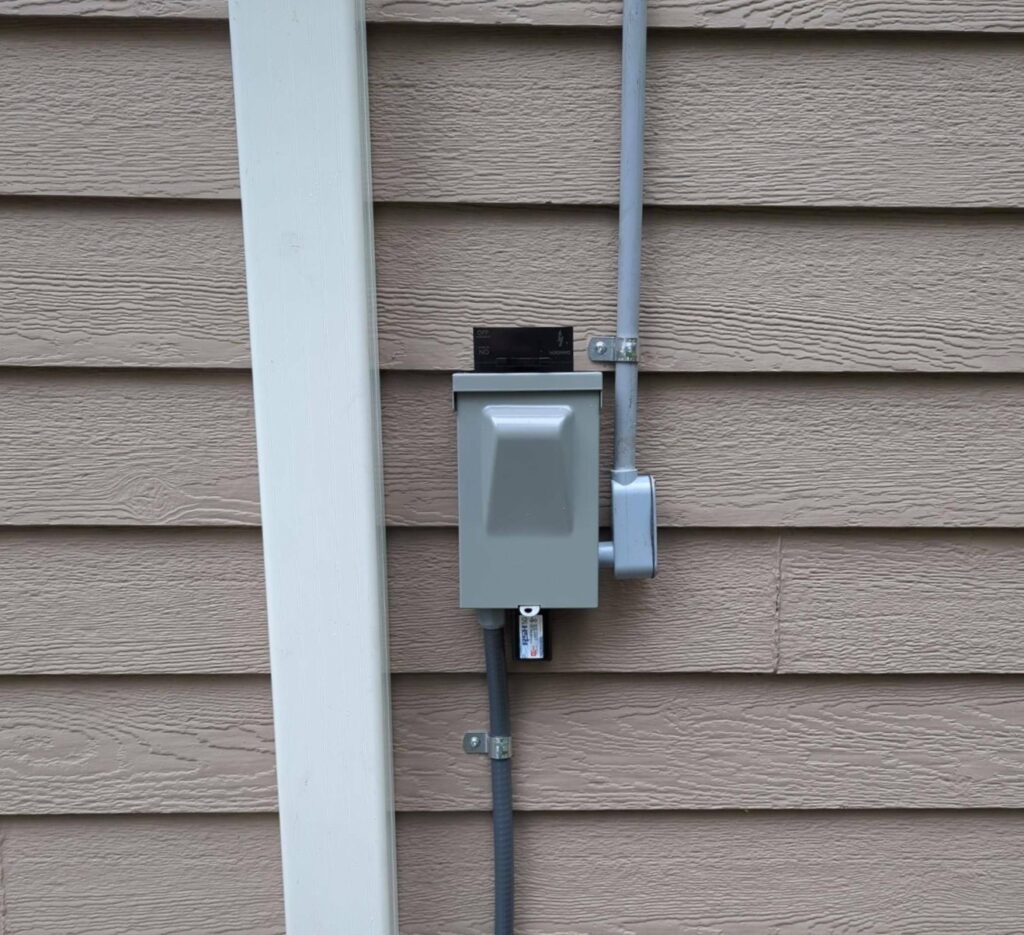
That plain gray box mounted on the wall next to your outdoor air conditioner is one of the most overlooked safety features of your home. This simple device, officially known as an AC disconnect switch, is the single most important control for ensuring safe maintenance on your cooling system. Its function is straightforward: turning off power to the outdoor AC unit right at the source.
While your home has a circuit breaker for the AC in its main electrical panel, that panel might be in a distant basement or closet. The disconnect switch is required by building codes to be within sight of the AC unit itself. This critical difference in location provides a clear, visible safety measure, allowing a technician to physically cut the electricity and confirm it’s off before they begin work, preventing dangerous accidents.
Why Your AC Has Its Own Personal Safety Switch
The primary reason for an AC disconnect is safety you can see. If a technician only turns off the power at a distant breaker panel, they have no way of knowing if someone inside accidentally flips it back on. The disconnect switch eliminates this dangerous guesswork. By placing the shutoff right next to the equipment, a technician gains complete, confident control over the unit, preventing a potentially serious electric shock.
This line-of-sight safety isn’t just a good idea; it’s a strict requirement. The National Electrical Code (NEC) has specific rules for HVAC disconnects to ensure a technician can always find a visible, accessible shutoff near the outdoor equipment. These regulations create a universal safety standard for every professional. Beyond its critical safety role, the switch is also a matter of convenience, allowing a technician to work efficiently without running back and forth to your main panel. This applies to nearly all systems, including modern mini-splits.
The 2 Common Disconnect Types: A Visual Guide
While these gray boxes all serve the same safety purpose, you’ll almost always find one of two simple mechanisms inside: a lever or a pull-out handle. Identifying which one you have is easy, and operating either is just as straightforward.
The first type is the lever switch, which works just like a large circuit breaker. To shut off the power to your AC unit, you open the small access door and pull the handle firmly down to the “OFF” position. You’ll often feel a solid clunk as the internal connection is physically broken.
More common is the AC disconnect pull out style. Instead of a hinged lever, you’ll see a T-shaped handle set into a removable block. To turn the power off, you grip the handle and pull the entire block straight out. For a foolproof safety measure, you can then flip the puller upside down and reinsert it. In this orientation, it cannot make an electrical connection, ensuring the power stays securely off.
When Should a Homeowner Safely Use the Disconnect Switch?
While the HVAC service disconnect is primarily for professionals, there are a few specific and safe moments where a homeowner might operate it. Using the switch is appropriate in three main scenarios:
- Before an HVAC Technician Arrives: While any good technician will do this themselves, turning it off beforehand is a thoughtful step.
- Before Cleaning the Outdoor Unit: If you plan to gently hose down the outside of your AC unit to clear away grass clippings or cottonwood fluff, shutting the power off first is a crucial safety measure.
- To “Reboot” Your AC System: If your thermostat is working but the AC unit won’t kick on, a simple power cycle can sometimes resolve the glitch.
This “reboot” process works much like restarting a frozen computer. Use the disconnect switch to turn the power off, wait a full five minutes to allow the system’s internal electronics to reset, and then turn it back on. If the unit still won’t start, you’ve done your due diligence, and it’s time to call a pro.
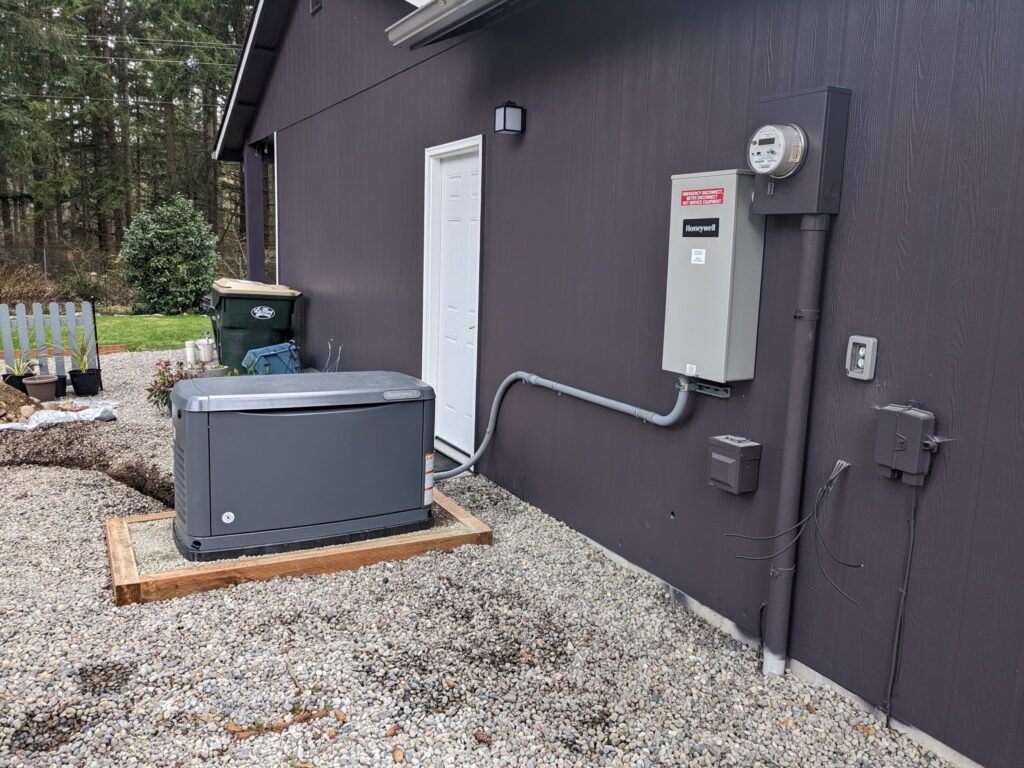
The most critical rule is understanding the boundary between safe and unsafe actions. Operating the external handle or puller is designed for you. However, you must never open the main, screwed-shut panel of the disconnect box. Inside are exposed, high-voltage wires that pose a serious risk of electric shock.
Fused vs. Non-Fused: Does It Matter for You?
Inside some disconnect boxes, you’ll find fuses—small, one-time-use safety devices. A fuse acts as a dedicated bodyguard for your AC. If a dangerous electrical surge occurs, the fuse intentionally breaks to stop the flow of electricity, protecting your expensive equipment. This is the core difference in a fused vs. non-fused HVAC disconnect: one has an extra, localized layer of protection.
A non-fused box is simply a straightforward on/off switch. It relies entirely on the circuit breaker in your main electrical panel for protection. Both systems are safe and meet electrical codes; they just place that automatic shut-off feature in a different location.
For a homeowner, the distinction doesn’t change your role. Your safe interaction is always limited to the external handle or puller. If a fuse blows, it must be replaced by a professional who can safely open the box and install the correct type, such as determining if a 30 amp vs. 60 amp disconnect is appropriate. A unit that won’t power on after a reset is a clear signal to let a technician take a look.
Common Signs of a Failing Disconnect: What to Look For
Your AC disconnect box should operate silently. A steady buzz or hum is a warning sign that the electrical connections inside may have loosened. This instability can cause electricity to arc, or jump across a tiny gap, which creates noise and generates significant heat.
Visual clues are even more urgent. If you see that the handle or the AC disconnect pull out is melted, warped, or discolored, the unit has been dangerously overheating. This is a direct sign that internal components are failing and creating a potential fire hazard. Even a high-quality, weatherproof outdoor disconnect box cannot contain the damage from a severe internal fault.
When you encounter these red flags, any DIY troubleshooting must stop. These are not minor glitches; they are indicators of a serious electrical hazard. For your safety, do not touch the box. Call a certified electrician or HVAC professional immediately.
Your Quick Guide to AC Disconnect Safety
Understanding the air conditioner shut-off box is an essential part of managing your home safely and effectively. It’s a simple tool that puts you more in control of your home’s maintenance.
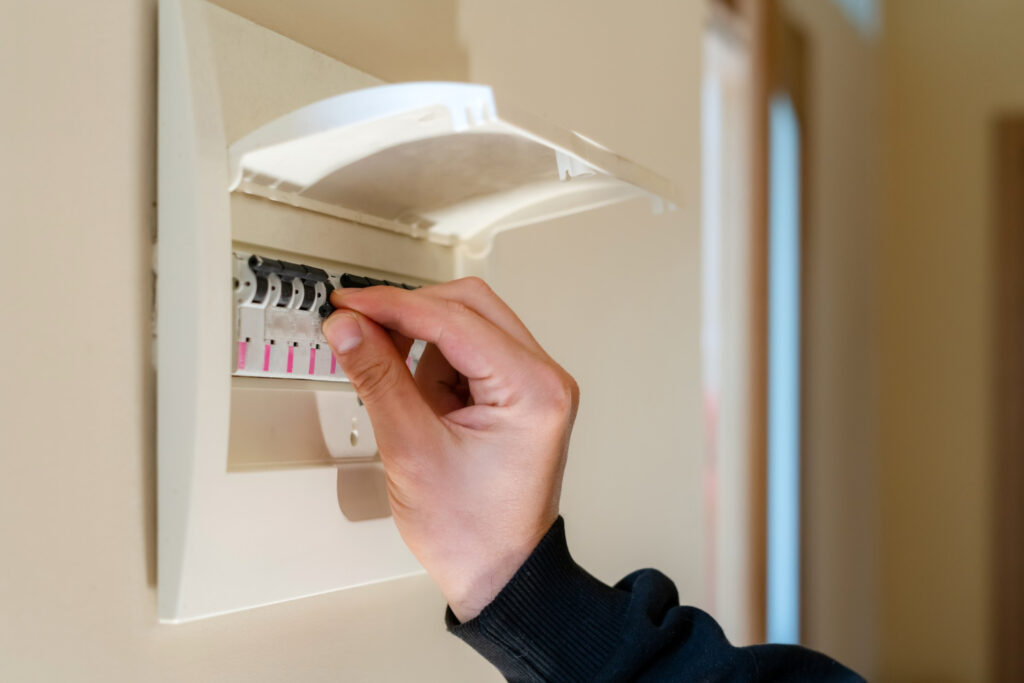
Your Confident Homeowner Checklist
- I can identify my AC disconnect switch.
- I know the safe reasons to turn it off (cleaning, service calls).
- I know to call a professional for any problems like humming or damage.
This is what smart homeownership looks like. It’s not about performing complex repairs; it’s about understanding how your home works. By using this guide, you’ve added a layer of confidence and safety to how you manage your space.
The AC Disconnect Switch lets you kill power next to your AC for safe maintenance, meets code requirements, and boosts homeowner confidence and safety.
FAQ: