- 1. What is the emergency AC repair checklist every homeowner needs?
- 2. What are the top safety warning signs that demand immediate professional AC repair?
- 3. Which quick homeowner checks can you do before calling for help?
- 4. How to organize information for the technician when help arrives
- 5. DIY check vs. call immediately: when does each apply?
- Key takeaways
- What 15 years of AC emergencies taught me about staying calm
- Upright Construction & HVAC is ready when your AC is not
- FAQ
- Recommended
TL;DR:
- An emergency AC repair kit helps homeowners act quickly and safely during system failures in extreme temperatures. Recognizing warning signs such as burning smells, water leaks, or ice on refrigerant lines prompts immediate professional help to prevent damage and health risks. Performing simple checks like thermostat settings and filter conditions can often resolve issues or clarify when to call a technician.
An emergency AC repair checklist is the fastest way to protect your home and family when your cooling system fails at the worst possible time. A true AC emergency exists when outdoor temperatures exceed 90°F or indoor temperatures climb above 80°F with a failed system, especially if children, elderly residents, or anyone with a health condition lives in the home. Beyond discomfort, AC failure risks include heat stroke, mold growth, and structural moisture damage. Knowing exactly what to check and when to call a pro makes all the difference.
1. What is the emergency AC repair checklist every homeowner needs?
The emergency AC repair checklist is a structured, step-by-step guide that helps you act fast, stay safe, and avoid costly mistakes when your air conditioner stops working. HVAC technicians use a similar diagnostic framework, but this version is built for homeowners with no technical background. The goal is simple: rule out the easy fixes first, identify real danger signs, and know when to stop and call a professional. Having this checklist ready before an emergency happens saves you time, money, and panic.
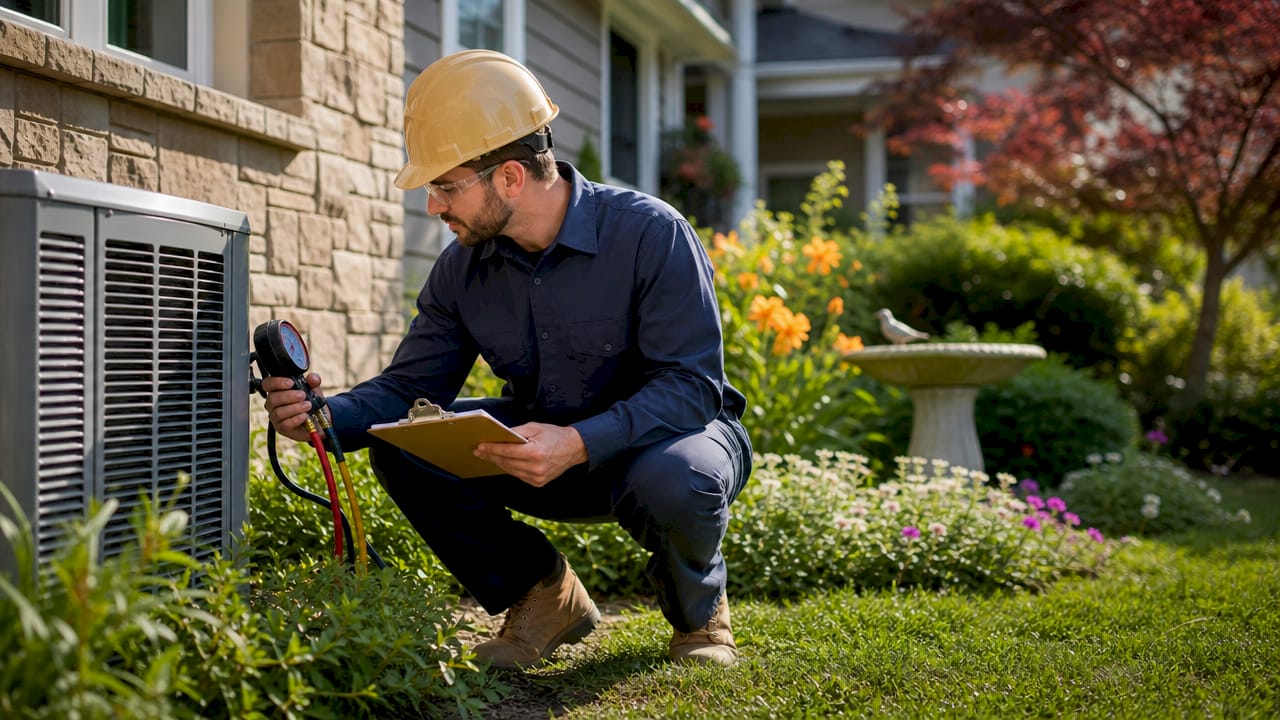
2. What are the top safety warning signs that demand immediate professional AC repair?
Some AC problems are true emergencies that require you to shut the system off and call a technician right away. Recognizing these signs early prevents fires, compressor failure, and serious health risks.
- Burning smell or smoke. Any burning odor near your AC unit or vents signals an electrical fault. Shut the system off at the breaker immediately.
- Sparks or visible scorch marks. These indicate active electrical failure. Do not reset the breaker. Call for emergency service.
- Loud grinding or screeching. These noises warn of bearing or fan blade failure. Running the system further risks severe mechanical damage.
- Water leaking near electrical panels. Water and electricity together create a fire and electrocution hazard. Turn off the system and the breaker.
- Frozen coils or refrigerant lines. Ice on the lines signals low refrigerant or an airflow restriction. Continuing to run a frozen system often destroys the compressor, which is the most expensive repair on any AC unit.
- Breaker trips immediately after reset. A breaker that re-trips right away points to a short circuit or motor failure. Stop resetting it and call a certified technician.
- Indoor temperature above 80°F with system running. When the system runs but cannot cool the home past 80°F, the risk of heat stroke rises sharply, particularly for vulnerable residents.
Pro Tip: Never ignore a burning smell, even a faint one. In over 15 years of HVAC work in Los Angeles, I have seen minor electrical odors turn into serious damage within hours.
3. Which quick homeowner checks can you do before calling for help?
90% of common AC “no-cool” issues can be resolved by homeowners using a simple 10-minute checklist. Running through these steps before calling a technician can save you a diagnostic fee of $150 or more.
- Check your thermostat settings. Confirm the mode is set to “cool,” the set temperature is below the current room temperature, and the batteries are not dead. A thermostat set to “fan only” or “heat” is one of the most common causes of a “broken” AC.
- Inspect the circuit breaker. Go to your electrical panel and look for a tripped breaker. Reset it once. If it trips again immediately, stop and call a professional. Repeated breaker trips signal a serious electrical or mechanical fault.
- Check and replace the air filter. A clogged filter blocks airflow and causes the system to freeze up or overheat. Pull the filter out and hold it up to light. If you cannot see light through it, replace it before doing anything else.
- Clear your vents and return air grilles. Walk through every room and make sure furniture, rugs, or curtains are not blocking supply vents or return air grilles. Blocked airflow is a surprisingly common cause of poor cooling.
- Look for ice on the refrigerant lines. Check the copper lines running from your indoor air handler to the outdoor unit. Visible ice means the system is frozen. Turn it off and let it thaw for at least two hours before restarting.
- Check the outdoor unit. Make sure the outdoor condenser is not buried in debris, overgrown shrubs, or blocked by objects. The unit needs at least two feet of clearance on all sides to breathe properly.
- Do not touch refrigerant lines or open electrical panels. Handling refrigerant requires EPA 608 certification. Unlicensed attempts to add refrigerant are both illegal and dangerous. Leave anything beyond visual inspection to a certified technician.
Pro Tip: Set a phone reminder to replace your AC filter every 30–60 days during summer. A clean filter alone prevents a large percentage of the urgent air conditioner issues I see every season in Los Angeles.
4. How to organize information for the technician when help arrives
Clear communication with your HVAC technician speeds up diagnosis and gets your system running faster. Simple, non-technical descriptions of symptoms improve response accuracy more than any technical detail you could provide.
Before the technician arrives, write down or note the following:
- Symptom description in plain language. Use phrases like “no air coming from vents,” “loud rattling noise from the outdoor unit,” or “water pooling near the indoor air handler.” Avoid guessing at causes.
- When the problem started. Note the time and whether it happened suddenly or gradually. Sudden failures often point to electrical issues. Gradual decline usually signals a refrigerant leak or failing component.
- What you already tried. List every reset or check you performed and what happened. If you replaced the filter or reset the breaker, say so. This prevents the technician from repeating steps and wastes no time.
- Thermostat settings at the time of failure. Take a photo of your thermostat screen before the technician arrives. This gives them a baseline without any guesswork.
- Clear access to both units. Move any furniture, boxes, or stored items away from the indoor air handler and make sure the outdoor condenser is accessible. A technician who has to move obstacles adds time to your bill.
Understanding what technicians look for during an emergency visit helps you prepare the right information and set realistic expectations.
5. DIY check vs. call immediately: when does each apply?
Not every AC problem is a true emergency. Knowing the difference saves you money and prevents unnecessary panic. The table below lays out the most common scenarios.
| Symptom | Homeowner action | Urgency level |
|---|---|---|
| AC not cooling, thermostat on wrong setting | Correct thermostat, restart system | Low. Fix yourself. |
| Clogged air filter causing weak airflow | Replace filter, restart system | Low. Fix yourself. |
| Tripped breaker, resets without re-tripping | Reset once, monitor system | Moderate. Watch closely. |
| Tripped breaker that re-trips immediately | Do not reset again. Call a pro. | High. Call now. |
| Ice on refrigerant lines | Shut system off, let thaw, call if it refreezes | Moderate to high. |
| Burning smell or smoke from unit | Shut off at breaker. Call emergency service. | Critical. Do not delay. |
| Loud grinding or screeching noise | Shut off immediately. Call a pro. | Critical. Do not delay. |
| Water near electrical panel | Shut off breaker. Call emergency service. | Critical. Do not delay. |
Remember: AC failure is not just a comfort issue. Humidity and temperature control prevent mold growth and structural damage in your home. Delaying a call when you see a critical warning sign can turn a $300 repair into a $3,000 restoration project.
The most common HVAC repair challenges homeowners face fall into the moderate category, where a quick check resolves the issue. But when you see smoke, sparks, or repeated breaker trips, no checklist replaces a certified technician.
Key takeaways
The most effective emergency AC repair approach combines immediate safety checks, a structured DIY diagnostic, and clear communication with a certified HVAC technician.
| Point | Details |
|---|---|
| Define the emergency first | Outdoor temps above 90°F or indoor temps above 80°F with system failure qualify as true emergencies. |
| Run the 10-minute checklist | Check thermostat, filter, breaker, and vents before calling a technician to rule out simple fixes. |
| Know when to stop DIY | Burning smells, sparks, frozen coils, and repeated breaker trips require a certified pro immediately. |
| Communicate clearly | Write down symptoms in plain language and note every check you performed before the technician arrives. |
| Never handle refrigerant | EPA 608 certification is required by law. Unlicensed refrigerant handling is illegal and dangerous. |
What 15 years of AC emergencies taught me about staying calm
I have walked into hundreds of homes in Los Angeles where the AC had failed on a 100°F day and the homeowner was in full panic mode. The panic almost always made things worse. Homeowners would reset breakers five or six times, trying to force the system back on, and end up burning out a motor that a simple filter change would have fixed.
The single biggest mistake I see is skipping the checklist entirely and calling for emergency service before checking the thermostat or filter. A prepared checklist mindset reduces anxiety and gets the technician the right information faster. That combination cuts repair time significantly.
The second mistake is the opposite: waiting too long when the warning signs are serious. I have seen homeowners ignore a faint burning smell for two days because they did not want to pay for an emergency call. That decision cost them far more in the end. If you smell burning, see ice, or hear grinding, shut the system off and call. The emergency repair cost factors are always lower when you act early.
My honest advice: print this checklist and tape it inside your electrical panel door. When the AC fails at 9 PM in july, you will not be searching the internet in a hot house. You will already know exactly what to do.
— Ernie M
Upright Construction & HVAC is ready when your AC is not
When your air conditioner fails and the checklist points to a problem beyond your control, Upright Construction & HVAC is available 24/7 for emergency AC repairs across Los Angeles. With over 15 years of experience, the team brings fast diagnostics, transparent pricing, and real solutions to urgent cooling failures.

Upright Construction & HVAC offers same-day emergency service, clear explanations of every repair, and no surprise fees. Whether you need a quick fix or a full system diagnosis, the team handles it with the same care they bring to every job. Read through the essential AC repair tips on the website, or call directly for immediate help. Your comfort and safety are not optional, and neither is the response time.
FAQ
What qualifies as a true AC emergency?
An AC failure is a true emergency when outdoor temperatures exceed 90°F or indoor temperatures rise above 80°F with the system down, especially for elderly, young, or medically vulnerable residents. Burning smells, sparks, or water near electrical components also qualify as immediate emergencies.
Can I reset my circuit breaker if the AC trips it?
You can reset a tripped breaker once. If it trips again immediately after reset, stop. Repeated breaker trips indicate a short circuit or motor failure that requires a certified technician.
Why does my AC have ice on the lines?
Ice on refrigerant lines or coils signals low refrigerant or an airflow restriction, often caused by a clogged filter. Continuing to run a frozen system risks compressor failure, which is the most expensive AC repair.
Is it safe to add refrigerant myself?
No. Handling refrigerant requires EPA 608 certification. Unlicensed refrigerant handling is illegal under federal law and dangerous without proper equipment.
How do I describe my AC problem to a technician?
Use plain language focused on what you observe: “no air from vents,” “loud rattling from the outdoor unit,” or “water pooling near the wall unit.” Clear, simple descriptions improve diagnosis speed and accuracy.