- How to verify AC repair technician credentials using the CSLB portal
- What certifications should you check beyond the CSLB license?
- How to spot a credible technician beyond the paperwork
- Common red flags when checking AC technician credentials
- Key Takeaways
- Why I always tell homeowners to verify first, ask questions second
- Upright Construction & HVAC: verified credentials, clear pricing, and 24/7 emergency service
- FAQ
- Recommended
TL;DR:
- Verifying an AC repair technician’s credentials involves checking their active CSLB license and relevant certifications before hiring. This ensures legal authority, proper refrigerant handling, and technical competence, protecting homeowners from unlicensed or underqualified workers. Verifying credentials is a quick, essential step that helps prevent costly mistakes and unsafe work.
Verifying an AC repair technician’s credentials means confirming their active CSLB license, EPA Section 608 certification, insurance coverage, and customer feedback before they touch your system. California law requires any HVAC work valued at $500 or more to be performed by a CSLB-licensed contractor with a C-20 classification. Skipping this step leaves you with no legal recourse if the job goes wrong. When your AC fails on a hot Los Angeles afternoon, knowing how to quickly verify HVAC technician credentials is the single most protective thing you can do.
How to verify AC repair technician credentials using the CSLB portal
The California Contractors State License Board (CSLB) runs an online tool at cslb.ca.gov that lets you confirm a contractor’s license in under two minutes. This is the fastest and most reliable way to check AC repair qualifications before anyone shows up at your door.
Here is exactly how to do it:
- Go to cslb.ca.gov and click “Check a License” in the top navigation.
- Enter the license number or business name the technician provided. Use both if you have them, since a license number tied to the wrong business name is a red flag.
- Confirm the license status is “Active.” A suspended or revoked license means the contractor is legally prohibited from working. An expired license carries the same risk.
- Check the license classification. It must show C-20 HVAC. A general contractor license does not cover specialized AC repair work.
- Verify the bond and workers’ compensation. California requires a $25,000 contractor bond. If the contractor has employees, active workers’ comp coverage must also appear in the record. Without it, you could be liable for injuries on your property.
The CSLB portal displays all of this on one screen. You do not need to call anyone or wait for a callback.
Pro Tip: Screenshot the CSLB results page before the technician arrives. If a dispute arises later, you have a timestamped record of the license status at the time of hire.

One detail most homeowners miss: a license number in California is issued to a qualifying individual, not the company itself. If that person leaves the company, the license can become inactive even if the business keeps using the number. Always verify the license number against the exact business name the technician gives you.
What certifications should you check beyond the CSLB license?
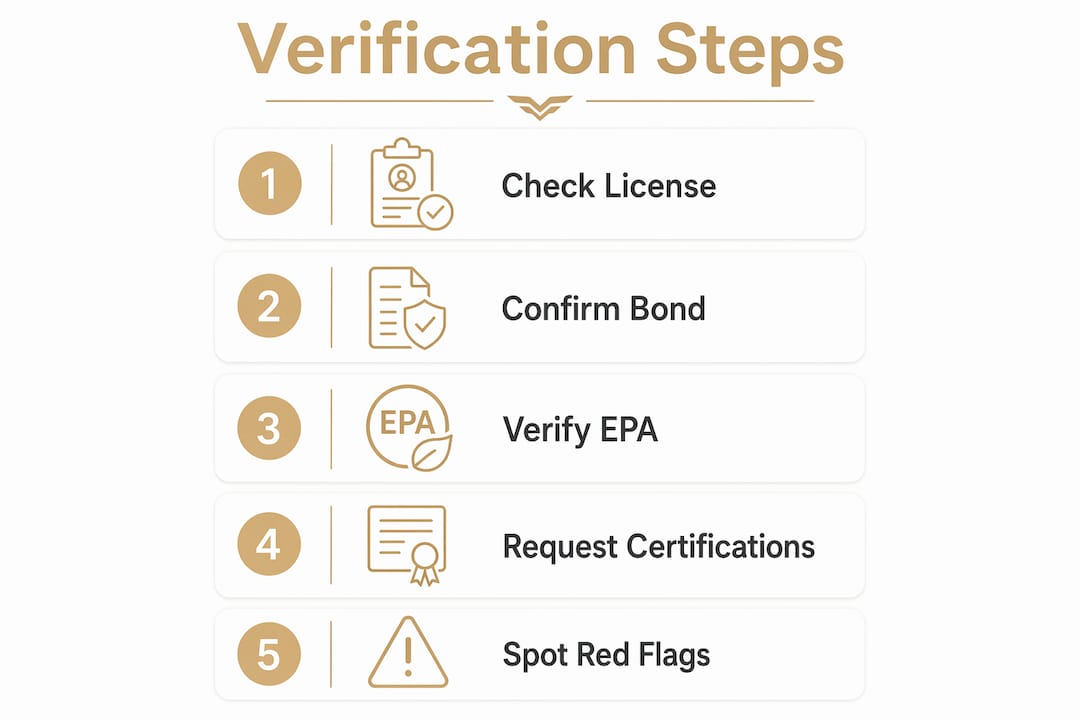
A CSLB license confirms the legal right to work. It does not confirm technical skill. Two additional credentials fill that gap: EPA Section 608 certification and NATE certification.
- EPA Section 608 certification is federally mandated for any technician who handles refrigerants. By law, technicians must hold this certification before touching refrigerant lines. For residential AC work, Type II is the minimum required tier. Universal certification covers all refrigerant types and is the standard you want to see.
- NATE (North American Technician Excellence) certification is the industry’s leading voluntary credential for technical competence. A NATE-certified technician has passed third-party exams covering specific HVAC systems. It signals a level of expertise that goes well beyond the minimum legal requirement.
- How to ask for proof. Request the physical or digital certification card. EPA certification cards include the technician’s name and certification tier. NATE certificates include a credential ID you can verify directly through the NATE website.
- Why both matter together. Federal and state certifications serve different roles: the CSLB license covers legal authority, EPA covers refrigerant handling, and NATE signals advanced technical knowledge. A technician with all three is the complete package.
Asking for these documents is not rude. Any reputable licensed AC repair specialist will hand them over without hesitation. If a technician gets defensive about the request, that reaction tells you something important.
How to spot a credible technician beyond the paperwork
Credentials on paper are the foundation. A few additional checks confirm that the technician in front of you matches those credentials.
Pro Tip: Ask for a certificate of insurance directly from the technician’s insurer, not just a card the technician hands you. A real certificate lists the policy number, coverage dates, and your address as the job site.
- Request a certificate of insurance. General liability insurance protects your property if something goes wrong during the repair. Workers’ compensation protects you from claims if a technician is injured on your property.
- Expect transparent diagnostic fees. Emergency AC repair in Los Angeles typically carries a diagnostic fee ranging from $69 to $175. Reputable companies disclose this fee upfront and credit it toward the repair cost if you proceed. Vague pricing at the start of a call is a warning sign.
- Be cautious of prices that seem too low. Suspiciously low quotes often indicate an unlicensed technician, missing insurance, or undertrained staff. Legitimate HVAC businesses carry real operational costs, and their pricing reflects that.
- Require a written estimate before work begins. A written estimate protects you legally and gives you a clear record of what was agreed. Verbal estimates are not enforceable.
- Check online reviews as a supplement, not a substitute. High star ratings do not replace a CSLB license check or certification verification. Reviews reflect customer experience. They do not confirm legal or technical compliance. Use them after you have confirmed credentials, not instead of it.
For more on what drives AC repair costs in Southern California, the pricing factors are worth understanding before you get your first quote.
Common red flags when checking AC technician credentials
Knowing what to look for is only half the job. Knowing what to avoid is equally important.
- The license number does not match the business name. Run both through the CSLB portal together. A mismatch means the technician may be using a borrowed or outdated license number.
- The license status is anything other than “Active.” Suspended, revoked, and expired licenses all mean the same thing: the contractor has no legal authority to perform HVAC work in California. There is no gray area here.
- No written estimate or permit discussion. Significant HVAC repairs often require a permit in Los Angeles. A technician who skips this conversation is either uninformed or cutting corners.
- Pressure tactics and urgency manipulation. A credible technician explains the problem and gives you time to decide. High-pressure tactics to sign immediately are a classic sign of an unlicensed or unscrupulous operator.
- Certification lookup returns no results. If you search the NATE database or ask for an EPA certification card and nothing comes up, do not proceed. A legitimate technician’s credentials are verifiable. If they are not, treat it as a hard stop.
For a broader look at contractor warning signs, the patterns repeat across the industry. Recognizing them early saves you money and stress. You can also review tips for choosing HVAC installers to see how reputable professionals present themselves from the first call.
Credential verification is the first step homeowners should take before considering references or reviews. Credentials confirm legal and technical compliance. Everything else is secondary.
Key Takeaways
Verifying an AC repair technician’s credentials requires checking an active CSLB C-20 license, EPA Section 608 certification, valid insurance, and written pricing before any work begins.
| Point | Details |
|---|---|
| CSLB license check | Confirm Active status, C-20 classification, $25,000 bond, and workers’ comp at cslb.ca.gov. |
| EPA Section 608 is mandatory | Federal law requires this certification for any technician handling refrigerants; Type II is the minimum for residential AC. |
| License number belongs to a person | Always match the license number to the business name; a qualifying individual leaving the company can invalidate the license. |
| Pricing transparency signals credibility | Diagnostic fees in Los Angeles range from $69 to $175; upfront disclosure is a mark of a trustworthy contractor. |
| Reviews supplement, not replace, credentials | High ratings confirm customer satisfaction but do not verify legal or technical compliance. |
Why I always tell homeowners to verify first, ask questions second
I have been in the HVAC business in Los Angeles for over 15 years, and I have seen what happens when homeowners skip the credential check. A family hires someone who quotes a low price, the work gets done without permits, the manufacturer voids the equipment warranty, and then the homeowner calls me to fix the mess. That repair always costs more than the original job would have.
The CSLB portal takes two minutes. Two minutes to confirm that the person working on your system is legally authorized, bonded, and insured. That is not a burden. That is basic protection for one of the most expensive systems in your home.
What surprises me most is how often homeowners feel awkward asking for credentials. They worry about seeming rude or distrustful. My honest advice: any technician who earns your business will welcome the question. I hand over our license number, insurance certificate, and EPA documentation before a customer even asks. That is what transparency looks like. If a technician hesitates or deflects, that hesitation is your answer.
The two-minute CSLB check and a quick request for certification cards are the simplest ways to protect yourself. Do them every time, even in an emergency. Especially in an emergency.
— Ernie M
Upright Construction & HVAC: verified credentials, clear pricing, and 24/7 emergency service
When your AC stops working in the middle of a Los Angeles summer, you need a team you can trust immediately.
Upright Construction & HVAC is fully licensed with a C-20 HVAC classification, bonded, and insured. Every technician carries EPA Section 608 certification, and we provide written estimates before any work begins. Our diagnostic fees are disclosed upfront, and we offer emergency AC repair tips so you know exactly what to expect before we arrive. With over 15 years serving Los Angeles homeowners and 24/7 availability, we are built for the moments when waiting is not an option. Call us and get a verified, credentialed technician at your door.
FAQ
What is a C-20 HVAC license in California?
A C-20 license is the specific contractor classification issued by the CSLB for HVAC work in California. Any contractor performing AC repair valued at $500 or more must hold this classification.
How do I verify an HVAC technician’s EPA Section 608 certification?
Ask the technician for their certification card, which lists their name and certification tier. You can also verify credentials directly through the EPA’s certification program records or the certifying organization’s database.
What does it mean if a CSLB license shows “Suspended”?
A suspended license means the contractor is legally prohibited from performing work in California. Hiring a suspended contractor eliminates your bond and insurance protections and leaves you with no legal recourse.
Are online reviews enough to confirm a technician is qualified?
No. Online reviews reflect customer service experience but do not confirm license status, EPA certification, or insurance coverage. Always verify credentials through the CSLB portal first.
What is NATE certification and do I need to require it?
NATE (North American Technician Excellence) is a voluntary third-party certification that confirms advanced technical knowledge in HVAC systems. It is not legally required, but it is the strongest signal of technical competence beyond the minimum state license.