- What causes AC unit failure most often?
- How do refrigerant leaks cause air conditioner breakdown?
- What electrical failures make an AC unit stop working?
- Other warning signs of a failing AC unit you should not ignore
- Key Takeaways
- What 15 years of AC calls taught me about preventing failure
- How Upright Construction & HVAC keeps your AC running all summer
- FAQ
- Recommended
TL;DR:
- AC unit failure is mostly caused by restricted airflow from dirty filters, refrigerant leaks, or electrical component failures. Regular filter changes, timely leak repairs, and electrical inspections help prevent expensive breakdowns and extend system life. Neglecting maintenance and ignoring early warning signs often lead to costly repairs or system replacements.
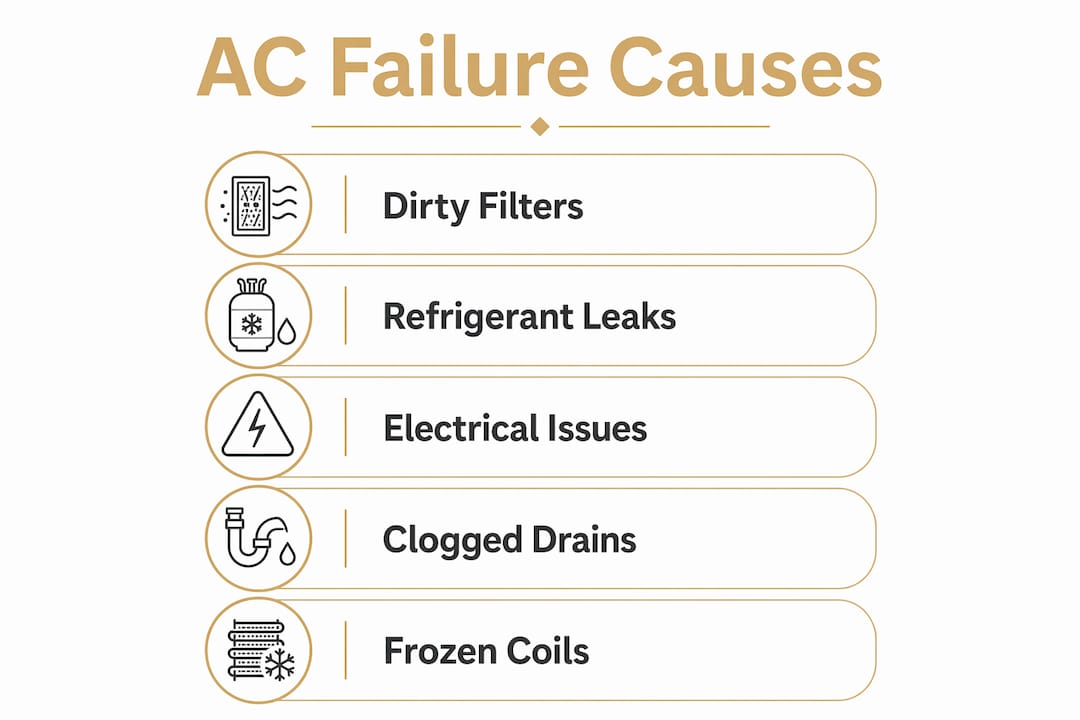
AC unit failure is defined as the breakdown of one or more key components that interrupts your system’s ability to cool your home. The three leading causes are restricted airflow from dirty filters, refrigerant leaks, and electrical component failures such as bad capacitors or contactors. Each of these problems creates a chain reaction that stresses other parts of your system, turning a small issue into an expensive repair. The Department of Energy identifies dirty air filters as the single most common root cause of premature AC failure. Understanding these causes gives you real power to prevent breakdowns before they happen.
What causes AC unit failure most often?
Restricted airflow is the most frequent reason AC systems fail before their time. When a dirty filter blocks airflow, the evaporator coil cannot absorb heat properly. The coil gets too cold and freezes over, which shuts the system down to protect the compressor.
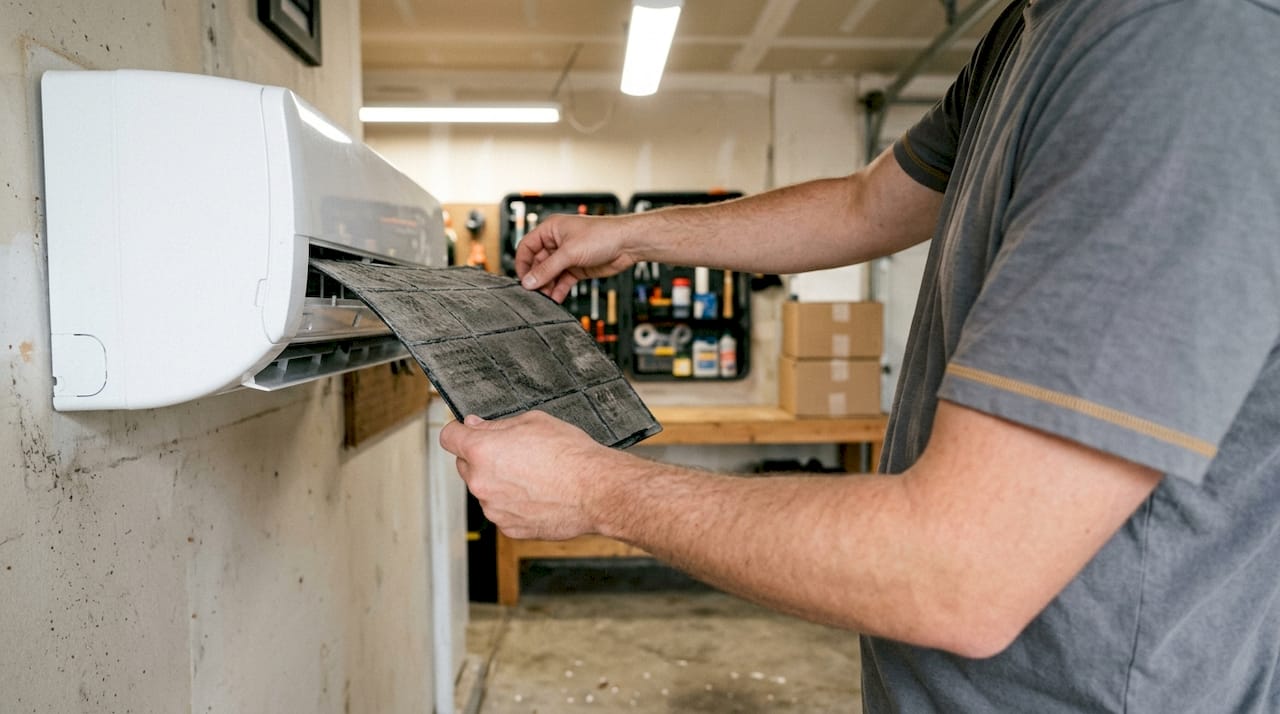
The snowball effect is real and fast. A clogged filter forces the blower motor to work harder and run longer. That extra strain raises temperatures inside the unit, which shortens the life of the motor and the compressor. The Department of Energy confirms that ignored maintenance like dirty filters creates progressive component failures across the entire system.
Filter replacement is the single most effective thing you can do as a homeowner. Standard 1-inch filters need replacement every 30–60 days during heavy use. Thicker media filters rated at 4–5 inches can last up to 6 months, but you should still check them monthly during summer in Los Angeles.
Dirty outdoor condenser coils cause a separate but related problem. When the condenser coil is coated with dust, leaves, or debris, the system cannot release heat outside. The refrigerant stays too warm, pressure builds, and the compressor works against itself.
- Replace 1-inch filters every 30–60 days during cooling season.
- Inspect the outdoor condenser unit monthly and clear debris from around it.
- Keep at least 2 feet of clearance around the outdoor unit.
- Schedule a professional coil cleaning once a year before summer.
- Check that supply and return vents inside your home are open and unblocked.
Pro Tip: Set a recurring phone reminder on the first of each month to check your filter. A quick visual check takes 30 seconds and can save you hundreds of dollars in repair bills.
The float switch is a safety feature inside the condensate drain pan. When the drain line clogs, the pan fills with water and the float switch shuts the system off to prevent overflow. Many homeowners mistake this shutdown for an electrical failure, when the real fix is simply clearing the drain line.
How do refrigerant leaks cause air conditioner breakdown?
Refrigerant is the chemical that carries heat out of your home. It absorbs heat at the indoor evaporator coil and releases it outside at the condenser coil. Without the right refrigerant charge, the entire cooling cycle collapses.
Low refrigerant almost always means a leak, not normal depletion. Refrigerant does not get used up like gasoline. Refrigerant leaks come from corrosion, worn fittings, or physical damage to the refrigerant lines. Simply refilling the refrigerant without fixing the leak is a waste of money and a temporary fix at best.
Watch for these signs of a refrigerant leak:
- Warm or barely cooled air coming from your vents even after long run times.
- Ice forming on the refrigerant lines or the outdoor unit.
- Your system running for unusually long cycles without reaching the set temperature.
- Higher energy bills with no change in usage habits.
- A hissing or bubbling sound near the refrigerant lines.
The consequences of ignoring a refrigerant leak are serious. When refrigerant levels drop too low, liquid refrigerant can enter the compressor in a process called slugging. Compressor damage from slugging can cost over $1,200 in parts alone, and in many cases a full compressor replacement is needed. Catching a leak early costs a fraction of that.
Never attempt a DIY refrigerant refill. Handling refrigerants requires EPA certification, and the wrong charge can damage your system further. A licensed technician will use leak detection equipment to find the source, repair it, and recharge the system to the manufacturer’s specification.
What electrical failures make an AC unit stop working?
Capacitors are small cylindrical components that give the motors in your AC system the electrical jolt they need to start and keep running. Heat stress and age cause capacitors to weaken and fail. Capacitor failure rates increase significantly in summer when the system runs hardest and temperatures inside the unit are highest.
When a capacitor fails, you will notice specific symptoms:
- The AC hums but the fan or compressor does not start.
- The outdoor fan spins slowly or wobbles instead of running at full speed.
- The system short cycles, meaning it turns on and off every few minutes.
- The unit clicks repeatedly but never fully starts.
- The system shuts off on its own shortly after starting.
Contactors are electrical switches that control power to the compressor and condenser fan. A worn contactor can fail to close, which means the outdoor unit never receives power. It can also fail to open, which keeps the unit running when it should be off.
Short cycling is both a symptom and a cause of accelerated wear. Every time the compressor starts, it draws a large surge of electricity. Repeated short starts overheat the motor windings and shorten the compressor’s life. Fixing the root cause, whether a bad capacitor or a faulty sensor, stops the damage cycle.
Pro Tip: Before calling for service, check these three things yourself: confirm your thermostat is set to “cool” and the temperature is below the current room temperature, check your circuit breaker panel for a tripped breaker, and verify the outdoor disconnect switch near the condenser unit is in the “on” position. These simple checks resolve a surprising number of service calls.
Capacitors store a dangerous electrical charge even after the power is off. Capacitor replacement requires strict safety protocols and should always be handled by a licensed technician. The part itself may cost around $20, but the risk of serious electrical shock makes this a job for a professional every time.
Other warning signs of a failing AC unit you should not ignore
Frozen evaporator coils are a symptom, not a standalone cause. They result from either restricted airflow or low refrigerant. When the coil freezes solid, your system loses all cooling ability and water can leak into your home as the ice melts. The correct response is to turn the system off and run the fan only to thaw the coil. Thawing can take up to 24 hours before a technician can accurately diagnose the root problem.
A clogged condensate drain line is one of the most overlooked causes of AC shutdowns. The drain line removes moisture pulled from your indoor air. When it clogs with algae or debris, the drain pan fills up and the float switch cuts power to the system. The result is a musty smell, water stains near the air handler, and a system that will not turn on.
Thermostat problems cause more confusion than most homeowners expect. Dead batteries, miscalibration, or a thermostat placed near a heat source can cause the system to cycle incorrectly or not at all. Always check the thermostat display and battery status before assuming a mechanical failure.
| Warning sign | Likely cause |
|---|---|
| Warm air from vents | Refrigerant leak or dirty condenser coil |
| Ice on refrigerant lines | Low refrigerant or blocked airflow |
| System hums but won’t start | Failed capacitor or contactor |
| Water leaking near air handler | Clogged condensate drain line |
| Short cycling | Bad capacitor, low refrigerant, or oversized unit |
| Musty odor from vents | Mold in drain pan or dirty evaporator coil |
Blower motor problems are less common but worth knowing. Dirt buildup on the motor or bearings causes overheating and reduced airflow. You may notice weaker airflow from your vents or a burning smell when the system runs. A blower motor issue left unaddressed will eventually cause the evaporator coil to freeze.
When you notice uneven cooling, unusual sounds, or a spike in your energy bill, those are signals to get a professional evaluation before the problem escalates. Minor issues become major repairs when ignored for even one season.
Key Takeaways
The most effective way to prevent AC unit failure is consistent filter maintenance, early leak detection, and professional inspection of electrical components before summer begins.
| Point | Details |
|---|---|
| Dirty filters are the top cause | Replace 1-inch filters every 30–60 days to prevent coil freezing and compressor stress. |
| Refrigerant leaks need professional repair | Low refrigerant signals a leak; refilling without fixing the source causes compressor damage. |
| Electrical faults require licensed technicians | Capacitors and contactors fail from heat stress; DIY repairs risk serious electrical shock. |
| Float switch shutdowns are often misdiagnosed | A clogged condensate drain triggers a safety shutoff that looks like an electrical failure. |
| Early warning signs save money | Unusual sounds, short cycling, and uneven cooling are signals to call for service immediately. |
What 15 years of AC calls taught me about preventing failure
I have been in the HVAC business in Los Angeles for over 15 years, and the honest truth is that most of the AC failures I respond to were preventable. The number one mistake I see homeowners make is waiting until the system stops working entirely before calling for help. By that point, what started as a $30 filter replacement has turned into a $1,500 compressor repair.
The second most common mistake is ignoring short cycling. Homeowners often tell me the system “turns on and off a lot” but they assumed it was normal. Short cycling is never normal. It is the system telling you something is wrong, and every cycle that goes unaddressed is wearing out your compressor faster.
I also want to be direct about electrical repairs and refrigerant work. I understand the appeal of watching a YouTube video and trying to fix it yourself. But capacitors hold a lethal charge even with the power off, and refrigerant handling requires EPA certification for good reason. These are not areas where a mistake is just inconvenient. Please call a licensed technician.
The single best thing you can do right now is check your air filter. If it looks gray and clogged, replace it today. Then schedule a seasonal HVAC inspection before the next cooling season starts. That one habit, more than anything else, is what separates homeowners who rarely have AC problems from those who call me in a panic every July.
— Ernie M
How Upright Construction & HVAC keeps your AC running all summer
When your AC shows signs of trouble, fast and accurate diagnosis is what protects you from a much larger repair bill.

Upright Construction & HVAC has served Los Angeles homeowners for over 15 years with expert AC diagnostics, refrigerant leak detection, electrical component repairs, and full airflow system cleaning. The team handles everything from a tripped float switch to a failing compressor, and 24/7 emergency support means you are never left without help on the hottest day of the year. Read through the common HVAC repair challenges homeowners face to see exactly what to expect, then reach out to schedule a service visit before a minor issue becomes a costly failure.
FAQ
What is the most common cause of AC unit failure?
Dirty air filters are the most common cause of AC failure. They restrict airflow, freeze the evaporator coil, and force the compressor to work under stress until it breaks down.
How do I know if my AC has a refrigerant leak?
Signs include warm air from vents, ice on the refrigerant lines, unusually long run times, and higher energy bills. A licensed technician must locate and repair the leak before recharging the system.
Can I fix a bad capacitor myself?
Capacitors store a dangerous electrical charge even after the power is disconnected. Replacement should always be done by a licensed HVAC technician to avoid serious shock risk.
Why does my AC turn on and off every few minutes?
Short cycling is a sign of an underlying problem such as a failing capacitor, low refrigerant, or a clogged filter. Left unaddressed, short cycling accelerates wear on the compressor and electrical components.
What should I check before calling for AC repair?
Check that your thermostat is set to “cool” and below room temperature, look for a tripped breaker in your electrical panel, and confirm the outdoor disconnect switch is on. Review the AC repair checklist for a full step-by-step guide before scheduling a service call.