
- Key takeaways
- 1. When you call makes a huge difference in price
- 2. Repair complexity and parts cost more than most people expect
- 3. Your system’s age can make repairs financially irrational
- 4. Where you live affects what you pay
- 5. Seasonal demand spikes the cost of HVAC breakdown
- 6. The type of system you own changes the cost equation
- 7. Contractor quality and transparency affect your final bill
- 8. Financing and cost management strategies that actually work
- My honest take on HVAC emergency costs
- Get expert help from Upright Construction & HVAC
- FAQ
- Recommended
TL;DR:
- HVAC emergency costs are significantly higher outside regular hours, with after-hours, weekend, and holiday calls increasing expenses by up to 200%. The complexity of repairs, parts costs, and the system’s age greatly influence the total bill, making early maintenance and informed choices crucial. Geographic location and seasonal demand spikes further drive up repair prices, emphasizing the importance of proactive scheduling and understanding your system’s specifics.
Your heat goes out at 11 PM in January, or your AC dies during a Los Angeles heat wave. The technician arrives, hands you a bill that makes your stomach drop, and you have no idea if it’s fair. Understanding the key hvac emergency cost factors before that moment arrives is the difference between making a smart decision and getting taken advantage of when you’re most vulnerable.
Key takeaways
| Point | Details |
|---|---|
| Timing drives up costs fast | After-hours, weekend, and holiday calls can cost 50% to 200% more than standard rates. |
| Parts and complexity vary widely | A capacitor costs a fraction of what a compressor does. Know the ranges before you approve work. |
| Old systems cost more to fix | Units over 10 years old often cost more to repair than replace, especially with scarce parts. |
| Location and refrigerant type matter | Urban markets and newer refrigerant standards push emergency repair prices higher in 2026. |
| Maintenance prevents most emergencies | Annual tune-ups costing $150 to $300 can eliminate up to 75% of emergency service calls. |
1. When you call makes a huge difference in price
The single fastest way to double your repair bill is calling for service outside of business hours. Emergency labor rates range from $140 to $600 per hour, compared to $75 to $150 during normal business hours. That’s not a small difference. That’s potentially four times the cost for the same technician doing the same job.
Here’s how the surcharges typically break down:
- Weeknight after-hours calls add roughly 50% to standard labor rates
- Weekend calls add between 50% and 100% on top of normal pricing
- Holiday emergency repairs can run 2.5 to 3 times standard rates, sometimes hitting $250 to $600 per hour
- Emergency trip fees alone run $150 to $500, compared to $50 to $100 for scheduled visits
These surcharges exist because technicians are pulled away from their personal time, and companies pay premium wages to keep staff available around the clock. That’s a real cost. But it’s also a cost you can sometimes avoid.
Pro Tip: If your system is struggling but still functioning, schedule the repair for the next business morning rather than calling at midnight. You could save hundreds of dollars on labor alone.
2. Repair complexity and parts cost more than most people expect
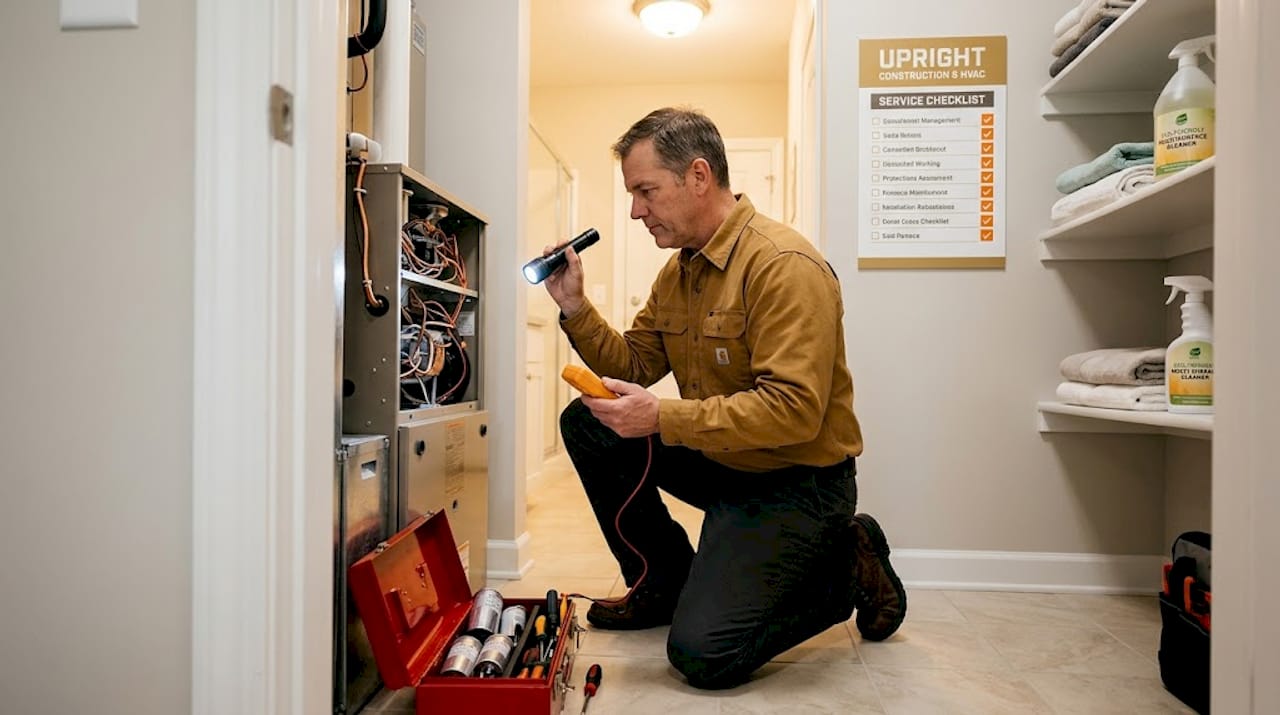
Not all HVAC repairs are equal. Replacing a capacitor takes 20 minutes and costs $150 to $400. Replacing a compressor can take most of a day and cost $1,200 to $4,000 or more. The gap between those two numbers is enormous, and knowing typical ranges protects you from inflated quotes.
Here’s a quick comparison of common emergency repair parts:
| Component | Typical Repair Cost | Red Flag Price |
|---|---|---|
| Capacitor | $150 to $400 | Over $600 |
| Control board | $400 to $900 | Over $1,200 |
| Blower motor | $800 to $1,500 | Over $2,500 |
| Compressor | $1,200 to $4,000+ | Varies by unit size |
| Refrigerant recharge | $350 to $600 | Varies by refrigerant type |
Beyond parts, diagnostic fees add to the bill. Legitimate diagnostic fees run $75 to $150 for standard visits and up to $500 for emergency calls. Those fees are real and fair. What isn’t fair is when a contractor charges a low diagnostic fee and then inflates every line item on the repair quote to recover the difference.
Some repairs also require more labor hours because of system layout, accessibility, or the need to recover and recharge refrigerant. A repair that sounds simple can get complicated fast once a technician opens up the unit.
Pro Tip: Always ask for a line-by-line breakdown of the quote before authorizing any work. A reputable contractor will explain every charge without hesitation.
3. Your system’s age can make repairs financially irrational
A 15-year-old HVAC unit that needs a $2,000 compressor replacement is not the same financial decision as a 3-year-old unit needing the same fix. Age changes everything about the math.
Two rules help homeowners make this call clearly:
- The $5,000 Rule. Multiply your unit’s age by the cost of the repair. If that number exceeds $5,000, replacement is almost always the smarter financial choice.
- The 50% Rule. If the repair cost exceeds 50% of what a new unit would cost, you’re better off replacing it. Putting $2,500 into a system worth $4,000 makes very little sense.
Older systems also face parts scarcity. Manufacturers stop producing components for discontinued models, which means technicians have to source parts from specialty suppliers at a significant markup. That scarcity problem gets worse every year.
There’s also a safety dimension. Aging systems with cracked heat exchangers or failing electrical components don’t just cost more to fix. They can leak carbon monoxide or create fire hazards. The repair spiral is real: you fix one thing, something else breaks two months later, and you’ve spent more than a replacement would have cost while living with an unreliable system.
4. Where you live affects what you pay
Geography is one of the most underappreciated factors in HVAC emergency service pricing. Urban metro areas like Los Angeles carry 30% to 45% surcharges on both parts and labor compared to national averages. Higher cost of living, commercial overhead, and competitive wages for skilled technicians all feed into that number.
Rural areas present a different problem. Hourly rates may be lower, but travel fees can be steep when the nearest qualified technician is 45 minutes away. You might save $30 per hour on labor and pay $200 extra in trip fees.
Key geographic and market factors affecting your bill:
- Urban labor markets with high demand push technician wages and therefore your rates higher
- Skilled labor shortages in 2026 are driving emergency rates up as companies compete for certified technicians
- Seasonal demand spikes in summer and winter reduce technician availability and increase pricing pressure
- Refrigerant transitions from R-410A to R-454B are pushing recharge costs to $350 to $600, as older refrigerant supplies shrink and new refrigerant commands a premium
You can learn more about how refrigerant pricing changes affect your repair costs specifically. The transition away from R-410A is not a future concern. It’s affecting prices right now, and homeowners with older systems using that refrigerant should factor it into any repair decision.
5. Seasonal demand spikes the cost of HVAC breakdown
Your HVAC system is most likely to fail precisely when every other system in your neighborhood is under the same stress. Peak summer heat and deep winter cold drive up both the frequency of failures and the cost of getting them fixed.
Proactive seasonal maintenance helps avoid the costly chaos of peak demand, when technician availability drops and prices surge. When every HVAC company in your area is fully booked, the ones with open slots can charge whatever the market will bear.
Emergency heating costs in winter and emergency cooling costs in summer are consistently higher than the same repairs performed in spring or fall. If your system is showing warning signs like unusual noises, inconsistent temperatures, or higher-than-normal energy bills, scheduling a diagnostic in the off-season can save you significantly compared to waiting for a full breakdown.
6. The type of system you own changes the cost equation
A standard central air system, a heat pump, a mini-split, and a commercial-grade rooftop unit all carry different repair costs. The more specialized your system, the more specialized the technician needs to be, and that expertise costs more.
Mini-split systems, for example, require technicians trained specifically on their refrigerant handling and inverter technology. Heat pumps have components that standard AC technicians may not be familiar with. If your home has a less common system type, the pool of qualified emergency technicians is smaller, which reduces competition and increases your cost.
You can review common air handler issues and fixes to understand which problems are typically straightforward and which ones signal a more expensive repair ahead.
7. Contractor quality and transparency affect your final bill
Two contractors can quote the same repair at wildly different prices. That gap isn’t always about greed. It reflects differences in overhead, warranty terms, technician experience, and parts quality. But it can also reflect opportunistic pricing during emergencies.
Free estimates for emergency calls are mostly a marketing tactic. When a contractor waives the diagnostic fee, they typically recover that cost by inflating the repair quote. A transparent contractor charges a fair diagnostic fee and then prices the repair honestly. That’s actually the better deal.
Always ask these questions before authorizing work:
- What is the diagnostic fee, and does it apply toward the repair cost?
- Can you provide a written, itemized quote before starting?
- What warranty do you offer on parts and labor?
- Are the parts OEM (original manufacturer) or aftermarket?
Getting a second opinion on repairs over $500 is almost always worth the extra diagnostic fee you’ll pay. A $150 second opinion that saves you $800 on an inflated quote is a strong return.
8. Financing and cost management strategies that actually work
Facing a $3,000 repair bill when you weren’t expecting it is genuinely stressful. The good news is that options exist to manage the financial hit without making a panicked decision.
Maintenance plans reduce emergency calls by nearly 70% among participants, and annual tune-ups typically cost $150 to $300. That’s a straightforward trade: spend $200 now to avoid a $1,500 emergency call later.
When the emergency has already happened, here are your real options:
- Contractor financing: Many HVAC companies offer 0% interest promotions for 12 to 18 months on repairs or replacements. Read the fine print carefully, because deferred interest terms can be punishing if you don’t pay in full before the promotional period ends.
- Personal loans: For larger replacement costs, a personal loan through your bank or credit union often carries lower interest than contractor financing after the promotional period.
- LIHEAP assistance: The Low Income Home Energy Assistance Program provides emergency heating cost help for qualifying households. If your income qualifies, this program can cover emergency furnace repairs or replacement costs.
- Payment plans: Some contractors offer split-payment arrangements. Ask directly. Many will accommodate a two or three-payment schedule without charging interest.
Pro Tip: Before signing any financing agreement, calculate the total cost if you miss the 0% promotional deadline. Some agreements charge retroactive interest on the full original balance.
My honest take on HVAC emergency costs
I’ve seen homeowners make the same expensive mistake over and over. The system fails at the worst possible time, panic sets in, and they approve the first quote they get without asking a single question. I understand the impulse. You’re hot or freezing, you have kids or elderly parents in the house, and you just want it fixed.
But that emotional state is exactly when contractors with questionable ethics make their most money. I’ve watched homeowners pay $900 for a capacitor that should have cost $250, simply because they didn’t know the difference and were too stressed to push back.
The other mistake I see constantly is the repair spiral on old systems. Someone spends $1,800 fixing a 14-year-old unit in March, and by August it needs another $1,200 repair. They’ve now spent $3,000 on a system that was already past its useful life. A new unit would have cost $4,500 installed and come with a 10-year warranty.
Being informed doesn’t require being an HVAC expert. It requires knowing a few key numbers, asking for itemized quotes, and not authorizing work while you’re in a panic. The factors affecting HVAC emergency costs are not mysterious. They’re predictable once you know what to look for. That knowledge is your best protection.
— Ernie M
Get expert help from Upright Construction & HVAC
When an HVAC emergency hits in Los Angeles, you deserve a contractor who gives you straight answers and fair pricing, not someone who exploits the situation. Upright Construction & HVAC has been handling emergency repairs and full system replacements across the LA area for over 15 years, with 24/7 availability and a commitment to transparent, itemized pricing.

Whether you need fast answers on heating system fixes or guidance on AC repair decisions, the team at Upright Construction & HVAC can walk you through your options without the pressure. Flexible HVAC financing solutions are also available to make emergency repairs manageable. Call or contact us online to get a real diagnosis from a technician who will explain every line of the quote.
FAQ
How much does an emergency HVAC repair typically cost?
Emergency HVAC service calls range from $250 to $2,000 depending on the repair needed and when you call. After-hours and holiday calls carry the highest rates.
What time of day is cheapest to call for HVAC service?
Standard business hours on weekdays offer the lowest rates, typically $75 to $150 per hour for labor. Calling after hours, on weekends, or on holidays can multiply that rate by two to three times.
When should I replace my HVAC instead of repairing it?
Use the $5,000 Rule: multiply your unit’s age by the repair cost, and if the result exceeds $5,000, replacement is usually smarter. The 50% Rule also applies: if repair costs exceed half the price of a new unit, replace it.
Why are refrigerant recharges so expensive right now?
The industry transition from R-410A to R-454B has reduced the supply of older refrigerants and increased the cost of newer ones, pushing recharge costs to $350 to $600. Systems still running on R-410A face higher recharge costs as that refrigerant becomes harder to source.
Does homeowner’s insurance cover emergency HVAC repairs?
Most standard homeowner’s insurance policies do not cover HVAC repairs from normal wear and tear. Coverage may apply if the failure resulted from a covered event like a power surge or storm damage. Check your policy or call your insurer before assuming you’re covered.
Recommended
- Top 7 Air Handler Issues And Fixes For Encino Homeowners – Upright Construction & HVAC
- Home HVAC Furnaces: Top 8 Quick Fixes For Heating Problems With Home HVAC Furnaces – Upright Construction & HVAC
- Essential Tips When Your Air Conditioner Needs Repairs – Upright Construction & HVAC
- 5 Key Steps To Planning Your Budget For Furnace Replacement In Los Angeles – Upright Construction & HVAC