
- TL;DR Summary for Those in a Hurry:
- Why Skunk Smell Clings to Everything (And Why Water Won't Work)
- The Proven DIY Recipe That Actually Eliminates Skunk Odor
- How to Get Skunk Smell Out of Carpet and Furniture Upholstery
- The Right Way to Wash Skunk Smell Out of Clothes and Linens
- Dealing with Lingering Odors: Cleaning Hard Surfaces and the Air
- When the Skunk Sprays Under Your House or Deck
- The Final Step: A Checklist for a Smell-Free Home
TL;DR Summary for Those in a Hurry:
- House Smells Like Skunk can be caused by actual skunk spray, gas leaks, sewer issues, HVAC problems, or electrical faults — not always wildlife.
- Identifying the source quickly helps prevent lingering odors and protects your home from potential safety risks.
- Simple checks like inspecting vents, drains, and appliances can rule out common causes before the smell spreads.
- If the odor persists or seems chemical-like, it’s best to contact a professional to diagnose and fix the issue safely.
- Acting early saves time, avoids damage, and restores clean indoor air faster.
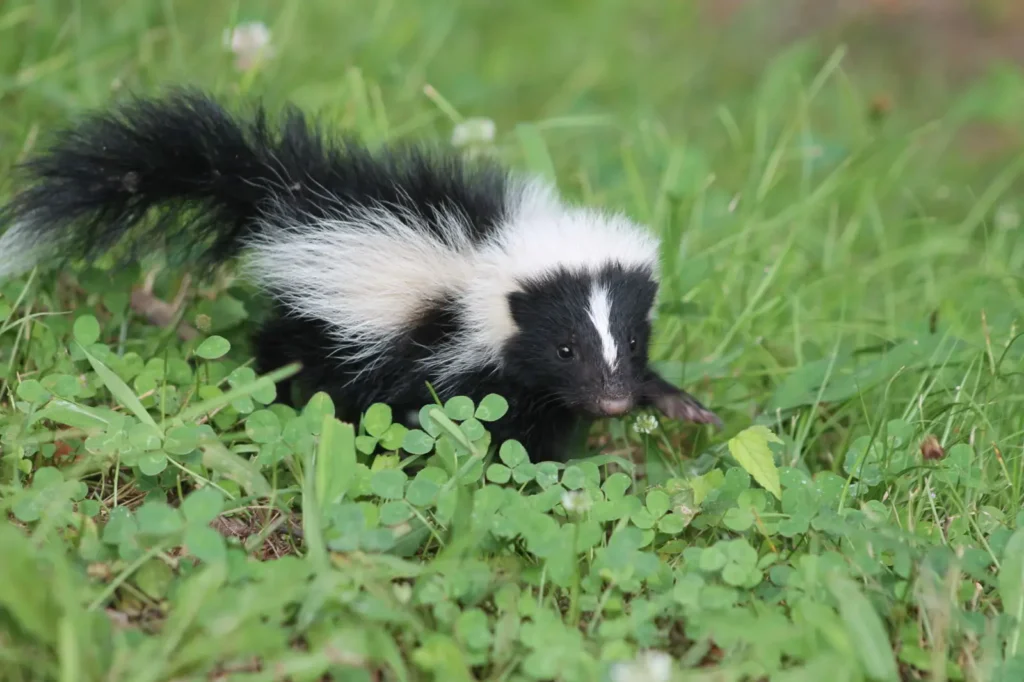
A skunk has sprayed near your home, and now the eye-watering, burnt-rubber smell is everywhere. It’s in your curtains, your couch, and your senses. Don’t panic. This is one of the most challenging skunk odor house fixes, but you can solve it by acting fast with the right plan.
Before you do anything else, get the air moving. Opening every window and turning on fans is the fastest way to air out a house after skunk exposure, which immediately begins to reduce the odor’s concentration. While many people reach for tomato juice, experience shows this only masks the scent temporarily. The real problem is the spray’s oily compound that simple remedies can’t touch.
To truly get the skunk smell out of your house requires a specific formula that chemically breaks down those stubborn oils. This guide provides a step-by-step plan and proven recipe that neutralizes the odor at its source, restoring your home and your peace of mind.
Why Skunk Smell Clings to Everything (And Why Water Won’t Work)
Skunk spray is notoriously hard to remove because it’s not just a smell—it’s a physical, oily substance designed to stick. This oily nature is the key to understanding why it clings so tenaciously to everything from your dog’s fur to your living room carpet.
Skunk spray is a thick oil loaded with sulfur compounds, which create that unmistakable, eye-watering stench of burnt rubber and garlic. Because the spray is an oil, it naturally repels water. This is why hosing down your porch or giving your dog a quick rinse does absolutely nothing to remove the odor; the water just beads up and rolls right off the oily residue.
To neutralize skunk odor, you need a solution that can both cut through the protective oil and chemically break down the smelly sulfur compounds inside. Most household cleaners and the famous tomato juice remedy fail because they can’t effectively tackle both parts of the problem. Fortunately, a specific homemade recipe can.
The Proven DIY Recipe That Actually Eliminates Skunk Odor
Forget the tomato juice. To destroy skunk odor, you need a formula that can cut through the oil and chemically neutralize the sulfur compounds. This simple, proven recipe is trusted by veterinarians and professional cleaners because it breaks the smell down instead of just covering it up.
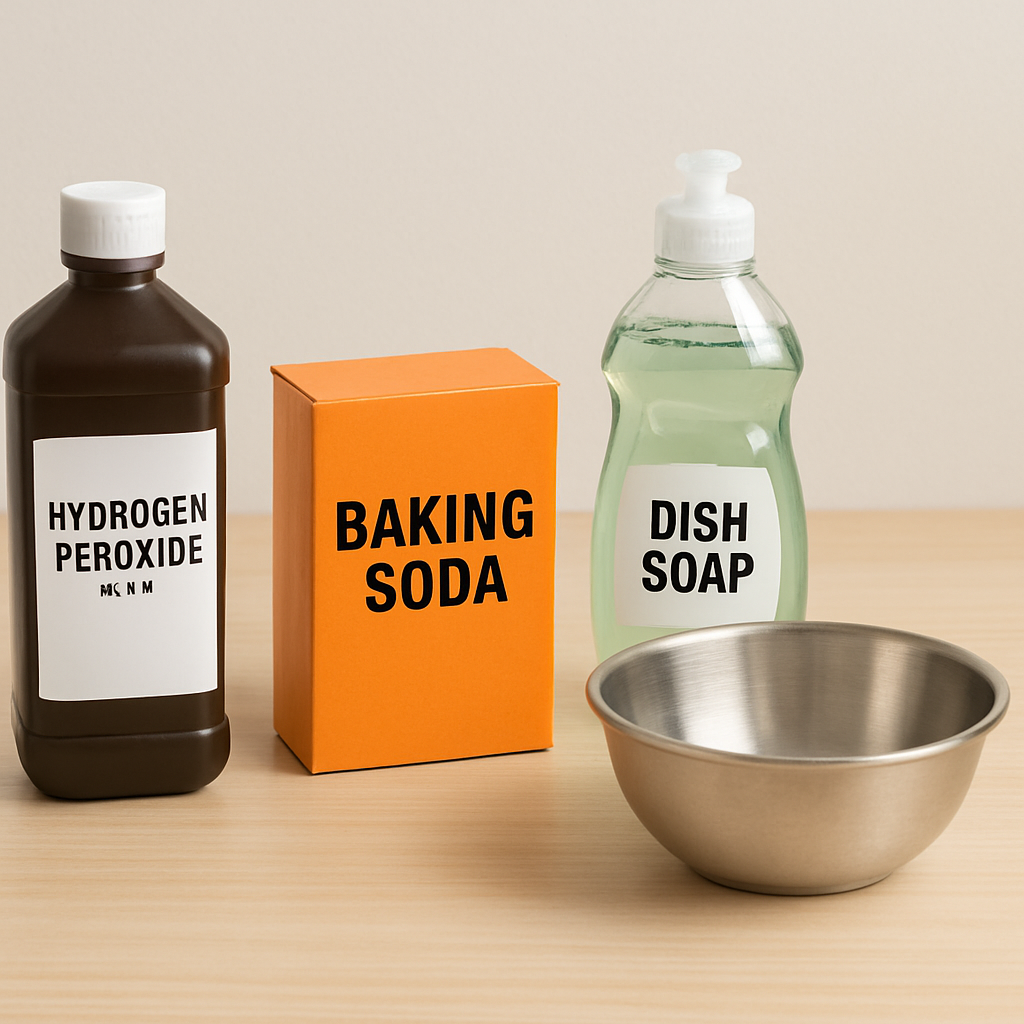
For a fresh batch, mix these ingredients in an open bucket or bowl right before you use them:
- 1 quart of 3% hydrogen peroxide
- ¼ cup of baking soda
- 1 to 2 teaspoons of liquid dish soap
This mixture works through a one-two punch. The hydrogen peroxide and baking soda work together to release oxygen, which changes the chemical structure of the smelly sulfur compounds into something that doesn’t smell at all. Meanwhile, the dish soap cuts through the greasy oil, allowing the solution to reach the odor molecules and wash them away.
Before you start, there are two critical safety rules. First, this solution can bleach fabrics and surfaces, so always spot-test it on a hidden area before applying it widely. Second, never, ever store this mixture in a sealed container. The chemical reaction creates oxygen gas, which can build up pressure and cause the container to burst. Mix it fresh, use it all immediately, and safely pour any leftovers down the drain.
How to Get Skunk Smell Out of Carpet and Furniture Upholstery
When the oily residue gets tracked onto your carpet or furniture, a careful approach is necessary. Since you can’t just toss a sofa in the wash, start by performing the spot-test mentioned earlier on an inconspicuous area, like the underside of a cushion or a patch of carpet inside a closet. This quick check ensures the hydrogen peroxide won’t cause unwanted discoloration.
Once you’ve confirmed it’s safe, it’s time to tackle the smell. Using a clean cloth, apply your DIY skunk odor remover to the affected area. The key here is to blot, don’t rub. Press the solution firmly into the upholstery. Rubbing can spread the oily skunk spray deeper into the fibers, while blotting allows the solution to penetrate and neutralize the odor at its source.
Let the mixture sit for at least five to ten minutes. You need to give the peroxide and baking soda enough time to chemically break down the smelly compounds. During this time, the odor should start to noticeably fade.
To finish, “rinse” the area by blotting it with a fresh cloth dampened with cool water. This lifts the cleaning solution and the neutralized skunk oil out of the fabric. Repeat this rinsing process a few times, then blot the spot as dry as possible with a clean towel. Aiming a fan at the damp area will help it dry faster and prevent any musty smells from developing.
The Right Way to Wash Skunk Smell Out of Clothes and Linens
For washable items like clothing, towels, or bedding, a standard wash cycle won’t be enough. The oily skunk spray needs to be broken down first. In a bucket or tub, submerge the affected fabrics in a fresh batch of the hydrogen peroxide solution and let them soak for at least 30 minutes. This pre-soak is the most important step, as it gives the mixture time to neutralize the odor molecules before they go into the machine.
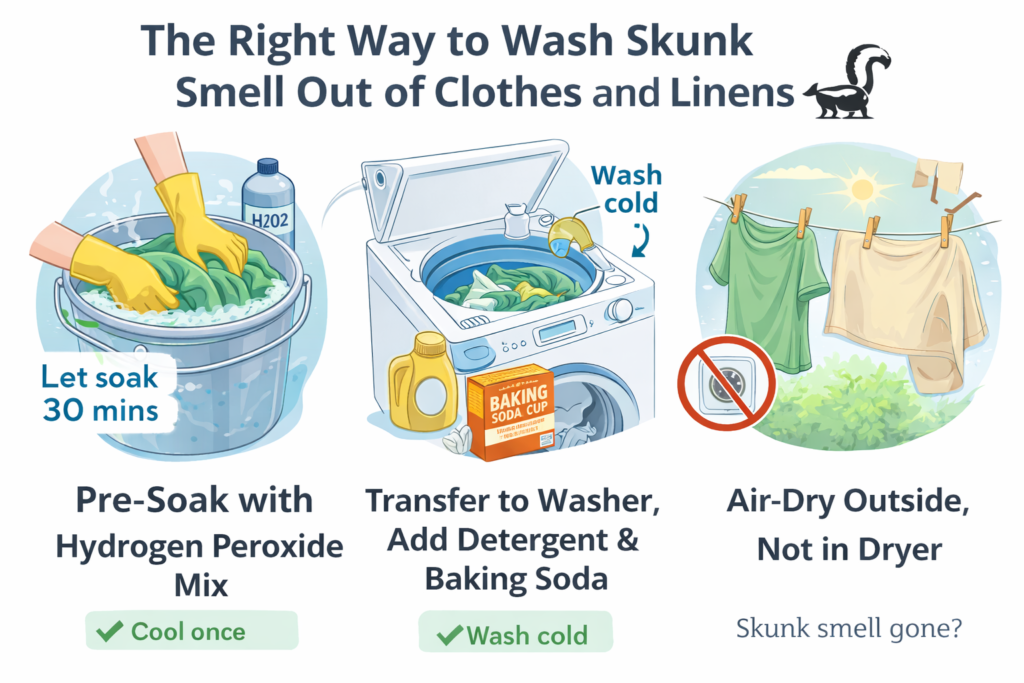
After the items have soaked, wring out the excess solution and transfer them directly into your washing machine. Add your regular laundry detergent and wash them on the cold water setting. You can also add another half-cup of baking soda to the wash for an extra deodorizing boost. This combination helps lift and rinse away any remaining residue.
This next step is critical: do not use your clothes dryer. The high heat can chemically bond any lingering skunk smell to the fabric, making the odor permanent. Instead, hang the items to air-dry, preferably outside in the sun. Once completely dry, do a final smell check. If the odor is gone, they are safe to be dried normally in the future. If a faint smell remains, repeat the pre-soak and wash process.
Dealing with Lingering Odors: Cleaning Hard Surfaces and the Air
Even after washing fabrics, the oily skunk spray can cling to hard surfaces like floors, countertops, and walls. Wipe these areas down with your peroxide cleaning solution, but be sure to test it on a small, hidden spot first, as it can discolor wood finishes and some paints. The goal is to chemically neutralize any oily residue you can’t see.
Once you’ve cleaned the direct sources, tackle the air itself. A lingering odor means smelly particles are still floating around. Instead of masking the scent with air fresheners, use common household items to absorb it. Place several small bowls of these items around the most affected areas:
- White Vinegar: Its acidity helps neutralize odor molecules.
- Baking Soda: Leave open boxes or pour it into bowls to soak up smells.
- Activated Charcoal: Found in pet stores or online, this is extremely porous and excellent at trapping odors.
Finally, keep the air moving. Continue running exhaust fans and consider using an air purifier for skunk smell to help capture remaining particles. If you notice the skunk smell coming through vents repeatedly, it could mean the source is outside and very close—or even under—your home.
When the Skunk Sprays Under Your House or Deck
If you’ve cleaned everything inside but a persistent skunk smell is coming through your vents, the source is almost certainly outside. Carefully inspect the area around your foundation, crawl space openings, and under any decks or porches. You’re looking for a dark, oily patch on the ground or a direct hit on the siding. This is ground zero, and neutralizing it is the only way to stop the odor from seeping indoors.
For a large, saturated area like soil or the underside of a deck, the DIY peroxide solution isn’t practical. This is the time to invest in a commercial-grade enzyme cleaner, often considered the best skunk odor eliminator for home exteriors. These formulas contain active enzymes that don’t just cover the smell—they digest the oily skunk spray, destroying the odor-causing compounds completely.
To solve the problem of a skunk sprayed under your house with the smell inside, mix the enzyme cleaner in a garden pump sprayer according to the product’s directions. Thoroughly soak the contaminated ground, foundation, or deck supports. You must saturate the source to neutralize it. This is the most critical step to ensure the smell stops seeping into your home, allowing the air inside to finally clear.
The Final Step: A Checklist for a Smell-Free Home
Use this final checklist for your skunk odor house fixes to ensure you’ve covered all your bases and can confidently reclaim your space.
Your Final Action Plan:
- Ventilate Immediately: Open windows and use fans to get the air moving.
- Locate the Source(s): Find any objects, pets, or people that made direct contact.
- Mix the DIY Odor Eliminator: Combine the peroxide, baking soda, and dish soap solution.
- Clean Affected Surfaces: Treat carpets, furniture, and hard floors.
- Wash All Contaminated Fabrics: Launder clothing, curtains, and linens immediately.
- Set Out Passive Air-Fresheners: Place bowls of vinegar or charcoal to absorb lingering smells.
- Be Patient: The smell will dissipate completely, but it may take a day or two.
That powerful skunk smell is intimidating, but it isn’t permanent. By following these steps, you actively destroy the odor molecules at the source rather than just covering them up. Trust the process, give it a little time, and your home will soon be back to normal.
If your house smells like skunk, the cause isn’t always a skunk outside. The odor may signal gas, HVAC, or plumbing issues that need attention. Pinpointing the source early helps you fix the problem safely and get your home smelling normal again.
FAQ: