
- TL;DR Summary for Those in a Hurry:
- How Your AC Really Works: The Heat Sponge in Your Window
- What Size Window AC Do I Need? Matching BTUs to Your Room
- The Secret to Lower Electric Bills: What 'EER' and 'CEER' Mean for Your Wallet
- The 3 Keys to a Leak-Proof, Secure Installation
- Your AC's Secret Weapon for Better Cooling: The Filter
- Window AC vs. Portable AC: Which One Is Actually Better?
- The Best AC Upgrades: When to Pay More for Quiet, Smart, or U-Shaped Models
- Your Plan for a Perfectly Cool Summer
TL;DR Summary for Those in a Hurry:
- Window AC units primarily cool and recirculate the indoor air in your room rather than bringing in fresh air from outside.
- They work as a closed system: warm room air is pulled in, cooled, dehumidified, and blown back inside while heat is expelled outdoors.
- Some models have a fresh air/vent lever that lets a small amount of outside air mix in, but this is optional and separate from normal cooling.
- Knowing this helps you set expectations for ventilation and decide when you actually need dedicated fresh-air circulation or open windows.
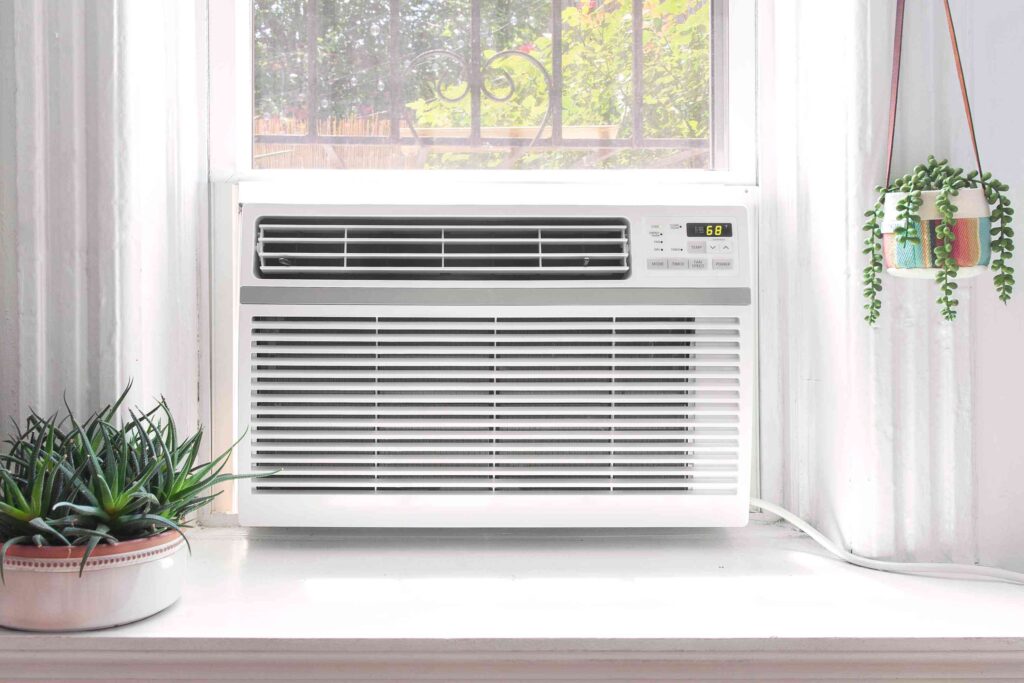
That first truly hot day of the year has arrived. Your room feels more like a sauna than a sanctuary, the air thick and still, and you find yourself wondering: is my window AC unit making it worse by pulling in that sweltering air from outside? The answer, for almost all window AC units, is a surprising no. It’s one of the biggest misconceptions about how they work.
Contrary to what many believe, your window air conditioner is designed as a closed system. It doesn’t use outside air for cooling; instead, it recycles the air that’s already inside your room. Think of it less as a window open to the world and more as a powerful heat-removing machine dedicated entirely to your personal space.
The process is like a sponge for heat. The AC sucks in the warm, humid air from your room, and inside the unit, a special cooling process soaks up the heat and moisture. The unit then pushes the newly cooled, drier air back into your room while dumping all the collected heat out the back, which is why the exterior part of the unit always feels hot.
So what about that “vent” or “exhaust” setting on some models? That feature doesn’t bring in fresh, cooled air. It’s designed to exchange a very small amount of stale indoor air with outside air, but this function is separate from the primary cooling cycle. Knowing this helps you use your AC more efficiently and finally get the cool relief you’re looking for.
How Your AC Really Works: The Heat Sponge in Your Window
The magic trick of a window AC isn’t that it “makes” cold, but that it moves heat . Think of your AC as a sealed system acting like a heat sponge. Inside, a special cooling fluid circulates to absorb warmth from your indoor air. If this process is hindered, a unit may seem like it’s not cooling properly. The AC is constantly soaking up your room’s heat and preparing to push it outside.
To get rid of that captured heat, your AC has two distinct jobs separated by the window. The indoor side uses a cold coil (the evaporator) to draw in warmth from the air your fan pulls in. Meanwhile, the outdoor side uses another coil (the condenser) to release that heat into the world. This is why proper airflow is key, so ensuring it’s secure on a window ac unit bracket support with clear space is essential.
Besides moving heat, your AC is also a powerful dehumidifier. As warm, humid air passes over the cold indoor coil, water condenses on it—just like on a glass of iced tea on a summer day. This process pulls that sticky, muggy feeling from your room, making the air feel crisp and comfortable. That collected water then drips harmlessly outside, which is why knowing how to install a window air conditioner with a slight downward tilt is so important.
What Size Window AC Do I Need? Matching BTUs to Your Room
When you’re wondering, what size window AC do I need?, the answer starts with a tape measure. An air conditioner’s cooling ability is measured in BTUs (British Thermal Units)—think of it like horsepower for cooling. To get the right amount of power, you need to match it to your room’s size. Simply calculate your room’s square footage by multiplying its length by its width. For example, a bedroom that is 10 feet long and 15 feet wide is 150 square feet.
With your square footage in hand, you can use this simple chart to find the perfect match:
- 100-150 sq. ft. (Small bedroom, home office) → 5,000 BTU
- 150-250 sq. ft. (Large bedroom, small living room) → 6,000 BTU
- 250-350 sq. ft. (Studio apartment, living room) → 8,000 BTU
- 350-450 sq. ft. (Large living room) → 10,000 BTU
- 450-550 sq. ft. (Open-plan area) → 12,000 BTU
It might be tempting to buy a more powerful unit “just in case,” but bigger isn’t better. An oversized AC will blast the room with cold air and shut off too quickly. Because it doesn’t run long enough, it won’t properly dehumidify the air, leaving you feeling cool but uncomfortably damp. Getting the right size is the first step to an energy efficient window air conditioner, but power is only half the story.
The Secret to Lower Electric Bills: What ‘EER’ and ‘CEER’ Mean for Your Wallet
Finding the right BTU size ensures your AC cools effectively, but how do you know what it will cost to run? The answer lies in the unit’s efficiency rating, called the CEER (Combined Energy Efficiency Ratio). Think of it like a car’s miles-per-gallon (MPG); a higher CEER means the unit uses less electricity to produce the same amount of cool air. This number directly impacts the cost to run a window air conditioner, so a higher CEER will save you money every month.
For an even simpler way to choose, look for the blue ENERGY STAR® label. This government-backed symbol is your shortcut to savings. An energy efficient window air conditioner with the Energy Star certification is guaranteed to be significantly more efficient than standard models. It’s a clear sign you’re making a wallet-friendly choice without becoming an expert on efficiency ratings.
The window ac EER rating meaning is simple: when comparing two models with the same cooling power, the one with the higher CEER rating is the cheaper one to operate. Choosing a unit with a CEER of 12.0 over one with a 10.0 might cost a little more upfront but can lead to real savings summer after summer.
The 3 Keys to a Leak-Proof, Secure Installation
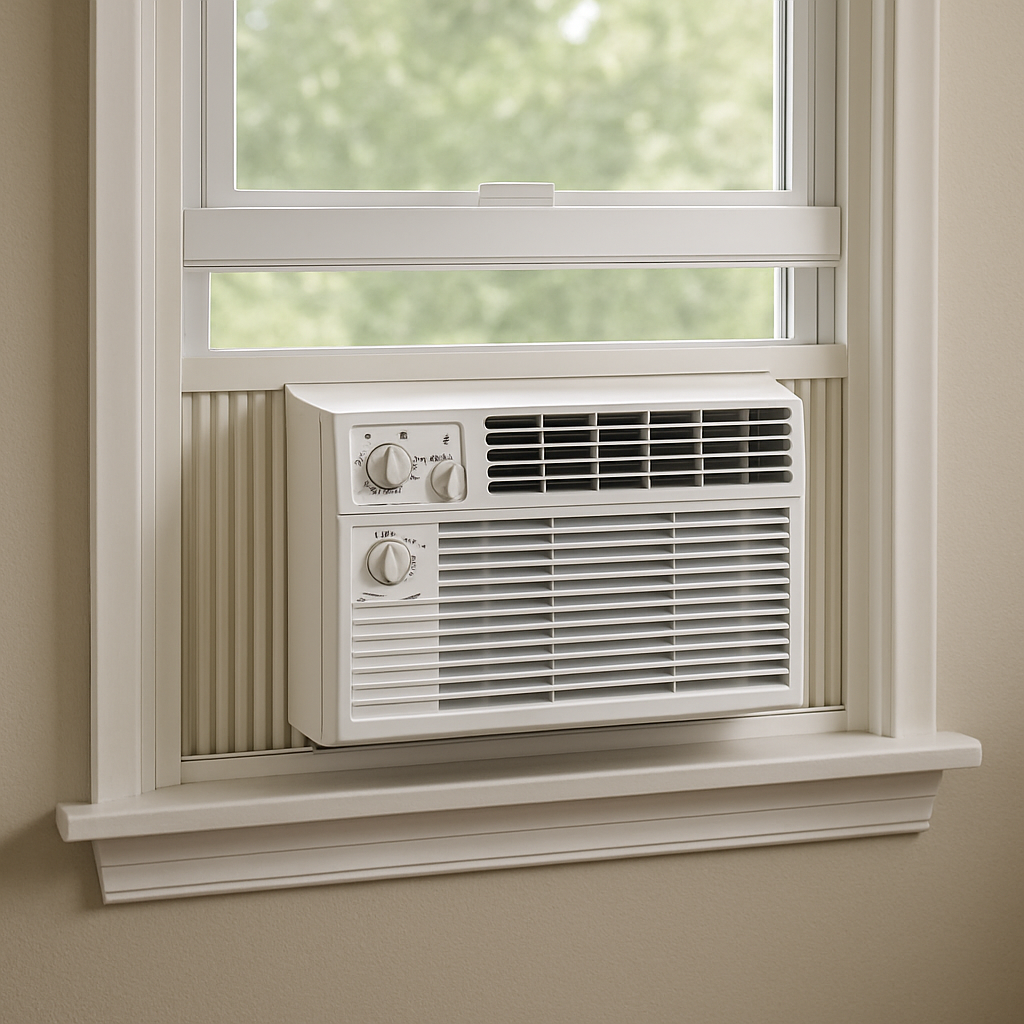
Proper installation is about more than just getting the AC to fit; it’s about safety, efficiency, and preventing water damage. The first, and most important, step is creating a slight drainage tilt. As your AC pulls moisture from the air, you must ensure the unit tilts slightly backward so condensation drains away from your home. A small bubble level can help you confirm the back is about a quarter-inch lower than the front.
Next, seal all the gaps. Your AC comes with accordion side panels designed to fill the spaces on either side. Extend them until they meet the window frame, then lock them in place. For a truly airtight seal, use the included foam strips to plug any remaining cracks. This simple step is a core part of how to install a window air conditioner correctly, as it stops cool air from escaping and hot air from getting in.
Finally, securely support the unit’s weight. While a small AC might rest on the windowsill, most units require a dedicated window ac unit bracket support, especially for heavier models or any unit installed above the ground floor. These brackets mount to your home’s exterior and hold the AC from underneath, taking the strain off your window frame and preventing a dangerous fall.
Your AC’s Secret Weapon for Better Cooling: The Filter
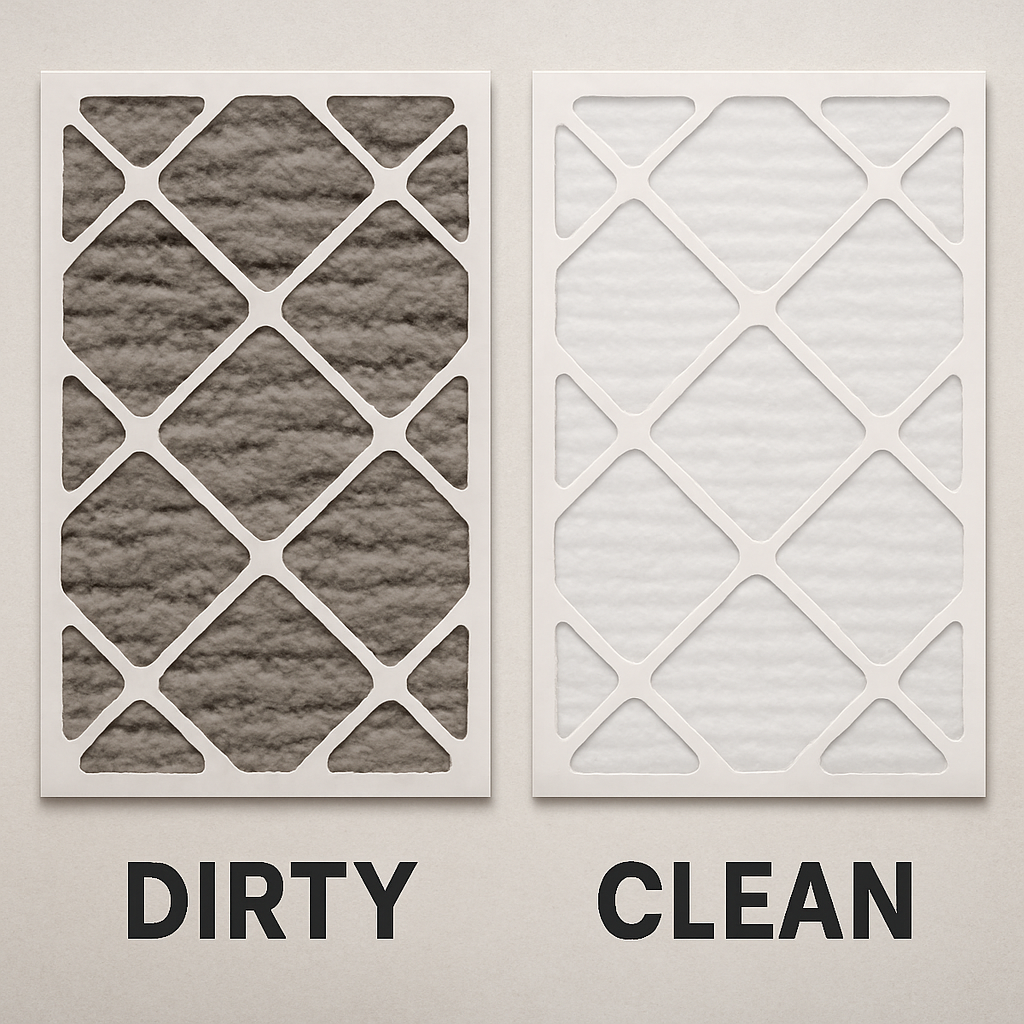
Is your AC running, but the room just isn’t getting cool? Before you worry, check the air filter. A dirty filter is the number one cause when a window ac not cooling properly. Clogged with dust and lint, it forces your unit to try and breathe through a thick blanket, leading to weaker airflow and a higher electricity bill.
To prevent this, plan on checking your filter once a month during the summer. For homes with pets or smokers, a quick check every two or three weeks is even better. This simple piece of window ac maintenance keeps your air quality high and your running costs low.
Thankfully, learning how to clean window air conditioner filter is a two-minute task. The front grille usually unclips easily, allowing you to slide the filter out. Just wash it in your sink with warm water and a little mild soap, rinse it well, and let it dry completely before popping it back in. Keeping this part clean is the most effective thing you can do to ensure your AC runs powerfully all season long.
Window AC vs. Portable AC: Which One Is Actually Better?
When exploring window air conditioner alternatives, you’ll quickly find portable ACs. They seem convenient, but it’s crucial to understand the major trade-off you’re making in cooling power and efficiency. The hidden flaw in most portable units is their own warm exhaust hose, which radiates heat back into the space you’re trying to cool. It’s like running a small heater in the room while the AC is on.
A window AC, on the other hand, keeps all of its hot components completely outside your window. Because it isn’t fighting against its own heat, a window AC will cool a room far more effectively and use less electricity than a portable unit with the same BTU rating.
So, what’s the verdict in the window ac vs portable ac debate? A window AC is almost always the better choice for raw cooling power and lower energy bills. A portable unit should be seen as a last resort, best for situations where building rules or window styles leave you no other option.
The Best AC Upgrades: When to Pay More for Quiet, Smart, or U-Shaped Models
Once you’ve nailed down the right cooling power, you’ll notice some AC models cost significantly more. Are the features worth it? Not always, but new designs solve common frustrations. For many, the biggest complaint about a traditional window unit is the constant, loud hum.
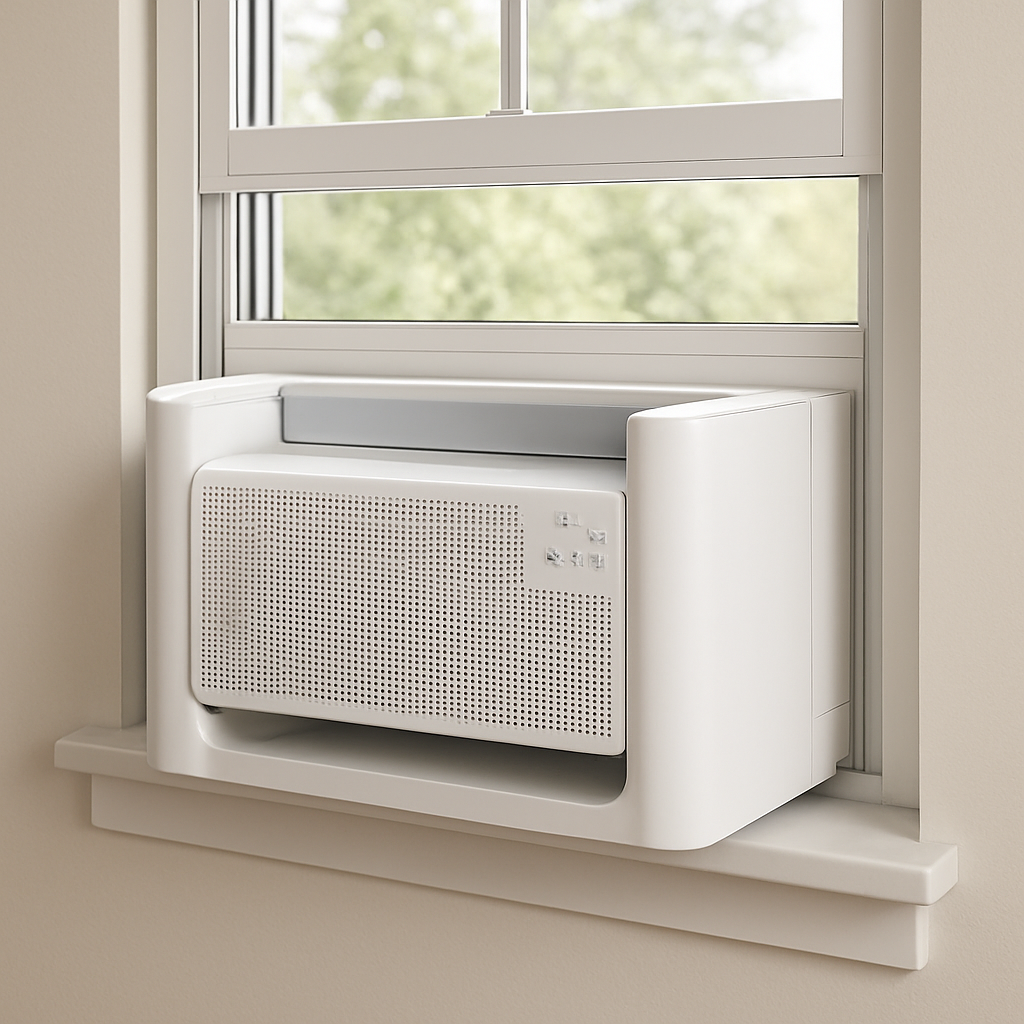
A new solution is the innovative U-shaped design. These units place the noisy compressor completely outside, with the window closing down into the “U” to seal off the sound. This simple change makes it the best quiet window air conditioner type available. While a standard AC can run at 60 decibels (dB), a U-shaped model can be closer to 40 dB—as quiet as a library.
For ultimate convenience, look for a smart window air conditioner with wifi. Imagine turning your AC on during your commute so the room is cool the moment you walk in. Instead of leaving it running all day, you can use an app to turn it on or off from anywhere or set a precise schedule. This smart control prevents wasting electricity and can lead to real savings.
If you’re a light sleeper or work from home, the quiet U-shaped design is a game-changer. If you have an unpredictable schedule, a smart model is worth every penny. These aren’t just bells and whistles; they’re targeted solutions.
Your Plan for a Perfectly Cool Summer
Perfect cooling isn’t just about raw power, but about finding the right balance of size and efficiency for your room. Your final checklist is straightforward. Start by measuring your room to find its square footage, then match that number to the right BTU power. As you compare models, choose the highest CEER rating your budget allows for the best long-term savings.
When you get it home, focus on a secure installation—making sure it’s supported, sealed, and tilted correctly. With this knowledge, a quick monthly filter cleaning is all you need to keep your unit running perfectly. You are ready to make a confident choice and enjoy your cool, quiet oasis.
Window AC units mostly recirculate indoor air for cooling, rarely bring outside air in unless a special vent feature is used, and understanding this helps you maintain better comfort and air quality.
FAQ: