- TL;DR Summary for Those in a Hurry:
- Understanding Furnace Stages: What’s the Difference?
- How Does a Single Stage Furnace Work?
- How Does a Two Stage Furnace Work?
- Pros and Cons of Single Stage Furnaces
- Pros and Cons of Two Stage Furnaces
- Key Differences: Single Stage vs. Two Stage Furnace
- Cost Comparison: Upfront and Long-Term
- Comfort and Performance: What to Expect
- Maintenance, Reliability, and Lifespan
- Which Furnace Is Right for You? Factors to Consider
- UPRIGHT HVAC and Construction: Your Trusted Furnace Partner
- Conclusion: Making the Best Choice for Your Home
TL;DR Summary for Those in a Hurry:
- Single vs. Two Stage Furnace comparison helps you decide which heating system fits your home’s comfort, cost, and efficiency needs. Two-stage furnaces run at both low and high levels for more consistent warmth and energy savings, while single-stage units simply turn on full power or off.
- Single-stage models are cheaper upfront, simpler to maintain, and work well in smaller homes or mild climates, but they often cause temperature swings and higher energy use.
- Two-stage furnaces deliver steadier indoor temperatures, quieter operation, longer runtimes, and potentially lower utility bills over time.
- The main trade-off is higher upfront cost and complexity for two-stage systems versus simplicity and lower initial price for single-stage ones.
- Choose based on your budget, comfort priorities, and climate — two stage for long-term efficiency and comfort, single stage for cost-effective basics.
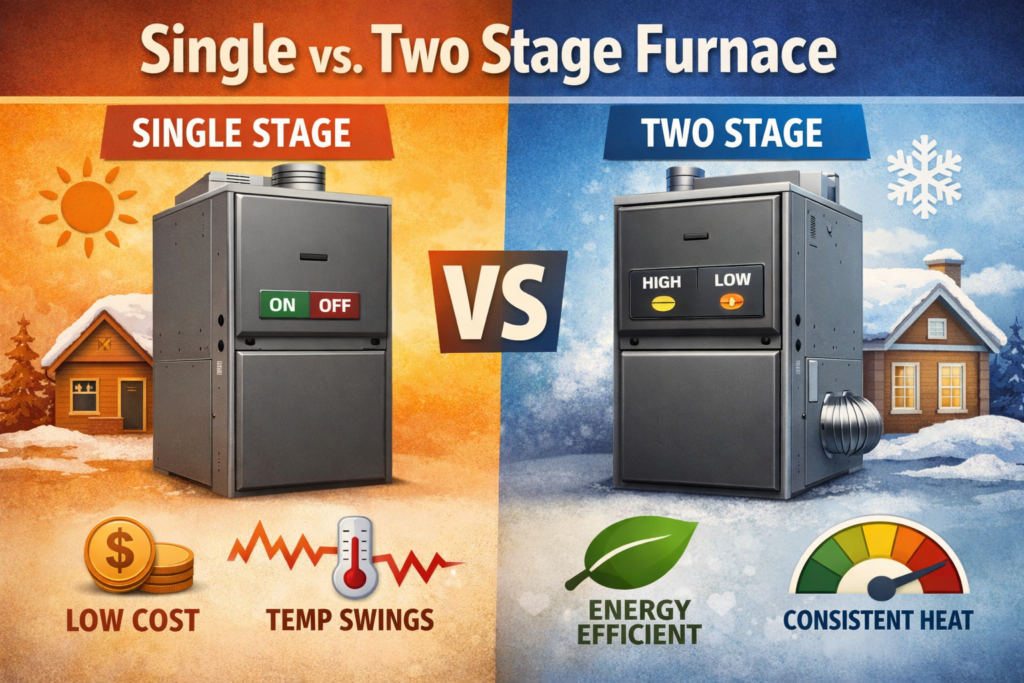
Choosing the right furnace is crucial for home comfort and energy efficiency. Homeowners often face the dilemma of selecting between single-stage and two-stage furnaces. Each type offers distinct advantages and potential drawbacks. Understanding these differences can help you make an informed decision.
A single-stage furnace operates at full capacity whenever it is on. This simplicity can mean lower upfront costs. However, it may lead to more temperature fluctuations in your home. On the other hand, a two-stage furnace offers more precise temperature control. It operates at two levels, adjusting to your heating needs.
While two-stage furnaces are more expensive initially, they can offer long-term savings. They are more energy-efficient and can lower utility bills over time. At UPRIGHT HVAC and Construction, we understand the importance of making the right choice. Our expertise can guide you in selecting the best furnace for your needs.
Understanding Furnace Stages: What’s the Difference?
Furnaces are a central part of a home’s heating system, but not all operate the same way. The difference between single-stage and two-stage furnaces lies in their operational modes.
A single-stage furnace has one heating option: full power. This means it is always on at maximum capacity when activated. Simple by design, this furnace is often suitable for smaller homes or mild climates.
In contrast, a two-stage furnace comes with two operational levels. High power for those particularly cold days, and a lower, energy-efficient setting for milder ones. This adaptability can significantly improve comfort and efficiency.
Here’s a brief comparison:
- Single-stage furnace: Operates at full capacity only.
- Two-stage furnace: Offers both high and low heating options.
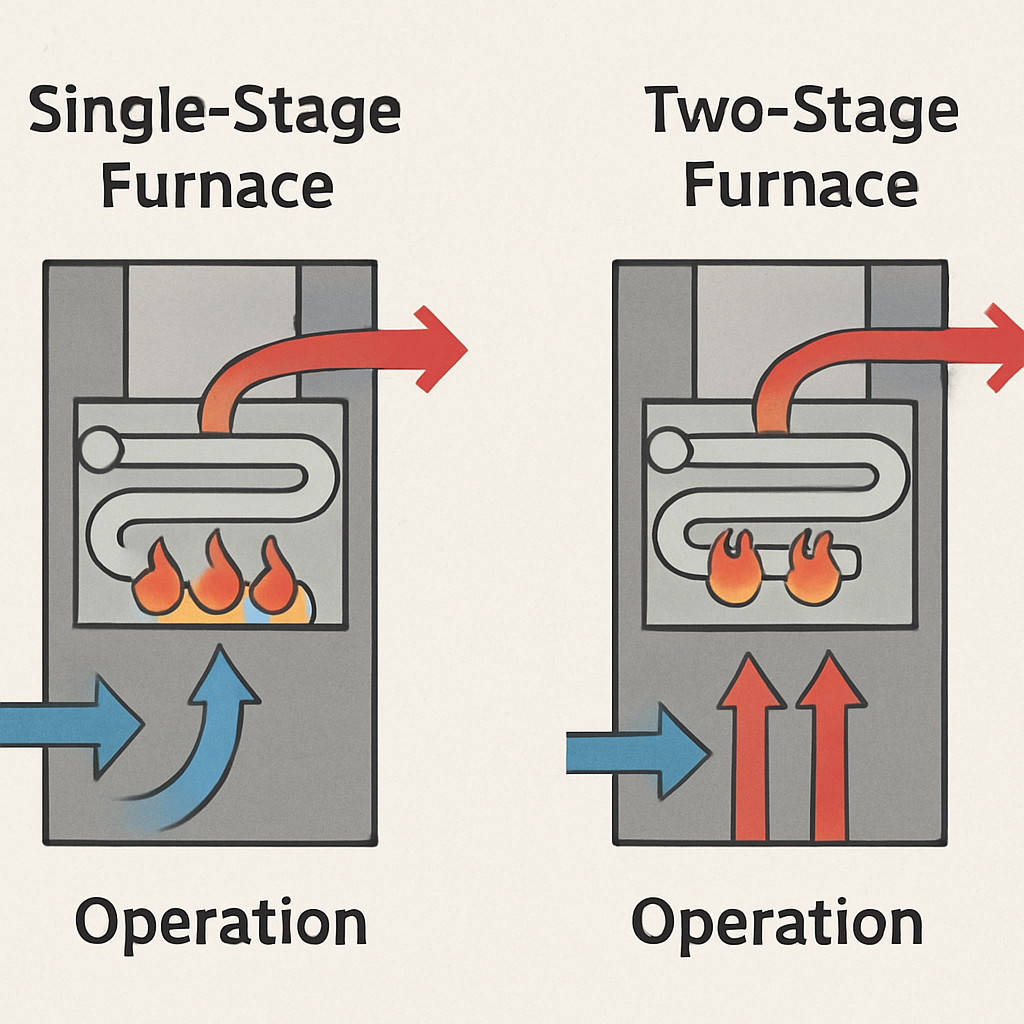
This operational flexibility makes two-stage furnaces a preferred choice for regions with varying temperatures. Understanding these differences helps in tailoring a system that meets your specific needs.
How Does a Single Stage Furnace Work?
A single-stage furnace is straightforward in its operation. It runs at full blast whenever it’s turned on, ensuring immediate heat. This constant power can make the environment cozy quickly.
When the thermostat signals for heat, the furnace ignites and blows warm air at a single, maximum setting. This simplicity can mean fewer components to maintain. However, frequent cycles of turning on and off can lead to some inefficiencies.
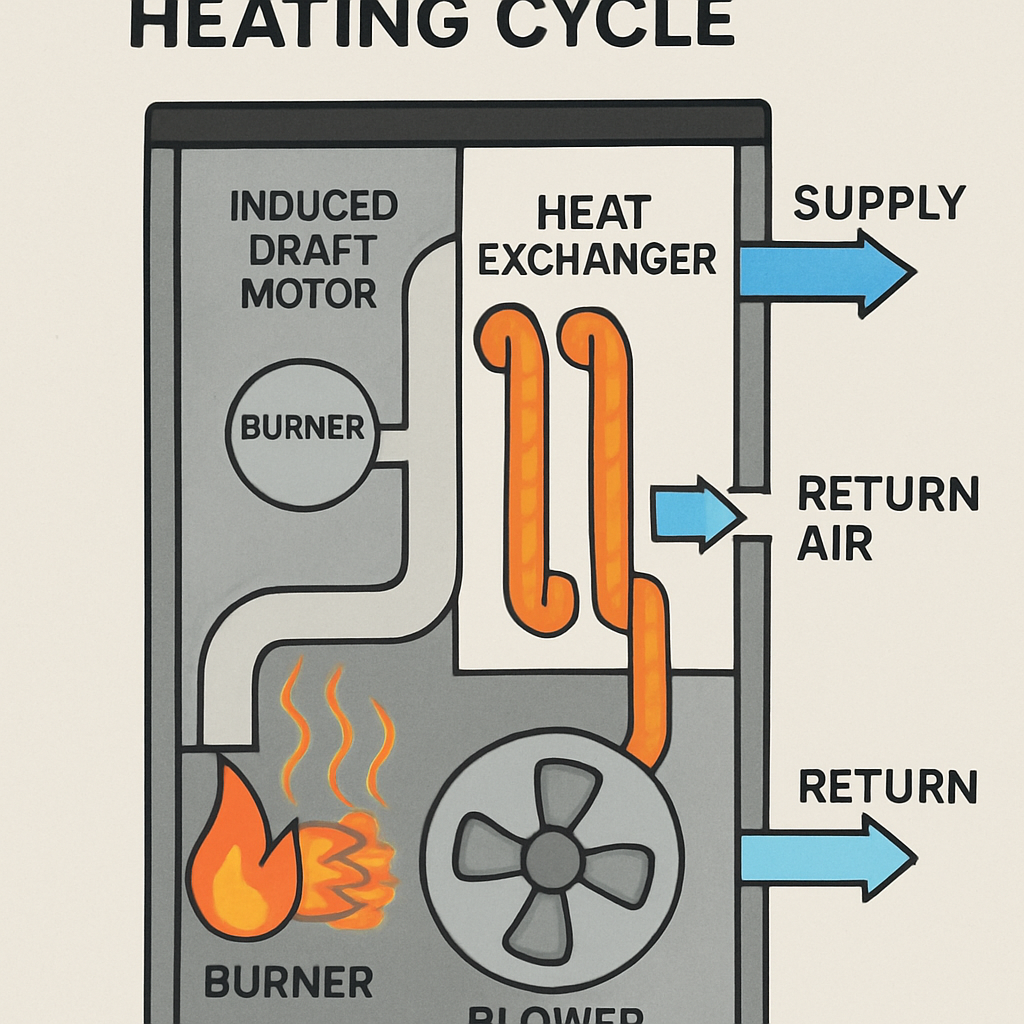
Due to its single-speed function, homeowners might notice slight temperature swings. Despite this, many appreciate its reliability and lower initial costs. It’s often an economical choice for smaller or less variable climate settings.
How Does a Two Stage Furnace Work?
A two-stage furnace offers more refined heating capabilities. It has two operation levels: high and low, adapting to temperature needs. This makes the heating process more efficient and consistent.
On milder days, it runs on the lower setting, conserving energy. When it gets colder, it switches to the higher level for extra warmth. This ensures comfort without the constant powering on and off, typical of single-stage models.
Due to its variable settings, a two-stage furnace minimizes temperature fluctuations. This results in a quieter, more stable heat environment. Thus, it can also improve indoor air quality, as the furnace operates longer at a gentler pace.
Pros and Cons of Single Stage Furnaces
Single-stage furnaces are straightforward in design, which can be a significant advantage. Their simplicity leads to easier installation and potentially lower costs. With fewer parts, maintenance tends to be less complicated.
However, a single-stage furnace operates at full capacity whenever it’s on. This can result in frequent cycling, which might increase wear and tear over time. It’s important to consider the potential for higher energy bills as well.
On the flip side, they are generally more affordable upfront. This makes them appealing for those with budget constraints. They’re also suitable for smaller homes or areas with mild climates.
Here are key pros and cons of single-stage furnaces:
Pros:
- Lower initial cost
- Easier to install and maintain
- Simple design with fewer parts
Cons:
- Higher energy usage due to constant full capacity
- More temperature fluctuations in the home
- Potentially shorter lifespan due to frequent cycling
Choosing a single-stage furnace means weighing these factors based on personal needs and budget. UPRIGHT HVAC and Construction can guide you to make an informed choice.
Pros and Cons of Two Stage Furnaces
Two-stage furnaces offer a sophisticated heating approach, adjusting to different temperature needs. They run at a lower stage during mild weather and shift to a higher stage as it gets colder. This flexibility makes them efficient in energy use, potentially lowering utility costs over time.
The quiet operation of two-stage furnaces is a notable benefit, providing a serene home environment. Their longer cycles at reduced speeds enhance air filtration, benefiting indoor air quality. Additionally, they tend to maintain more consistent temperatures.
However, the initial investment for a two-stage furnace is higher. Installation is more complex, which could increase labor costs. The potential long-term savings and comfort must be weighed against these upfront costs.
Consider the key pros and cons of two-stage furnaces:
Pros:
- Enhanced energy efficiency
- Improved temperature control and consistency
- Quieter operation
- Better indoor air quality
Cons:
- Higher initial and installation costs
- More complex maintenance
Opting for a two-stage furnace involves considering both immediate and future benefits. At UPRIGHT HVAC and Construction, we help you find the right match for your home’s unique needs.
Key Differences: Single Stage vs. Two Stage Furnace
Choosing between a single-stage and a two-stage furnace involves understanding how each type operates. Single-stage furnaces run at full capacity whenever they are on, providing a straightforward and cost-effective heating solution. In contrast, two-stage furnaces modulate their operation, offering varying levels of heat output depending on the temperature outside.
This modulation in two-stage furnaces results in greater energy efficiency, potentially lowering long-term heating costs. The capability to maintain consistent indoor temperatures makes them ideal for regions with frequent temperature fluctuations.
Homeowners might appreciate the simpler design of a single-stage furnace, which often translates to easier maintenance. However, those seeking enhanced comfort and efficiency might find the initial investment in a two-stage furnace worthwhile.
Key Differences Include:
- Operational Modes: Full capacity vs. variable stages
- Energy Efficiency: Lower efficiency vs. higher efficiency
- Temperature Control: More fluctuations vs. consistent temperatures
- Initial Cost: Lower cost vs. higher cost
Understanding these differences can guide homeowners in selecting the ideal furnace, tailored to their specific heating preferences and budgetary considerations.
Cost Comparison: Upfront and Long-Term
When considering a new furnace, understanding the financial aspects is crucial. Single-stage furnaces are generally less expensive upfront. Their straightforward design makes installation simpler and cost-effective.
In contrast, two-stage furnaces come with a higher initial price. The added complexity for better efficiency often demands more from your wallet at the outset. However, the potential for long-term savings is appealing. Their ability to run at lower stages can lead to reduced energy costs.
Over time, the energy savings from a two-stage furnace can offset the initial investment difference. It’s essential to weigh these costs against benefits like energy efficiency and comfort.
Cost Factors:
- Initial Purchase: Lower for single-stage, higher for two-stage
- Installation: Simpler and cheaper for single-stage
- Long-Term Savings: Greater for two-stage due to efficiency
By examining these cost factors closely, homeowners can align their furnace choice with budget goals and financial plans, ensuring a sound investment in their home heating system.
Comfort and Performance: What to Expect
When it comes to home heating, comfort is key. A single-stage furnace provides consistent heat but may cause temperature swings. It switches on and off frequently, which might disrupt the steady warmth you desire.
In contrast, a two-stage furnace offers enhanced comfort levels. By operating at a low or high setting depending on the outside temperature, it maintains more consistent indoor temperatures. This means fewer hot and cold spots throughout your home.
Advantages of Two-Stage Comfort:
- Smoother heat distribution
- Fewer temperature fluctuations
- Enhanced indoor air quality
Choosing the right furnace will hinge on personal preferences for steady warmth and energy efficiency. Your decision should balance comfort, performance, and how much you value a stable indoor environment.
Maintenance, Reliability, and Lifespan
When considering maintenance, single-stage furnaces have an edge. Their simpler design means fewer parts, which often leads to less maintenance. This simplicity can also translate to more reliability, as there are fewer components that could fail.
Two-stage furnaces, however, may require more attention due to their complexity. They have additional components to maintain their dual-level operation. Despite this, they often boast a longer lifespan due to reduced wear from smoother operation.
Key Considerations:
- Simpler maintenance for single-stage
- Potential for lower repair costs
- Longer lifespan with two-stage due to less cycling
Choosing between the two depends on your priorities for maintenance ease versus long-term durability.
Which Furnace Is Right for You? Factors to Consider
Choosing between a single-stage and two-stage furnace hinges on several critical factors. It’s essential to consider your climate, budget, and personal comfort preferences. These elements will guide you toward the most suitable option for your home.
Think about your long-term energy savings goals. Two-stage furnaces can offer significant savings over time. However, they require a higher initial investment. Analyze both short-term affordability and potential long-term benefits.
Factors to Consider:
- Climate variations in your area
- Desired comfort level
- Budget constraints and energy savings goals
At UPRIGHT HVAC and Construction, we understand these factors intimately. We are here to help you make the best choice for your needs.
UPRIGHT HVAC and Construction: Your Trusted Furnace Partner
At UPRIGHT HVAC and Construction, we are committed to excellence in HVAC services. With over 15 years of experience, we ensure top-tier installations and long-lasting results.
Trust us to guide you through the complexities of single and two-stage furnaces. Our expert team is ready to meet your heating needs efficiently and affordably.
Conclusion: Making the Best Choice for Your Home
Selecting the right furnace is a crucial decision for comfort and efficiency. Understanding the difference between single-stage and two-stage furnaces can guide your choice.
Each option offers unique benefits. Consider your home’s climate, budget, and personal comfort preferences. With UPRIGHT HVAC and Construction, you can be confident in finding the perfect solution to enhance your home’s heating system efficiently and reliably. Let us assist you in making a wise investment for your future.
Understand the pros and cons of Single vs. Two Stage Furnace to pick the right balance of cost, comfort, and efficiency for your home.
FAQ: