
- What to Do in the First 24 to 72 Hours
- Cleaning Smoke Residue Off Walls, Ceilings, and Hard Floors
- Getting Smoke Smell Out of Clothing, Upholstery, and Carpets
- Your HVAC System, Filters, and Ductwork After Smoke Exposure
- Picking the Right Air Cleaner and Avoiding the Wrong Technology
- Baking Soda, Activated Charcoal, and Vinegar: What They Actually Do
- When to Call in a Professional, and What That Work Looks Like
- My Take on Priorities, Trade-Offs, and When to Stop Cleaning
- Let Upright Construction & HVAC Handle the Hard Parts
- FAQ
- Sources
Permanent smoke odor removal means removing the source: soot and residue on surfaces, contaminated fabrics, and whatever has settled inside your ductwork, combined with HEPA plus activated carbon filtration to clear the air you’re breathing right now. Ventilation and odor absorbers only dilute or mask the smell temporarily. If the smoke exposure was heavy or the smell lingers after a real cleaning effort, professional remediation, including duct cleaning and targeted HVAC work, is often the honest next step.
TL;DR:
- Upgrading to MERV 13 filters and running a HEPA plus activated carbon air cleaner on high speed significantly reduces indoor smoke particles and odors.
- Promptly replacing HVAC filters, setting your system to continuous fan operation, and using portable air cleaners are crucial in the first 72 hours after smoke exposure.
- Thorough cleaning of soot from surfaces depends on soot type, with oily residues often requiring gentle detergents or TSP and longer drying to fully eliminate smells.
- Replacing or sealing porous materials like drywall or wood trim is often necessary if cleaning cannot remove persistent yellowing or odors.
- Professional remediation includes duct cleaning, material replacement, and air quality testing when visible soot or lingering odors persist despite initial cleaning efforts.
What to Do in the First 24 to 72 Hours
Speed matters here. Smoke particles and the oily residue that carries odor molecules settle fast, and the longer they sit on porous surfaces, the harder they are to lift. Here’s the order that actually helps:
- Set your HVAC system to recirculate and swap in a fresh filter immediately, then run the fan continuously instead of on auto cycling.
- Bring in a portable air cleaner with HEPA and activated carbon, sized for your main living area, and run it on its highest setting.
- Open windows only when outdoor air quality is better than indoor air, and move heavily soiled fabrics like bedding or curtains to a ventilated outdoor space.
- Set out bowls of baking soda or activated charcoal as short-term absorbers, and skip scented sprays or candles entirely.
That last point trips people up. A scented candle feels like progress, but it just adds another chemical layer on top of the smoke residue, and it can fool you into thinking a room is clean when it isn’t. Running the fan continuously, per EPA guidance on indoor air filtration, pulls more air through your filter over the course of a day, which matters more than any single burst of fresh air from an open window.
If you have asthma, COPD, or young children in the house, treat the first three days as a filtration priority, not a cleaning priority. Clean air to breathe while you work beats a spotless room with no air cleaner running.
Cleaning Smoke Residue Off Walls, Ceilings, and Hard Floors
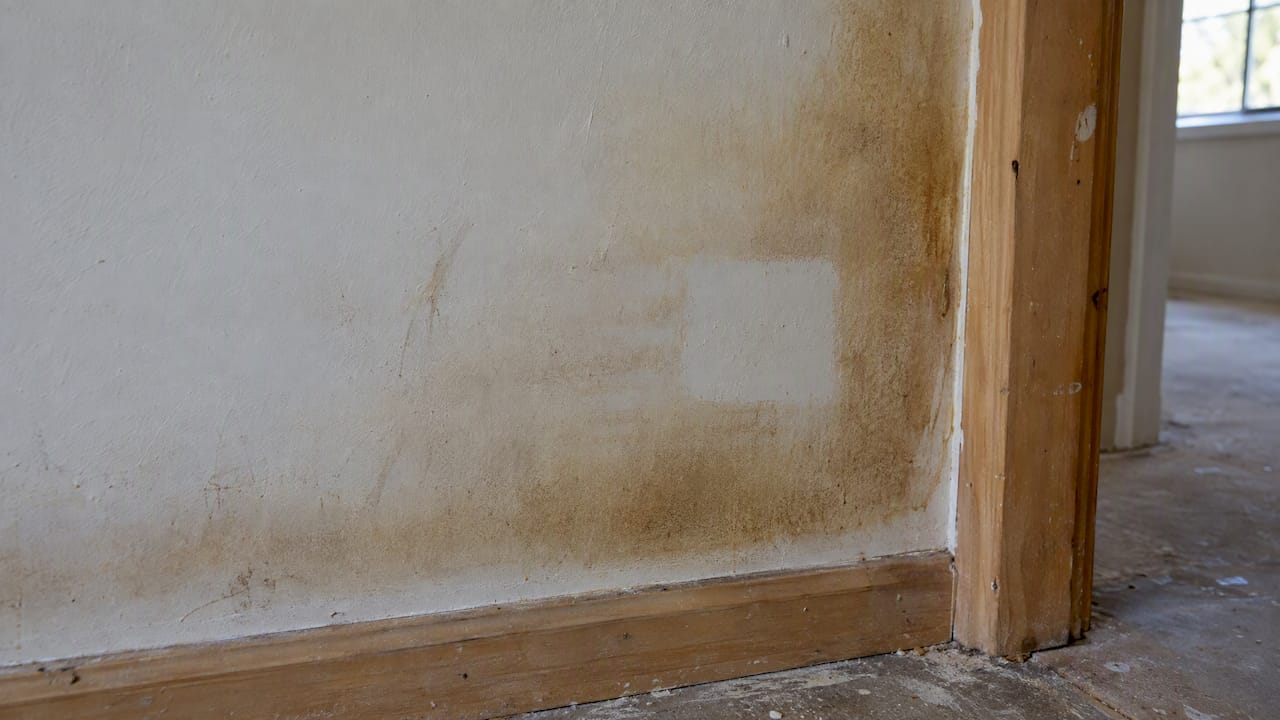
Soot behaves differently depending on how it formed, and that difference changes what you should reach for under the sink. Dry, powdery soot from a smaller fire or heavy tobacco use wipes off more easily. The oily, tar-like film from a larger fire or long-term smoking clings to paint and grout and tends to smear before it lifts, so match your approach to what you’re actually dealing with.
- Work top to bottom: ceilings first, then walls, then trim, then floors, so you’re never dripping residue onto a surface you already cleaned.
- Use a dry chemical sponge on dry soot before introducing any liquid, since water can smear light soot into a worse stain.
- For oily residue, a mild detergent solution or diluted tri-sodium phosphate (TSP) cuts through film that a sponge alone won’t touch.
- Rinse every surface after cleaning and let it dry fully before deciding whether the odor is gone, since a damp wall can trap smell underneath the surface.
- If staining bleeds through after cleaning, a stain-blocking primer followed by repainting is usually faster than a second or third cleaning attempt.
Pro Tip: Test your cleaning solution on a small, hidden patch first. Painted drywall and old plaster react differently to TSP, and you want to find that out on a closet wall, not your living room.
The Oklahoma State University Extension guide on removing smoke odor is clear that permanent removal depends on getting the physical source off the surface, not just covering the smell. That’s why rinsing and drying thoroughly matters so much: leftover detergent residue can itself trap odor, undoing the work you just did.
When residue has soaked into unfinished wood trim or bare drywall, cleaning alone sometimes isn’t enough. Porous building materials absorb smoke compounds the same way porous fabrics do, and at that point, sealing the surface or replacing the affected wallboard is more realistic than another round of scrubbing. If you’re seeing persistent yellowing or a smell that returns within a day of cleaning, that’s your signal to stop cleaning and start sealing or replacing.
Getting Smoke Smell Out of Clothing, Upholstery, and Carpets
Soft goods hold onto smoke longer than hard surfaces because smoke compounds work their way into fibers instead of sitting on top of them. The fix depends heavily on the material.
- For washable clothing and linens, add one cup of white vinegar to your regular detergent, and if the item still smells after the wash cycle, rewash before putting it in the dryer, since heat can set the remaining odor permanently.
- Upholstered furniture and mattresses usually need steam extraction rather than surface wiping, and padding that has absorbed heavy smoke sometimes needs to be replaced rather than cleaned.
- Carpets with light exposure can respond to a professional rotary or extraction cleaning, but if the smell persists after two or three attempts, replacement is often the more honest fix than continuing to pay for cleanings that won’t finish the job.
- Dry-clean-only garments and delicate fabrics need a cleaner experienced specifically with smoke odor removal, since standard dry cleaning doesn’t always target the same compounds that standard laundering does.
One detail that surprises people: a regular vacuum brush head can push soot deeper into carpet fibers instead of lifting it out. If you’re dealing with visibly sooty carpet, hold the nozzle just above the surface rather than grinding the brush into it, or leave that step to a professional with proper extraction equipment.
Your HVAC System, Filters, and Ductwork After Smoke Exposure
Your HVAC system is both the problem and the solution here. It circulated the smoke through every room in your house, and now it’s the tool that can clear the air, but only if you treat the filter and ducts as part of the cleanup rather than an afterthought.
- Replace your HVAC filter right away, and plan to replace it monthly for the first year after heavy smoke exposure, since residue continues to work its way through the system longer than most people expect.
- Upgrade to the highest MERV rating your system can handle, with MERV 13 as a strong target where your equipment supports it, and look into HVAC-compatible activated carbon media for the gases that a particle filter alone won’t catch.
- Set your thermostat fan to “On” rather than “Auto” while active filtration is underway, so air keeps moving through the filter continuously instead of only when heating or cooling cycles on.
- Call in professional duct cleaning when you see visible soot inside vents, when odor persists after thorough surface cleaning, or after any fire that affected the home, and have the ducts inspected both before and after the work in line with expert wildfire ash cleanup exterior guidance.
Pro Tip: Pull a vent cover and look inside with a flashlight before you decide duct cleaning is unnecessary. Soot inside the ductwork is easy to miss from across the room but obvious once you’re looking directly at it.
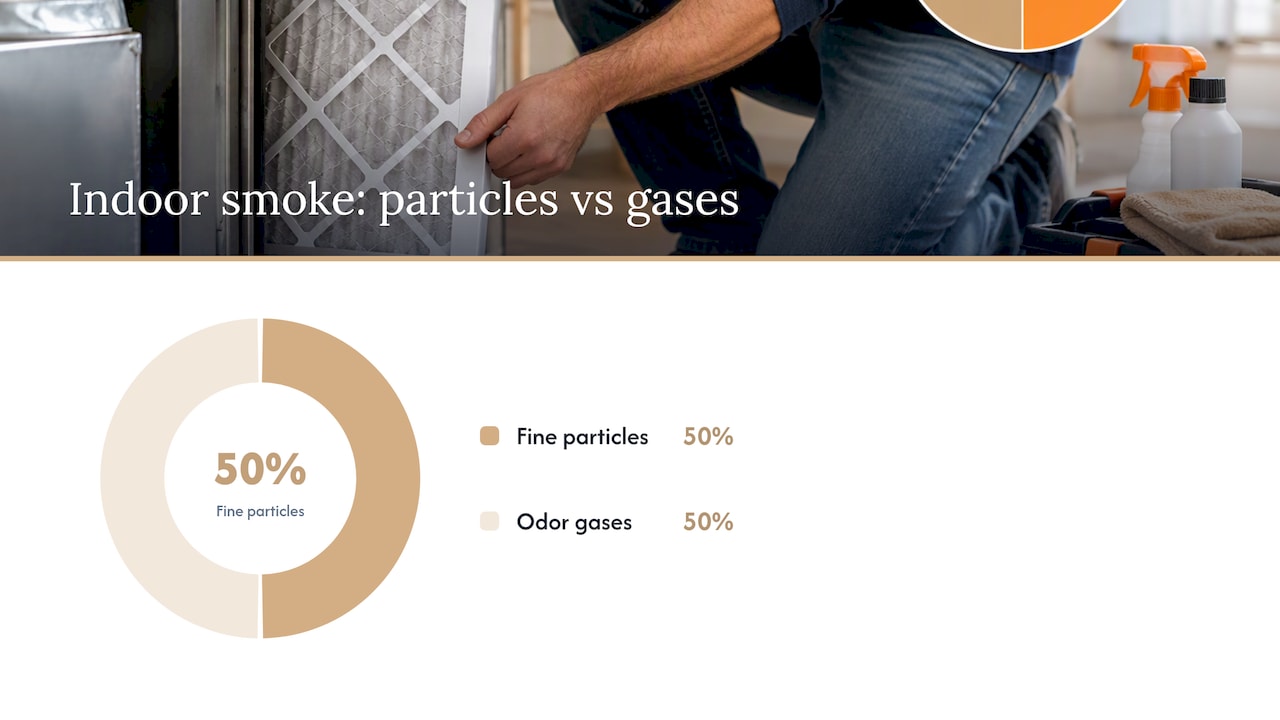
According to the EPA’s strategies for reducing indoor smoke exposure, upgrading to MERV 13 filtration combined with continuous fan operation can meaningfully cut fine particle concentrations indoors, but particles are only half the problem. HEPA filtration handles those fine particles well, while activated carbon is what actually removes the gases responsible for lingering odor, which is why a filter upgrade alone sometimes leaves the smell behind even after the visible haze clears.
Picking the Right Air Cleaner and Avoiding the Wrong Technology
Not every air cleaner on the shelf is built for smoke, and the ones that aren’t will leave you disappointed no matter how long you run them.
- Choose a portable air cleaner that pairs a HEPA filter for particles with an activated carbon stage for odor-causing gases, since a HEPA-only unit will clear haze but leave the smell behind.
- Size the unit by its CADR (Clean Air Delivery Rate) rather than by marketing claims about square footage, aiming for a CADR roughly two-thirds of your room’s area in square feet, and run it on the highest fan speed you can tolerate.
- DIY Corsi-Rosenthal box filters are genuinely effective at pulling particles out of the air, but research from CIRES on post-fire smoke mitigation notes they typically lack the tested carbon media needed to remove VOCs, so they’re a particle solution, not a full odor solution.
- Steer clear of ozone generators, ionizers, and PCO or hydroxyl devices for routine cleanup.
Upgrading to MERV 13 filtration or running a properly sized HEPA plus activated carbon unit can significantly reduce indoor PM2.5, according to the EPA’s wildfire smoke guidance, which makes filter quality one of the highest-leverage decisions you’ll make in this whole process.
The EPA’s own page on ozone generators states plainly that these devices aren’t recommended for routine smoke odor removal and can be harmful, since ozone at the concentrations needed to neutralize odor also irritates lungs and damages rubber, plastic, and certain fabrics in your home. Professionals sometimes use ozone as part of a controlled restoration process, but only in an unoccupied property with strict safety protocols, never as a homeowner DIY step.
Baking Soda, Activated Charcoal, and Vinegar: What They Actually Do
These three household staples show up in nearly every smoke-cleanup guide for good reason: they work, within limits. None of them removes a source that’s embedded in drywall or carpet padding. They absorb odor sitting in open air and on surfaces, which makes them useful companions to real cleaning, not a replacement for it.
- Baking soda sprinkled on carpet or set out in open bowls absorbs odor over several days, and should be vacuumed up thoroughly once it’s done its job.
- Powdered or pelletized activated charcoal works on the same principle and is itself odorless, making it a good option for rooms where you don’t want a baking soda residue left behind.
- Vinegar wipes down hard surfaces well and works as a laundry additive, one cup added to a regular wash, but don’t dry any item that still smells of smoke since the heat sets the odor in.
- Masking odors with sprays or candles only covers the smell temporarily and can make it harder to tell whether your actual cleanup worked.
Guidance on removing smoke odor from Fremont County frames these absorbers correctly: useful as a maintenance step during active cleaning, not a solution for smoke that has already penetrated deep into materials. If you’re still smelling smoke in a room with an open box of baking soda sitting in it, that’s a sign the source hasn’t actually been removed yet.
When to Call in a Professional, and What That Work Looks Like
A few warning signs tell you it’s time to stop DIY cleaning and bring in a crew.
- Visible soot inside your ductwork or vent covers, since that residue will keep recirculating every time your system runs.
- Odor that persists after a genuine, thorough cleaning effort on surfaces and fabrics.
- Symptoms in sensitive household members, including coughing, headaches, or eye irritation that worsen indoors.
- Fire damage involving chemical residues beyond ordinary tobacco or cooking smoke.
Professional remediation typically includes a full HVAC inspection paired with duct cleaning, deep extraction cleaning for carpet and upholstery, targeted replacement of materials that won’t recover through cleaning, and a formal indoor air quality assessment to confirm the job actually worked. We handle HVAC diagnostics, duct cleaning coordination, and air filtration upgrades for homeowners, and we’d encourage you to ask any contractor you’re considering licensing, insurance, and what they do to verify the work afterward.
Pro Tip: Get a written scope of work before any remediation starts, including specific odor-verification steps and safety protocols for anything involving ozone equipment. If evacuation is required for a treatment step, that should be spelled out in writing, not mentioned casually on the phone.
My Take on Priorities, Trade-Offs, and When to Stop Cleaning
I’ve seen homeowners spend a weekend scrubbing walls before ever touching their HVAC filter, which is backward. Air moves through your ductwork dozens of times a day, so I always push filtration and a duct inspection to the front of the list, before spending money on specialty cleaning products that address a smaller slice of the problem.
Replacement is also underrated as a solution. I understand the instinct to clean a carpet or a couch cushion a third time rather than replace it, but at some point repeated cleaning costs more than new material, and the smell either way. If you’ve genuinely tried twice and the odor is still there, that’s your answer.
One more thing I’d tell any homeowner dealing with fire damage specifically: document everything with photos before you clean anything, and talk to your insurance company early. That paperwork is much harder to recreate after the fact than before.
— Ernie M
Let Upright Construction & HVAC Handle the Hard Parts
Cleaning up smoke odor yourself saves money on the easy parts, but filtration upgrades, duct inspections, and verifying the job actually worked are where most DIY efforts fall short, and that’s exactly where we come in. We handle HVAC inspections, filter and MERV upgrades, duct cleaning coordination, indoor air quality assessments, and emergency restoration support for homes across the Los Angeles area.

Before you call, it helps to have a few details ready: when the smoke exposure happened, which rooms were affected, whether you’ve seen visible soot anywhere, and whether anyone in the household has had symptoms like coughing or headaches since. That information lets us scope the job accurately instead of guessing.
If your home still smells like smoke after a genuine cleaning effort, reach out for an indoor air quality assessment or get in touch about HVAC repair and emergency service and we’ll help you figure out what’s actually left to fix.
FAQ
What gets rid of the smell of smoke fast?
Running a HEPA plus activated carbon air cleaner on high, combined with replacing your HVAC filter and setting the fan to run continuously, reduces airborne smoke odor fastest. These steps only manage what’s in the air, though. Removing the smell permanently still requires cleaning the surfaces and fabrics where smoke residue has settled.
How do professional cleaners get rid of smoke smell?
Professional crews combine mechanical cleaning techniques like dry-chemical sponging and rotary carpet extraction with specialized methods such as dry ice blasting for heavy residue, and they inspect and often clean ductwork as part of the job. For heavily contaminated porous materials, replacement is sometimes recommended instead of continued cleaning.
What smell cancels out cigarette smoke?
No scent actually cancels out smoke odor; sprays and candles just mask it temporarily and can make it harder to tell whether real remediation has worked. Baking soda and activated charcoal are odor-neutral absorbers that reduce the smell without adding a competing scent, but they work alongside cleaning, not instead of it.
What absorbs the smell of smoke?
Baking soda and activated charcoal both absorb odor molecules from the air and off surfaces when left out in open bowls or sprinkled on carpet for several days, according to cleanup guidance from Fremont County. Activated carbon filtration inside an air cleaner does the same job continuously for airborne odor. This makes it more effective for whole-room treatment than a static bowl of powder.