
- What LADWP HVAC Rebates Actually Pay in 2026
- Who Qualifies and What Documents Do You Need?
- How to Apply for LADWP HVAC Rebates Step by Step
- How to Maximize Your Total HVAC Rebate Savings
- Why LADWP Rebate Applications Get Rejected
- SEER2, HSPF2, and UEF: What These Ratings Actually Mean
- A Contractor’s View From the Field in Los Angeles
- Get Help Installing a Rebate-Eligible System in Los Angeles
- Where to Verify LADWP Rebate Details
- Sources
- FAQ
- Recommended
LADWP pays up to $2,500 per ton for qualifying heat pump HVAC systems, up to $2,500 per unit for heat pump water heaters, and $100 to $120 per ton for conventional high-efficiency AC systems through its Consumer Rebate Program. You have to be an active LADWP residential electric customer to qualify, and you’ll need three things in hand before you apply: a paid itemized invoice, an AHRI certificate matching your exact equipment, and a final approved Building & Safety permit.
TL;DR:
- Heat pump systems qualify for up to $2,500 per ton, with typical rebates reaching $7,500 for 3-ton units, depending on efficiency ratings.
- The rebate application must be submitted within 12 months of purchase, and proper AHRI certification, permit approval, and detailed invoices are mandatory.
- Conventional high-efficiency AC rebates are much lower, at $100 to $120 per ton, intentionally designed to promote electrification over standard systems.
- Eligibility requires being an active LADWP residential electric customer, with specific documentation, especially for rental properties tied to the account holder.
- Manufacturers’ instant discounts and other local efficiency programs can often be combined with LADWP rebates, but double-dipping on the same equipment is not permitted.
What LADWP HVAC Rebates Actually Pay in 2026
Here’s the part most homeowners get wrong: they assume every AC or heat pump swap pays the same flat rebate. It doesn’t. LADWP splits the program into tiers based on what you install and how efficient it is, and the gap between the top and bottom tiers is enormous.
Heat pump HVAC systems sit at the top. LADWP raised these rebate limits for equipment purchased and installed on or after November 1, 2025, and now pays up to $2,500 per ton for qualifying systems. That’s not a flat number, though. It’s a rate that scales with tonnage and gets set by where your equipment’s SEER2 and HSPF2 ratings land on LADWP’s chart.
For a typical Los Angeles home, that shakes out roughly like this:
- A 2-ton mini-split heat pump can qualify for up to $5,000 in rebates.
- A 3-ton central heat pump, the size most single-family homes in the San Fernando Valley or Reseda actually need, can qualify for up to $7,500.
- A 4-ton system on a larger property can reach up to $10,000.
Mini-splits and central heat pump systems both qualify, but the paperwork looks different. Central systems need AHRI matching between the indoor coil and outdoor condenser. Ductless mini-splits often have simpler AHRI documentation since many are sold as matched sets from the factory.
Conventional HVAC, meaning a standard AC replacement with no heat pump function, falls under a lower tier: $100 to $120 per ton. A 3-ton conventional system might net you $300 to $360. It’s real money, but it’s a fraction of what the heat pump tier pays, and that gap is intentional. LADWP is using the rebate structure to push electrification, not just efficiency, so heat pumps get the premium treatment.
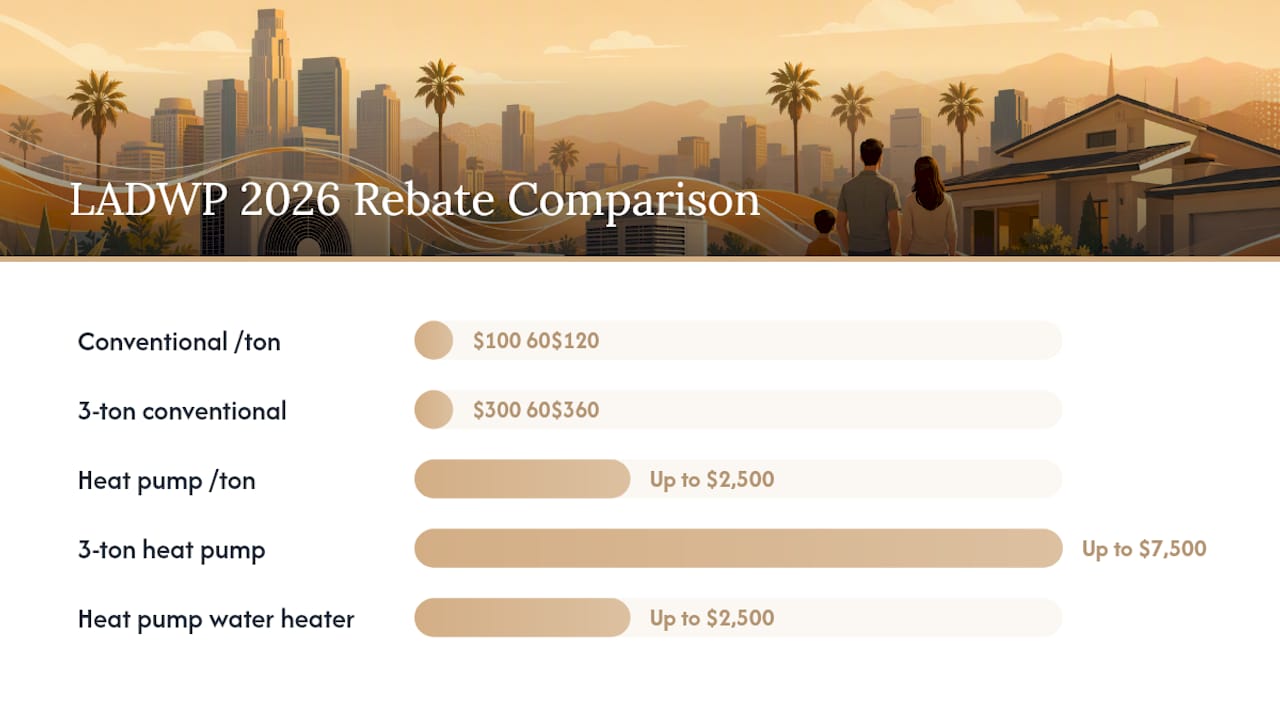
Heat pump water heaters have their own lane entirely, capped at up to $2,500 per unit. Eligibility runs through UEF (Uniform Energy Factor) thresholds rather than SEER2 or HSPF2, and the unit has to appear on the ENERGY STAR qualified list to count.
Pro Tip: Watch for temporary promo windows. LADWP has run summer specials, for example a stretch from June through September, that temporarily boost certain rebate categories, with applications accepted through the end of the calendar year for the enhanced amount. Check the current Consumer Rebate Program page before you buy so you don’t install a week too early and miss a bump.
If you’re weighing a heat pump against a straight AC swap purely on the rebate math, the size of that gap alone usually answers the question. Our breakdown of heat pump installation costs and LA rebates walks through the net price difference in more detail.
Who Qualifies and What Documents Do You Need?
LADWP’s eligibility rule is simple on paper: you must be a residential customer with an active LADWP electric meter at the property where the equipment is installed. If you’re on a commercial rate or your account isn’t in good standing, the rebate application won’t go through.
Landlords and rental properties add a wrinkle. The rebate typically follows the account holder, not the person living in the unit. If you own a rental and pay the LADWP electric bill yourself, you apply. If your tenant holds the electric account, they’re technically the eligible party, even though you likely paid for the equipment. Multi-unit buildings with separate meters per unit need a separate application for each meter, since LADWP ties the rebate to the specific account tied to that address.
Here’s exactly what you need to gather before you submit:
- A paid itemized invoice. It has to show the equipment model numbers, the installation address, the amount paid, and a paid or zero-balance status. A quote or estimate won’t work.
- An AHRI certificate with a matching reference number. This document proves your indoor and outdoor units are a certified matched pair, not just two compatible-looking parts your installer assembled.
- A final approved Building & Safety permit. Not a permit application, not a permit “in process.” LADWP wants the final sign-off from the local building department.
- Manufacturer specification sheets for the installed equipment, confirming the SEER2, HSPF2, or UEF ratings that determine which rebate tier you fall into.
The deadline is the part that trips people up most: your application must be submitted or postmarked within 12 months of the purchase date, not the installation date. If you buy equipment in January and don’t get it installed until August, your 12-month clock started in January. Homeowners who order equipment early to lock in pricing, then wait on a contractor’s schedule, sometimes bump right up against that deadline without realizing it.
Understanding who qualifies for these programs and how utility rebates function generally can help you plan a purchase timeline that avoids that trap.
How to Apply for LADWP HVAC Rebates Step by Step
Filing correctly the first time saves you weeks. Here’s the order that actually works:
- Confirm product eligibility before you buy. Check that the exact model combination appears in the AHRI Directory and, for water heaters, on the ENERGY STAR qualified products list. Don’t take a salesperson’s word for it. Pull it up yourself.
- Buy the equipment and note the exact purchase date. This is the date your 12-month application window starts, regardless of when the install happens.
- Schedule installation and permit sign-off. Your contractor needs to pull the permit and get it to final approved status with the local Building & Safety department, not just filed.
- Collect your documents. Get the AHRI certificate and reference number from your contractor. If they don’t provide it, you can pull it directly from the AHRI Directory using the model numbers on your invoice.
- Choose your submission path. For eligible products bought through the Efficient Product Marketplace (EPM), you get an instant discount applied at checkout, no separate rebate application needed. For everything else, submit online through LADWP’s rebate portal for the fastest processing, which triggers a Reward Link email.
- Mail a paper application if you prefer. LADWP still accepts paper submissions, but processing runs slower and rewards arrive as a mailed prepaid Visa card instead of a digital Reward Link.
Pro Tip: Online submissions typically generate a Reward Link email within five to seven business days, according to LADWP’s EPM program details. Paper applications take longer because a physical card has to be mailed. If you want your money faster, skip the paper form.
How to Maximize Your Total HVAC Rebate Savings
Stacking is where the real savings show up, but it only works if you know which programs actually combine.
LADWP’s utility rebate generally stacks with manufacturer instant discounts and with separate state or local efficiency offers, since those come from different funding sources. What typically doesn’t stack is applying for the same equipment under two different LADWP rebate categories, or double dipping between the EPM instant discount and a separate post-install rebate application for the identical unit. Pick one path per piece of equipment.
Federal tax credits are a separate track entirely from LADWP’s program. If you’re weighing a federal credit alongside your utility rebate, check current guidance directly through the IRS rather than relying on a contractor’s estimate, since federal credit rules and dollar limits change based on annual legislation.
A worked example. Say you install a 3-ton central heat pump system in your Burbank home:
- LADWP heat pump rebate at the top tier: up to $7,500 (3 tons at up to $2,500/ton)
- A manufacturer instant rebate on the specific model: commonly $300 to $600, varies by brand and season
- A local efficiency program discount, where available: varies by jurisdiction
Even before any federal credit is factored in, the LADWP piece alone can cover a meaningful chunk of a typical 3 ton heat pump installation. Timing matters here too. If you can coordinate your purchase date, install date, and permit approval all within the same rebate window, especially around a promo period like the summer bump mentioned earlier, you avoid the risk of a rate change mid-project.
Why LADWP Rebate Applications Get Rejected
Most denials trace back to one of three fixable problems.
AHRI mismatch is the most common. If your installer pairs an indoor coil with an outdoor condenser that isn’t on the same AHRI-certified match, the system doesn’t qualify no matter how efficient each individual piece is rated. Verify the AHRI reference number before installation day, not after.
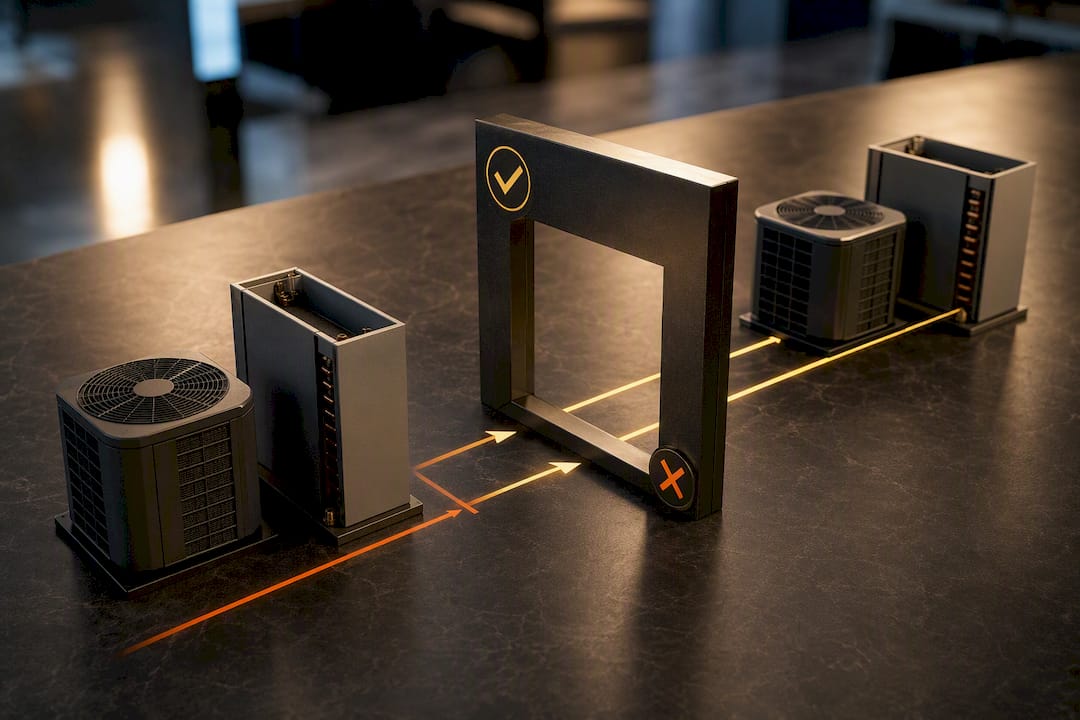
Permit problems come in second. LADWP requires the permit to reach final approved status, and some installers submit the permit application but never follow through to inspection and sign-off. Put permit responsibility and final approval in writing in your contract.
Invoice issues round out the list. An invoice missing the installation address, showing a balance still due, or lacking specific model numbers will get kicked back. If your contractor’s invoice is incomplete, request a corrected version before you submit anything to LADWP.
- Keep a folder, physical or digital, with your invoice, AHRI certificate, permit approval, and spec sheets together from day one.
- Photograph the equipment model plates during installation in case a document goes missing later.
Pro Tip: Ask your contractor for the AHRI certificate the same day the equipment goes in, while the installer still has the exact model numbers fresh. Chasing it down three months later, after a rebate rejection, costs you time you don’t have inside that 12-month window.
SEER2, HSPF2, and UEF: What These Ratings Actually Mean
You don’t need an engineering degree to shop for a rebate-eligible system, but you do need to know what these three acronyms control.
SEER2 measures cooling efficiency, how much cooling you get per unit of electricity. HSPF2 measures heating efficiency for heat pumps specifically. Both ratings, together, determine which rebate tier your heat pump system lands in under LADWP’s schedule. UEF applies only to water heaters and measures overall energy efficiency across a full daily usage cycle.
AHRI matching ties directly to these numbers. The AHRI certificate lists the exact SEER2 and HSPF2 rating for that specific indoor/outdoor pairing, not for either component alone. Swap one part for an off-brand replacement and the rating, along with your rebate eligibility, disappears.
Before you sign a contract, ask your installer three things:
- What is the exact AHRI reference number for this matched system?
- Does this combination meet LADWP’s minimum SEER2 and HSPF2 for the tier you’re quoting me?
- Can you provide the manufacturer spec sheet showing these ratings in writing?
If you want the full breakdown of how these ratings translate into real-world comfort and cost, our guide on HVAC efficiency ratings covers it in plain terms.
A Contractor’s View From the Field in Los Angeles
I’m Ernie, and I’ve spent over 15 years running HVAC and construction jobs across Los Angeles, from Woodland Hills to Reseda and beyond. My crews see the same rebate mistakes on repeat: a homeowner who assumed their AHRI certificate was automatic, or a permit that sat “pending” for months because nobody followed up with the inspector.
Upright Construction & HVAC handles emergency HVAC repairs, installs, and permit coordination as a normal part of the job, not an afterthought bolted on at the end. Here’s the short checklist I give every client before we start: confirm who’s pulling and finalizing the permit in writing, get the AHRI certificate the day of install, request an invoice with the full address and model numbers, and build your install timeline around your 12-month application clock, not around your contractor’s calendar.
— Ernie M
Get Help Installing a Rebate-Eligible System in Los Angeles
Rebate paperwork is only as good as the install behind it. A perfectly filled application still gets denied if the AHRI pairing is wrong or the permit never reached final approval, and that’s the exact gap Upright Construction & HVAC closes for Los Angeles homeowners chasing an LADWP rebate.

Our team handles installation, permit coordination with Building & Safety, and the AHRI documentation and itemized invoicing your rebate application actually needs, all under one contract instead of three separate headaches. Bigger installs, like a full heat pump swap, can be financed rather than paid up front, and support lines may be available if something goes wrong mid-project. If you’re ready to size a heat pump system for your home and get the paperwork right the first time, request a quote through our Los Angeles HVAC repair and installation page and we’ll walk you through what your specific property qualifies for.
Where to Verify LADWP Rebate Details
- LADWP Consumer Rebate Program official page
- 2026 CRP application form (PDF)
- Efficient Product Marketplace
- ENERGY STAR qualified product lists
Sources
- Consumer Rebate Program | Los Angeles Department of Water and Power
- Efficient Product Marketplace | Los Angeles Department of Water and Power
- ENERGY STAR
- Consumer Rebate Program | Los Angeles Department of Water and Power
FAQ
What Are the New HVAC Rebates Available in California in 2026?
LADWP residential customers can get up to $2,500 per ton for qualifying heat pump HVAC systems, up to $2,500 per unit for heat pump water heaters, and $100 to $120 per ton for conventional high-efficiency AC through the Consumer Rebate Program.
Is There a Tax Credit for HVAC Installation in 2026?
Federal tax credits for HVAC equipment exist separately from LADWP’s utility rebate, and current limits and eligibility rules change with federal legislation, so check IRS guidance directly before assuming a specific credit amount.
Are There Federal Rebates for HVAC Systems?
Federal-level incentive programs for HVAC have existed alongside utility rebates like LADWP’s, but they run through different agencies with their own rules, so they need to be checked separately from your LADWP application.
How Does an LADWP Rebate Actually Work?
You buy and install a qualifying system, gather your paid invoice, AHRI certificate, and final approved permit, then submit your application within 12 months of the purchase date through LADWP’s online portal or by mail.
Does Upright Construction & HVAC Help With LADWP Rebate Paperwork?
Yes. Upright Construction & HVAC coordinates permit approval, provides AHRI-matched documentation, and issues the itemized invoices LADWP requires as a standard part of every installation in Los Angeles.