
- How Much Do Mini Splits Cost by System Size?
- What Actually Drives Your Mini Split Installation Cost?
- What Does Labor, Electrical Work, and Permitting Add to the Bill?
- How Do You Estimate the Right Size and Cost for Your Home?
- How Do Tax Credits and Rebates Lower the Net Cost?
- Is DIY Installation Worth the Savings?
- What Should You Ask Contractors Before You Sign?
- Ernie M’s Perspective: Why Transparent Quotes Matter More Than Low Prices
- Get an Honest Mini Split Quote From Upright Construction & HVAC
- Sources
- FAQ
- Recommended
A single-zone mini split typically runs $3,000 to $6,000 installed, while a whole-home 3 to 5 zone setup usually lands between $8,000 and $18,000 or more. The number one factor pushing that price up or down is how many indoor heads you install, not the brand on the outdoor unit. Federal tax credits can knock a meaningful chunk off the final bill.
TL;DR:
- The number of indoor heads significantly impacts costs, with each additional zone adding roughly $1,500 to $3,500 to the total installation price.
- Labor and electrical upgrades can account for up to half of the overall cost, with regional variation influencing final quotes by 15 to 30 percent.
- Proper sizing depends on room square footage and layout, with a typical 2,000-square-foot home requiring three to four zones costing between $8,000 and $14,000.
- Federal tax credits can offset about 30% of qualifying equipment costs, but detailed documentation and model verification are necessary for claiming rebates.
- DIY mini split installations may save money but risk voiding warranties, increasing leak risks, and complicating permits, which often justifies hiring a licensed professional.
How Much Do Mini Splits Cost by System Size?
The jump from one zone to five isn’t linear, and that catches a lot of homeowners off guard when they get their first multi-zone quote. Single-zone systems stay affordable because you’re paying for one indoor head, one outdoor condenser, and a short line-set run. Add zones, and you’re adding equipment, labor hours, and often a bigger outdoor unit to handle the combined load.
Here’s how the typical mini split cost breaks down by configuration, based on installed pricing data across the country:
A single bedroom addition usually needs just a 9,000 to 12,000 BTU head, which sits at the low end of that single-zone range. A living room with vaulted ceilings or lots of west-facing glass in the San Fernando Valley might push you toward an 18,000 BTU unit instead, adding a few hundred dollars in equipment cost. Whole-home coverage for a typical 1,800 to 2,200 square foot Los Angeles house usually means three to four zones, one per living area or bedroom wing, which is why those jobs cluster in the $8,000 to $14,000 band rather than the higher end of that range.
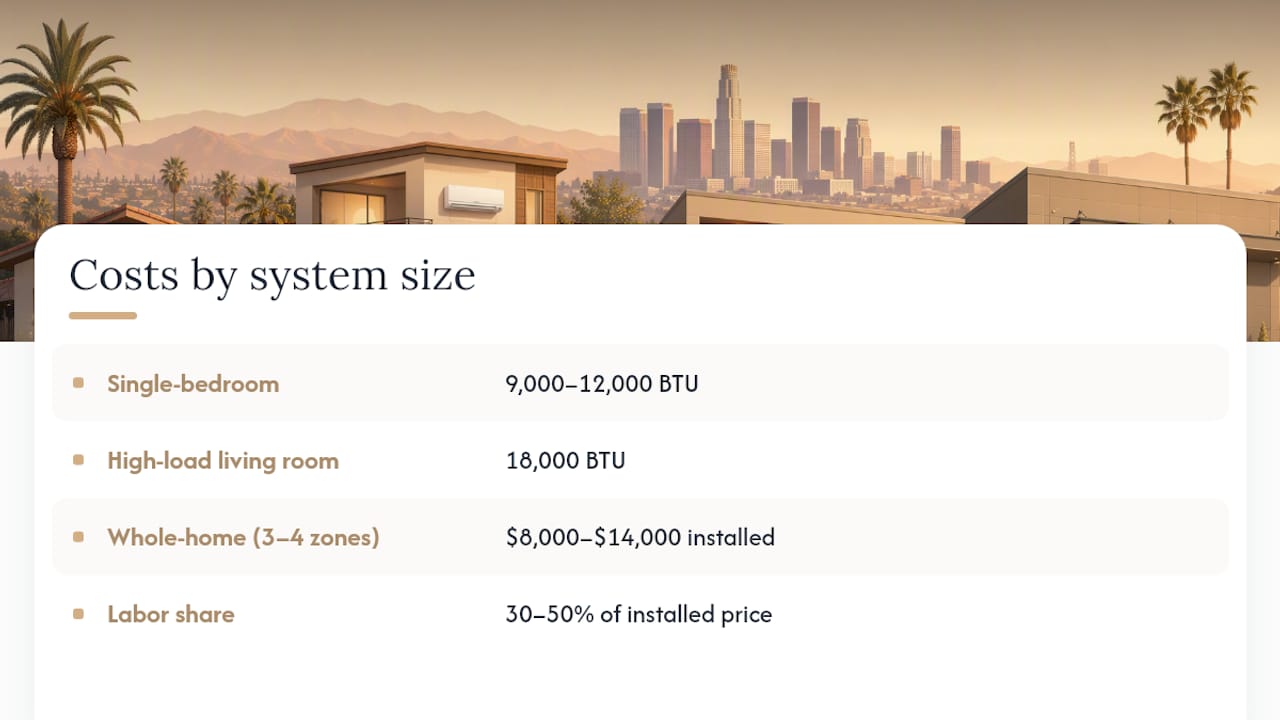
Labor typically makes up 30 to 50 percent of the installed price, which surprises homeowners who assumed the sticker price was mostly the machine itself.
What Actually Drives Your Mini Split Installation Cost?
Every quote you get is really a sum of a handful of variables, and most homeowners only think about one or two of them. Here’s what actually moves the number:
- Number of indoor heads. Each additional zone adds roughly $1,500 to $3,500 to the installed total, covering the head unit, extra line-set, and added labor.
- Brand and efficiency tier. Higher-SEER units cost more upfront but often qualify for larger rebates and lower operating costs over time.
- Line-set length and routing. Runs longer than 25 feet, wall penetrations through stucco or brick, and second-floor installs all add material and labor time.
- Indoor unit style. A standard wall-mount head is the cheapest option; ceiling cassettes and concealed ducted units cost more to install because they require additional framing or ductwork access.
- Home layout. Open floor plans sometimes need fewer, larger heads; chopped-up floor plans with lots of closed doors usually need one head per room to keep temperatures even.
That last point trips up a lot of buyers. A multi-zone system can look cleaner with less outdoor equipment cluttering a side yard, but running several heads simultaneously can pull down the real-world efficiency compared to what’s listed on the spec sheet. More zones also means more per-head cost stacking up, so bigger isn’t automatically better if a couple of well-placed heads would cover the same square footage.
What Does Labor, Electrical Work, and Permitting Add to the Bill?
Equipment is only half the invoice. The other half is the work nobody sees once the drywall is patched, and it’s where a lot of quotes quietly diverge from each other.
- Labor hours and rates. Licensed HVAC techs in most markets charge $75 to $150 per hour, with total labor per job running $700 to $3,000 depending on complexity.
- Electrical upgrades. Older homes with a 100-amp panel sometimes need a dedicated circuit or subpanel upgrade before a mini split can be installed safely, which adds a separate electrical line item.
- Permits and inspection. Most California jurisdictions require an HVAC permit for new refrigerant lines, and skipping it can create problems later during a home sale or insurance claim.
- Finish work. Condensate pumps for units without gravity drainage, drywall patching around line-set penetrations, and exterior line hide covers are common add-ons that catch first-time buyers off guard.
For a single-zone job, expect installers to be in and out in a day, sometimes less. Multi-zone systems with electrical upgrades or difficult line-set routing can stretch to two or three days. Because labor and permit costs vary by region, local quotes in Los Angeles can run 15 to 30 percent above or below national averages, which is exactly why a phone quote is never as reliable as an on-site walkthrough.
How Do You Estimate the Right Size and Cost for Your Home?
You don’t need an engineering degree to get a rough number before a contractor ever walks through your door. Here’s a simple sequence to work through:
- Start with square footage. As a rough baseline, most rooms need about 20 BTU per square foot, adjusted up for high ceilings, poor insulation, or heavy sun exposure common in South-facing LA rooms.
- Match that BTU figure to the cost table above. A single 300 square foot bedroom lands in the 9,000 to 12,000 BTU single-zone range; a 1,000 square foot open living and dining area often needs 18,000 to 24,000 BTU, sometimes split across two heads.
- Decide one head versus several. Closed-door rooms each need their own head for even comfort; open floor plans can sometimes share one larger head across adjoining spaces.
- Add per-head cost to your base estimate. Once you know your zone count, add roughly $1,500 to $3,500 per additional head to a single-zone baseline for a quick ballpark total.
- Factor in climate and unit style. Cold-climate heat pump models built for sub-freezing performance, along with concealed ducted or cassette units, both carry a price premium over a standard wall-mount head.
This gets you within a reasonable range before you ever request a quote, which makes it much easier to spot a bid that’s oddly high or suspiciously low.
How Do Tax Credits and Rebates Lower the Net Cost?
This is the part most pricing guides gloss over, and it can change your real out-of-pocket cost more than any single equipment choice. The federal Energy Efficient Home Improvement Credit lets homeowners claim roughly 30% of qualifying costs for eligible heat pump systems, with some installations qualifying for up to $2,000 per year when the equipment meets CEE or ENERGY STAR efficiency tiers.
To actually claim it, you’ll want:
- AHRI certificate and SKU verification confirming your exact model meets the efficiency tier the credit requires.
- Itemized invoice separating equipment cost from labor, since some rebate programs calculate off equipment cost alone.
- Dealer paperwork documenting installation date and certified startup, which some utility programs require alongside the federal filing.
- Utility rebate confirmation, such as LADWP’s heat pump rebate program for LA-area homeowners, which can stack with the federal credit but may require subtracting the rebate from your qualified expense base.
Keep every document. The credit is only as good as your paperwork when it’s time to file.
Is DIY Installation Worth the Savings?
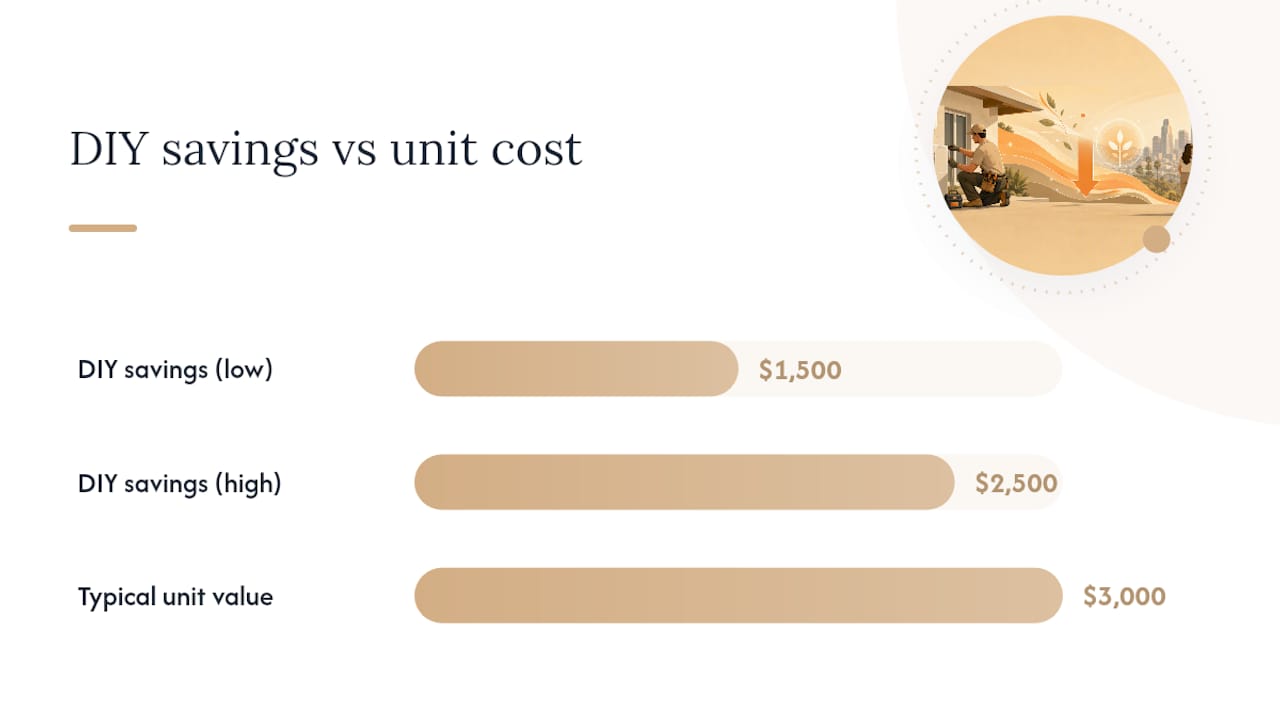
DIY pre-charged mini split kits are real, and the savings are real too. Retail kits can save $1,500 to $2,500 on a single-zone install compared to hiring a licensed contractor. But that savings comes with strings attached that don’t show up until something goes wrong.
- Warranty voids are common. Most manufacturers require certified startup with a vacuum pump and proper charge verification to keep the full compressor warranty active.
- Leak risk goes up without vacuum testing. Skipping proper evacuation of the line-set is one of the most common causes of early refrigerant leaks and shortened compressor life.
- Permits and insurance can get complicated. An uninspected DIY HVAC install can create issues during a home sale or an insurance claim after storm or fire damage.
- Electrical work isn’t DIY-friendly. Dedicated circuits and disconnect boxes usually need a licensed electrician regardless of who installs the mini split itself.
Pro Tip: If you’re handy but nervous about refrigerant work, ask a licensed installer for a hybrid arrangement: you handle the mounting bracket and line-set routing, they handle the vacuum, charge, and certified startup. Some contractors will quote that separately.
For most homeowners, the certified startup step alone justifies hiring a pro. A voided warranty on a $3,000 unit costs more than the money saved going DIY.
What Should You Ask Contractors Before You Sign?
A vague quote is how homeowners end up with surprise charges halfway through a job. Before you accept any bid, work through this list:
- Request a line-item quote breaking out equipment SKU, labor hours, electrical scope, permit fees, and finish work separately.
- Confirm certified startup procedures, including vacuum method, hold pressure test, and torque specs on flare connections.
- Ask how warranty registration works and who files it, you or the contractor.
- Watch for red flags, like a bid with no mention of permits, no electrical assessment, or a price that seems too low for the zone count you need.
- Require an on-site visit before any binding number. Line-set length, wall material, and panel capacity all change the real price, and no contractor can quote those accurately over the phone.
Pro Tip: Send your top three contractors the exact same email listing your square footage, room layout, and desired zone count. Identical questions make it far easier to compare bids apples to apples instead of guessing why one number is thousands higher.
If a contractor pushes back on giving you a written, itemized quote, that’s worth noting before you sign anything.
Ernie M’s Perspective: Why Transparent Quotes Matter More Than Low Prices
I’ve seen homeowners get burned more by vague quotes than by high ones. A number with no breakdown almost always means something gets added later, usually the electrical work or a line-set upcharge nobody mentioned during the walkthrough.
At Upright Construction & HVAC, every site visit includes a written breakdown covering equipment, labor hours, electrical scope, and permit costs before any contract gets signed. We’d rather spend an extra ten minutes explaining a number than have a customer feel blindsided in month three. After more than 15 years serving Los Angeles homeowners, that’s the reputation worth protecting.
— Ernie M
Get an Honest Mini Split Quote From Upright Construction & HVAC
We provide homeowners with an on-site walkthrough before giving a final number, rather than a phone estimate that may change once the crew arrives. We perform installation and certified startup to help ensure manufacturer warranties remain valid, and we assist with the paperwork for federal credits and local rebates.

Our team serves homeowners and property managers in the greater Los Angeles area, and financing options may be available for larger installation projects. If you’re weighing a single-zone bedroom addition against a full multi-zone retrofit, our multi-zone installation service page walks through what that scope actually looks like, and our mini split maintenance program keeps your system running at the efficiency you paid for long after installation day.
Ready to see what your home actually needs? Request an on-site estimate and get a written, itemized quote before you commit to anything.
Sources
This article draws on IRS guidance for federal energy credits, installer-sourced pricing surveys, and cost-breakdown analyses from HVAC industry publications.
- Mini Split Installation Cost | Home Energy Decisions
- Energy Efficient Home Improvement Credit — IRS
- Ductless mini split installation cost and insights (pipelineon)
- Mini Split Installation Cost (Pro Quote vs DIY) — MiniSplitSizer
FAQ
What is the average cost to install a mini split?
A single-zone mini split typically costs $3,000 to $6,000 installed, while multi-zone whole-home systems usually range from $6,000 to $18,000 or more depending on zone count.
What is the $5,000 rule for HVAC?
There’s no official industry standard called the “rule of thumb.” Some contractors use a rough threshold: if a repair estimate exceeds a certain amount on an aging system, replacement often makes more financial sense than continued repair.
How much does it cost to install a mini split system in a 2,000 square foot house?
A 2,000 square foot home typically needs three to four zones to cover separate living areas and bedrooms, which usually lands in the $8,000 to $14,000 installed range based on typical multi-zone pricing.
What are the downsides of a mini split HVAC system?
Multi-zone systems can cost more per head than a single larger ducted unit, running several indoor heads at once can reduce real-world efficiency compared to rated SEER numbers, and DIY installations risk voiding the warranty without certified startup procedures.
Do mini splits qualify for federal tax credits?
Yes. Eligible heat pump mini splits can qualify for the Energy Efficient Home Improvement Credit, covering roughly 30% of qualifying costs up to $2,000 per year when the equipment meets required efficiency tiers.