- What Is the Average Water Damage Restoration Cost?
- How Much Does Water Removal Cost Per Square Foot?
- What’s Included in a Professional Restoration Bill?
- What Does a Real Water Damage Job Cost? Three Examples
- How Fast Does Water Damage Restoration Need to Happen?
- What Does Insurance Typically Cover for Water Damage?
- How Do You Choose a Contractor and Keep Costs Down?
- What Upright Construction & HVAC Has Learned from 15 Years of Restoration Work
- What Are the Hidden Costs During the Restoration Process?
- What Fees Catch Homeowners Off Guard?
- Why Fast Action Beats Cheap Quotes Every Time
- Get a Water Damage Estimate from a Local Los Angeles Crew
- Where to Verify These Numbers Yourself
- Sources
- FAQ
- Recommended
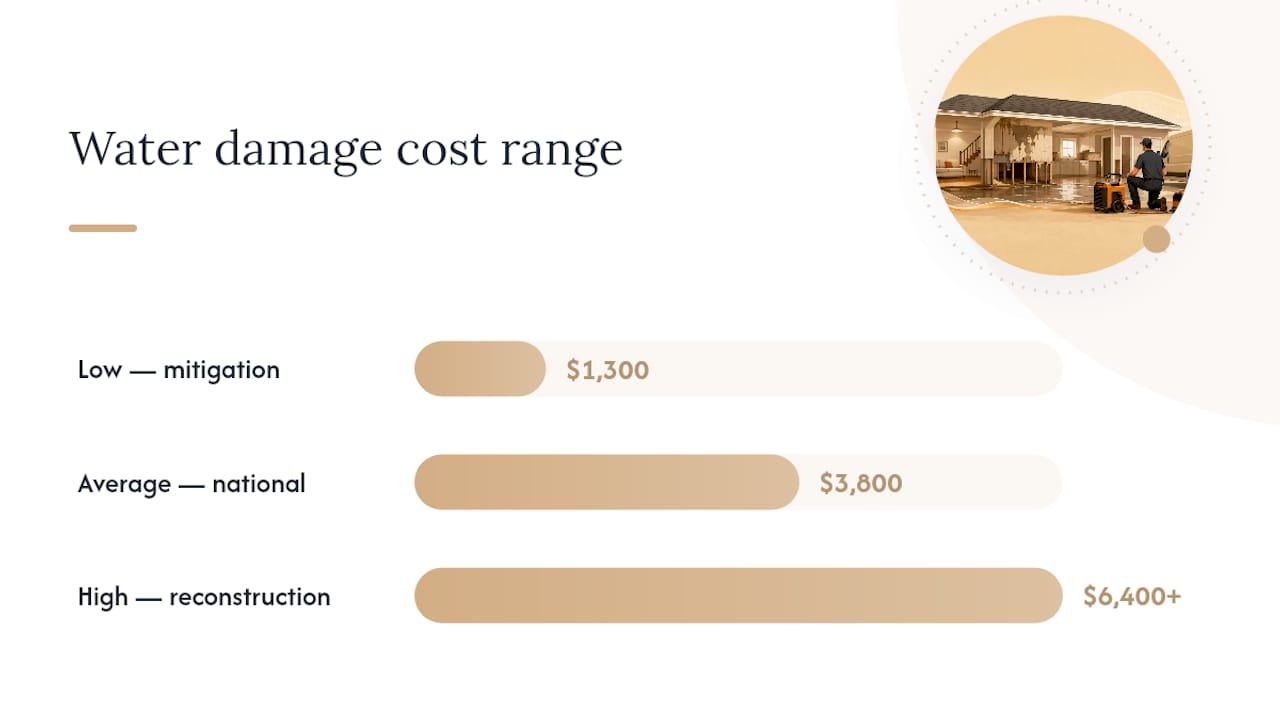
Expect to pay somewhere between $1,300 and $6,400 for professional water damage restoration, with most U.S. homeowners landing around $3,800 in total cost. Three things swing that number more than anything else: how contaminated the water is, how many square feet got wet, and how fast you called someone. Wait two days on a Category 1 leak and it can turn into a Category 3 mold job. That’s the whole ballgame.
TL;DR:
- Most water damage mitigation costs between $1,300 and $6,400, heavily influenced by water contamination level, wet area size, and response time.
- Costs per square foot range from $3 to $7.50 for mitigation and $20 to $37 for reconstruction, depending on water category and materials involved.
- Immediate response within 24 to 72 hours is crucial, as mold growth can begin in this window, significantly increasing long-term expenses.
- Combining mitigation and reconstruction under one contractor typically results in faster projects and fewer hidden or duplicated fees.
- Insurance often covers sudden damage but usually excludes gradual leaks and flood damage, making documentation of water category and damage vital.
What Is the Average Water Damage Restoration Cost?
The national average for water damage restoration sits near $3,800, with typical jobs ranging from roughly $1,300 on the low end to $6,400 for more involved cases, according to industry cost data. That range usually covers mitigation work: extraction, drying, and antimicrobial treatment. It often does not include full reconstruction, which is billed separately once the structure is dry and your contractor knows exactly what needs to be rebuilt.
Regional factors push these numbers up or down. Labor rates in Los Angeles and the surrounding areas run higher than the national baseline, and permitting requirements for reconstruction work add both time and cost. Older homes in Burbank or Beverly Hills with plaster walls or original hardwood floors also cost more to restore than a newer build with standard drywall, simply because matching materials and techniques takes more skilled labor.
Quick fact: Homeowners who wait even a day or two before calling a restoration company often see their bill jump into a higher category, since standing water spreads into wall cavities and subflooring the longer it sits.
Local market conditions matter too. Areas with frequent storm exposure or higher humidity tend to have more restoration contractors competing for work, which can moderate pricing, while tighter markets with fewer licensed crews sometimes carry a premium, especially during emergency after-hours calls.
How Much Does Water Removal Cost Per Square Foot?
Per-square-foot pricing depends almost entirely on water category, and this is where most homeowners get surprised by their final bill. Mitigation costs typically run $3 to $7.50 per square foot, while reconstruction repairs (drywall, flooring, trim) run considerably higher, often $20 to $37 per square foot in many markets, based on current cost guides.
The three water categories, as defined by industry standards, determine which end of that range you land on:
- Category 1 (clean water): Comes from a supply line break or overflow with no contaminants. Cheapest to remediate since no antimicrobial treatment or special disposal is required.
- Category 2 (gray water): Comes from appliances like dishwashers or washing machines, or water that has sat for a day or more. Requires antimicrobial application and more careful drying.
- Category 3 (black water): Comes from sewage backups, flooding, or water that has been standing for several days. Requires full PPE, containment barriers, and disposal of porous materials like carpet and drywall.
A smart approach to category assessment makes a real difference here, because Category 3 jobs multiply your costs through labor intensity, not just materials. Every contaminated surface has to be either sanitized to industry standard or torn out and disposed of properly, which adds disposal fees most homeowners never see coming.
Pro Tip: Ask your restoration crew to show you the moisture meter readings and water category classification in writing before work begins. If your policy or contractor later disputes the scope, that documentation is what protects you.
What’s Included in a Professional Restoration Bill?
A restoration invoice breaks into two distinct phases, and knowing the difference helps you read any estimate without getting blindsided by add-ons.
Mitigation line items typically include:
- Emergency response and initial water extraction (often billed as a flat call-out fee plus hourly labor)
- Structural drying with air movers and dehumidifiers, usually billed as daily equipment rental
- Moisture monitoring visits over several days
- Antimicrobial or antimicrobial-adjacent treatment on affected surfaces
Reconstruction line items typically include:
- Drywall removal and replacement, priced per square foot or per sheet
- Subflooring and flooring replacement, which varies enormously by material choice
- Trim, baseboards, and paint
- Any HVAC or electrical work disturbed during demolition, billed separately by licensed trades
Add-ons homeowners often miss include pack-out and storage of belongings, contents cleaning for salvageable items, hazardous material disposal fees for anything contaminated, permit costs for larger reconstruction jobs, and daily equipment rental if drying runs longer than expected. Always ask for an itemized estimate broken out by phase. The IICRC’s S500 standard is the industry benchmark for how these phases should be documented, and a legitimate contractor will reference it without hesitation.
What Does a Real Water Damage Job Cost? Three Examples
Small localized leak (under 100 sq ft, Category 1): A supply line break under a kitchen sink that soaks a small area typically runs $500 to $1,500 for mitigation alone. Most homeowners handle drywall touch-ups themselves, so reconstruction stays minimal. Out-of-pocket costs often come from the insurance deductible rather than the work itself.
Bathroom or kitchen incident (200 to 400 sq ft, Category 2): A washing machine overflow that spreads into an adjacent hallway and closet, assuming standard flooring and drywall, commonly costs several thousand dollars total once mitigation and partial reconstruction are combined. This assumes no cabinetry replacement; significant additional cost applies if cabinets need to come out.
Finished basement flood (800+ sq ft, Category 3): Sewage backup or major storm flooding in a finished basement is the most expensive scenario, often running $10,000 to $20,000 or more once you add mold remediation, full flooring replacement, and drywall removal up several feet on every wall. These jobs almost always require the reconstruction phase to run concurrently with drying to control cost.
Every scenario assumes standard-grade materials. Upgrade to hardwood, tile, or custom cabinetry and the reconstruction side climbs fast, independent of what the mitigation phase costs.
How Fast Does Water Damage Restoration Need to Happen?
Timeline depends on damage class, and the clock is not just about convenience. It is directly tied to your final bill.
- Class 1 (minimal absorption, small area): typically dries in 1 to 3 days
- Class 2 (larger area, carpet and cushion affected): often 3 to 5 days
- Class 3 (water from overhead, saturating walls and ceilings): commonly 5 to 7 days or longer
- Class 4 (deep saturation into hardwood, concrete, or plaster): can run beyond a week and requires specialized low-grain-refractant drying
The EPA notes that mold growth can begin within 24 to 72 hours of water exposure. Miss that window and you’re no longer just paying for drying, you’re paying for mold remediation on top of it, which can add thousands to a job that started as a straightforward extraction.
Equipment run-time also affects cost more than most homeowners realize. Air movers and dehumidifiers run continuously once placed, and interrupting that cycle (say, by turning them off overnight to save on your electric bill) actually extends the total drying period and the daily equipment rental charges that come with it.
What Does Insurance Typically Cover for Water Damage?
Standard homeowners insurance generally covers sudden, accidental water damage, like a burst pipe, but denies claims tied to gradual leaks, poor maintenance, or neglect. Flood damage from rising water, storm surge, or heavy rain runoff is a separate matter entirely: standard policies typically exclude it, and FloodSmart’s National Flood Insurance Program is the mechanism most homeowners need for that specific risk.
Documentation makes or breaks your claim outcome. Before any cleanup begins:
- Photograph and video every affected room, including baseboards, ceilings, and any visible water lines
- Create a written inventory of damaged contents with approximate values and, where possible, receipts
- Keep moisture-meter readings your contractor provides, since these establish the extent of damage at the time of loss
- Save pack-out lists if any belongings are removed for cleaning or storage
Your deductible applies before any payout begins, and most policies separate dwelling coverage (structure) from contents coverage (belongings), so you may see two different payout timelines on the same claim. According to the Insurance Information Institute, claim payouts vary significantly based on documented cause of loss, which is exactly why the photos and moisture readings matter more than most homeowners expect going in.
How Do You Choose a Contractor and Keep Costs Down?
Ask these questions on your first call, before anyone shows up: Are your technicians IICRC certified? Can you provide proof of liability insurance? Will you separate mitigation and reconstruction into distinct line items? What equipment will be on-site, and how will you measure when drying is complete?
Watch for these red flags:
- No written moisture readings or documentation offered
- Pressure to sign a contract before you’ve seen a written scope of work
- Cash-only payment requests
- Vague answers about timeline or “we’ll know when we know” responses
The single best cost-saving move is hiring one licensed contractor who handles both mitigation and reconstruction under one contract. Splitting the job between two vendors usually means duplicate overhead, scheduling gaps, and sometimes conflicting scope definitions that leave you paying for work twice.
Pro Tip: Before signing anything, confirm your contractor will work directly with your insurance adjuster on scope approval. This one step prevents the most common billing disputes homeowners run into.
What Upright Construction & HVAC Has Learned from 15 Years of Restoration Work
I’ve watched plenty of homeowners try to save money by hiring a mitigation company and a separate contractor for the rebuild, and it almost never works out cheaper. One Burbank homeowner had a slow leak behind a washing machine that went undetected for weeks. Because we handled extraction, drying, and the drywall rebuild under one contract, the whole project moved in under three weeks instead of the five or six it typically takes when two crews have to coordinate schedules.
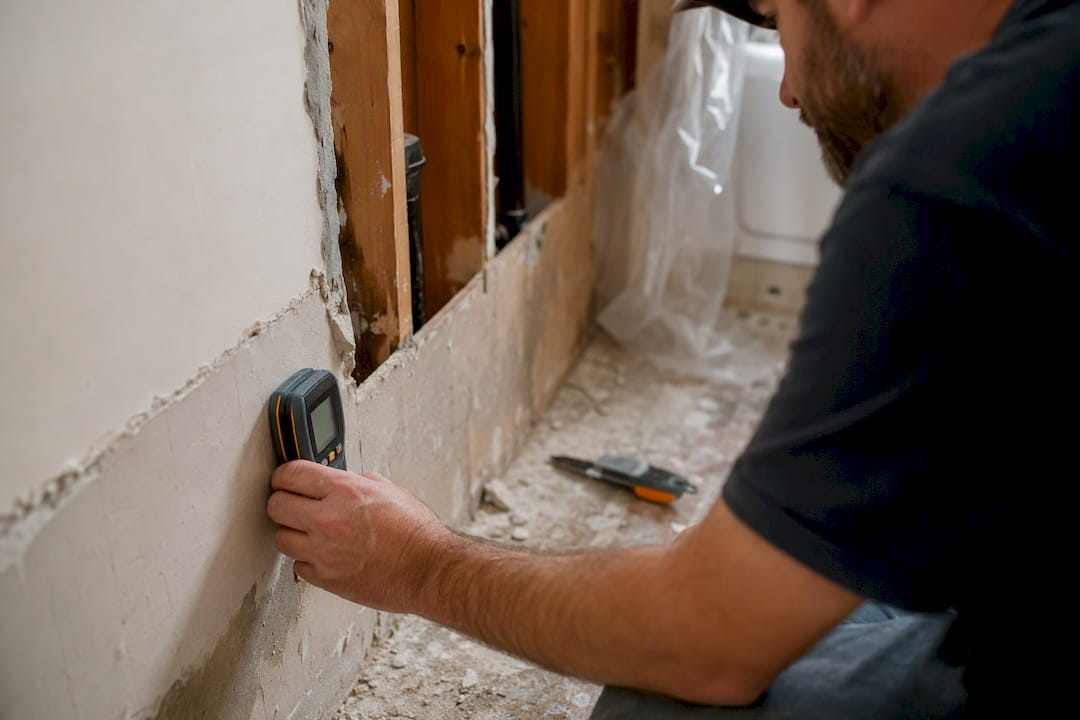
Our inspection process gives you a written moisture map and category classification before any work starts, which is exactly the documentation your insurer will want to see.
What Are the Hidden Costs During the Restoration Process?
Water damage doesn’t stop costing you money once the drying equipment goes home. If your home is uninhabitable during reconstruction, temporary housing becomes a real expense, and it’s one many homeowners forget to check against their policy. Some homeowners insurance policies include “loss of use” coverage that reimburses hotel stays or short-term rentals, but the amount and duration vary by policy, and you need to confirm this before assuming it’s covered.
Lost income adds up too, particularly for anyone running a home-based business or renting out a property affected by the damage. A rental property owner in Los Angeles County dealing with a Category 2 kitchen flood might lose two to three weeks of rental income while reconstruction wraps up, on top of the restoration bill itself. That’s rarely reflected in the restoration quote you receive, since contractors price the physical work, not your personal financial disruption.
Storage costs during a pack-out are another indirect expense. If your contents need to be removed for cleaning or to make room for drying equipment, storage fees accrue for as long as your home is under construction. Ask upfront whether pack-out and storage are bundled into your estimate or billed as a separate line item, because this is where budgets quietly balloon.
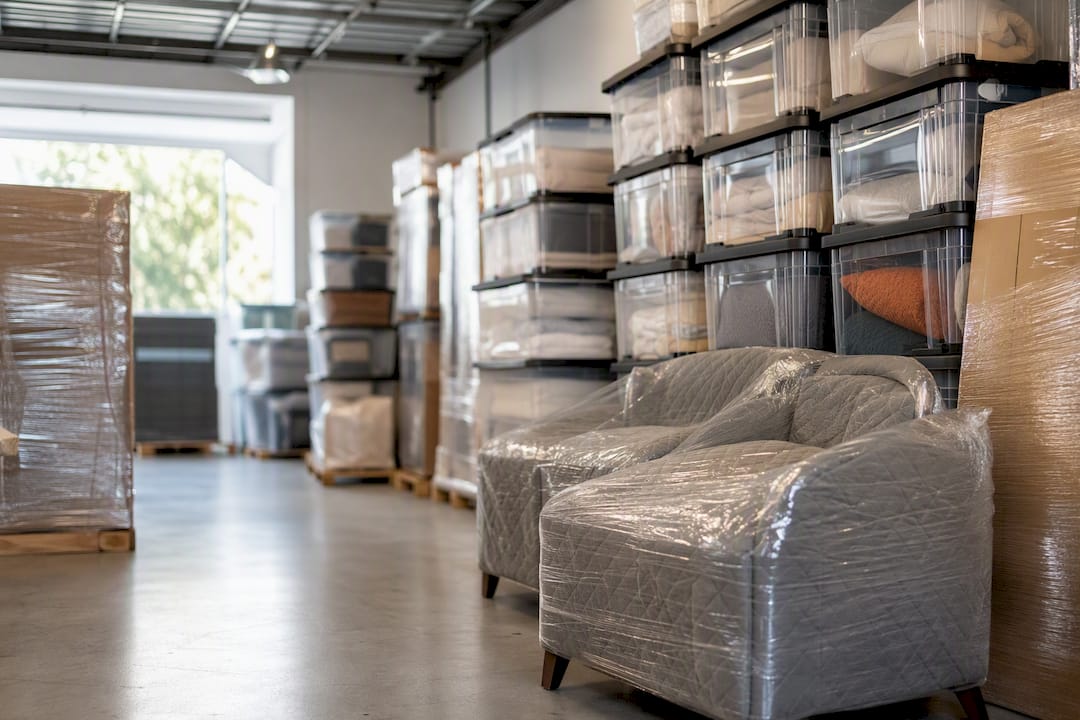
Plan for these indirect costs the same way you’d plan for the restoration bill itself: get estimates in writing, check your policy’s loss-of-use limits before the job starts, and factor in at least a few weeks of disruption if reconstruction involves more than one room.
What Fees Catch Homeowners Off Guard?
The base mitigation quote rarely tells the whole story. Emergency or after-hours response fees are common if you call outside normal business hours, and given that water damage doesn’t wait for 9 to 5, most homeowners end up paying this without realizing it was optional pricing tied to timing.
Disposal fees for contaminated materials are another common surprise, especially on Category 2 or 3 jobs where carpet, padding, and sometimes drywall have to be discarded rather than cleaned. These fees are often billed by weight or by the dumpster load, and they’re rarely itemized clearly on an initial estimate.
Daily equipment rental charges can also run longer than expected if drying takes more time than the initial estimate assumed, which happens more often than contractors like to admit, particularly in humid weather or with dense materials like hardwood and concrete. Ask what happens to your bill if drying runs past the original timeline.
Permit fees for reconstruction work, especially anything involving electrical or plumbing, are set by your local building department and vary by city. In Los Angeles County, these can add a few hundred dollars depending on project scope, and they’re almost never included in the initial mitigation quote since permits only apply once reconstruction begins.
Finally, watch for minimum service call fees. Some companies charge a flat minimum regardless of how small the job is, which matters if you’re dealing with a very localized leak. Ask about minimum charges before you agree to a service call, not after the technician is already on-site.
Why Fast Action Beats Cheap Quotes Every Time
The conventional advice out there tells homeowners to get three quotes and pick the lowest one. I think that’s backwards for water damage specifically, because the biggest cost driver isn’t which company you hire, it’s how many hours pass between the leak and the first extraction. A slightly higher quote from a crew that shows up in two hours will almost always beat a cheaper quote from someone who can’t start until tomorrow.
The other place conventional wisdom falls short is treating mitigation and reconstruction as separate purchasing decisions. They’re not. When you split the job across two vendors, you’re paying for two site visits, two sets of overhead, and often a gap in scheduling while paperwork gets sorted between them. One licensed contractor handling both phases, working from one moisture map and one insurance conversation, consistently comes in faster and with fewer surprise change orders.
If you take one thing from this: prioritize response speed and contractor scope over squeezing the lowest number out of a quote. That’s where the real savings live.
— Ernie M
Get a Water Damage Estimate from a Local Los Angeles Crew
Upright Construction & HVAC is the alternative to juggling two separate contractors for water damage. We handle inspection, mitigation, and full reconstruction under one contract, which means one point of contact, one coordinated timeline, and no duplicate markups between vendors.

Our estimates start with a written inspection that documents moisture readings and water category, exactly the paperwork your insurance adjuster will ask for. We’re available 24/7 for emergency extraction across the greater Los Angeles area, including Burbank and Beverly Hills, and we offer financing for larger reconstruction projects when a claim doesn’t cover everything. Before you call, gather your policy declarations page, any photos of the damage, and a rough sense of when the water intrusion started. If HVAC or electrical systems were affected by the flooding, our HVAC repair team can address that in the same visit. Reach out for an inspection and we’ll walk you through exactly what your restoration will cost before any work begins.
Where to Verify These Numbers Yourself
- FEMA disaster preparedness steps: guidance on immediate mitigation actions after flooding
- EPA mold and health guidance: background on the 24 to 72 hour mold colonization window
- EPA flood cleanup resources: indoor air quality steps after water intrusion
- IICRC S500 standard: the industry benchmark for restoration phases
- Insurance Information Institute: homeowners insurance claim data
Sources
- FEMA — disaster preparedness steps
- EPA — Can mold cause health problems?
- IICRC — certification and S500 standard (industry reference)
- EPA — Resources for flood cleanup and indoor air quality
- Insurance Information Institute — homeowners & renters insurance statistics
FAQ
Is Water Damage Restoration Worth the Cost?
Yes, in almost every case. Skipping professional mitigation risks structural damage and mold growth, which the EPA notes can begin within 24 to 72 hours, turning a $1,500 job into a $10,000 one.
How Much Will Insurance Pay for Water Damage?
It depends on your cause of loss. Sudden accidental damage, like a burst pipe, is typically covered after your deductible, while gradual leaks or flood-related damage often fall outside standard homeowners coverage, per Insurance Information Institute data and FloodSmart guidance on flood policies.
How Hard Is It to Fix Water Damage in a House?
It ranges from a simple drywall patch for a small clean-water leak to a multi-week rebuild for a Category 3 basement flood involving mold remediation, subflooring, and full wall reconstruction.
How Much Does It Cost to Remove Moisture from Walls?
Structural drying for moisture trapped in walls typically falls within the standard mitigation range of $3 to $7.50 per square foot, though deeply saturated materials like plaster or concrete can extend drying time and raise the total.
Does Upright Construction & HVAC Handle Both Mitigation and Reconstruction?
Yes. Upright Construction & HVAC manages the full process, from emergency extraction through structural drying to final reconstruction, under one contract, which typically shortens project timelines compared to hiring separate vendors.