- What does an HVAC tune-up include?
- Why tune-ups are critical for efficiency and system life
- How often should you schedule an HVAC tune-up?
- What should you expect from a professional HVAC service provider?
- Key takeaways
- Why I always tell homeowners not to wait until something breaks
- Schedule your HVAC tune-up with Upright Construction & HVAC
- FAQ
- Recommended
TL;DR:
- An HVAC tune-up is a professional maintenance visit that inspects, cleans, and adjusts your heating and cooling system to optimize performance. It includes tasks like coil cleaning, refrigerant checks, electrical testing, and safety evaluations, which extend system lifespan and improve efficiency. Scheduling annual tune-ups before peak seasons helps prevent costly repairs, lowers energy bills, and maintains warranty coverage.
An HVAC tune-up is a professional preventive maintenance visit where a qualified technician inspects, cleans, and adjusts your heating and cooling system to keep it running at peak performance. Think of it as a physical exam for your home’s most hardworking equipment. Brands like Bryant and Carrier, along with the U.S. Department of Energy, all back regular tune-ups as the single most effective way to protect your investment, lower energy bills, and avoid the kind of breakdown that always seems to happen on the hottest day of the year.
What does an HVAC tune-up include?
A professional HVAC tune-up goes well beyond a quick visual check. According to Carrier’s maintenance guidelines, a thorough tune-up covers thermostat calibration, coil cleaning, refrigerant level checks, electrical inspections, lubrication of moving parts, and safety and performance testing. Each of those tasks has a direct impact on how well your system performs and how long it lasts.
What the inspection checklist covers
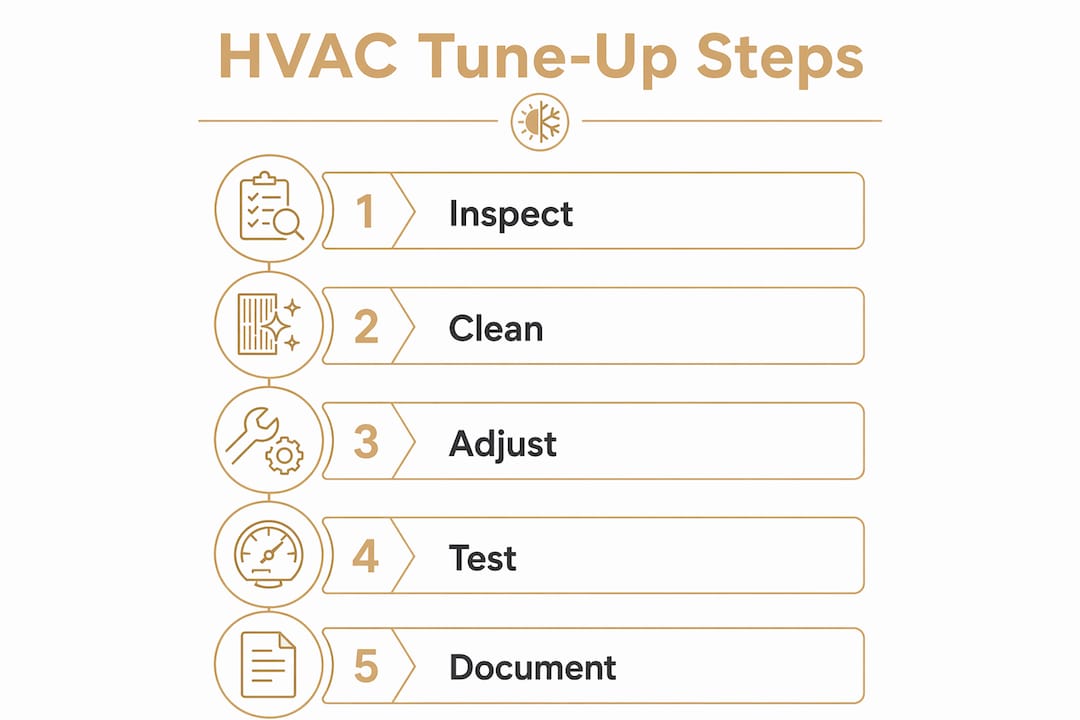
During the inspection phase, your technician will check thermostat accuracy, verify refrigerant levels, and examine all electrical connections for signs of wear or corrosion. Loose electrical connections are a leading cause of compressor failure, so catching them early is money in your pocket. The technician will also test safety controls and measure airflow to confirm the system is operating within manufacturer specifications.
Cleaning tasks that make the biggest difference
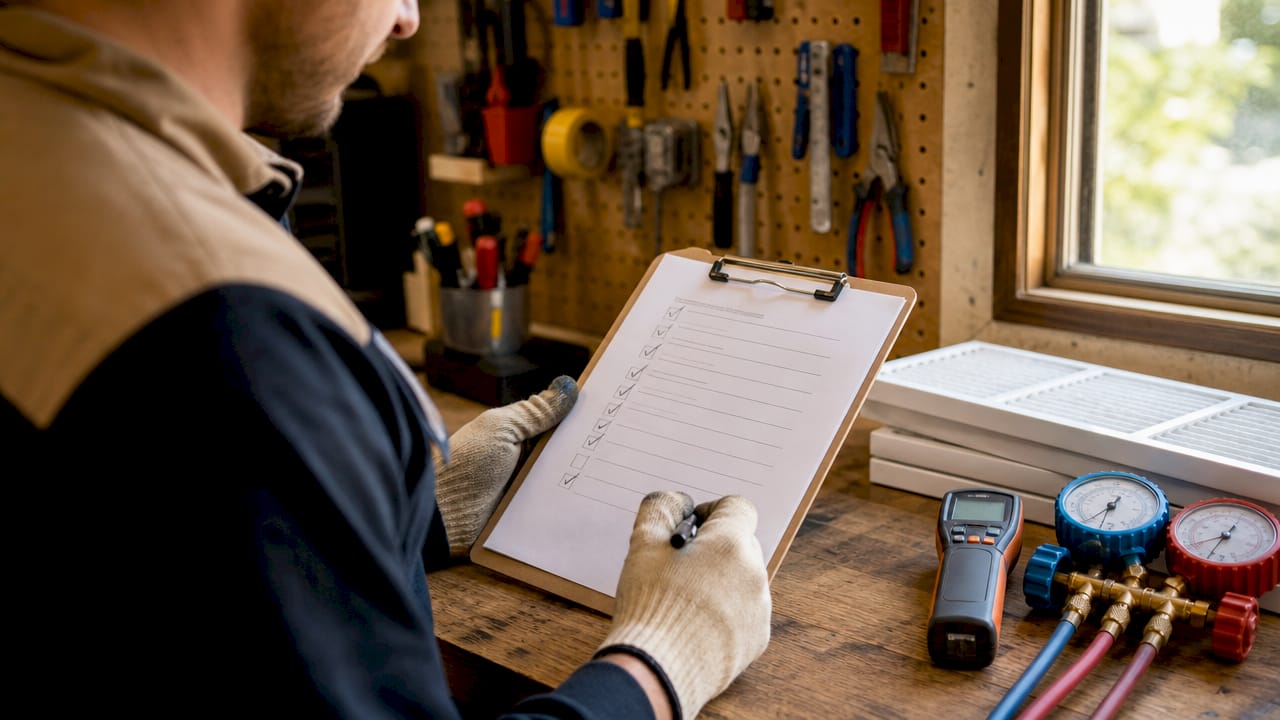
Cleaning is where a tune-up earns its cost. The Department of Energy confirms that dirty or clogged air filters and evaporator coils reduce airflow and system efficiency, causing your system to work harder for the same result. Professionals use fin combs to straighten bent coil fins, which restores heat transfer capacity that a simple filter swap cannot address. The condensate drain also gets cleared to prevent water damage and mold growth inside your unit.
Pro Tip: Ask your technician to show you the condition of your coils before and after cleaning. That visual comparison alone will tell you whether the service was worth it.
Here is a quick summary of what a complete HVAC system checklist should include:
- Thermostat calibration and testing
- Refrigerant level inspection and leak check
- Electrical connections tightened and tested
- Evaporator and condenser coil cleaning
- Condensate drain flushing
- Lubrication of all moving parts (motors, bearings)
- Air filter inspection or replacement
- Safety controls and startup sequence testing
- Airflow and temperature differential measurement
A basic inspection only looks at your system. A real tune-up cleans, adjusts, and tests it. That distinction matters when you are comparing service quotes.
Why tune-ups are critical for efficiency and system life
Skipping a tune-up does not just risk a breakdown. It quietly costs you money every single month. Carrier states directly that tune-ups reduce the risk of unexpected breakdowns during peak usage periods, which is exactly when repair costs and wait times are highest. A system running with dirty coils or low refrigerant draws more electricity to deliver the same cooling, and that inefficiency shows up on your utility bill.
“Even with diligent filter care, the evaporator coil can accumulate dirt over time, which reduces heat exchange efficiency. Only professional inspection and cleaning can fully address coil contamination that filters miss.” — U.S. Department of Energy
The benefits extend beyond energy savings. Carrier’s research links regular maintenance to better indoor air quality, fewer repairs, and longer equipment life. A well-maintained system in Los Angeles can last 15 to 20 years. A neglected one often needs replacement in 10 to 12. That difference in lifespan represents thousands of dollars.
Refrigerant checks matter more than most homeowners realize. Low refrigerant does not just reduce cooling power. It forces the compressor to run under stress, which is the most expensive component in your entire system to replace. Catching a slow leak during a tune-up costs a fraction of what a failed compressor does.
Warranty protection is another angle worth knowing. Many HVAC manufacturers, including Bryant, require documented annual maintenance to keep warranties valid. Skipping tune-ups can void your coverage right when you need it most.
How often should you schedule an HVAC tune-up?
Bryant recommends annual tune-ups as the standard for maintaining efficiency and extending system lifespan. Most HVAC professionals and energy authorities agree. The practical approach for most homeowners is to split service by season.
Here is the schedule that works best for a typical residential system:
- Spring (March to May): Schedule your air conditioning tune-up before temperatures climb. This gives your technician time to address any issues before peak demand hits.
- Fall (September to October): Schedule your heating system tune-up before the first cold snap. Furnaces and heat pumps that sit idle all summer often develop minor issues that only show up under load.
- Older systems (10+ years): Consider twice-yearly service. Aging components wear faster and benefit from more frequent monitoring.
- High-use environments: Homes in extreme climates, homes with pets, or homes with residents who have allergies may benefit from more frequent filter checks between professional visits.
Pro Tip: Set a calendar reminder for the same week each spring and fall. Consistency matters more than perfection. A tune-up in April is far better than one you keep meaning to schedule in July.
What happens if you skip a tune-up? Efficiency drops, small problems grow into expensive repairs, and your system’s lifespan shortens. The Department of Energy’s guidance is clear that filter and coil maintenance directly affects how well your system performs. Delaying service by even one season can mean running a system at reduced capacity without knowing it. You can learn more about seasonal HVAC timing to plan your service schedule around Los Angeles weather patterns.
What should you expect from a professional HVAC service provider?
Not all tune-ups are equal, and knowing what separates a thorough service from a rushed one protects you as a homeowner. The Department of Energy emphasizes that a real tune-up involves cleaning, testing, diagnosing, and fixing issues as needed by licensed technicians. A technician who spends 20 minutes at your home and hands you a checklist with every box ticked should raise a flag.
PracticeTestGeeks’ HVAC maintenance research confirms that documentation of tune-up results enables trend analysis and early detection of system degradation. That means your technician should provide measurable readings, not just a verbal summary. Year-over-year data on refrigerant levels, electrical readings, and airflow measurements tells a story that a single visit cannot.
Here is how a quality provider compares to a subpar one:
| What a quality provider does | What a subpar provider does |
|---|---|
| Provides written checklist with actual readings | Hands you a generic form with boxes checked |
| Spends 45 to 75 minutes on a thorough service | Completes the visit in under 30 minutes |
| Explains findings clearly before recommending repairs | Pushes repairs without showing you evidence |
| Holds a valid HVAC license for your state | Cannot verify credentials on request |
| Documents results for future comparison | Leaves no paper trail |
Before your technician arrives, ask these questions: Are you licensed and insured in California? What does your tune-up checklist include? Will you provide written documentation of all readings? Those three questions filter out most low-quality providers before the visit even starts.
Watch for upsell pressure. A legitimate technician will show you a problem before recommending a fix. If you are being pushed toward a major repair without a clear explanation and evidence, get a second opinion. You can also review how HVAC inspections work to understand what a proper diagnostic process looks like. For context on regular filter replacement, that is one maintenance task you can handle between professional visits.
Key takeaways
A professional HVAC tune-up is the most cost-effective way to protect your system’s efficiency, lifespan, and reliability before problems develop.
| Point | Details |
|---|---|
| Tune-up vs. inspection | A tune-up cleans, tests, and adjusts your system. An inspection only looks at it. |
| Annual scheduling | Schedule once in spring for AC and once in fall for heating to stay ahead of peak demand. |
| Efficiency and cost savings | Dirty coils and low refrigerant raise energy bills and risk compressor failure. |
| Documentation matters | Request written readings each visit to track system health over time. |
| Tune-up cost range | A professional service typically runs $150 to $250 and takes 45 to 75 minutes. |
Why I always tell homeowners not to wait until something breaks
I have been doing this work in Los Angeles for over 15 years, and the pattern I see most often is this: a homeowner calls us in July because their AC stopped working, and when we get there, we find a problem that a tune-up in April would have caught for a fraction of the cost. The repair bill stings twice. Once for the repair itself, and once because it was preventable.
The biggest misunderstanding I run into is that homeowners think a tune-up is only necessary when something feels off. That is backwards. The whole point of preventive maintenance is to catch problems before you feel them. A system can be running at 70% efficiency and still cool your home. You just will not know it until your utility bill arrives.
I also want to be honest about something most articles skip. Not every tune-up on the market is worth the price. I have seen “tune-ups” that amounted to a filter check and a signature on a form. That is not a tune-up. A real service takes time, uses diagnostic tools, and leaves you with documentation you can reference next year. When you hire someone, ask to see their checklist before they start. If they cannot produce one, that tells you everything.
My advice is simple. Schedule your tune-up before the season you need your system most. Do not wait for a sign. Your HVAC will not always give you one.
— Ernie M
Schedule your HVAC tune-up with Upright Construction & HVAC

Upright Construction & HVAC has served Los Angeles homeowners for over 15 years with honest, thorough HVAC maintenance services. Our technicians arrive with a full diagnostic checklist, provide written documentation of every reading, and never push repairs without showing you the evidence first. Whether you need a one-time seasonal service or want the peace of mind that comes with a structured plan, we have an option that fits your home and budget. Explore our HVAC maintenance plans to see how a proactive approach keeps your system running efficiently year-round without surprise repair bills. Call us or book online. We are available 24/7.
FAQ
What is an HVAC tune-up exactly?
An HVAC tune-up is a professional maintenance visit where a licensed technician inspects, cleans, adjusts, and tests your heating and cooling system. It goes beyond a visual check to include coil cleaning, refrigerant verification, electrical testing, and performance measurement.
How much does an HVAC tune-up cost?
A professional tune-up typically costs between $150 and $250 and takes 45 to 75 minutes. Pricing varies by market, system type, and the scope of service included.
How often should I get an HVAC tune-up?
Most manufacturers and energy authorities recommend annual tune-ups, ideally split by season. Schedule an AC tune-up in spring and a heating system tune-up in fall for best results.
What are the signs your HVAC needs a tune-up?
Rising energy bills, uneven cooling or heating, unusual noises, and reduced airflow are all signs your system needs attention. That said, waiting for symptoms means the problem has already developed. Annual service prevents those signs from appearing in the first place.
Does an HVAC tune-up really save money?
Yes. Keeping coils clean and refrigerant levels correct reduces the energy your system uses to do its job. It also prevents the kind of compressor and electrical failures that cost far more than a routine service visit.