- How HVAC permits work: what they are and why they matter
- What HVAC projects require permits and what’s exempt
- How to get HVAC permits: the step-by-step process
- Understanding HVAC permit fees and what drives the cost
- What inspectors check and why permits fail
- Homeowner responsibilities and contractor red flags
- Key takeaways
- Why I take permits seriously on every single job
- Let Upright Construction & HVAC handle your permits and installation
- FAQ
- Recommended
TL;DR:
- HVAC permits are essential for ensuring safe, legal, and properly inspected residential heating and cooling installations.
- Skipping permits risks fines, insurance issues, safety hazards, and resale complications, making compliance crucial.
HVAC permits are official authorizations issued by your local building department that allow residential heating and cooling installations or modifications to proceed legally and safely. Understanding how HVAC permits work protects your home’s value, keeps your family safe, and prevents costly surprises down the road. Whether you’re replacing a furnace, installing a new air conditioning system, or adding ductwork, the permit process follows a clear path: application, fee payment, inspection, and final approval. Skipping any step creates real legal and financial risk, including fines, insurance denials, and complications when you sell your home.
How HVAC permits work: what they are and why they matter
A mechanical permit, which is the industry term for what most homeowners call an HVAC permit, is a formal approval from your local building authority confirming that proposed HVAC work meets current safety codes and installation standards. The permit triggers a mandatory inspection process, meaning a licensed inspector verifies the work at key stages before it’s considered complete and legal.
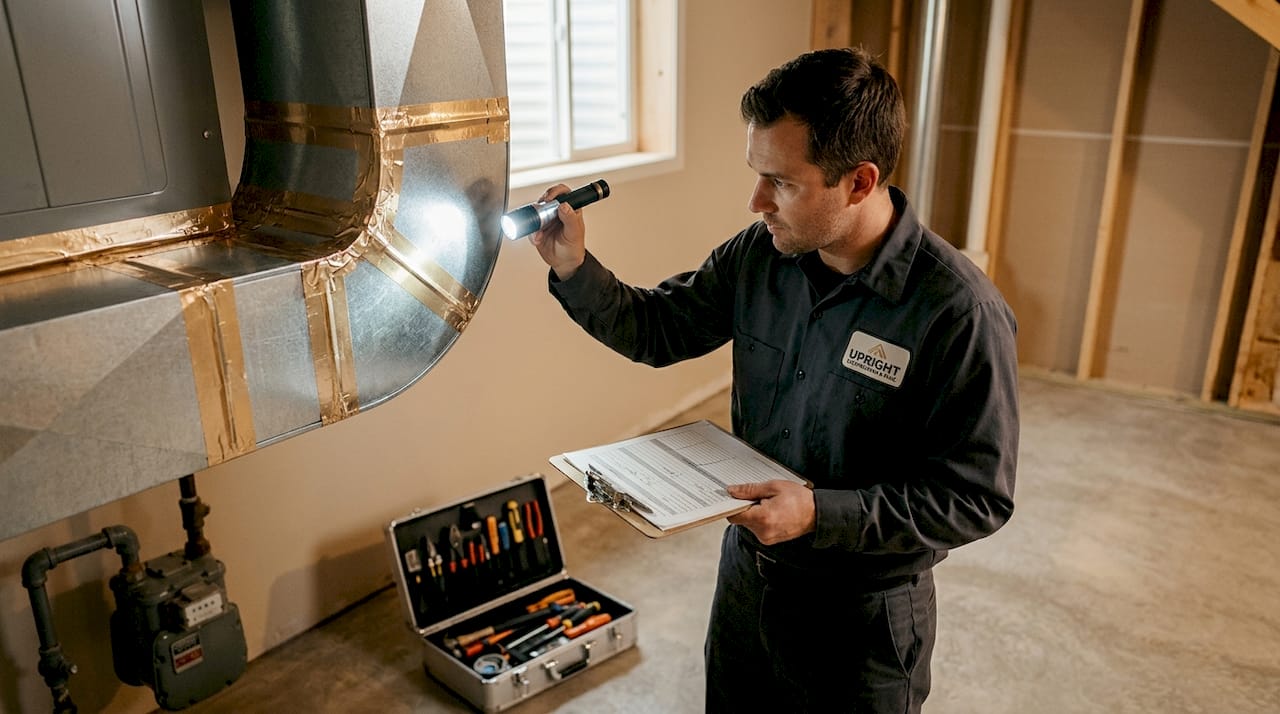
Permits exist because HVAC systems involve gas lines, electrical connections, refrigerants, and combustion equipment. A poorly installed furnace can leak carbon monoxide. An improperly sized air conditioner can overload your electrical panel. These are not theoretical risks. The permit and inspection process is the mechanism that catches these problems before they become emergencies.
For homeowners, permits also carry direct financial implications. Unpermitted HVAC work can void your homeowner’s insurance coverage on related claims. When you sell your home, a buyer’s inspector or title company will often flag unpermitted work, which can delay or kill the sale entirely. Retrofitting a permit after the fact is expensive and may require opening walls to expose concealed work.
What HVAC projects require permits and what’s exempt
A mechanical permit is required for almost all residential HVAC installations, replacements, and major modifications, regardless of whether the new equipment is identical to what it replaces. The following work types consistently require permits across most U.S. jurisdictions:
- New HVAC system installation (central air, heat pump, furnace, mini-split)
- Full or partial system replacement, including outdoor condenser units
- New or modified ductwork and air distribution systems
- Gas piping additions or modifications
- Electrical panel upgrades tied to HVAC equipment
- Installation of ventilation systems, exhaust fans, or whole-house fans
Routine maintenance and minor repairs are typically exempt from permit requirements. Thermostat replacements, filter changes, coil cleaning, capacitor swaps, and refrigerant recharging generally do not trigger a permit. The line is drawn at work that changes the system’s configuration, capacity, or connection to gas or electrical infrastructure.
One area that surprises many homeowners is the “like-for-like” replacement. Swapping a broken furnace for an identical model still requires a permit in most jurisdictions because the inspector needs to verify that gas connections, venting, and safety controls meet current code, not just the code from when the original unit was installed. Local permit requirements vary significantly even within the same state, so always confirm with your local building department before assuming an exemption applies.
Pro Tip: If a contractor tells you a full system replacement doesn’t need a permit, treat that as a serious red flag. Reputable contractors know the rules and follow them.
The risks of skipping permits go beyond fines. Unpermitted work can result in insurance claim denials, resale complications, and safety liabilities that fall entirely on you as the homeowner.
How to get HVAC permits: the step-by-step process
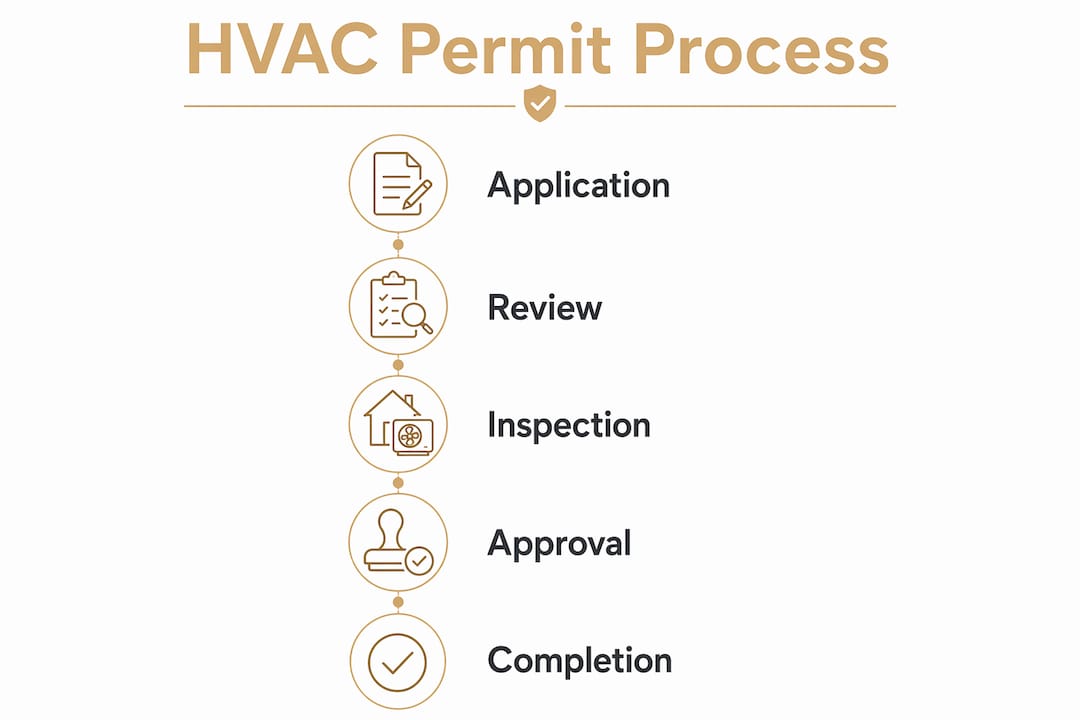
The HVAC permit process follows a consistent sequence, though timelines and specific requirements differ by city and county. Here is how it works from start to finish:
- Gather your documentation. Before applying, collect equipment specifications (model numbers, BTU ratings, efficiency ratings), a Manual J load calculation if required, your contractor’s license number, and a site plan showing equipment placement.
- Submit the permit application. Applications go to your local building department, either online through a permit portal or in person. Your contractor typically handles this step on your behalf.
- Pay the permit fee. Fees are collected at submission or issuance. Simple permits are issued within 3 to 7 business days for straightforward projects, while complex jobs can take several weeks. Some jurisdictions offer expedited review for an additional fee.
- Post the permit on-site. Once issued, the permit must be visibly posted at the job site during all work.
- Schedule the rough-in inspection. Before walls are closed or equipment is fully connected, an inspector visits to check ductwork routing, gas line rough-in, and electrical rough-in. This stage confirms the infrastructure is correctly placed.
- Complete the installation. After rough-in approval, the contractor finishes the installation, connects all systems, and verifies operation.
- Schedule the final inspection. The inspector returns to verify the completed installation, test operational safety controls, confirm proper venting and drainage, and close out the permit.
Most HVAC permits require this multi-stage inspection process, and certain states require local governments to respond to permit applications within 5 business days for projects under $15,000.
| Stage | What happens |
|---|---|
| Application | Contractor submits equipment specs, site plan, and license info |
| Permit issuance | Building department reviews and issues permit (3–7 business days typical) |
| Rough-in inspection | Inspector checks ductwork, gas lines, and electrical before walls close |
| Final inspection | Inspector verifies completed installation, venting, safety controls, and operation |
Pro Tip: Ask your contractor to confirm the inspection schedule in writing before work begins. Missed inspection windows can delay your project by days or weeks, especially during peak summer and winter seasons.
For homeowners considering pulling permits themselves, homeowners can pull permits for their primary residence in many areas. However, you cannot legally perform gas line work or refrigerant handling without the proper certifications. The permit is one thing. The actual work is another. Licensed contractors handle both.
Understanding HVAC permit fees and what drives the cost
HVAC permit fees vary by local jurisdiction and typically range from $75 to $300 or more for residential projects. Replacement permits often start around $75 to $233, while new installations involving ductwork, gas piping, and electrical work can exceed $300.
Several factors push permit costs higher:
- Project scope. A simple condenser replacement costs less to permit than a full system installation with new ductwork.
- Plan review requirements. Some jurisdictions require a formal plan review for larger projects, which adds a separate fee.
- Additional trade permits. If your HVAC project involves electrical upgrades or gas line work, those trades may require separate permits with their own fees.
- Regional regulations. High-cost-of-living areas like Los Angeles often have higher permit fees than rural counties.
To understand how permit costs fit into your total project budget, reviewing HVAC project cost factors alongside permit fees gives you a clearer picture. Permit fees are a small percentage of total installation costs, but they are non-negotiable. Budget for them from the start.
Local fees and requirements vary widely even within states due to jurisdictional authority and local code amendments. Always verify the exact fee with your local building department or ask your contractor to confirm it in the initial bid.
What inspectors check and why permits fail
HVAC inspections are more thorough than most homeowners expect. Inspectors work from a specific checklist tied to local building codes and manufacturer installation requirements. The primary areas they examine include:
- Equipment sizing. The installed unit must match the Manual J load calculation for the space. An oversized or undersized system fails inspection.
- Venting and combustion air. Gas furnaces require careful inspection of combustion air supply, vent termination location, and flue integrity. Gas furnaces require inspection of CO detectors, clearances, and gas connections because the safety risks are direct and serious.
- Ductwork sealing. Duct leakage is one of the most common reasons inspections fail. All joints must be properly sealed with mastic or approved tape.
- Electrical connections. Wiring must meet NEC standards, breaker sizing must match equipment requirements, and disconnect switches must be properly located.
- Drainage. Condensate drain lines must be correctly pitched and terminated to prevent water damage or biological growth.
- Operational safety controls. Pressure switches, limit switches, and safety shutoffs must function correctly before final approval.
Common failed inspection points include duct leakage, improper vent termination, and gas leaks. These are not minor issues. Each one represents a real safety or efficiency problem that the permit process is specifically designed to catch.
When an inspection fails, the contractor must correct the identified issues and schedule a re-inspection. This adds time and sometimes cost to the project. The best way to avoid failed inspections is to work with a contractor who knows the local code requirements and installs to those standards the first time. You can learn more about what to expect by reviewing how HVAC inspections work before your project begins.
Homeowner responsibilities and contractor red flags
Most reputable HVAC contractors include permitting in their quotes and manage the entire process on your behalf. That means pulling the permit, scheduling inspections, and delivering the final approved permit documentation to you. If a contractor’s bid does not mention permits, ask directly before signing anything.
Contractors who avoid permits often skip critical safety steps such as gas pressure testing and refrigerant handling procedures, which increases risk to your home and family. This is not a coincidence. Avoiding permits means avoiding accountability.
Watch for these red flags when evaluating HVAC contractors:
- The contractor asks you to pull the permit yourself, even though they are doing the work.
- The contractor says the project “doesn’t need a permit” for work that clearly does.
- The bid has no line item or mention of permit fees.
- The contractor cannot provide a current state contractor’s license number.
- The contractor pressures you to start work before the permit is issued.
When comparing bids, verifying contractor estimates in LA side by side helps you spot which contractors are cutting corners on compliance. A bid that looks cheaper because it excludes permits is not actually cheaper. You absorb all the risk.
Keep copies of your permit application, the issued permit, all inspection reports, and the final permit closure document. These records protect you during insurance claims and home sales. Store them with your other home improvement documentation.
Pro Tip: Before any HVAC contractor starts work, ask them to show you the issued permit. Not the application. The actual permit. If they cannot produce it, the work should not begin.
Key takeaways
The HVAC permit process is a non-negotiable safety and legal requirement for nearly all residential heating and cooling installations, and skipping it creates financial and safety risks that far outweigh the cost of compliance.
| Point | Details |
|---|---|
| Permits are required for most HVAC work | Installations, replacements, ductwork, and gas piping all require a mechanical permit in most jurisdictions. |
| Exemptions are narrow | Only minor maintenance like filter changes, thermostat swaps, and coil cleaning typically avoids permit requirements. |
| Fees range from $75 to $300+ | Project scope, trade count, and local jurisdiction determine where your permit fee lands within that range. |
| Inspections happen in two stages | Rough-in inspection covers infrastructure; final inspection confirms the completed system operates safely and to code. |
| Unpermitted work carries serious consequences | Fines, insurance denials, and resale complications are all documented outcomes of skipping the permit process. |
Why I take permits seriously on every single job
I have been doing HVAC work in the Los Angeles area for over 15 years, and I can tell you that the permit conversation is one I have with every single homeowner before we touch anything. Not because I enjoy paperwork, but because I have seen what happens when it gets skipped.
A few years back, a homeowner called us after buying a house where the previous owner had replaced the furnace without a permit. The installation had a venting problem that was slowly allowing combustion gases into the living space. The previous contractor had never been inspected. Nobody caught it until this family had been living there for two years. That story stays with me.
The permit process is not bureaucratic friction. It is the mechanism that puts a second set of eyes on work that directly affects your family’s safety. I have also seen homeowners get burned at resale when unpermitted HVAC work surfaced during escrow. The deal fell apart, and the homeowner had to pay to retrofit the permit and re-open walls. It cost far more than the original permit would have.
My advice is simple. Ask about permits before you sign any contract. If a contractor hesitates or tries to talk you out of it, walk away. A contractor who respects the permit process respects you and your home. That is the standard we hold ourselves to at Upright Construction & HVAC, and it is the standard you deserve from anyone you hire.
— Ernie M
Let Upright Construction & HVAC handle your permits and installation
Dealing with permits, inspections, and code compliance on your own is stressful. Upright Construction & HVAC takes that burden off your plate entirely.

Our licensed HVAC contractors manage every step of the permit process, from application to final inspection sign-off, and we include permit fees transparently in every estimate. We stay current with 2026 Los Angeles building codes and work with local inspectors regularly, which means fewer delays and no surprises. Whether you need a new system installation, a full replacement, or air conditioner repairs handled the right way, we are ready to help. Call Upright Construction & HVAC or visit uprightch.com to get a transparent estimate that includes everything, permits and all.
FAQ
Do I need a permit to replace my HVAC system?
Yes. A mechanical permit is required for nearly all HVAC replacements, including like-for-like swaps, because inspectors must verify that gas connections, venting, and safety controls meet current code.
How much does an HVAC permit cost?
Residential HVAC permit fees typically range from $75 to $300 or more depending on your local jurisdiction and the scope of the project. New installations with ductwork and gas piping tend to cost more to permit than simple unit replacements.
How long does it take to get an HVAC permit?
Simple permits are often issued within 3 to 7 business days. Complex projects or those in busy jurisdictions can take several weeks, so plan your project timeline accordingly.
Can a homeowner pull their own HVAC permit?
Homeowners can pull permits for their primary residence in many states, but they cannot legally perform gas line work or refrigerant handling without proper certifications. Licensed contractors should handle all specialized HVAC work.
What happens if HVAC work is done without a permit?
Skipping permits can result in fines, insurance claim denials, and serious complications when selling your home. Retrofitting a permit after the fact often requires exposing concealed work, which adds significant cost.