
- Why a dual-fuel heating system is worth considering
- How dual-fuel systems work: balance point and automatic switching
- The real benefits of dual-fuel heating: efficiency, savings, and comfort
- When a dual-fuel system makes sense for your home
- What dual-fuel systems cost and what maintenance looks like
- Can you add a heat pump to your existing furnace?
- How to choose the right dual-fuel system and contractor
- What installers see most often that undermines your savings
- Key Takeaways
- A note from Ernie M
- Upright Construction & HVAC can handle your dual-fuel installation
- Useful sources
- FAQ
- Recommended
TL;DR:
- A dual-fuel heating system combines a heat pump and a gas or propane furnace, switching automatically based on outdoor temperature. It maximizes efficiency and saves money in colder climates with gas access by covering most heating hours with the heat pump. Proper installation, including accurate sizing and correct thermostat programming, is essential to realize these benefits.
If you have cold winters and access to affordable natural gas, a dual-fuel heating system is often the most cost-effective and reliable choice for year-round home comfort. The setup pairs an electric air-source heat pump with a gas or propane furnace, letting each source do what it does best. Federal heat pump tax credits under the Inflation Reduction Act can reach up to $2,000, which meaningfully improves the upfront math. At Upright Construction & HVAC, we’ve installed these systems across the greater Los Angeles area for over 15 years, and the homeowners who benefit most share a few common traits.
Why homeowners choose dual-fuel heating:
- Heat pumps are highly efficient in mild to moderately cold weather, covering the majority of your heating hours at low cost
- Gas or propane takes over during deep cold, when it’s often cheaper than running electric resistance heat
- You get built-in redundancy: two independent heat sources mean one failure rarely leaves you without heat
- The heat pump doubles as your air conditioner in summer, so you’re not paying for a separate cooling system
Why a dual-fuel heating system is worth considering
A dual-fuel system, also called a hybrid heating system, combines an air-source heat pump with a fossil-fuel furnace (natural gas, propane, or oil) that share the same ductwork. Only one heat source runs at a time. The system automatically selects whichever source is more efficient or cost-effective based on outdoor temperature.
The dual-fuel thermostat and an outdoor temperature sensor are the brains of the operation. When it’s 45°F outside, the heat pump handles everything quietly and cheaply. When temperatures drop below a programmed threshold, the thermostat signals the furnace to take over. You never have to flip a switch yourself.
Common configurations include a heat pump paired with a natural gas furnace, a heat pump with a propane furnace (common in rural areas without gas lines), and the increasingly popular retrofit where a heat pump is added to an existing working furnace. That last option is often where the best return on investment lives.
How dual-fuel systems work: balance point and automatic switching
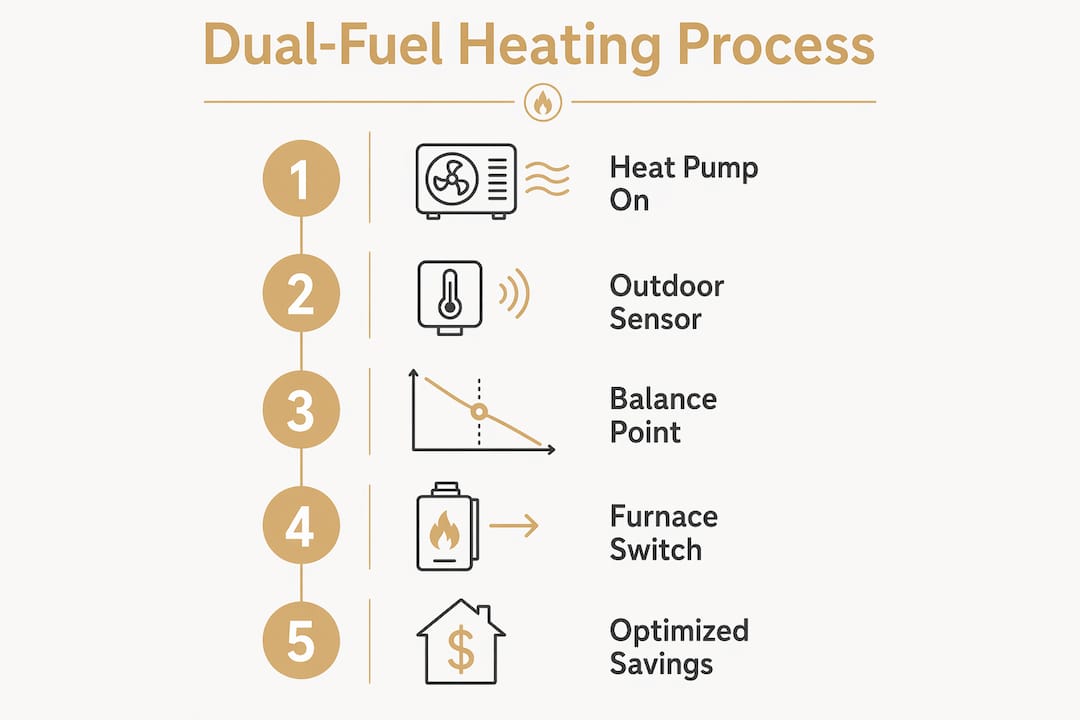
The thermostat decides which system runs based on a programmed outdoor temperature, sometimes combined with cost logic comparing your actual electricity and gas rates. That temperature is called the balance point, and getting it right is where most of the savings are won or lost.
There are two types of balance points worth knowing:
- Thermal balance point: the outdoor temperature at which the heat pump can no longer meet your home’s full heating load on its own
- Economic balance point: the outdoor temperature at which running the gas furnace becomes cheaper than running the heat pump, even if the heat pump could still keep up
The economic balance point is the one that matters for your utility bill. Because local utility rates shift the math noticeably, a switchover temperature that saves money in one city may cost money in another.
Common control mistakes that erase savings:
- Setting the lockout temperature too high, so the furnace runs when the heat pump would be cheaper
- Leaving emergency heat or electric strip heat enabled, which bypasses the furnace and drives up electric bills
- Using a standard thermostat instead of a dual-fuel compatible model with outdoor sensing
- Never verifying the switchover logic after installation
Pro Tip: Ask your installer to calculate the economic balance point using your actual electricity price ($/kWh) and gas price ($/therm) before they program the thermostat. Get that number in writing. An installer who sets a default 35°F without showing the math may be costing you money every month.
The real benefits of dual-fuel heating: efficiency, savings, and comfort
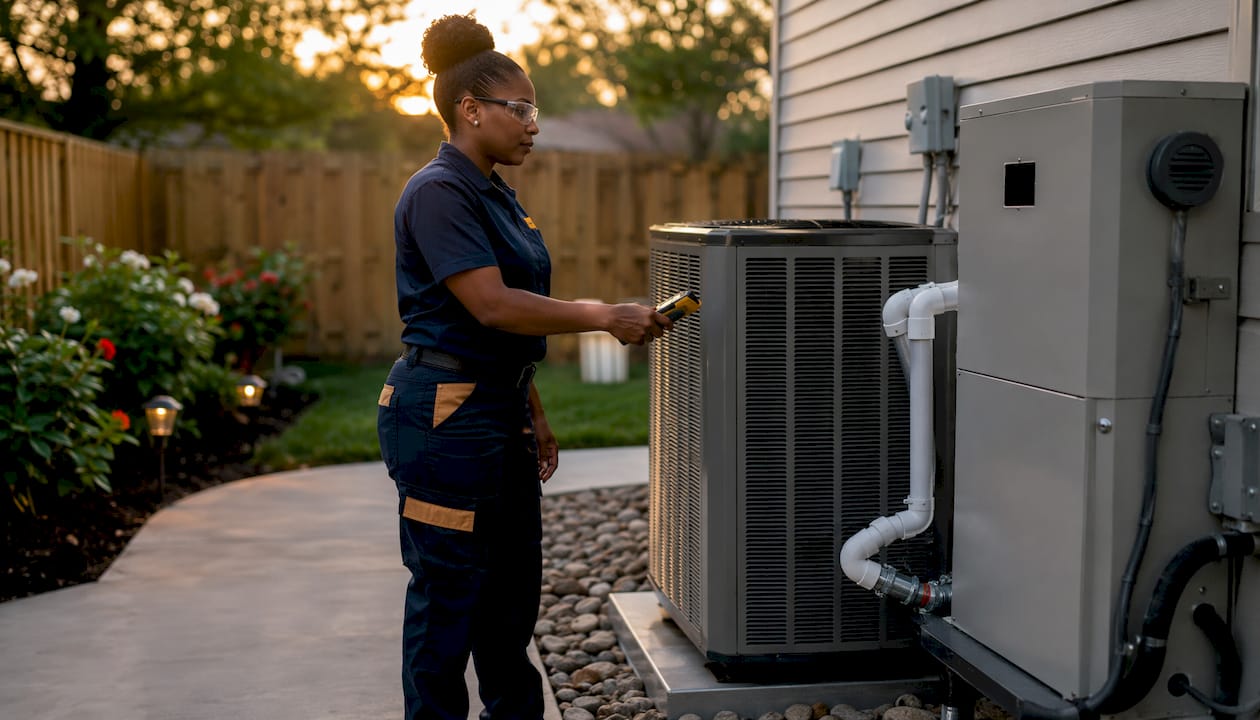
The core promise is simple: you get heat-pump efficiency for the vast majority of your heating hours, and furnace power when deep cold arrives. In mixed climates, heat pumps handle 80–90% of heating hours, with the furnace stepping in only during the coldest stretches. In many zone-5 winters, this split lets the heat pump cover most heating hours, and the furnace runs for deep cold periods only, which is exactly the split that makes dual-fuel economics work.
Practical benefits at a glance:
- Lower seasonal bills where electricity is reasonably priced and gas is available
- Built-in cooling from the heat pump, so you’re not buying a separate AC
- Redundancy: two independent heat sources mean a single failure rarely leaves you cold
- Longer combined system life when each component runs within its efficient range
- Reduced onsite combustion during mild weather, which lowers your carbon footprint and pairs well with rooftop solar
The environmental angle is real but nuanced. Running the heat pump more often cuts combustion emissions. Pair that with solar panels and the system can get close to carbon-neutral for most of the year.
When a dual-fuel system makes sense for your home
The simple rule: US climate zones 1–4 usually favor stand-alone heat pumps; zones 5–7 often make dual-fuel the smarter call when gas is available and reasonably priced. Three factors drive the decision.
The three key decision drivers:
- Winter severity: measured in heating degree days; the colder your winters, the more the furnace earns its keep
- Electricity vs. gas price ratio: if gas is cheap relative to electricity in your area, the economic balance point shifts warmer and the furnace runs more often
- Existing gas infrastructure: if you already have a gas line and a working furnace, the incremental cost of adding a heat pump is much lower
| Climate Zone Group | Typical Winter Severity | Recommended Approach |
|---|---|---|
| Zones 1–3 (South, Southwest) | Mild | Stand-alone heat pump |
| Zone 4 (Mid-Atlantic, Pacific NW) | Moderate | Heat pump or dual-fuel |
| Zones 5–6 (Midwest, Northeast) | Cold | Dual-fuel when gas is available |
| Zone 7 (Northern tier, mountains) | Very cold | Dual-fuel or high-performance ccASHP |
Modern cold-climate air-source heat pumps (ccASHPs) can carry full heating loads down to about 5°F, so dual-fuel is usually an economic choice rather than a strict technical necessity. The decision almost always comes down to local utility rates and winter severity, not ideology.
Pro Tip: Before committing, run the economic balance-point calculation using your actual electricity and gas prices. A quick spreadsheet with your equipment’s expected COP and AFUE will tell you the crossover temperature and whether dual-fuel pencils out for your zip code.
What dual-fuel systems cost and what maintenance looks like
Higher upfront than a single system, yes. But operating savings often repay that premium in colder regions within a reasonable timeframe.

| System Type | Typical Installed Cost | Estimated Payback |
|---|---|---|
| All-electric heat pump (replacement) | moderate to high cost, varies by climate | payback varies |
| Add heat pump to existing furnace | moderate additional cost | payback possible over multiple years in colder regions |
| Full dual-fuel replacement (both units) | higher upfront cost | moderate payback timeline in colder regions |
Installed cost ranges sourced from EnergyRanked. Federal tax credits under the Inflation Reduction Act can reduce heat pump costs by up to $2,000, and local utility rebates may stack on top of that.
Maintenance considerations:
- Plan for annual service on both the heat pump and the furnace, not just one
- Combined maintenance visits from a single contractor save time and catch cross-system issues
- Ask about combined maintenance plans that cover both units under one agreement
Questions to ask your contractor about warranties and service:
- Does the manufacturer warranty cover both units, or are they separate?
- Is there a combined service plan that covers annual heat pump and furnace maintenance?
- What is the labor warranty on the installation itself?
Reducing your home’s heating load before installing any new equipment also pays off. Sealing air leaks and upgrading insulation, or even improving interior doors for better thermal separation, lowers the capacity you need and can shift the economics further in your favor.
Can you add a heat pump to your existing furnace?
Yes, in most cases. Adding a heat pump to a working furnace and sharing the existing ductwork is the most common retrofit path, and often the one with the highest return on investment.
Retrofit preconditions checklist:
- Ductwork is in good condition with acceptable airflow and low leakage
- Electrical panel has capacity for the heat pump’s load (typically 240V, 30–50A)
- Gas line and furnace venting are up to code and in good repair
- The air handler coil and refrigerant circuit are compatible with the proposed heat pump (coil sizing mismatches reduce efficiency significantly)
- The existing furnace has meaningful remaining service life
When the furnace still has useful life, the retrofit approach typically delivers the best ROI because you’re not replacing a working system. If both units are aging, a full replacement of both at once often makes more financial sense.
Pro Tip: When retrofitting, verify the air handler coil match carefully. A small mismatch on coil sizing or airflow can quietly reduce heat-pump efficiency by a meaningful margin. Any reputable installer should confirm coil compatibility before pulling permits.
How to choose the right dual-fuel system and contractor
Prioritize three things: a Manual J load calculation, documented economic balance-point math, and a dual-fuel thermostat with proper staging logic. Everything else flows from those.
Checklist for comparing contractor quotes:
- Manual J load calculation — required for correct sizing; reject any quote that skips it
- Proposed balance-point temperature — ask how it was calculated and what utility rates were used
- Equipment efficiencies — confirm HSPF (heat pump heating), SEER (cooling), and AFUE (furnace) ratings; understanding HVAC efficiency ratings helps you compare quotes accurately
- Thermostat model and staging logic — confirm it is dual-fuel compatible with outdoor sensing
- Warranty details — separate equipment warranties plus labor warranty from the installer
- Installation scope — duct testing, airflow balancing, and commissioning should be included, not optional add-ons
Pro Tip: Insist the installer provide a written document showing the switchover temperature calculation and how any rebates or tax credits are applied to your final quote. If they can’t produce that document, find someone who can.
What installers see most often that undermines your savings
Poor thermostat staging, undersized units, and ignored ductwork are the three things that most consistently kill the savings a dual-fuel system should deliver. At Upright Construction & HVAC, we see it regularly on service calls for systems installed elsewhere.
Four practical tips from local installs:
- Verify Manual J before anything else. An undersized heat pump forces the furnace to run more than necessary, erasing efficiency gains.
- Test airflow and duct leakage. Leaky ducts waste conditioned air and reduce heat pump performance; fix them before commissioning.
- Disable electric strip heat if the furnace is the backup. Leaving strip heat active means the system may use expensive electric resistance instead of cheap gas during deep cold.
- Set the switchover at the economic balance point, not a default. Installers who program 35°F as a default without running the math often set it wrong for your specific utility rates.
A properly set system should never run gas and heat pump simultaneously. Correct staging means the control logic shuts one off before engaging the other; if both appear to run at once, it’s a wiring or staging error that needs immediate correction.
Pro Tip: Los Angeles homeowners should check LADWP rebates and Southern California Gas Company incentives before finalizing a quote. Upright Construction & HVAC factors these into every estimate, and in some cases a small electrical service upgrade is needed for the heat pump circuit — knowing that cost upfront prevents surprises.
For outdoor equipment, it’s also worth knowing that hail and weather events can damage heat pump condenser coils. Documenting your equipment after installation helps with any future insurance claims.
Key Takeaways
A dual-fuel heating system delivers heat-pump efficiency for most of the year and gas-furnace reliability during deep cold, making it the most cost-effective choice for homeowners in colder climates with gas access.
| Point | Details |
|---|---|
| Climate fit matters most | Zones 5–7 with gas access typically benefit most; zones 1–3 often do fine with a stand-alone heat pump. |
| Balance point drives savings | The economic balance point, calculated from your actual utility rates, determines when the furnace should take over. |
| Retrofit is often the best ROI | moderate additional cost |
| Installation quality is everything | NEEA guidance confirms that correct sizing, configuration, and commissioning are the single biggest factors in achieving expected savings. |
| Upright Construction & HVAC | Provides Manual J sizing, balance-point calculations, and dual-fuel installation support across the Los Angeles area. |
A note from Ernie M
When a homeowner asks me whether a dual-fuel system is worth it, my honest answer is: it depends on your climate, your utility rates, and who installs it. The technology works. What fails is the execution. I’ve seen systems that should save $600 a year end up costing more than a straight gas furnace because the thermostat was programmed wrong or the ductwork was never tested. That’s why I always start with Manual J and the balance-point math before we talk equipment brands. If you’re in the Los Angeles area and want a straight answer about whether dual-fuel makes sense for your home, reach out to us. We’ll do the diagnostic right and give you numbers you can actually trust.
Upright Construction & HVAC can handle your dual-fuel installation
If you’ve decided dual-fuel heating deserves a closer look, the next step is a proper on-site diagnostic, not a phone estimate. Upright Construction & HVAC performs full Manual J load calculations, documents the economic balance-point computation using your actual LADWP or SoCalGas rates, and handles heat pump installation, furnace service, and combined maintenance plans under one roof. Financing options are available for higher-ticket projects, and we apply all eligible rebates and tax credits directly to your quote so you see the real net cost upfront.

Ready to get a documented quote with the balance-point math included? Schedule your diagnostic with Upright Construction & HVAC today, and we’ll tell you exactly what a dual-fuel system would cost and save in your home.
Useful sources
These resources help you run balance-point calculations, check rebates, and read manufacturer and utility guidance:
- U.S. Department of Energy — Heat Pump Systems: Explains how heat pumps work, climate zone guidance, and efficiency considerations for homeowners.
- ENERGY STAR — Federal Tax Credits: Current Inflation Reduction Act tax credit details for heat pump installations, including the 25C credit up to $2,000.
- NEEA — Dual-Fuel HVAC White Paper: Industry research on dual-fuel system performance, sizing requirements, and smart switching controls.
- California Energy Commission: State-level guidance on heat pump adoption and efficiency programs relevant to California homeowners.
- Clean Heat NY: Example of state-level heat pump rebate programs; useful model for understanding what local utility incentives look like.
- Upright Construction & HVAC — Heat Pump Installation Los Angeles: Local installation page with LADWP rebate eligibility details and service area information.
FAQ
Is a dual-fuel HVAC system worth it?
Yes, for most homeowners in climate zones 5–7 with access to natural gas. The heat pump covers 80–90% of heating hours in mixed climates, and the furnace handles deep cold efficiently, resulting in lower seasonal bills than either system alone.
What are the disadvantages of a dual-fuel system?
Higher upfront cost than a single system, two units to maintain annually, and savings that depend heavily on correct installation and thermostat programming. A poorly configured system can cost more than a straight gas furnace.
What is the $5,000 rule for a furnace?
The general guideline is: if the repair cost is high relative to the furnace’s replacement cost, replacing it makes more financial sense than repairing it. That threshold is also a natural trigger to evaluate adding a heat pump and creating a dual-fuel setup.
What temperature should a dual-fuel heat pump switch at?
The switchover temperature should be set at the economic balance point, calculated from your actual electricity and gas prices along with the equipment’s COP and AFUE ratings. A common default is around 35°F, but the correct figure depends on local utility rates and varies by home. Upright Construction & HVAC calculates and documents this for every installation.
Recommended
- Single Vs. Two Stage Furnace: Pros And Cons – Upright Construction & HVAC
- Essential Heat Balance Tips For Every Floor In Winter – Upright Construction & HVAC
- Why Heating Maintenance Saves Money For Homeowners
- Wondering Why Your Heater Blowing Cold Air Instead Of Hot Air? Here’s Why – Upright Construction & HVAC