
- How heat pumps and furnaces actually produce heat
- Upfront cost vs. operating cost: what the numbers look like
- Where heat pumps excel and when a furnace is still the right call
- Federal and state incentives that change the math
- Dual-fuel systems: the smart middle ground
- Key Takeaways
- What I’ve seen after 15 years of installations in Los Angeles
- Upright Construction & HVAC can handle the whole process for you
- Useful sources
- FAQ
- Is a heat pump or furnace better for most U.S. homes?
- How do I choose between a heat pump and a furnace for my climate?
- What IRA incentives are available for heat pump installations?
- Can Upright Construction & HVAC help with LADWP rebates in Los Angeles?
- How long does a heat pump last compared to a furnace?
- Recommended
TL;DR:
- Most U.S. homes benefit from heat pumps due to their higher efficiency compared to furnaces.
- Federal tax credits and utility rebates increase the financial attractiveness of installing heat pumps now.
For most U.S. homes, a heat pump is the better heating choice right now. The U.S. Department of Energy confirms that heat pumps transfer heat rather than burn fuel to create it, which makes them significantly more efficient than combustion systems. ENERGY STAR-rated models and the Inflation Reduction Act (IRA) tax credits make the financial case even stronger in 2026. Upright Construction & HVAC has installed both systems across the Los Angeles area for over 15 years, and the pattern is clear: heat pumps win in most mild-to-moderate climates, while furnaces still make sense in a handful of specific situations.
Three things to do right now:
- Check your climate zone and local electricity rates (mild climates almost always favor heat pumps)
- Look up IRA federal tax credits and your utility’s rebate program before you buy anything
- Schedule a home assessment with a licensed installer to get a load calculation and payback estimate
How heat pumps and furnaces actually produce heat
A furnace burns gas, oil, or propane to generate heat, then pushes that warm air through your ducts. A heat pump does something fundamentally different: it moves heat that already exists in outdoor air (or the ground) into your home. That distinction drives every efficiency number you will see on an EnergyGuide label.
Air-source heat pumps can deliver 2–4 times more heat energy than the electrical energy they consume. A unit rated at 10.3 HSPF (Heating Seasonal Performance Factor) produces approximately 10,300 Btu of heat per kilowatt-hour of electricity, which aligns with modern efficiency standards. A gas furnace with a 95% AFUE (Annual Fuel Utilization Efficiency) converts 95 cents of every dollar of gas into usable heat. Both numbers look impressive, but HSPF and AFUE measure different things: HSPF reflects a multiplier effect, AFUE reflects a conversion rate. You can learn more about reading these labels on our HVAC efficiency ratings guide.
Modern cold-climate heat pumps use variable-speed compressors and demand-defrost controls to operate efficiently well below freezing. That technology has changed the conversation considerably over the last decade, as CNET’s buyer coverage notes. One comfort difference worth knowing: furnaces push drier, hotter air; heat pumps deliver gentler, slightly more humid warmth. Some people love that; others miss the “blast of heat” feeling from a gas furnace.
Upfront cost vs. operating cost: what the numbers look like
Heat pumps typically cost more to install than furnaces, but less to run. The gap in operating cost is what drives payback. According to EnergySage, upfront and ongoing costs vary significantly by ductwork condition, local fuel prices, and available rebates.
| Dimension | Heat Pump | Gas Furnace |
|---|---|---|
| Upfront installation cost | Higher (especially if electrical panel upgrade needed) | Lower in most cases |
| Operating cost | Lower (moves heat vs. burns fuel) | Higher if gas prices rise |
| Efficiency metric | HSPF (heating), SEER (cooling) | AFUE |
| Climate suitability | Excellent in mild/moderate; improving in cold climates | Strong in very cold climates |
| Maintenance & lifespan | Annual service; 15–20 years typical | Annual tune-up; 15–20 years typical |
| Cooling capability | Yes, doubles as AC | No (separate AC needed) |
| Available rebates | IRA tax credit + state/utility rebates | Limited federal incentives |
A simple payback example: if you replace a 78% AFUE gas furnace with a heat pump in a mild climate and your electricity rate is competitive with local gas prices, DOE national-lab research indicates that over 90% of American households assessed could save on energy bills by making that switch. Pairing the installation with insulation or air-sealing upgrades can shrink the equipment size you need and improve payback further. For older homes, improving envelope efficiency before sizing new equipment is one of the most overlooked steps.
Where heat pumps excel and when a furnace is still the right call
Climate is the single biggest variable in the heat pump vs furnace comparison. In mild and temperate regions like Southern California, the Pacific Northwest, the Southeast, and most of the Mid-Atlantic, heat pumps are almost always the better choice on both cost and comfort.
ACEEE’s regional lifecycle-cost analysis finds that replacing oil or propane furnaces with high-efficiency heat pumps yields substantial savings across most of the U.S., with paybacks often in the 1–9 year range depending on region and timing. The Upper Midwest is the main exception, where electricity prices and extreme cold can tilt the math back toward gas.
| Region | Typical verdict | Notes |
|---|---|---|
| Southern California / Southwest | Heat pump strongly favored | Mild winters, high gas prices, strong rebates |
| Southeast / Mid-Atlantic | Heat pump favored | Moderate winters; replaces AC too |
| Northeast | Heat pump usually favored | Cold-climate models needed; NEEP guidance applies |
| Upper Midwest | Furnace or dual-fuel | Very cold temps; electricity mix matters |
ACEEE’s earlier state-by-state analysis reinforces that warm states see the clearest efficiency and economic wins, especially when a heat pump replaces both a furnace and a central AC unit.
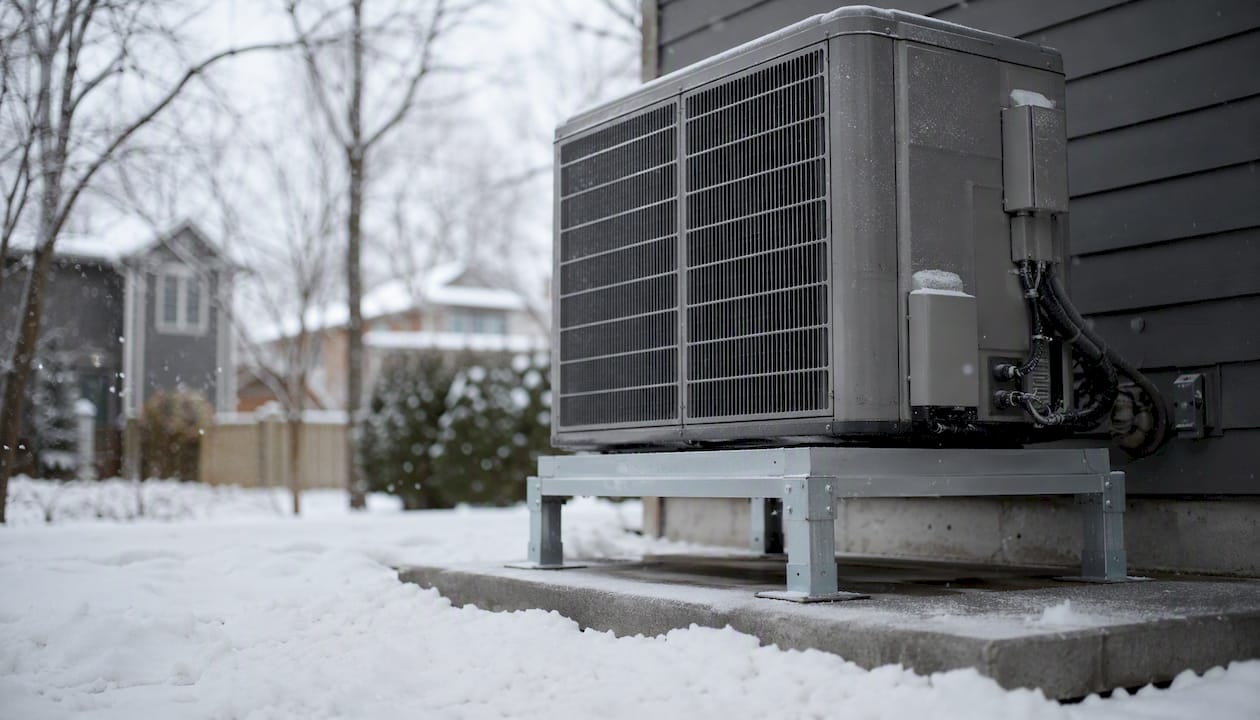
Pro Tip: If you live where temperatures regularly drop below 10°F, ask your installer specifically about cold-climate heat pump models (look for units rated to operate at or below 0°F). Mount the outdoor unit at least 18 inches off the ground to keep it clear of snow and ice, and confirm the unit uses demand-defrost rather than timed-defrost controls.
Federal and state incentives that change the math
The Inflation Reduction Act (IRA) of 2022 is the most significant federal support for heat pump purchases in decades. It funds an Energy Efficient Home Improvement tax credit and state-level rebate programs that can meaningfully reduce your net installation cost. Check IRS guidance for current eligibility rules and per-household limits, as program details can update annually.
Where to look for incentives:
- State rebate programs: — Funded through IRA’s Home Energy Rebates; availability and amounts vary by state
- Utility rebates: LADWP offers rebates for qualifying heat pump installations in Los Angeles; check our LADWP rebate page for current amounts and eligible equipment
Keep your contractor’s invoice, equipment model number, and ENERGY STAR certification documentation. You will need all three to file for tax credits or utility rebates.
Dual-fuel systems: the smart middle ground
A dual-fuel (hybrid) system pairs an electric heat pump with a gas furnace backup. The heat pump handles most of the heating load efficiently throughout the year, and the furnace kicks in automatically when outdoor temperatures drop below the heat pump’s efficient operating range.
Benefits:
- Maximum efficiency for the majority of heating hours
- Reliable backup during cold snaps without sacrificing comfort
- Works well in climates with occasional but not constant extreme cold
Downsides:
- Two systems to maintain and potentially repair
- Higher upfront cost than either system alone
- Requires a contractor who understands sequencing and control strategy
Pro Tip: Size the heat pump to cover at least 80% of your annual heating load. A heat pump that is too small will lean on the furnace too often and reduce your savings. Ask your installer to show you the load calculation before agreeing on equipment size.
For a deeper look at how these systems are sequenced and controlled, the dual-fuel system guide from UltraAir is a solid neutral resource. Upright Construction & HVAC also covers this in detail at why dual-fuel systems save money.
Key Takeaways
For most U.S. homeowners, a heat pump delivers lower operating costs, built-in cooling, and access to IRA incentives that a furnace simply cannot match.
| Point | Details |
|---|---|
| Heat pumps are more efficient | They move heat instead of burning fuel, delivering 2–4 times more heat energy than the electrical energy they consume. |
| Climate shapes the decision | Mild and temperate climates strongly favor heat pumps; the Upper Midwest may still favor gas or dual-fuel. |
| IRA incentives reduce upfront cost | Federal tax credits and state/utility rebates can significantly lower net installation cost. |
| Dual-fuel is a strong middle option | Pairing a heat pump with a gas furnace backup covers efficiency and cold-weather reliability. |
| Upright Construction & HVAC | Serves LA-area homeowners with heat pump installations, load calculations, and LADWP rebate assistance. |
What I’ve seen after 15 years of installations in Los Angeles
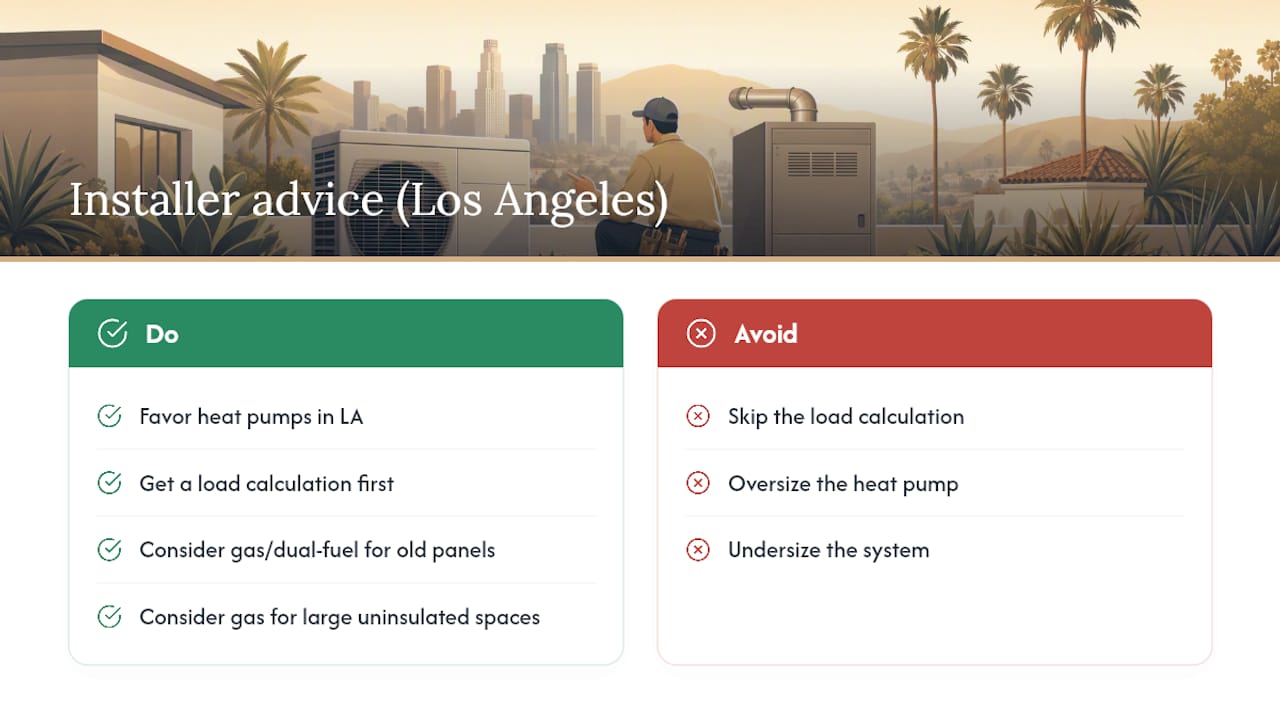
The heat pump vs furnace debate looks different from the field than it does on paper. In Los Angeles, I almost always recommend a heat pump. Our winters are mild, electricity rates are competitive with gas when you factor in efficiency multipliers, and the LADWP rebates we help clients access make the upfront gap much smaller than people expect. The homes where I still recommend a gas furnace or a dual-fuel setup are the ones with very old electrical panels that would need a costly upgrade, or clients who heat a large, poorly insulated space and need the raw BTU output of a high-capacity gas unit.
What I tell every homeowner before we talk equipment: get the load calculation first. The right system size matters more than the brand. An oversized heat pump cycles on and off too frequently and wears out faster. An undersized one runs constantly and never quite keeps up. That calculation is where the real work happens, and any installer who skips it is doing you a disservice.
Upright Construction & HVAC can handle the whole process for you
Getting a heat pump installed in Los Angeles means navigating equipment selection, electrical readiness, load calculations, and LADWP rebate paperwork, all at once. Upright Construction & HVAC handles every step, from the initial home assessment through final commissioning and rebate filing.

Services include heat pump installation in Los Angeles, dual-fuel conversions, ductwork evaluation, and 24/7 emergency HVAC service if something goes wrong after hours. Financing options are available for larger installations. For LA homeowners, the LADWP rebate program can offset a meaningful portion of the upfront cost, and we handle that paperwork so you do not have to track it down yourself.
Ready to find out which system fits your home? Schedule your free assessment or call Upright Construction & HVAC directly. We will bring the load calculation, the rebate numbers, and a straight answer.
Useful sources
- Pump Up Your Savings with Heat Pumps | Department of Energy
- Air-Source Heat Pumps | Department of Energy
- For Most Americans, A Heat Pump Can Lower Bills Right Now | Department of Energy
- ACEEE research report (a1803)
- Heat Pump vs Furnace: Which System is Right for You? | EnergySage
- Heat Pump vs. Furnace: Which Is Best for Your Home? | CNET
Check IRS.gov for current IRA tax-credit eligibility rules and your local utility’s website for up-to-date rebate amounts, since both can change between program cycles.
This article is general information, not professional tax or legal advice. Confirm current IRA credit rules with IRS guidance or a qualified tax professional before filing.
FAQ
Is a heat pump or furnace better for most U.S. homes?
A heat pump is the better choice for most U.S. homes, particularly in mild and moderate climates, because it delivers more heat energy per dollar of electricity than a furnace delivers per dollar of gas or oil.
How do I choose between a heat pump and a furnace for my climate?
If your winters rarely drop below 10°F and you have access to competitive electricity rates, a heat pump almost always wins on operating cost. In the Upper Midwest or areas with very low gas prices, a dual-fuel system or gas furnace may be more practical.
What IRA incentives are available for heat pump installations?
The Inflation Reduction Act provides a federal Energy Efficient Home Improvement tax credit for qualifying heat pump installations, plus funds state-level rebate programs. Check IRS Form 5695 instructions and your state energy office for current amounts and household caps.
Can Upright Construction & HVAC help with LADWP rebates in Los Angeles?
Yes. Upright Construction & HVAC handles LADWP rebate paperwork for qualifying heat pump installations in the Los Angeles area, so homeowners do not need to navigate the process alone.
How long does a heat pump last compared to a furnace?
Both systems typically last 15–20 years with proper annual maintenance. Installation quality and regular servicing are the biggest factors in reaching the upper end of that range.
Recommended
- Choosing Between Heat Pumps Vs AC Units – Upright Construction & HVAC
- Single Vs. Two Stage Furnace: Pros And Cons – Upright Construction & HVAC
- Advantages Of Using An Electric Furnace In California – Upright Construction & HVAC
- Home HVAC Furnaces: Top 8 Quick Fixes For Heating Problems With Home HVAC Furnaces – Upright Construction & HVAC