
- What is an emergency service fee and what does it cover?
- Why do emergency service fees vary so much?
- When is emergency HVAC service truly necessary?
- How to understand and negotiate emergency service fees
- Key Takeaways
- What 15 years of emergency calls taught me about these fees
- Upright Construction & HVAC is ready when you need us most
- FAQ
- Recommended
TL;DR:
- An emergency service fee covers technician travel, diagnostic assessment, and after-hours overhead, but excludes parts and repair labor. In 2026, emergency fees range from $150 to $300, with surcharges depending on call timing and overtime costs. Homeowners should only call for genuine safety, habitability, or active damage issues to avoid unnecessary expenses.
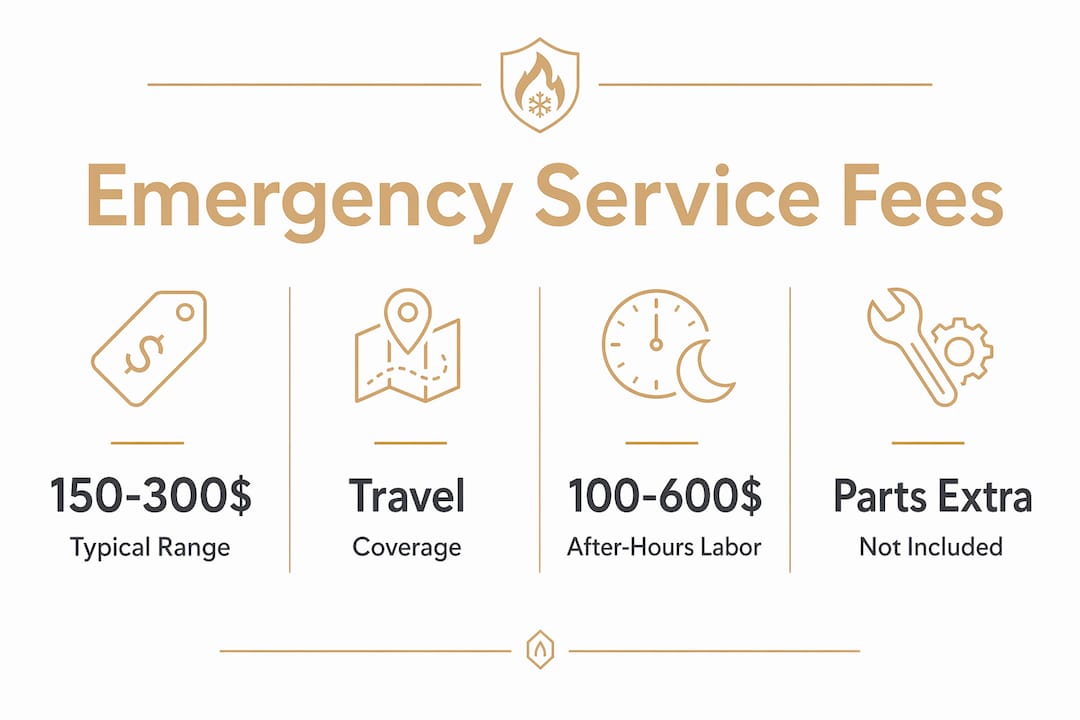
An emergency service fee is the standalone charge you pay when an HVAC technician responds to an urgent repair call outside of standard business hours. This fee covers the cost of getting a trained technician to your door at night, on a weekend, or during a holiday. It does not cover parts or the actual repair labor. In 2026, emergency service fees range from $150 to $300, compared to standard weekday diagnostic fees of $75 to $200. Knowing what this charge includes, and what it does not, saves you from sticker shock when the invoice arrives.
What is an emergency service fee and what does it cover?
An emergency service fee, also called an after-hours service call fee, is a separate line item on your HVAC invoice. It is not a deposit, and it does not apply toward your repair parts or labor. Think of it as the cost of having a trained technician available at 11:00 PM when your AC dies in the middle of a Los Angeles heat wave.
Here is what the fee typically bundles together:
- Technician travel time to your home from wherever they are dispatched
- Fuel and vehicle costs for the after-hours trip
- Initial diagnostic time to assess what is wrong with your system
- On-call dispatcher overhead to coordinate the response
What the fee does not cover is equally important to understand. Parts, replacement components, and the actual repair labor are billed separately. A service fee breakdown shows that five to ten minutes of basic troubleshooting on your end can sometimes eliminate the need for the visit entirely.
Pro Tip: Ask your HVAC provider upfront whether the diagnostic fee is waived if you book the repair. Many companies, including Upright Construction & HVAC, credit the service call fee toward the total repair cost.

Why do emergency service fees vary so much?
The time of day you call is the single biggest factor in what you pay. A weekday evening call costs less than a Saturday night call, which costs less than a Christmas Day call. That is not arbitrary pricing. It reflects real labor costs that the HVAC company must cover.
How timing affects the price
After-hours surcharges typically range from $100 to $300 on top of the base service fee. Weekends and holidays push that number higher because technicians earn overtime pay, and dispatchers must be staffed around the clock. Fleet vehicles also need to be fueled and ready at all times, which adds to operating costs.
Here is a general breakdown of how emergency pricing shifts by timing:
| Call Timing | Typical Surcharge Range | Labor Rate Multiplier |
|---|---|---|
| Weekday evening (after 5 PM) | $100–$150 | 1.5x standard rate |
| Saturday or Sunday | $150–$200 | 1.5x to 2x standard rate |
| Federal holiday | $200–$300 | 2x standard rate |
| Standard weekday (business hours) | $0 | 1x standard rate |
Standard hourly labor runs $85 to $150 per hour during business hours. Emergency hourly rates climb to $140 to $600 per hour after hours, and most companies apply a minimum labor block of one to two hours even for a quick fix.
Flat-rate versus premium pricebook models
Two pricing models dominate the HVAC industry. The first is a flat trip charge plus a stated emergency surcharge. The second is a premium pricebook model where labor and parts carry automatic markups. Premium pricebook models can look cheaper on the surface because the company may advertise no surcharge, but the total bill often runs higher. Flat-rate pricing is generally preferred by homeowners because you know the cost before work begins.
Pro Tip: Always ask for the total estimated cost in writing before the technician starts work. A reputable company will give you a number, not a range.
When is emergency HVAC service truly necessary?
Not every HVAC problem at 10:00 PM is a genuine emergency. Calling for emergency service when it is not needed costs you $150 to $300 before a single wrench turns. Knowing the difference protects your wallet.
Three situations that justify an emergency call
- Immediate safety risk. Carbon monoxide alarms triggered by a furnace malfunction, gas smells near HVAC equipment, or electrical burning odors require an emergency call without hesitation.
- Habitability risk for vulnerable occupants. If your home has infants, elderly residents, or people with medical conditions, a non-functional heating or cooling system in extreme temperatures is a genuine emergency.
- Active escalating damage. A refrigerant leak spreading to other components, or a frozen evaporator coil causing water damage, gets worse every hour you wait.
Issues that can usually wait until morning
- A system that is running but not cooling as well as usual
- One room that is warmer than the rest of the house
- A thermostat display that went blank (often a dead battery)
- Unusual but non-alarming noises during normal operation
Quick checks to do before you call
Before you pick up the phone, run through these steps. They take five minutes and can save you $150 to $300.
- Check your circuit breaker panel for a tripped breaker tied to your HVAC unit
- Replace or check your air filter if it has been more than 60 days since the last change
- Reset your thermostat by switching it off, waiting 30 seconds, and turning it back on
- Confirm the condensate drain line is not visibly clogged or overflowing
The emergency AC repair checklist from Upright Construction & HVAC walks through these steps in detail and helps you decide whether a call is truly urgent. For heating-specific issues, the quick fixes for furnace problems guide covers the most common causes homeowners can resolve on their own.
How to understand and negotiate emergency service fees
Knowing the right questions to ask before you schedule a call puts you in control of the final bill. Most homeowners skip this step and end up surprised by charges they could have anticipated.
Ask these questions before the technician is dispatched:
- “What is the emergency service call fee?” Get the exact dollar amount, not a range.
- “Is there an after-hours surcharge on top of the service fee?” These are sometimes listed separately.
- “What is the minimum labor charge for after-hours calls?” A one-hour minimum at $200 per hour adds up fast.
- “Will the service fee be credited toward the repair if I book the work tonight?” Many companies say yes.
Warning signs of unclear billing
Watch for vague answers about total costs, technicians who cannot give you a written estimate before starting, and invoices that list “emergency premium” without a clear dollar amount. Flat-rate pricing models reduce anxiety because you are not watching the clock while the technician works.
One detail most homeowners miss: emergency fees apply only when a call is dispatched outside business hours, not when a standard call runs late into the evening. If your appointment was scheduled at 3:00 PM and the technician finishes at 6:30 PM, that is not an emergency call. Confirm this distinction with your provider before agreeing to any surcharge.
Pro Tip: Ask the dispatcher to note the exact dispatch time on your work order. That timestamp protects you if a billing dispute comes up later.
For a deeper look at negotiating emergency HVAC costs, Upright Construction & HVAC has a full guide covering how to approach these conversations without damaging your relationship with your service provider.
Key Takeaways
An emergency service fee covers technician travel, diagnostic time, and after-hours overhead. It is always separate from parts and repair labor.
| Point | Details |
|---|---|
| Fee definition | An emergency service fee covers travel, fuel, and diagnostic time only, not parts or repair labor. |
| Typical cost range | Emergency fees run $150–$300 in 2026, with surcharges adding $100–$300 depending on timing. |
| Labor premium | After-hours labor rates run 1.5x to 2x the standard rate, with a 1–2 hour minimum block charge. |
| When to call | Reserve emergency calls for safety risks, habitability threats, or actively escalating damage. |
| Negotiation tip | Confirm dispatch time in writing and ask whether the service fee credits toward the repair cost. |
What 15 years of emergency calls taught me about these fees
I have been running Upright Construction & HVAC in Los Angeles for over 15 years, and the most common thing I hear after an emergency call is, “I had no idea the fee was separate from the repair.” That surprises me every time, because it is one of the most predictable parts of the invoice.
Here is the honest truth: emergency fees are not a profit grab. When one of my technicians drives to your home at 2:00 AM, I am paying overtime wages, keeping a dispatcher on the line, and maintaining vehicles that are ready to roll at any hour. Those costs are real, and they have to go somewhere. The fee is how we cover them without charging every customer more during regular hours.
What I see homeowners get wrong most often is calling for emergencies that are not emergencies. A system that is slightly underperforming on a warm night is not the same as a system that has completely failed with a newborn in the house. I am not saying do not call us. I am saying spend five minutes checking your breaker and thermostat first. Half the time, that is all it takes.
The homeowners who handle emergency situations best are the ones who already have a relationship with their HVAC provider. They know our pricing, they know what to ask, and they trust that we will be straight with them. That trust goes both ways. We show up fast, we give you a number before we start, and we do not pad the invoice. That is the standard every homeowner deserves.
— Ernie M
Upright Construction & HVAC is ready when you need us most
When your HVAC system fails at the worst possible time, you deserve a straight answer on cost before anyone touches your equipment. Upright Construction & HVAC has served Los Angeles homeowners for over 15 years with transparent pricing and 24/7 emergency availability.

We quote the emergency service fee before dispatch, credit it toward your repair when you book the work, and never add surprise line items to your invoice. Whether you are dealing with a failed AC in the middle of summer or a furnace that quit on a cold January night, our team is ready. Start with our guide to common HVAC repair challenges to understand what you are likely dealing with, or call us directly for same-day emergency support across the Los Angeles area.
FAQ
What does an emergency service fee include?
An emergency service fee covers technician travel, fuel, and initial diagnostic time. It does not include parts or repair labor, which are billed separately.
How much is a typical emergency HVAC service fee in 2026?
Emergency service fees typically range from $150 to $300, compared to $75 to $200 for standard weekday diagnostic calls.
Is the emergency fee charged even if nothing is repaired?
Yes, in most cases the emergency service fee applies once the technician is dispatched to your home, regardless of whether a repair is completed that visit.
Can I negotiate or waive the emergency service fee?
You can ask whether the fee is credited toward the repair cost if you book the work immediately. Many providers, including Upright Construction & HVAC, offer this credit as standard practice.
How do I know if my HVAC issue is a real emergency?
Genuine emergencies involve safety risks like gas smells or carbon monoxide alerts, habitability threats for vulnerable occupants, or damage that actively worsens every hour. Performance issues that are inconvenient but not dangerous can typically wait until morning.