Our Services
What Is an AC Thermostat Malfunction (And What to Check First)
Wondering what an AC thermostat malfunction means? Learn simple checks and tips to ensure your home stays cool and comfortable.
- CSLB C-20 Licensed
- NATE Certified
- EPA 608 Certified
- Licensed & Insured
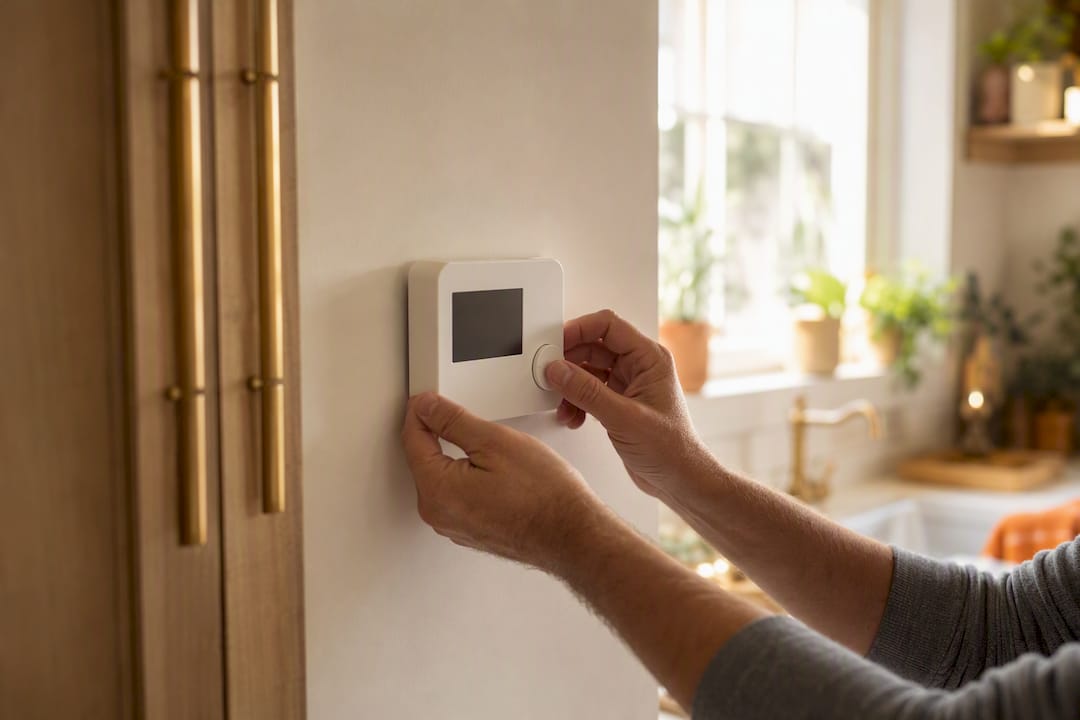
An AC thermostat malfunction means the thermostat has stopped sensing your home’s temperature accurately or has lost its ability to send power and control signals to the rest of the HVAC system. Most thermostats last 10 to 15 years before internal components start failing, but the good news is that most thermostat problems trace back to something simple like weak batteries or a wrong setting. At Upright Construction & HVAC, we tell homeowners to try three things before assuming the worst:
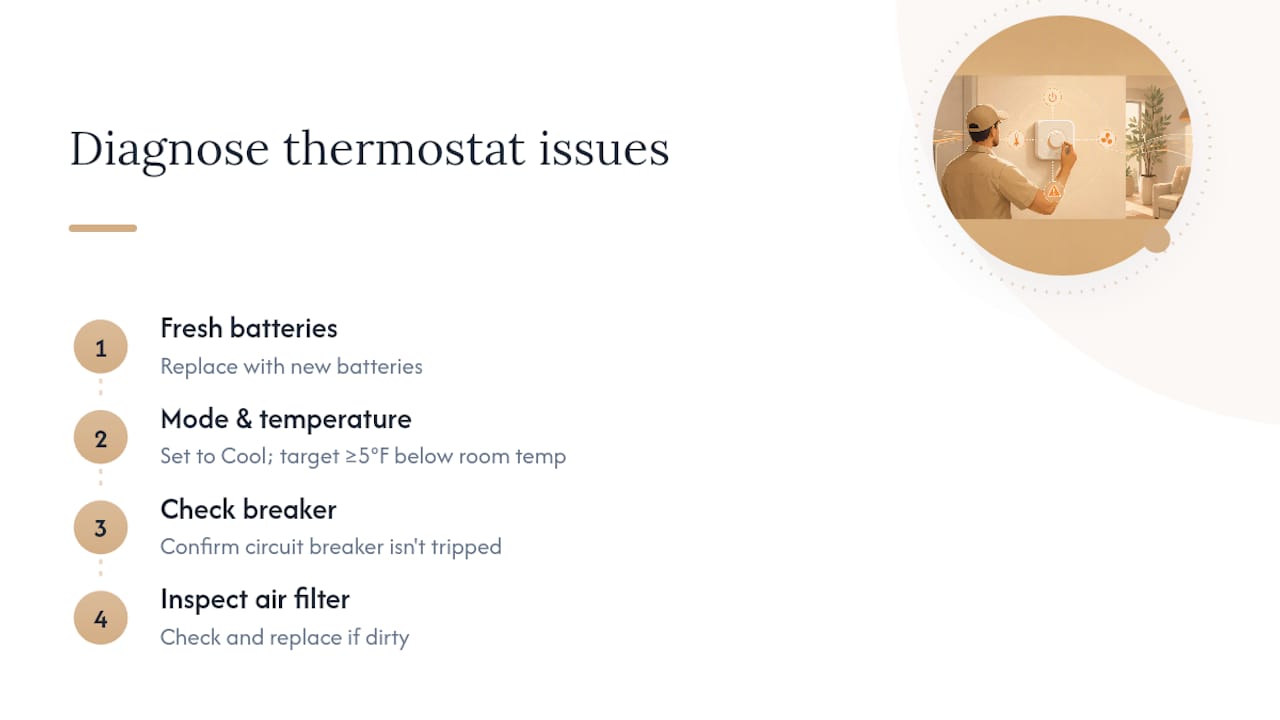
- Swap in fresh batteries if your model uses them, even if the old ones test fine.
- Check the breaker panel and the power switch near your furnace or air handler.
- Confirm the thermostat is set to Cool with the target temperature at least 5°F below the current room reading.
Key Takeaways
Most AC thermostat malfunctions come down to power loss, dead batteries, or a wrong setting, and only a small share require electrical or control-board repair.
| Point | Details |
|---|---|
| Check power first | Dead batteries, a tripped breaker, or a flipped power switch cause most blank-screen problems. |
| Rule out the filter | A clogged air filter often causes short cycling that looks like a thermostat fault. |
| Know the lifespan | Thermostats typically last 10 to 15 years before internal electronics start failing. |
| Stop at red flags | Burning smells, sparking, or repeated breaker trips mean stop DIY and call a professional immediately. |
| Call Upright for diagnostics | Upright Construction & HVAC offers licensed thermostat diagnostics with upfront pricing and 24/7 emergency service in the Los Angeles area. |
What Is AC Thermostat Malfunction Telling You? Signs to Watch For
Different symptoms point to different problems, and learning to read them saves you a diagnostic fee more often than you’d think. Here’s how to sort through the common signs of thermostat trouble.
- Blank or unresponsive display. This almost always means a power loss, whether from dead batteries, a tripped breaker, or an HVAC power switch that got bumped off, according to Carrier’s troubleshooting guide.
- The system won’t turn on at all. Could be the thermostat, but check your breaker first since that’s the more common culprit.
- The system runs nonstop and never shuts off. Points to a miscalibrated sensor or a thermostat stuck reading the wrong temperature.
- Short cycling (turning on and off in rapid bursts). Often has nothing to do with the thermostat at all. A clogged air filter restricting airflow is the more likely cause.
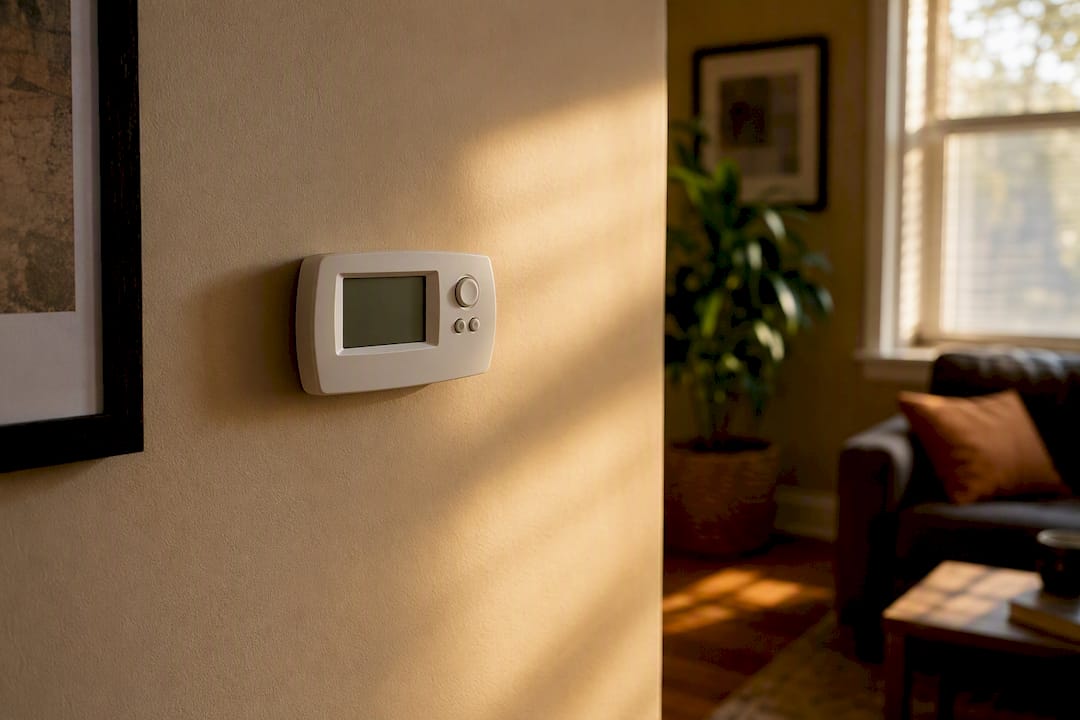
- Incorrect temperature readings. Usually a placement issue: direct sun, a nearby vent, or a drafty doorway skewing the sensor.
- The thermostat forgets your programmed schedule. Often a low battery warning sign or a software glitch on smart models.
- Erratic Wi-Fi disconnections on smart thermostats. Can indicate wiring problems, especially a missing common wire.
Some of these resolve in five minutes. Others, particularly wiring-related symptoms, are your cue to call in a professional.
Common Causes Behind AC Thermostat Issues
Once you know the sign, matching it to a cause gets a lot easier. Here’s what typically triggers each type of failure:
- Dead or weak batteries cause blank screens and system unresponsiveness, the single most frequent complaint we see.
- A tripped breaker or flipped HVAC power switch produces the same blank-screen symptom but comes from outside the thermostat itself.
- A blown low-voltage fuse or transformer issue can mimic a dead thermostat even when the unit itself is fine.
- Loose or corroded wiring shows up as intermittent power loss, erratic cycling, or a thermostat that works sometimes and not others.
- Dust and dirt on internal sensors throw off temperature accuracy and can cause the system to run longer than needed.
- Poor placement, near sunlight, HVAC vents, or drafty doors, skews sensor readings and leads to inconsistent comfort.
- Calibration drift or software bugs on digital and smart models cause forgotten schedules and odd temperature behavior.
- Missing common © wire on smart thermostat installs can cause power and connectivity problems that look like a full malfunction.
- Age, once a thermostat passes the 10 to 15 year mark, internal electronics simply wear out and failures become more frequent.
How to Fix an AC Thermostat: Step-by-Step Checks
Work through these in order. Most homeowners solve the problem within the first four steps.
- Replace the batteries, even if they seem to have life left in them.
- Confirm the thermostat is set to Cool and the target temperature is at least 5°F below the room’s actual temperature.
- Switch the fan setting from Auto to On. If the fan responds, the thermostat is communicating with the system.
- Check your electrical panel for a tripped breaker, and check the power switch on your furnace or air handler, it looks like a light switch and is easy to bump.
- Pull the air filter and inspect it. A clogged filter restricts airflow and can trigger short cycling that mimics a thermostat fault.
- Reboot the system: cut power for 60 seconds, then restore it.
- With power off, do a visual check of the wiring terminals for looseness or corrosion. Do not touch any wires while the system is powered.
- Place a separate portable thermometer near the thermostat and compare readings; anything more than 2 to 3°F off suggests a sensor problem.
- On smart thermostats, check your Wi-Fi connection, app settings, and any schedule overrides that might be fighting your manual changes.
- If your system uses a time-delay compressor protection, wait about 10 minutes after any power cycle before assuming it’s still broken.
Pro Tip: Often, the fix is a new set of batteries or a corrected setting. Don’t skip straight to wiring checks. Start simple, and you’ll usually save yourself both the wait and the diagnostic fee.
For furnace-specific power issues, our guide on heating problem quick fixes walks through additional switch and fuse checks.
Safety Red Flags: When to Stop and Call a Pro
Some signs mean you put the screwdriver down immediately.
- A burning smell coming from the thermostat, vents, or electrical panel.
- Visible melted plastic, or exposed and frayed wires anywhere near the unit.
- A breaker that trips repeatedly even after you reset it.
- Sparking at the thermostat or indoor unit.
- Error codes that keep returning no matter how many times you reboot.
If you smell burning or see damaged wiring, cut power to the HVAC circuit at the breaker immediately, ventilate the space, and do not attempt to run the system again until a licensed professional inspects it. Electrical failures like this carry real fire risk, and it’s not worth gambling on a DIY fix.
Thermostat Lifespan and What Replacement Really Costs
Most thermostats hold up well for 10 to 15 years before internal parts start failing more often. If yours is pushing that age and acting up, replacement usually makes more sense than another repair.
- A basic programmable thermostat replacement, parts and labor included, tends to sit on the lower end of the cost spectrum.
- A smart thermostat with C-wire installation runs higher, since it often involves additional wiring work.
- A standard diagnostic visit costs less than a full replacement, and most technicians apply that fee toward the repair if you move forward.
The number that matters most here is 10 to 15 years. Past that window, you’re not just fixing a glitch, you’re extending the life of a part that’s already near the end of its usable run. Our breakdown of signs your HVAC needs replacement covers the bigger picture if your whole system is aging alongside the thermostat.
When to Call an HVAC Technician
Some situations are simply beyond a screwdriver and a fresh set of batteries; in these cases, it’s best to understand top HVAC repair examples every homeowner should know.
Call a professional if you see any of the safety red flags above, if the display stays blank after you’ve confirmed power at the breaker, if the thermostat clicks but the outdoor condensing unit never starts, or if short cycling continues even after you’ve checked the filter and thermostat placement. A clicking thermostat with no outdoor response usually points to the contactor or capacitor, not the thermostat itself, and that’s a job for a licensed tech.
Before you call, gather a few details so the technician can move faster:
- Thermostat make, model, and approximate age.
- Exactly what symptoms you’re seeing and when they started.
- Which DIY checks you’ve already tried (batteries, breaker, filter).
- Any error codes on the display, along with photos if it’s safe to take them.
When you get someone on the phone, ask about the diagnostic fee upfront, whether they handle smart-thermostat and C-wire installations, and what their typical repair versus replacement costs look like. Our guide to common HVAC repair challenges also covers what a first-time service call usually involves.
How a Technician Diagnoses a Thermostat in the Field
When one of our technicians shows up, the process follows a set order designed to rule things out fast.
- Confirm the symptom you reported and reproduce it if possible.
- Verify power at the thermostat and check terminal voltages, typically looking for a steady 24VAC signal.
- Test control signals at the air handler and outdoor condensing unit to see if the thermostat’s commands are actually reaching the equipment.
- Check safety switches and fuses on the control board for a blown low-voltage fuse.
- Inspect wiring for corrosion, loose connections, or rodent damage.
- Log any error codes for reference.
If the thermostat is more than 10 to 15 years old, has failed repeatedly, or can’t support the wiring modern smart controls need, we’ll recommend replacement over repair. If a simple fix will do the job, that’s what we’ll suggest, no upselling, no unnecessary parts. Our piece on how thermostats actually work goes deeper into the wiring side if you’re curious.
A Word From Ernie M
I’ve been doing this for over 15 years, and I can tell you most thermostat calls end with a laugh and a $4 battery. When you do see burning smells or sparking, though, please call us. That’s not a DIY moment.
Get Your Thermostat Checked the Right Way
If your thermostat has you stumped after working through these checks, Upright Construction & HVAC offers licensed thermostat diagnostics with upfront pricing, so you know the cost before any work starts, not after.

We handle everything from smart-thermostat installation and C-wire upgrades to full system diagnostics, and our team is available around the clock for same-day emergency repairs across the greater Los Angeles area. Before you call, jot down your thermostat’s model, the symptoms you’re seeing, and what you’ve already tried. It helps us get to the fix faster and keeps your visit short. If you’re dealing with a system that won’t respond or an outdoor unit that stays silent, reach out through our HVAC repair page and we’ll get someone out to take a look.
Sources
- Bad thermostat — Carrier
- Common thermostat issues — Carrier
- How to Troubleshoot an AC Thermostat (DIY & Pro Tips) — HVACDatabase
- Reasons your thermostat isn’t working — The Spruce
- Thermostat troubleshooting — American Standard
- AC short cycling & thermostat problems — MrCool (blog)
FAQ
How do I know if my thermostat is malfunctioning?
Look for a blank display, a system that won’t turn on, short cycling, temperature readings that don’t match the room, or a schedule that keeps resetting itself.
How much does it cost to replace an AC thermostat?
Basic programmable thermostat replacement sits at the lower end of typical HVAC repair costs, while smart thermostats with C-wire installation run higher due to added wiring work.
How can I fix my AC thermostat?
Start with fresh batteries, confirm the mode is set to Cool with a target at least 5°F below room temperature, check your breaker, and inspect the air filter before assuming the thermostat itself is broken.
What happens when an air conditioner thermostat goes bad?
The system may stop responding, run constantly, short cycle, or show inaccurate temperatures because it can no longer sense conditions or send reliable signals to your AC unit.
When should I call a professional instead of troubleshooting myself?
Call immediately if you notice burning smells, sparking, frayed wires, or breakers that keep tripping, and call a qualified HVAC technician if the outdoor unit won’t respond even after basic checks.
Recommended
Ready to get started?
Licensed, insured & available 24/7 across Los Angeles and the San Fernando Valley.