Our Services
Why Weatherization Improves Heating for Every Room in Your House
Discover how weatherization enhances heating efficiency in your home, reduces energy costs, and promotes consistent comfort in every room.
- CSLB C-20 Licensed
- NATE Certified
- EPA 608 Certified
- Licensed & Insured
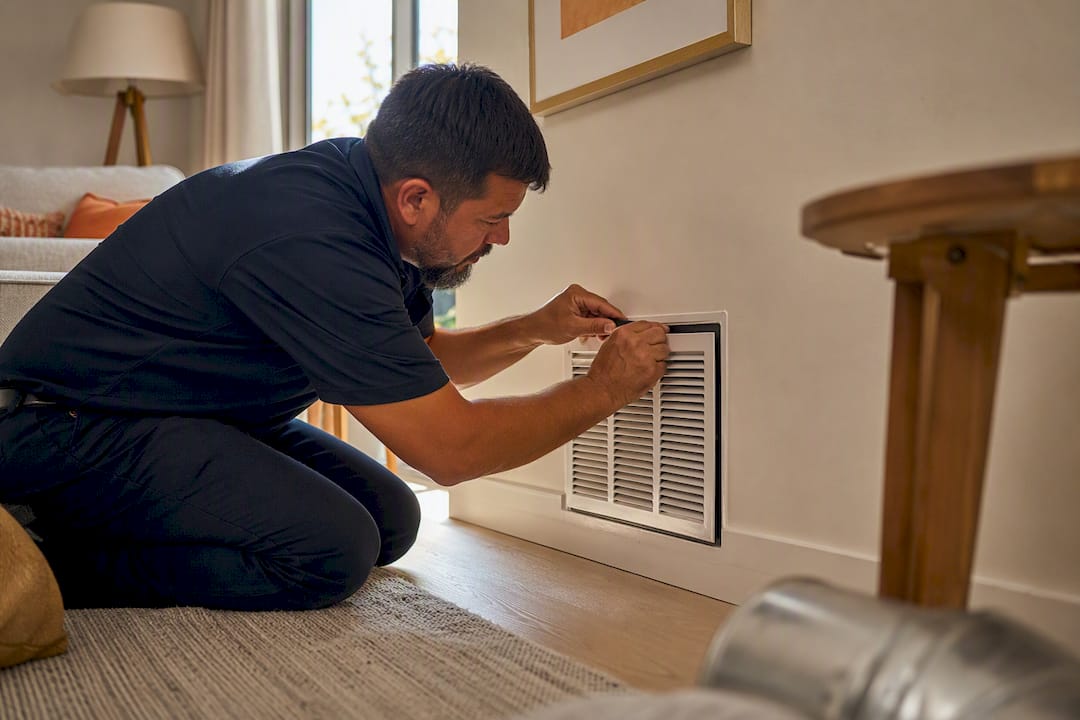
Weatherization improves heating because it stops the uncontrolled escape of heat through gaps, walls, and ducts, so your furnace or heat pump doesn’t have to work overtime to keep up. The DOE reports that weatherization can save households an average of $283 a year, and ENERGY STAR models show that combining air sealing with insulation cuts heating and cooling energy use by around 15% on average. Here at Upright Construction & HVAC, we see the same pattern in nearly every Los Angeles home we walk through: leaky, under insulated houses force heating systems to run longer, cycle harder, and wear out faster.
What this looks like in your day-to-day life:
- Lower monthly fuel or electric bills because the furnace or heat pump runs fewer hours
- Smaller, less expensive heating equipment since a tighter envelope needs less capacity
- More even temperatures room to room instead of a cold bedroom and a hot living room
- Longer HVAC lifespan because reduced cycling means less mechanical stress
The sections below break down the physics behind those results, the specific measures that make it happen, what savings you can realistically expect, and how to protect your indoor air quality along the way.
Key Takeaways
Weatherization improves heating by cutting air leakage, conduction, and duct losses so your HVAC system runs less and lasts longer.
| Point | Details |
|---|---|
| Envelope work comes first | Seal and insulate before replacing or resizing heating equipment for smaller, cheaper systems. |
| Air sealing delivers the most | Combined with attic insulation, it typically cuts energy use 12% to 18% nationwide. |
| Combined measures compound | Full envelope packages can reduce heating energy by far more than any single upgrade alone. |
| Safety testing is non-optional | Combustion safety and ventilation checks must happen during, not after, air sealing. |
| Audits should be data-driven | A real audit includes a blower-door test and a prioritized, costed measure list. |
| Upright Construction & HVAC coordinates it all | Audits, air sealing, insulation, duct work, and combustion safety testing under one contractor in Los Angeles. |
Why Weatherization Improves Heating at the Building Envelope Level
Heat leaves a house through three main pathways, and weatherization addresses each one differently. Understanding them helps you see why some upgrades matter far more than others for your heating bill.
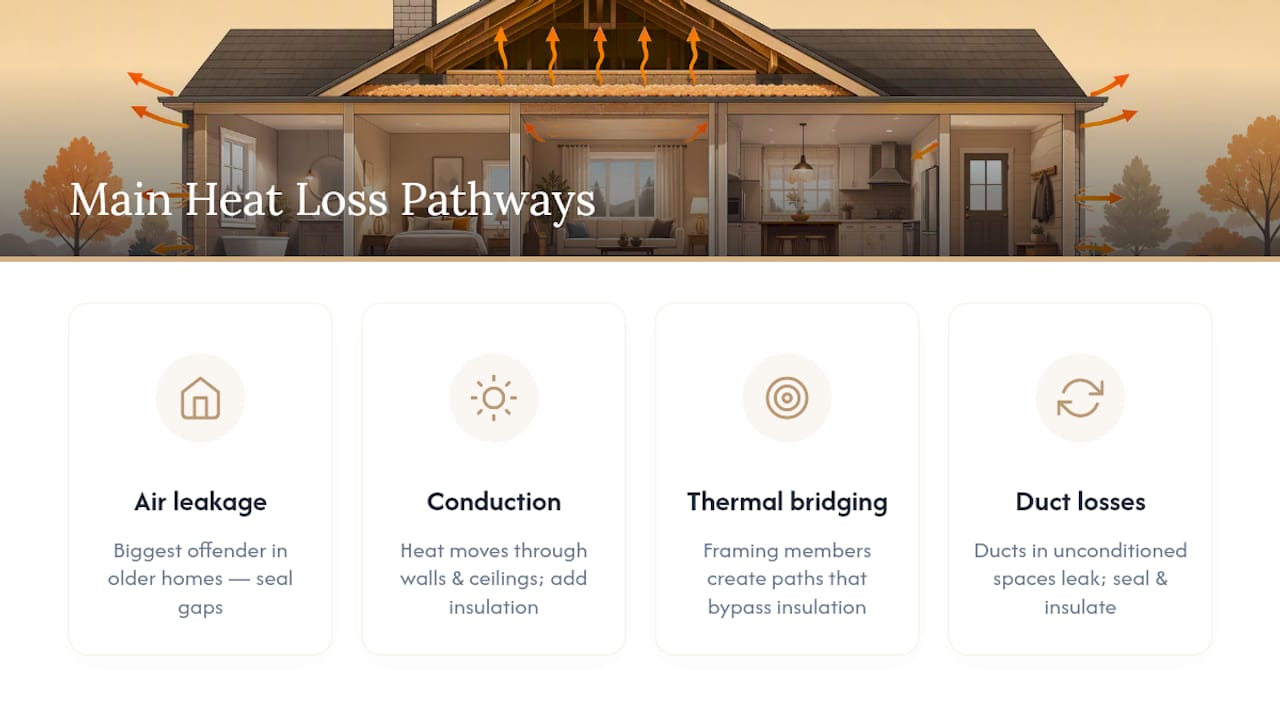
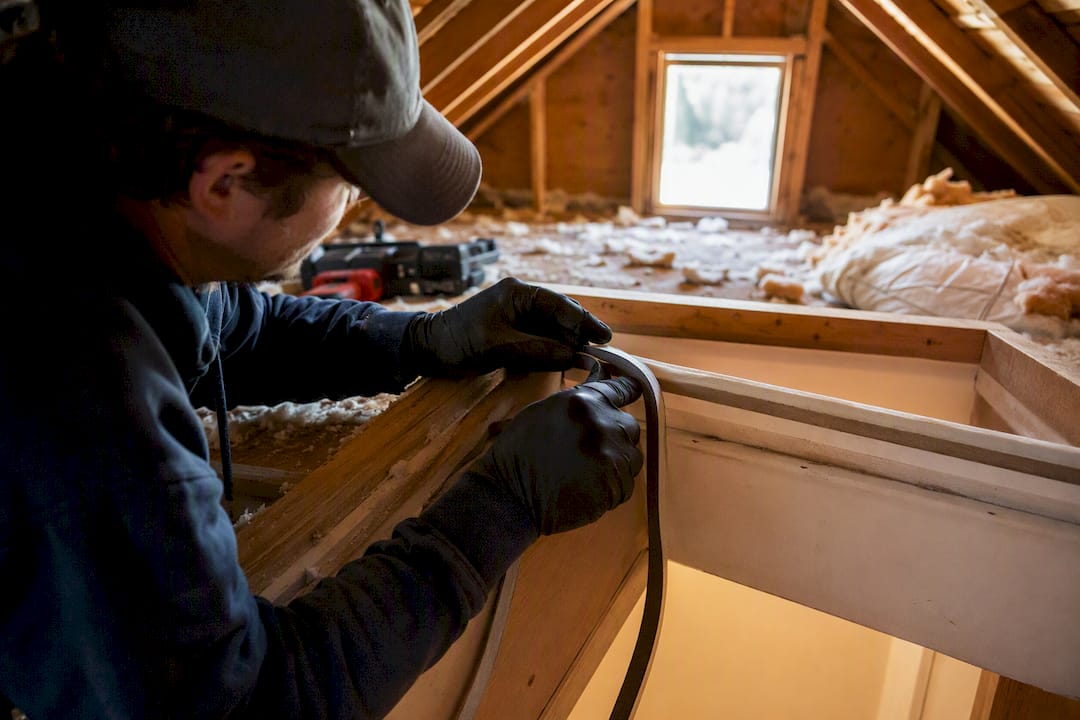
Air leakage is the biggest offender in most older homes. Warm indoor air escapes through gaps around windows, rim joists, attic hatches, and electrical penetrations, while cold outdoor air pours in to replace it. This convective exchange is why a drafty house feels cold even when the thermostat reads 70. Air sealing directly attacks this by closing those gaps.
Conduction is heat moving straight through solid materials, like walls and ceilings without enough insulation. Adding insulation slows that transfer, which is why attic and wall insulation pair so naturally with air sealing.
Thermal bridging happens where framing members (studs, joists) create an unbroken path for heat to bypass insulation entirely. Duct losses occur when heating ducts run through unconditioned attics or crawlspaces, leaking conditioned air before it ever reaches a vent. Sealing and insulating ducts fixes this.
Reduce these losses and your equipment stops fighting a losing battle. It cycles less, holds setpoint more easily, and experiences less mechanical stress over its lifespan. DOE guidance treats the envelope, HVAC, and combustion appliances as one connected system, not separate projects.
Pro Tip: Sealing your home tightly without checking ventilation is like zipping up a winter coat that has no way to let sweat out. Once you air seal aggressively, ask your contractor whether you need mechanical ventilation to keep indoor air fresh.
Which Weatherization Measures Actually Cut Heating Costs?
Not every upgrade delivers the same payoff, so it helps to know where your money works hardest.
- Air sealing ($600 to $2,500 typically): closes gaps around penetrations, rim joists, and attic access points; often the single highest-impact, lowest-cost measure
- Attic insulation ($1.50 to $5.00 per square foot installed): reduces conductive heat loss through the largest surface most homes lose heat through
- Wall and rim-joist insulation: complementary to attic work, especially in older construction with little to no existing insulation
- Duct sealing and insulation: stops conditioned air from leaking into attics or crawlspaces before it reaches your living space
- Window and door upgrades: meaningful but generally a smaller share of total heat loss than air sealing and attic work
- Pipe insulation and simple HVAC tune-ups: lower cost, supporting measures that round out a weatherization package
Contractor training guidance puts combined air sealing and insulation savings at roughly 11% of total energy costs when work follows DOE specifications, and ACEEE research finds modest envelope packages typically cut energy use 12% to 18% nationwide.
Air sealing plus attic insulation is where most homes see the biggest heating impact for the dollar. Windows and advanced wall work matter, but they’re complementary, not where you start. Duct sealing and combustion appliance testing require HVAC coordination, since a sealed duct system changes airflow and a tightened house changes how combustion appliances draft. If you’re weatherstripping doors and windows yourself, our guide on reducing heat loss fast covers the easiest wins.
How Much Money Does Weatherization Actually Save?
National averages give you a starting point, but your specific savings depend on your climate, your home’s current condition, and how the work gets done.
- National baseline: ENERGY STAR models put average heating and cooling savings at about 15%, with total whole-house energy savings closer to 11%. Colder climate zones see notably higher percentages.
- Field-measured results: ORNL program evaluations of weatherized homes found natural gas consumption dropped roughly 17% to 18% on average, with larger savings in homes that had higher starting consumption.
- Combined-measure ceiling: one modeled example showed a full envelope upgrade package cutting a dwelling’s heating energy by about 62%, while single measures alone produced far smaller reductions. That’s the power of stacking air sealing, insulation, and duct sealing together instead of doing one thing at a time.
The variables that move your specific number: your climate zone, how much insulation you already have, your fuel type, how many people live in the house, and how leaky the building was to begin with.
Here’s a simple way to think about payback. Say your annual heating bill runs $1,200 and weatherization delivers an 18% reduction in heating costs, a realistic outcome per the ACEEE and ORNL findings above. That’s $216 saved per year. On a $3,000 envelope project, that’s roughly a 14-year simple payback on heating savings alone, and that number improves once you factor in cooling savings, comfort, and reduced HVAC wear.
Does a Tighter House Create Health or Safety Risks?
Weatherization brings real comfort wins: fewer drafts, fewer cold spots near exterior walls, fewer pests finding their way in through gaps, and more consistent temperatures throughout the day.
But tightening a home does raise a few issues worth watching:
- Combustion backdrafting and carbon monoxide: a sealed house can pull exhaust from gas furnaces or water heaters back indoors if ventilation isn’t addressed
- Radon: sealing can concentrate radon in some geographic areas, so testing matters where radon is already a regional concern
- Moisture and mold: reduced air exchange without mechanical ventilation can trap indoor moisture
Combustion safety testing, radon screening where relevant, and a ventilation review should happen during or before deep air sealing, not after. DOE’s whole-house approach treats these checks as part of the job, not an add-on.
Pro Tip: Ask any contractor bidding your weatherization job whether combustion safety testing is included. If they don’t mention it unprompted, that’s a red flag.
Should You Weatherize First or Replace Your Heating System?
The general rule: weatherize first, unless your equipment has an immediate safety issue or has already failed. A tighter envelope often lets you install a smaller, less expensive heat pump or furnace, since ACEEE’s analysis shows reduced heat loss lowers the capacity your new equipment needs to deliver.
Before sizing new equipment:
- Complete the envelope work (air sealing, insulation, duct sealing)
- Run a blower-door test to confirm leakage reduction
- Get an updated load calculation, not a guess based on the old system’s size
Exceptions where equipment comes first: a furnace with a cracked heat exchanger, a failed compressor mid-summer, or a house where envelope work genuinely isn’t feasible yet. Our HVAC load calculation guide walks through why post-weatherization sizing prevents the oversizing problems we see constantly in Los Angeles homes.
What Happens During a Professional Home Energy Audit?
A real audit follows a sequence, not a quick walkthrough:
- Interview about comfort complaints and energy bills
- Visual inspection of insulation, attic, and mechanical systems
- Blower-door test measuring air leakage in CFM50
- Infrared scan to spot missing insulation and air leaks
- Duct leakage testing
- Combustion safety checks on any fuel-fired equipment
- Prioritized measure list with cost and savings estimates
Ask your auditor for the blower-door baseline number, an estimated percent leakage reduction if sealed, and a prioritized list with rough costs and payback. Walk away if there’s no blower-door test, no combustion safety check on gas equipment, or no written prioritization. Those are the deliverables that separate a real audit from a sales pitch.
What I’ve Learned Sealing Hundreds of Los Angeles Homes
Sequence matters more than most homeowners expect. We always seal first, test with a blower door, then decide on insulation levels, because guessing at insulation without knowing your actual leakage rate wastes money.
One job stands out as a lesson for every reader: a homeowner had already air sealed extensively on their own before calling us, and their older gas furnace started spilling combustion gases because there wasn’t enough makeup air anymore. We added a dedicated combustion air source and tested until the appliance drafted safely. It’s exactly why we test before and after sealing work, every time.
When picking a contractor, ask about blower-door testing, combustion safety certification, and whether they’ll give you a written, prioritized report, not just a bid. If your home has uneven heating or you’re worried about safety after DIY sealing, get an audit before doing more.
Seal first, test always, and never assume your combustion appliances are fine just because the furnace still turns on.
— Ernie M
Where the Common Advice on Weatherization Falls Short
Most weatherization advice treats it like a checklist: seal some gaps, add insulation, done. What gets underplayed is sequencing and safety testing, the two things that actually determine whether a project performs and stays safe.
The conventional wisdom oversells windows and doors relative to their actual impact on heating bills, but properly installing new interior doors can improve energy efficiency in older Portland homes. Air sealing and attic insulation do the heavy lifting in most homes; window replacement is a comfort upgrade more than a heating-cost fix, and it’s usually the most expensive dollar-per-percent-saved option on the list.
What I’d prioritize differently: get the blower-door number before spending a dollar on insulation. Without it, you’re insulating blind. And don’t treat combustion safety testing as optional paperwork, it’s the difference between a comfortable house and a dangerous one. Homeowners who skip that step to save a few hundred dollars are taking on a real risk for a small savings.
If you take one thing from this: envelope work should happen before you replace or resize your heating equipment, not after. Getting that order backward means paying for oversized equipment to compensate for leaks you could have sealed for a fraction of the cost.
How Upright Construction & HVAC Handles Weatherization in Los Angeles
Upright Construction & HVAC has spent over 15 years diagnosing exactly the kind of heat-loss problems this article covers, and we handle the whole sequence under one roof instead of passing you between separate insulation and HVAC companies.

Our team performs:
- Home energy audits with blower-door testing
- Air sealing for attics, rim joists, and common leak points
- Insulation installation
- Duct sealing and repair
- Combustion safety testing on gas furnaces and water heaters
- Heat pump and furnace sizing coordination after envelope work is complete
If uneven heating, high bills, or an aging furnace has you wondering where to start, our team can run a full diagnostic and give you a prioritized plan instead of a guess. Financing is available for larger projects. Get in touch through our HVAC repair Los Angeles page to schedule an inspection and find out exactly where your home is losing heat.
Sources
- Methodology for estimated energy savings | ENERGY STAR
- Empowering electrification through building envelope improvements (ACEEE)
- ORNL WAP retrofit evaluation (program evaluation findings)
- ResStock / envelope upgrade modeling results (FY26 report)
- Weatherization for contractors (CEE contractor training, 2024)
FAQ
Are weatherization programs worth it?
Yes. DOE data shows average household savings around $283 a year, and field evaluations from ORNL found natural gas savings of 17% to 18% in weatherized homes.
What is the healthiest way to heat a house?
The healthiest approach combines an efficient, properly sized heating system with a well sealed envelope and adequate mechanical ventilation, since sealing without ventilation can trap indoor pollutants and moisture.
What does a weatherization program typically pay for?
Weatherization programs generally cover air sealing, insulation, duct sealing, and combustion safety testing, treating the home as one connected system rather than isolated repairs.
How much does insulation reduce the electric bill?
ENERGY STAR modeling puts combined air sealing and insulation savings at around 15% for heating and cooling specifically, with total household energy savings closer to 11% on average.
Should I weatherize before replacing my furnace?
In most cases, yes. Sealing and insulating first often lets you install smaller, less expensive heating equipment, since your home needs less capacity once heat loss drops. Upright Construction & HVAC coordinates load calculations after envelope work to size equipment correctly.
Recommended
Ready to get started?
Licensed, insured & available 24/7 across Los Angeles and the San Fernando Valley.