- How to inspect the site safely and choose the right protective gear
- Actions to stop the water and shut off the right utilities
- Removing standing water before it soaks in further
- Building a drying plan that beats the mold clock
- Cleaning, disinfecting, and knowing when mold needs a pro
- Saving documents, photos, and family keepsakes
- Working with your insurer and knowing when to call a licensed contractor
- What years of emergency calls have taught me
- Upright Construction & HVAC: here when the damage is bigger than a mop and bucket
- FAQ
- Sources
- Recommended
When water hits your home, follow this order: check for safety hazards first, stop the water source, document everything with photos, remove standing water, and start drying within 24 to 48 hours as CDC and EPA guidance both recommend. We’ve handled enough of these calls to know that the homeowners who move through those steps calmly, rather than rushing, end up with smaller repair bills and fewer mold problems later. Call a licensed restoration contractor right away if you’re dealing with sewage, structural damage, or HVAC exposure.
TL;DR:
- Leave if you find sagging ceilings, buckled floors, gas odors, or downed electrical lines; otherwise wear an N95 respirator, waterproof boots, gloves, and eye protection.
- Photograph affected rooms and water line heights before cleanup, then save repair receipts and a damaged carpet or drywall sample until your adjuster approves disposal.
- If water reaches outlets, switches, or the electrical panel, shut power off at the breaker; never run extraction equipment until you confirm power is off.
- Run fans across wet surfaces, use a dehumidifier, close doors and windows, and check moisture levels daily; if they stay flat for two days, reassess.
- Call certified remediation professionals when mold exceeds about 10 square feet, and leave HVAC exposed to floodwater off until a specialist inspects it.
How to inspect the site safely and choose the right protective gear
Before you touch anything, look for the signs that mean you should back out and call someone: sagging ceilings, buckled floors, a gas smell, or any downed electrical line near water. None of those are jobs for a homeowner, no matter how handy you are.
Once you’ve confirmed it’s safe to enter, gear up. The CDC recommends a few basics for anyone cleaning up after water damage:
- A NIOSH-approved N95 respirator to limit mold spore and dust exposure
- Nitrile or vinyl gloves, not fabric, since fabric soaks through
- Eye protection, especially when working with bleach or disinfectants
- Waterproof boots if there’s any standing water
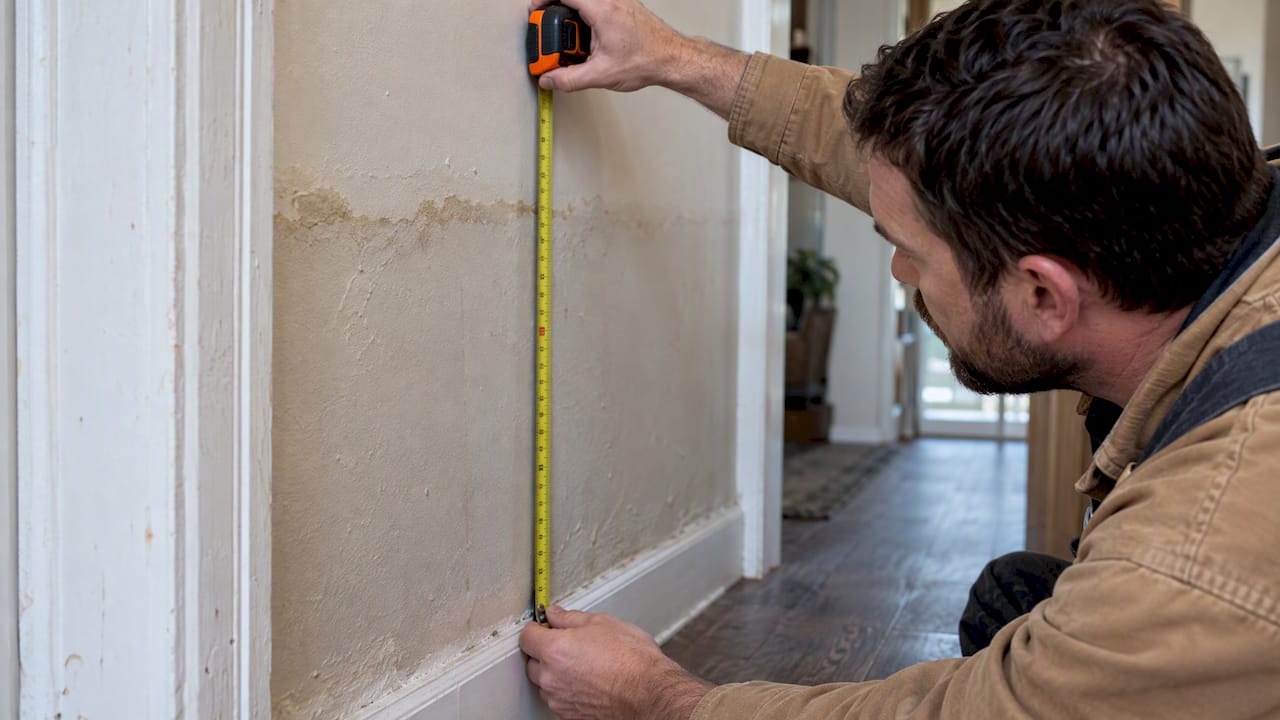
While you’re assessing, take photos of everything: soaked carpet, water lines on walls, damaged furniture, warped cabinets. This becomes your insurance record. A small, contained leak might be something you handle yourself over a weekend. A flooded basement or a burst pipe that’s been running for hours usually calls for a professional mitigation crew with pumps and commercial-grade drying equipment.
Pro Tip: Photograph a ruler or tape measure next to any water line on a wall so the adjuster can see exactly how high the water rose.
Actions to stop the water and shut off the right utilities
Stopping the source matters more than anything else you do in the first hour. Every extra minute of flow adds to your repair bill and your drying time.
- Shut off the main water supply if you can locate the valve safely, or close the isolation valve nearest the leak.
- If water is anywhere near outlets, switches, or your electrical panel, cut power to the affected area at the breaker, not at the outlet itself.
- Use towels, sandbags, or a shop tarp to contain spreading water while you wait for help.
- Call a plumber or emergency crew immediately for a burst pipe, a failed water heater, or sewage backup. We also hear from homeowners who aren’t sure whether the problem is urgent, and our emergency repair team can walk you through it by phone.
For a deeper walkthrough of shutoff valve locations and plumbing triage, this homeowner’s crisis guide covers the mechanics step by step.
Removing standing water before it soaks in further
Never plug in or run electrical equipment in standing water until you’ve confirmed the power to that area is off. That single mistake causes more injuries than anything else in a flooded home.
- For small spills, mop, bucket, and squeegee the water out by hand. This works fine for an inch or two in a bathroom or kitchen.
- For anything deeper, a wet/dry shop vacuum or a submersible pump clears water faster and reaches corners a mop misses.
- Pull up wet carpet and padding so air can reach the subfloor underneath. Check the subfloor itself for softness or warping, which signals deeper saturation.
- Open wall cavities near the floor if water soaked the drywall, since trapped moisture behind walls is where hidden mold problems start.
Speed matters here because EPA guidance treats the first 24 to 48 hours as the window that determines whether materials can be saved or need to go. If the water came from a sewage backup or covers a large area, hire a professional extraction crew. They have equipment that pulls moisture out of materials a shop vac can’t touch.
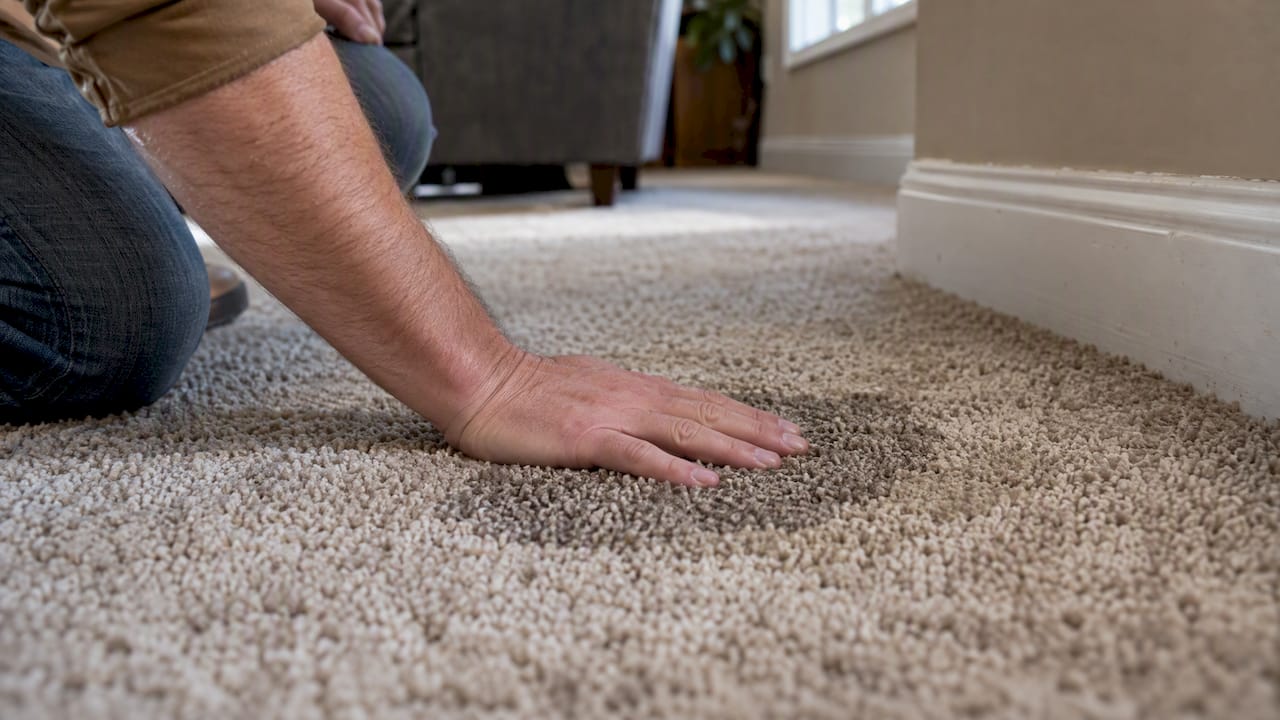
Pro Tip: Don’t wait for carpet to “look dry” before deciding it’s fine. Press your palm into it. If it feels cool or damp, there’s still water trapped in the padding underneath.
Building a drying plan that beats the mold clock
Drying wet materials within 24 to 48 hours is the benchmark EPA guidance points to for limiting mold growth. Hit that window and you cut your odds of a secondary mold problem; miss it and you’re often looking at a remediation job instead of a simple dry-out.
Here’s how to set up a drying zone that actually works:
- Position axial fans to blow air across wet surfaces, not just into open space.
- Use a dehumidifier, condensate models for warmer rooms and desiccant models for cooler or smaller spaces, to pull moisture out of the air so the fans aren’t just recirculating damp air.
- Close doors and windows while drying equipment runs so the dehumidifier isn’t fighting outside humidity.
- Check a moisture meter or hygrometer daily on walls and flooring rather than guessing by touch.
If your meter readings aren’t dropping after two days, that’s a sign the drying setup needs more airflow, another dehumidifier, or a professional assessment of what’s trapped behind a wall or under a floor.
Cleaning, disinfecting, and knowing when mold needs a pro
Once surfaces are dry or nearly dry, clean hard surfaces with a two-step process: wash with detergent and water first, then disinfect. The CDC guidance behind this is straightforward:
- Scrub with soap or detergent to remove dirt and residue.
- Rinse.
- Apply a disinfectant, diluted bleach is common, following the label’s dilution ratio exactly.
- Ventilate the room well and never mix bleach with ammonia-based cleaners, since the combination produces toxic fumes.
Some materials just aren’t worth saving once they’ve been wet for more than a day or two:
- Carpet padding, which holds moisture and rarely dries fully
- Insulation, which loses its effectiveness once soaked
- Upholstered furniture and mattresses exposed to contaminated water
If mold has already spread past about 10 square feet, if the water involved sewage, or if your HVAC system got wet, that’s a job for certified remediation professionals, not a weekend project. The IICRC S500 standard is the reference restoration contractors use to scope this kind of work correctly.
Saving documents, photos, and family keepsakes
Not everything can wait. Prioritize IDs, medications, legal documents, and irreplaceable heirlooms before anything else.
- Air-dry photographs gently, laying them flat on a clean towel rather than stacking them.
- Freeze documents or books you can’t dry within 48 hours. A frost-free freezer buys time until a conservator can help, a method FEMA and the Heritage Emergency National Task Force both recommend for water-damaged paper.
- Blot, don’t rub, wet textiles and let wood furniture dry slowly to avoid warping or cracking.
- Photograph salvaged items before and after cleaning for your insurance file.
Working with your insurer and knowing when to call a licensed contractor
Insurance adjusters move faster when you hand them clear documentation. Ready.gov and FEMA recommend keeping photos, receipts, and physical samples of damaged materials, since adjusters sometimes need a sample before you throw anything away.
- Photograph every room before cleanup starts, then again after.
- Save receipts for any repairs, replacement items, or cleaning supplies.
- Hold onto a swatch of damaged carpet or drywall until your adjuster says it’s fine to discard.
- Expect many adjusters to make initial contact within about two days of filing a claim.
Emergency repairs, like tarping a roof or extracting standing water, protect your property and are usually reimbursed differently than full restoration work, which typically requires a contractor’s bid. If your HVAC system was exposed to floodwater, don’t run it. Running a contaminated system spreads spores through your ductwork, and it needs professional inspection before you use it again.
What years of emergency calls have taught me
Three things separate a clean recovery from a drawn-out one: document before you touch anything, extract water fast, and hit that drying window. The mistakes we see most on arrival are homeowners running the HVAC system after flooding, waiting too long to start drying, or tossing damaged materials their adjuster needed to see first. You can safely handle minor cleanup and documentation yourself. Anything involving sewage, structural damage, or your HVAC system belongs with a licensed team.
— Ernie M
Upright Construction & HVAC: here when the damage is bigger than a mop and bucket
When water damage crosses the line from a weekend project into a real problem, structural concerns, sewage contamination, or an HVAC system that got wet, we’re the call to make. Our team handles extraction, drying coordination, and the follow-up repairs that come after, including HVAC inspection and repair for systems exposed to floodwater.

On your first call, we’ll ask what happened, how long the water sat, and what areas were affected, then walk you through what to document for your insurance claim before our crew arrives. If you’re staring at a soaked ceiling, a flooded crawlspace, or a furnace that might have taken on water, reach out to our emergency HVAC repair team and we’ll get someone moving on it.
FAQ
How quickly do I need to dry out water damage?
Aim to remove standing water and start active drying within 24 to 48 hours, which is the window EPA guidance points to for limiting mold growth. Waiting longer increases the odds that materials like carpet, padding, and drywall will need to be replaced instead of dried.
Can I run my HVAC system after a flood?
No. If your HVAC system was exposed to floodwater, running it can spread mold and contamination through your ductwork, according to CDC flood safety guidance. Have a professional inspect and clean the system before turning it back on.
What should I photograph for my insurance claim?
Photograph every affected room before and after cleanup, the height of water lines on walls, and any damaged belongings. Ready.gov and FEMA also recommend saving a physical sample of damaged material, since adjusters sometimes ask to see it before you discard it.
When does water damage need a certified professional instead of DIY cleanup?
Call a certified restoration contractor for sewage contamination, structural damage, mold covering more than roughly 10 square feet, or any water exposure to your HVAC system. The IICRC S500 standard is what professional restoration crews use to scope that kind of work properly.
Is it safe to use bleach to clean water-damaged surfaces?
Diluted bleach is commonly used to disinfect hard surfaces after cleaning with detergent, but ventilation and gloves matter. Never mix bleach with ammonia-based cleaners, since CDC guidance warns the combination produces toxic fumes.
Sources
- Guidelines for cleaning safely after a disaster | CDC
- Mold remediation and moisture control guidance | EPA
- Ready
- IICRC S500 Standard and Reference Guide for Professional Water Damage Restoration