- Signs of mold growth after water damage
- How fast does mold grow after a flood or leak?
- Health risks from mold and who should stay away from cleanup
- What to do in the first 24 to 48 hours after water damage
- DIY cleanup or professional remediation: how to decide
- Safe cleaning methods and protective gear for mold
- Preventing mold from coming back after water damage
- When to call a remediation contractor or HVAC team
- Structural damage mold and water can leave behind
- Do mold removal products actually work?
- How mold inspection and testing works
- Legal and insurance considerations around mold in your home
- A contractor’s view on the first 48 hours
- Getting help from Upright Construction & HVAC after water damage
- FAQ
- Sources
Mold can begin to grow within 24 to 48 hours after water damage, so drying or removing wet materials promptly is the single most important step you can take. We’ve built this guide around guidance from the EPA, the CDC, and FEMA, and we’re here if you need a hand getting water extraction and HVAC checks done fast. Stop the water, photograph everything, and start drying before the clock runs out.
TL;DR:
- Mold can start growing within 24 to 48 hours after water damage, making prompt drying and water removal essential to prevent growth.
- Visible mold or stains, musty odors, and signs of moisture behind surfaces are critical indicators of hidden mold that require inspection.
- Areas larger than 10 square feet, contaminated water, or structural damage generally need professional remediation rather than DIY efforts.
- People with asthma, allergies, or weakened immune systems should avoid cleanup and affected areas during mold removal to minimize health risks.
- Repairing water source issues and controlling indoor humidity are crucial for preventing mold re-establishment and structural damage.
Signs of mold growth after water damage
Mold does not always announce itself clearly, so you need to check with your eyes, your nose, and sometimes a tool.
Visible spots are the easiest to catch: fuzzy patches, dark speckling, or discoloration on walls, baseboards, or ceiling tiles. Staining that was not there before a flood or leak is a red flag even when no growth is visible yet. Surfaces that look slightly warped, bubbled, or soft to the touch often hide moisture underneath.
A musty, earthy smell is one of the most reliable indicators of hidden mold, especially when you cannot find a visible source. That smell usually means growth is happening somewhere you cannot see:
- Behind drywall or wallpaper near a past leak
- Under flooring or carpet padding
- Inside cabinets, especially under sinks
- Inside HVAC intake vents or ductwork
A moisture meter and a flashlight can help you spot damp drywall or trapped water in corners, but these tools have limits. They cannot tell you what is growing inside a wall cavity, which is why persistent odor or recurring staining usually calls for a closer professional look.
How fast does mold grow after a flood or leak?
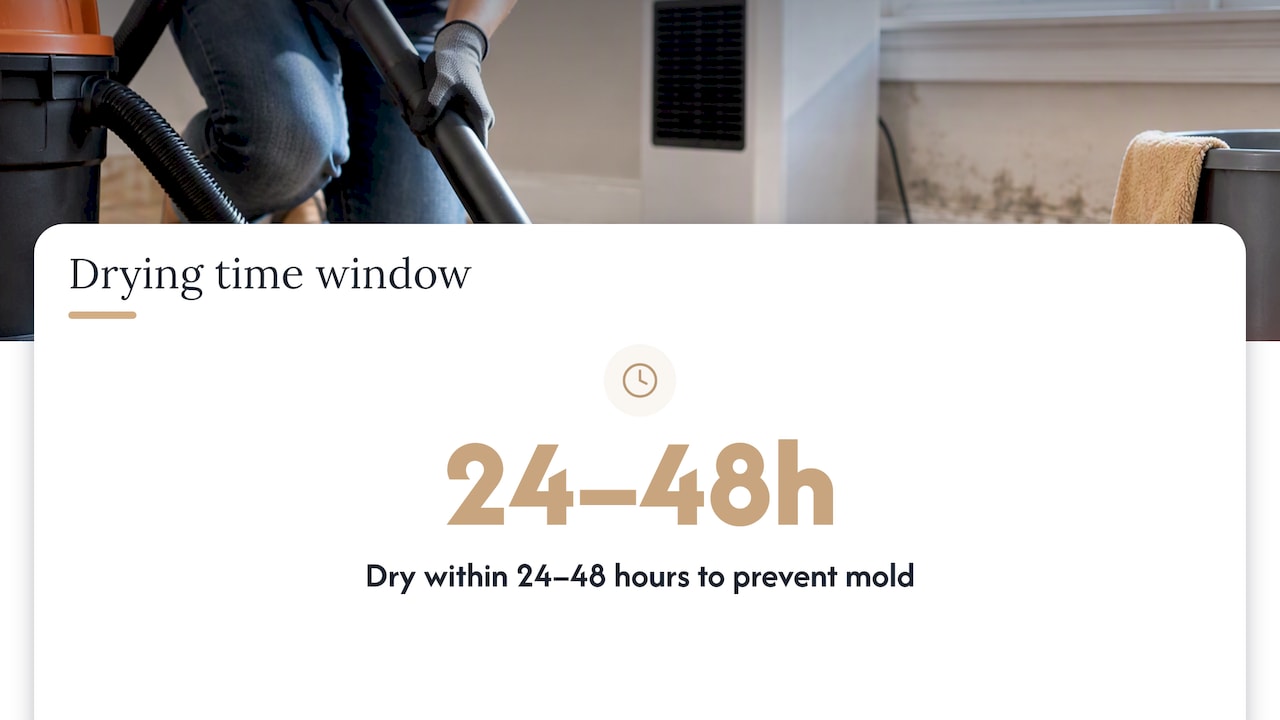
Mold spores need surprisingly little time to take hold. The EPA notes that drying water-damaged areas and items within 24 to 48 hours is the window for preventing growth, and once that window closes, it is reasonable to assume some mold has already started.
Warmth, high humidity, poor airflow, and porous materials all speed things along. A damp basement in summer heat is a much faster breeding ground than a cool, ventilated room. Carpet padding, drywall paper, and insulation soak up water and hold it, which is why these materials often need to be discarded rather than dried once they have been wet for more than a day or two. The practical takeaway: the longer wet materials sit, the more likely you are dealing with removal instead of simple drying.
Health risks from mold and who should stay away from cleanup
Mold exposure after water damage is not just a property problem, it is a health one. The CDC describes nasal stuffiness, throat irritation, coughing, wheezing, and eye or skin irritation as common reactions to damp, moldy environments.
People with asthma, allergies, COPD, or weakened immune systems face a higher risk from mold exposure, according to the CDC, and that guidance also names young children and older adults as groups who should be especially cautious.
Some practical guardrails worth following:
- People with asthma or chronic lung conditions should avoid hands-on cleanup work entirely.
- Children, pregnant women, and elderly household members should stay out of affected areas during cleanup.
- Anyone who develops new respiratory symptoms after re-entering a dried space should check in with a doctor rather than assume it will pass.
Notably, health guidance does not require identifying the exact species of mold before acting. The cleanup steps are the same regardless of what kind of mold you’re dealing with, so there’s no need to wait on lab results before protecting your household.
What to do in the first 24 to 48 hours after water damage
The hours right after a leak, flood, or appliance failure decide how much of your home you save. Work through these steps in order:
- Stop the source of water if it’s safe to do so: shut off a supply valve, unplug a failed appliance, or move anything you can away from standing water.
- Cut the electricity to any area where water has reached outlets or wiring, and don’t enter that space until a professional confirms it’s safe.
- Remove standing water with a wet vac or sump pump where you can reach it safely; leave sewage or floodwater removal to professionals.
- Photograph and video everything before you move or discard a single item: rooms, furniture, flooring, and appliance serial numbers as detailed in how to document weather-related home damage fast. FEMA’s guidance notes this documentation supports your insurance claim later.
- Open doors and windows and run fans or dehumidifiers to push drying air through the space, once it’s safe to do so.
- Move wet but salvageable items outside or to a dry area to speed drying.
- Bag and remove anything soaked for more than 48 hours that you cannot fully dry, particularly carpet padding, insulation, and soft furnishings.
If sewage, floodwater, or structural damage is involved, wait for trained help rather than entering the space yourself.
Pro Tip: Photograph wet items before you bag them for disposal, not after, since insurers often want to see the damage in its original state.
DIY cleanup or professional remediation: how to decide
The scope of the damage is what should drive this decision, not how confident you feel with a mop and bucket. The EPA’s remediation guidance treats moldy areas smaller than about 10 square feet, roughly a 3-by-3-foot patch, as generally manageable for a homeowner to clean. Anything larger, or any situation involving contaminated water, usually calls for a professional.
Call in a remediation team when you’re facing:
- Moldy areas larger than roughly 10 square feet
- Sewage backup or floodwater contact of any kind
- Suspected mold inside HVAC ductwork or the air handler
- Visible structural damage, like sagging floors or ceilings
- Occupants with asthma, allergies, or compromised immune systems
Professional crews typically contain the area, wear proper protective gear, use HEPA vacuums to capture spores, and bag contaminated materials for disposal rather than letting debris spread through the rest of the house.
On the insurance side, document the damage first, then call your insurer before work begins, and keep every receipt tied to mitigation, since many policies reimburse reasonable costs to prevent further damage.
Safe cleaning methods and protective gear for mold
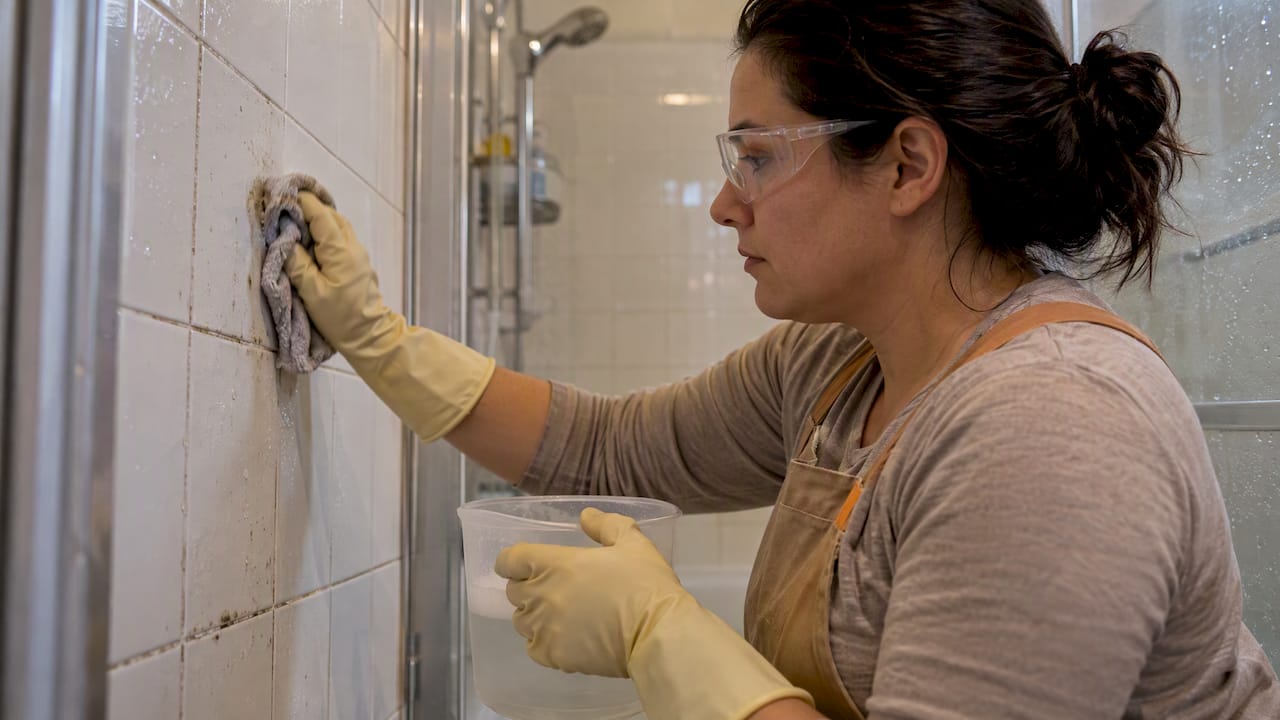
What you clean with matters as much as how thoroughly you clean. For hard, non-porous surfaces like tile, metal, or sealed countertops, soap and detergent are usually enough on their own. If you want to disinfect, the EPA recommends no more than 1 cup of household bleach per 1 gallon of water, and bleach should never be mixed with ammonia or any other cleaning product, since the combination produces dangerous fumes.
Porous materials behave differently. Carpet, drywall, ceiling tiles, and insulation that have stayed wet for more than 48 hours typically need to be removed rather than cleaned, since mold can grow into the material itself.
Protective gear basics:
- An N95 respirator, gloves, and goggles for small cleanup jobs with proper protective gear
- Half-face or full-face respirators plus disposable suits for larger or heavier contamination
- No bare-hand contact with moldy materials, ever
Avoid running your HVAC system if you suspect contamination anywhere in the home. A system can pull spores through ductwork and spread them to rooms that were never affected, so leave the system off until an HVAC professional has checked the ducts and air handler.
Pro Tip: If a room smells musty even after visible mold is gone, have your ductwork checked before assuming the problem is solved.
Preventing mold from coming back after water damage
Cleaning up mold without fixing what caused the water in the first place is a short-term patch. Lasting prevention starts with the source: repair leaking pipes and roofs, fix poor grading around your foundation, and clear gutters so water moves away from the house instead of pooling against it.
Indoor humidity control matters just as much. A hygrometer gives you a real reading of relative humidity in problem rooms, and keeping levels low with a dehumidifier or a well-maintained HVAC system makes it much harder for mold to re-establish itself. Bathroom and kitchen fans that vent outdoors, rather than into an attic, cut down on trapped moisture in two of the most humidity-prone rooms in any home.
For homes with a history of water issues, moisture barriers, improved attic ventilation, and indoor air quality tools like filtration or UV germicidal lamps can add another layer of protection. One rule holds regardless of what upgrades you make: never paint over mold. Painting over a mold problem seals in moisture and spores rather than solving anything, so the mold has to be removed and the underlying moisture source fixed before any cosmetic repair happens.
When to call a remediation contractor or HVAC team
Some situations leave no real room for a DIY attempt. Reach out to a qualified contractor if you’re dealing with mold covering more than roughly 10 square feet, any contact with sewage or floodwater, suspected contamination inside HVAC ductwork, visible structural damage, or a household member in a higher health risk group.
When you’re vetting a contractor, it’s reasonable to ask about certifications like IICRC, NEHA, or ACAC, and to request a written scope of work that spells out containment methods, HEPA filtration, and how contaminated materials will be disposed of.
Before that first call, have a few basics ready: when the water damage happened, photos of the affected areas, which rooms or materials got wet, and any health symptoms household members have noticed since. That information lets a contractor scope the job accurately on the first visit instead of needing a second trip.
Structural damage mold and water can leave behind
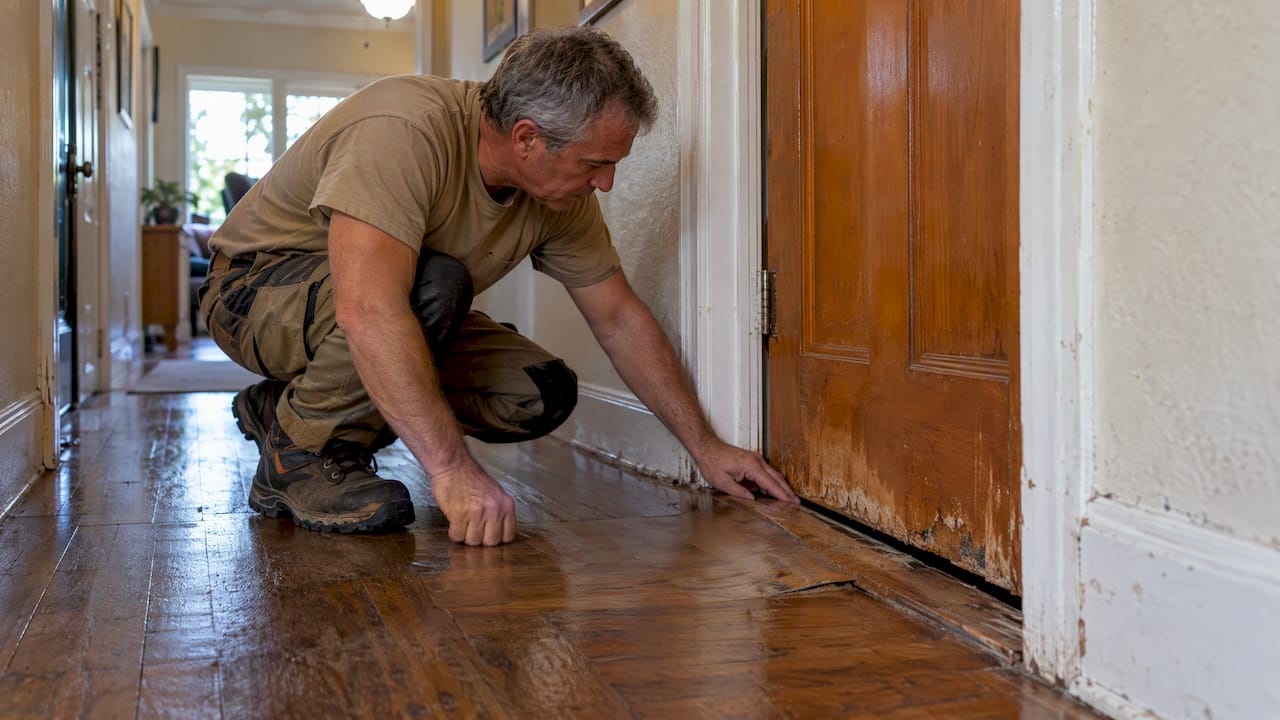
Water damage and mold don’t just threaten surfaces, they can compromise the bones of a house. Wood framing that stays wet for an extended period can soften and lose strength, and in severe cases, that leads to sagging floors, warped door frames, or ceilings that bow under their own weight.
Drywall and subflooring absorb water readily, and once mold takes hold inside those materials, the damage usually goes deeper than what’s visible on the surface. A stain on a ceiling is often the tip of a wet insulation problem above it. Metal fasteners and framing connectors can corrode when exposed to prolonged moisture, weakening joints that hold a structure together.
This is part of why the “dry within 24 to 48 hours” guidance matters beyond mold prevention alone. The EPA’s guidance frames moisture control as the root fix, and remediation that skips repairing the underlying moisture source tends to fail, because the structural materials stay vulnerable to a repeat problem.
If you notice soft spots in flooring, doors that suddenly stick or no longer close properly, or visible sagging anywhere near a water event, treat it as a structural question, not just a cleaning one, and bring in a contractor who can assess the framing itself.
Do mold removal products actually work?
Store shelves are full of mold-killing sprays, foggers, and “mold bombs,” and it’s worth knowing what they can and cannot do. For hard, non-porous surfaces, the EPA’s own guidance points back to something simple: soap and detergent handle most cleanup, and a bleach solution of no more than 1 cup per 1 gallon of water is the disinfecting step it recommends, never mixed with ammonia.
Fogging treatments and aerosol “mold killers” are not part of that guidance, and their effectiveness on porous materials like drywall or carpet padding is limited at best, since mold growing inside a porous material usually cannot be reached by a surface spray. For those materials, removal rather than treatment is the guidance that holds up.
Any product you use should be matched to the surface: a disinfecting spray on tile is reasonable, but spraying the same product on soaked drywall does not address the moisture sitting inside the wall. Whatever product you reach for, ventilation and PPE still apply, since many of these treatments carry their own fumes and handling warnings on the label.
How mold inspection and testing works
Inspection usually starts with a visual and moisture-based assessment rather than lab testing. A trained inspector looks for staining, odor, and signs of past water intrusion, then uses a moisture meter to check walls, flooring, and framing for elevated moisture that might not be visible yet.
Thermal imaging cameras can spot temperature differences that suggest trapped moisture behind a wall or ceiling, which helps narrow down where to open up a surface for a closer look. Air sampling and surface swab testing exist and can confirm the presence of mold spores, but health guidance from the CDC notes that identifying the exact species usually isn’t necessary, since the cleanup approach stays the same regardless of what type of mold is present.
For most homeowners, the practical path is simpler than a lab report: if you can see it, smell it, or measure elevated moisture near a past water event, treat it as confirmed and move to remediation rather than waiting on test results to tell you what your nose already knows.
Legal and insurance considerations around mold in your home
Mold rules vary quite a bit depending on where you live, and there is no single federal standard that caps allowable mold levels in a home. Some states and cities have their own disclosure requirements for sellers or landlords, so what applies to your situation depends on local and state law rather than any universal rule, and a real estate attorney or your local housing authority is the right resource for specifics in your area.
Insurance coverage for mold also depends heavily on your policy and how the water damage happened. A sudden pipe burst is treated differently than long-term, unaddressed moisture, and many policies have specific mold exclusions or sub-limits worth reading carefully. FEMA’s guidance on documenting damage with photos and videos before discarding items exists specifically because that evidence is often what determines whether a claim gets approved.
If you’re a renter, your lease and local landlord-tenant law determine who is responsible for remediation costs, and that responsibility often depends on whether the mold resulted from a maintenance failure versus something within the tenant’s control. When in doubt, document everything, loop in your insurer early, and don’t rely on a guess about what your policy or local law covers.
A contractor’s view on the first 48 hours
I’ve walked into more than a few homes where the owner waited a day too long, or ran the HVAC thinking it would help dry things out, when it just spread the problem further. Quick containment and early drying save far more than they cost, and I’ve seen that pattern hold up again and again on jobs across Los Angeles.
Before you call a contractor, have this ready: when the damage happened, photos of every wet area, which rooms were affected, and any symptoms anyone in the house has noticed.
— Ernie M
Getting help from Upright Construction & HVAC after water damage
We handle water extraction, HVAC inspection, and rebuild work for homeowners dealing with water damage, with 24/7 emergency response when you need it fastest.

Reach out for HVAC repair or explore our construction services to get your home dried out and rebuilt right.
This article is general information, not a substitute for advice from a qualified doctor. Consult a qualified healthcare professional about your own circumstances before acting on anything here.
FAQ
Is mold from water damage harmful?
Yes, mold exposure can cause nasal stuffiness, throat irritation, coughing, wheezing, and eye or skin irritation, according to the CDC. People with asthma, allergies, or weakened immune systems face a higher risk and should avoid cleanup work themselves.
How long does it take mold to settle in after water damage?
Mold can begin growing within 24 to 48 hours of water exposure, according to the EPA. If materials stay wet past that window, it’s reasonable to assume some growth has already started.
What are the first signs of mold sickness?
Early symptoms typically include nasal congestion, throat irritation, coughing, and eye or skin irritation after spending time in a damp or moldy space, per the CDC. Anyone with these symptoms after re-entering a dried area should check in with a doctor.
Does homeowners insurance cover mold from water damage?
Coverage depends on your specific policy and how the water damage occurred, with sudden events like a burst pipe often treated differently than long-term leaks. Documenting damage with photos and videos, as FEMA recommends, supports your claim regardless of how your policy handles mold specifically.