
- Quick safety steps: what to do the moment you smell burning
- Common causes of a burning smell from a heater
- Homeowner troubleshooting checklist: safe steps you can take now
- What a technician will check and how professionals diagnose the source
- Prevention and maintenance to stop burning smells before they start
- Publisher perspective: when to call Upright Construction & HVAC
- What this guide gets right that most advice misses
- How Upright Construction & HVAC can help
- Authoritative resources and safety guidance
- Sources
- FAQ
A short burning smell on your first cold day is usually dust burning off your heater’s coils, which clears up on its own within an hour. But a persistent gas-like odor, an electrical smell, or a carbon monoxide alarm going off is urgent: ventilate the house, shut off the unit if it’s safe to do so, and call emergency services if symptoms appear.
TL;DR:
- Most burning smells from heaters are harmless dust that burns off within an hour during the first use of the season; persistent odors require urgent action.
- Sharp, electrical, or gas-like odors, especially if paired with symptoms or CO alarm activation, demand immediate ventilation, house evacuation, and professional help.
- Electrical or control component failures often produce acrid plastic-like smells near outlets or panels, requiring an electrician for safety and repair.
- A dirty filter can cause burning odors from increased motor strain, and replacing or cleaning it typically resolves this issue without professional intervention.
- Regular maintenance, including annual inspections and following safety guidelines, significantly reduces the risk of dangerous smells and equipment failure.
Quick safety steps: what to do the moment you smell burning
Treat the smell as an emergency if you see smoke, the odor doesn’t fade after an hour, you feel nauseous or dizzy, or a CO alarm sounds. Carbon monoxide is colorless and odorless on its own, so these symptoms often arrive before any smell does, and CO poisoning causes over 200 non-fire deaths annually in the United States from equipment like furnaces and generators.
- Turn off the heater and its power source if you can do so without touching hot panels or outlets.
- Open windows and doors to ventilate the space immediately.
- Leave the house if the smell is strong, persistent, or paired with symptoms.
- Call 911 or your gas utility for fuel odors or CO alarm activation; call an electrician for burning smells tied to outlets or panels.
- Do not re-enter until a professional clears the home.
Install CO alarms on every level of your home and just outside sleeping areas, and keep anything flammable at least three feet from your heater, a clearance NFPA recommends for all heating equipment.
Common causes of a burning smell from a heater
Most burning smells trace back to one of a handful of culprits, and the smell itself often hints at which one you’re dealing with.
- Dust burning off: a faint, dusty odor on the season’s first run that fades within an hour is normal and comes from dust settling on heating elements over the summer.
- Dirty or clogged air filter: restricted airflow forces the blower to work harder, which increases motor wear and can create burning odors, especially if the filter hasn’t been swapped in months.
- Overheating blower motor or bearings: a persistent hot, metallic smell, sometimes with a grinding or squealing noise, suggests the motor is straining or its bearings are failing.
- Electrical wiring, control board, or outlet failure: a sharp, acrid, plastic-like smell near an outlet or the unit’s panel is a red flag. UL warns that a burning odor from an outlet means you should cut power and call an electrician rather than assume it’s routine.
- Foreign object in ducts or near the heat source: a melted-plastic or burnt-paper smell often means something fell into a vent or landed too close to the unit.
- Fuel-related smells and carbon monoxide risk: a rotten-egg or sulfur smell points to a gas leak, while CO itself has no smell at all. Either scenario demands you leave the house and call for help rather than trying to pinpoint the source yourself.
Homeowner troubleshooting checklist: safe steps you can take now
Before touching anything, figure out where the smell is strongest. A smell near a vent usually points to dust or debris in the ductwork, a smell right at the furnace cabinet often means the blower or motor, and a smell near an outlet or breaker panel almost always means electrical.
- Check and replace the air filter if it looks gray or clogged, since restricted airflow is one of the easiest fixes you can do yourself.
- Inspect nearby vents and registers for visible debris, melted plastic, or anything that shouldn’t be there.
- Touch outlets and the breaker panel near the unit only to check for warmth, never to open a panel yourself; if anything feels hot, stop and call an electrician.
- If you smell gas, do not flip any switches or light anything. Leave immediately and call your gas utility or emergency services from outside.
- Stop all DIY checks and call a licensed technician if the smell persists past an hour, returns after a filter change, or comes with any noise, smoke, or symptoms.
Pro Tip: Run your heater’s fan alone for ten minutes before your first full heating cycle of the season. It helps burn off dust gradually in a lower-risk way than jumping straight to full heat.
What a technician will check and how professionals diagnose the source
A service call for a burning smell usually follows a set pattern, starting with the most dangerous possibilities and working down.
- Inspecting the heat exchanger for cracks, soot buildup, or discolored metal, which can signal a combustion problem.
- Testing electrical components, including wiring, the control board, and motor amperage, along with listening for worn bearings.
- Running combustion and venting checks, including CO testing and a look at the flue or chimney for blockages.
- Checking ductwork for debris, foreign objects, or heavy dust buildup that a filter alone wouldn’t catch.
Most diagnostic visits take under an hour, though repairs involving a blower motor, control board, or heat exchanger replacement can take longer depending on parts availability.
Prevention and maintenance to stop burning smells before they start
Most burning smells are preventable with a short list of habits.
- Replace or clean your filter on the schedule your manufacturer recommends, since a dirty filter restricts airflow and increases motor wear; a higher MERV rating traps more particles but can restrict airflow further if it’s not sized for your system.
- Schedule a professional inspection every year to check the furnace, flue, and chimney, along with combustion and CO levels, something NFPA recommends for every central heating system.
- Keep boxes, furniture, and anything flammable at least three feet from your heater, and follow manufacturer instructions closely if you use a space heater.
- Book motor or bearing service at the first sign of unusual noise, since catching wear early is cheaper and safer than waiting for a full failure.
Pro Tip: Before your first full heat cycle each fall, run the fan alone for a few minutes to let dust burn off gradually instead of all at once under full heat.
Publisher perspective: when to call Upright Construction & HVAC
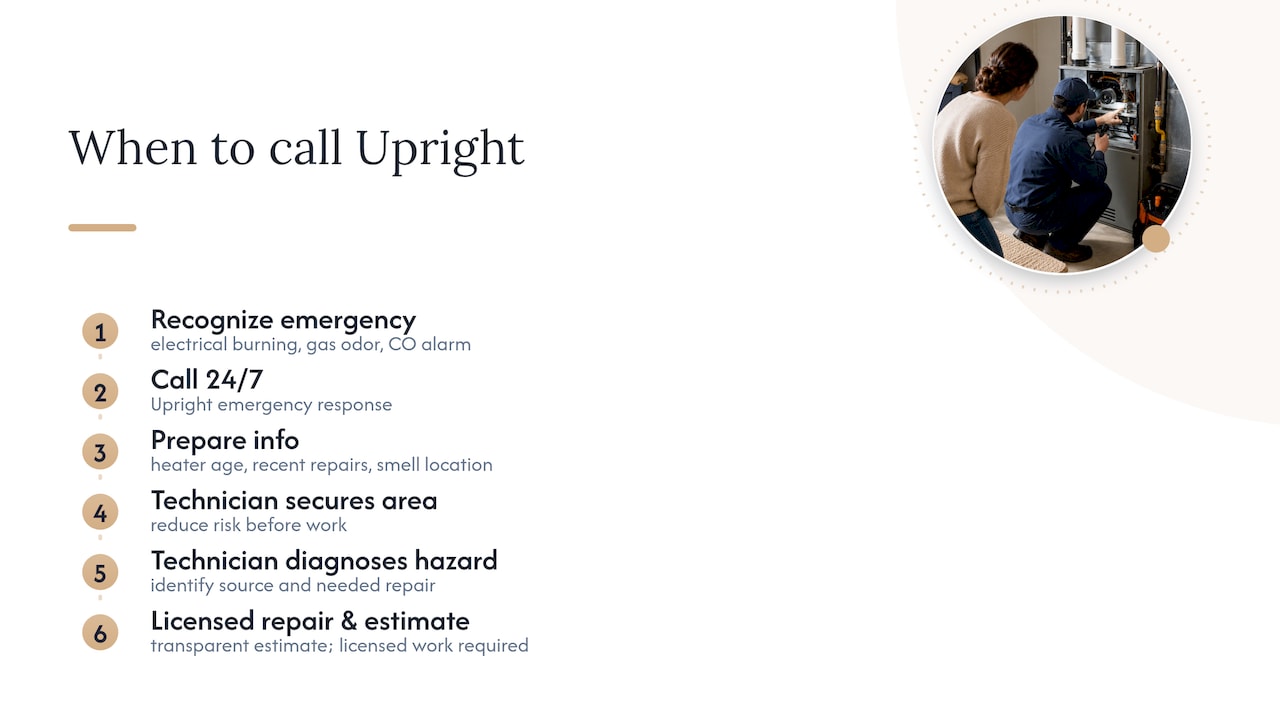
I’m Ernie M, and I’ve built Upright Construction & HVAC around one idea: when something smells wrong in your home, you shouldn’t have to guess whether it’s serious. If you’re dealing with an electrical burning smell, a gas odor, or a CO alarm going off, that’s not a wait-and-see situation, and our team offers 24/7 emergency response for exactly that reason.
When you call, have your heater’s age, any recent repairs, and where the smell is strongest ready to share. Our technicians secure the area first, then diagnose the hazard. For anything involving combustion, licensed work and a transparent estimate aren’t optional extras. They’re what keeps a repair from becoming a bigger problem later.
What this guide gets right that most advice misses
Most articles on this topic lead with a long list of causes before telling you what to actually do, and that order is backward. If your heater smells like burning right now, you need the safety threshold first and the diagnosis second.
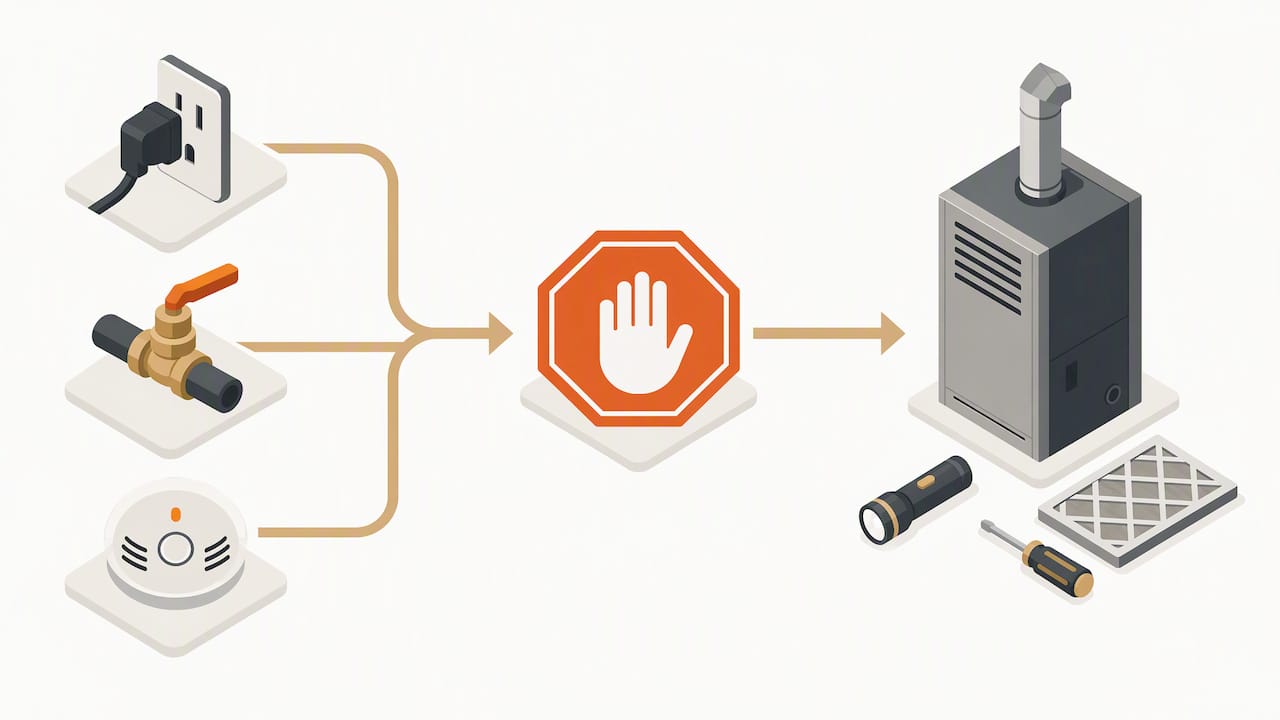
The part conventional advice underplays is how ordinary a serious smell can feel. A faint electrical odor doesn’t announce itself as dangerous the way a kitchen fire does, and that’s exactly why people wait too long to act on it. The three-foot rule and CO alarm placement get treated as boilerplate safety tips, but they’re the two cheapest things you can do that actually change the outcome if something does go wrong.
My honest take: spend less energy trying to diagnose the exact cause yourself and more energy on the threshold question, is this smell fading and faint, or persistent and sharp. That single judgment matters more than knowing the difference between a control board failure and a bearing issue.
— Ernie M
How Upright Construction & HVAC can help
If your heater’s burning smell doesn’t fade, or you’re not confident ruling out electrical or combustion issues on your own, our emergency heater repair team is available around the clock across the Los Angeles area. We also offer heater tune-ups and maintenance plans that include CO and combustion checks, which catch most of these issues before they become a smell at all.

When you call, we’ll ask what the smell is like and where it’s strongest, then walk you through whether it’s safe to wait for a scheduled visit or whether we should send someone out immediately. Reach out through our HVAC repair page to get started.
Authoritative resources and safety guidance
- CO poisoning symptoms and response, CDC
- CO alarm placement, CPSC
- NFPA heating safety tips
- Furnace safety steps for homeowners, TruComfort
This article is general information, not a substitute for advice from a qualified doctor. Consult a qualified healthcare professional about your own circumstances before acting on anything here.
Sources
- Carbon Monoxide (CO) Poisoning | CDC
- Heating safety tips | NFPA
- Carbon monoxide fact sheet | CPSC
- HVAC – Preventative Maintenance | Building Science Education
FAQ
Should I be worried if I smell burning?
A faint, dusty smell on your heater’s first run of the season usually isn’t a concern and should fade within an hour. A sharp, persistent, or gas-like smell is a different story and warrants ventilating the house and calling a professional right away.
Is there a smell before an electrical fire?
Often yes: a burning, acrid, or plastic-like odor near an outlet, panel, or wiring can precede an electrical fire, and UL treats this smell as a sign to cut power and call an electrician immediately. Carbon monoxide, by contrast, has no smell at all, which is why CO alarms matter even when nothing smells wrong.
What can be mistaken for a burning smell?
Dust accumulating on heating elements, a clogged filter straining the blower motor, or debris caught in a duct can all produce odors that smell similar to true electrical or combustion burning. The safest approach is to treat any unexplained burning smell as worth checking rather than trying to self-diagnose by scent alone.
Why does my house smell like burning, even though nothing is burning?
The smell is usually coming from your heating system even when no flame or visible smoke is present, often from dust burn-off, a strained motor, or an electrical component overheating. If the smell persists past an hour or returns repeatedly, it’s worth having a technician inspect the unit rather than assuming it will resolve on its own.