- Why boarding up matters right after a fire
- When to call professionals instead of doing it yourself
- What happens if you leave a fire-damaged property unsecured
- How a professional board-up actually gets installed
- Safe steps you can take while you wait for help
- What board-up costs and how long it takes
- Why we treat board-up as the first job, not an afterthought
- How we help after a fire: board-up and restoration
- FAQ
- Sources
- Recommended
Secure openings as soon as the fire department declares the scene safe, boarding up the same day when possible, then call your insurance agent and a licensed restoration contractor. Do not enter the structure until officials clear it. Acting fast on broken windows, doors, and roof holes keeps weather, thieves, and animals out while you wait for your insurer and a contractor to start the real repair work.
TL;DR:
- Board up fire-damaged openings immediately after clearance to prevent weather, theft, and animal intrusion, and to support insurance claims.
- Use certified materials and secure installation methods, including snug-fitting half-inch plywood with braces and tamper-resistant fasteners, following official standards.
- Call professionals if structural instability, utilities exposure, or large, complex openings are involved, as DIY efforts can compromise safety and insurance documentation.
- Leaving properties unsecured leads to secondary water damage, theft, liability risks, and potential insurance claim issues, especially during the window before repairs begin.
- Costs vary based on the number of openings, materials required, hazardous materials, and response timing, with emergency responses typically happening on the same day.
Why boarding up matters right after a fire
A fire-damaged home with open windows or doors is exposed to whatever comes next, and that is rarely kind. Rain gets into charred framing and drywall within hours, which raises repair costs and sets up mold growth that insurers may treat differently from fire damage itself. Wind pushes ash and debris deeper into the structure, and an open house signals to anyone walking by that nobody is watching.
Boarding up solves several problems at once:
- Keeps out rain, wind, and dust that compound fire damage with water and mold issues
- Blocks easy entry for people looking to steal fixtures, tools, or copper wiring
- Discourages animals from nesting in wall cavities or attics
- Preserves salvageable belongings until you or a restoration crew can sort through them
- Supports your insurance claim by showing you took reasonable steps to limit further loss, a step the North Carolina Department of Insurance points to as part of a normal recovery process
Insurers generally expect homeowners to prevent additional damage once the immediate danger has passed. Boarding up is the most visible, most practical way to meet that expectation.
When to call professionals instead of doing it yourself
Not every board-up job is a weekend task with a drill and some scrap plywood. Several conditions mean you should call a licensed restoration crew rather than climb a ladder yourself.
- The roof has holes, the ceiling is sagging, or any part of the structure feels unstable underfoot
- Electrical wiring, gas lines, or other utilities are exposed or you smell gas
- The fire department has not yet declared the scene safe to enter
- Your insurance adjuster has not yet documented the damage, since permanent repairs made too early can complicate a claim
- The openings involved are large, high, or oddly shaped, making DIY bracing unsafe or ineffective
A licensed contractor brings more than labor. Professional crews install tamper-resistant boarding that is documented with photos, which both satisfies insurance requirements and makes it obvious to anyone passing by that the property is secured, not abandoned.
What happens if you leave a fire-damaged property unsecured
Leaving windows and doors open after a fire rarely stays a small problem. Rain finds its way into insulation and subfloors, turning a fire claim into a combined fire-and-water claim with a longer, messier repair. Unsecured homes also draw attention from people looking for an easy target.
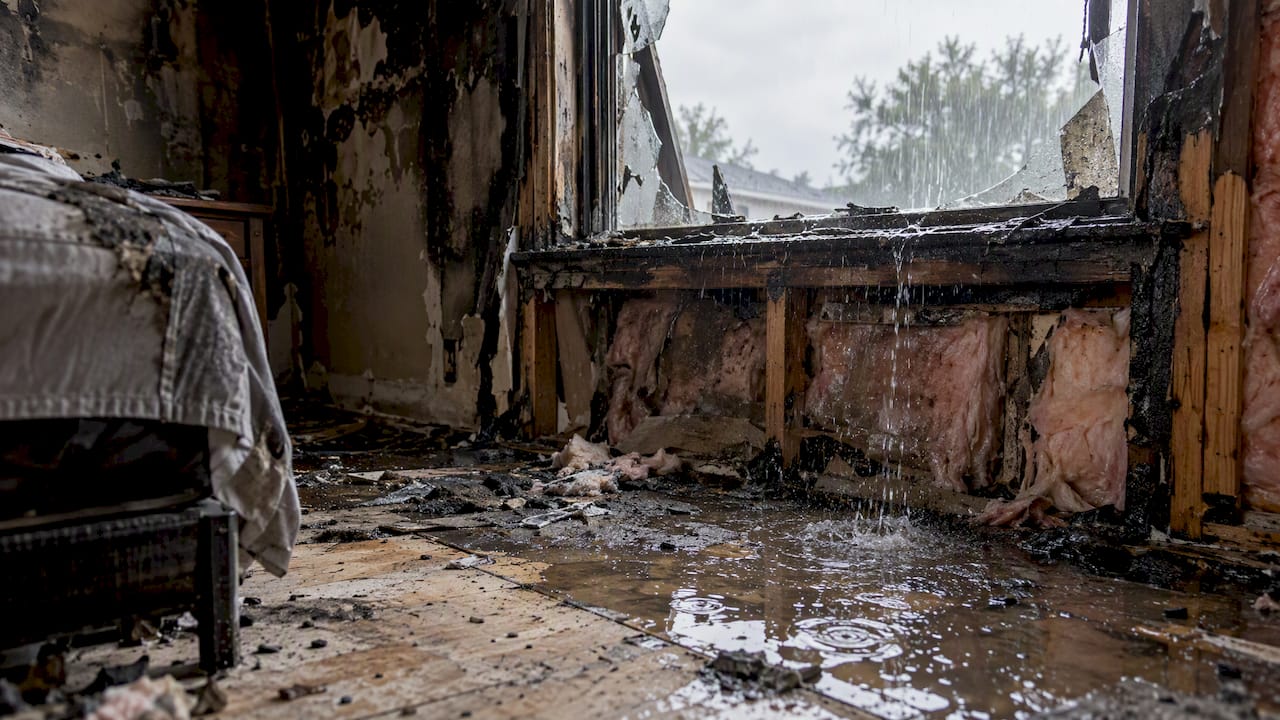
Fire Administration](https://www.usfa.fema.gov/downloads/pdf/publications/fa_46.pdf), which also notes that boarding windows and doors is often left to the homeowner once the fire department leaves the scene. That timing gap, between the trucks pulling away and your contractor arriving, is exactly when a property is most vulnerable.
A few consequences show up again and again after fires:
- Secondary water damage from rain entering through broken windows or roof holes
- Theft of appliances, fixtures, and building materials from an open structure
- Liability exposure if someone is injured while trespassing on an unsecured property
- Insurers questioning claims when no reasonable steps were taken to limit further loss
How a professional board-up actually gets installed
Knowing what proper boarding looks like helps you judge whether a crew did the job right or just nailed plywood over a hole and called it done.
According to official board-up procedures published by the U.S. Fire Administration, a secure job uses specific materials and a specific method, not whatever scrap is on hand. The accepted standard, echoed in arson-prevention board-up guidelines, calls for:
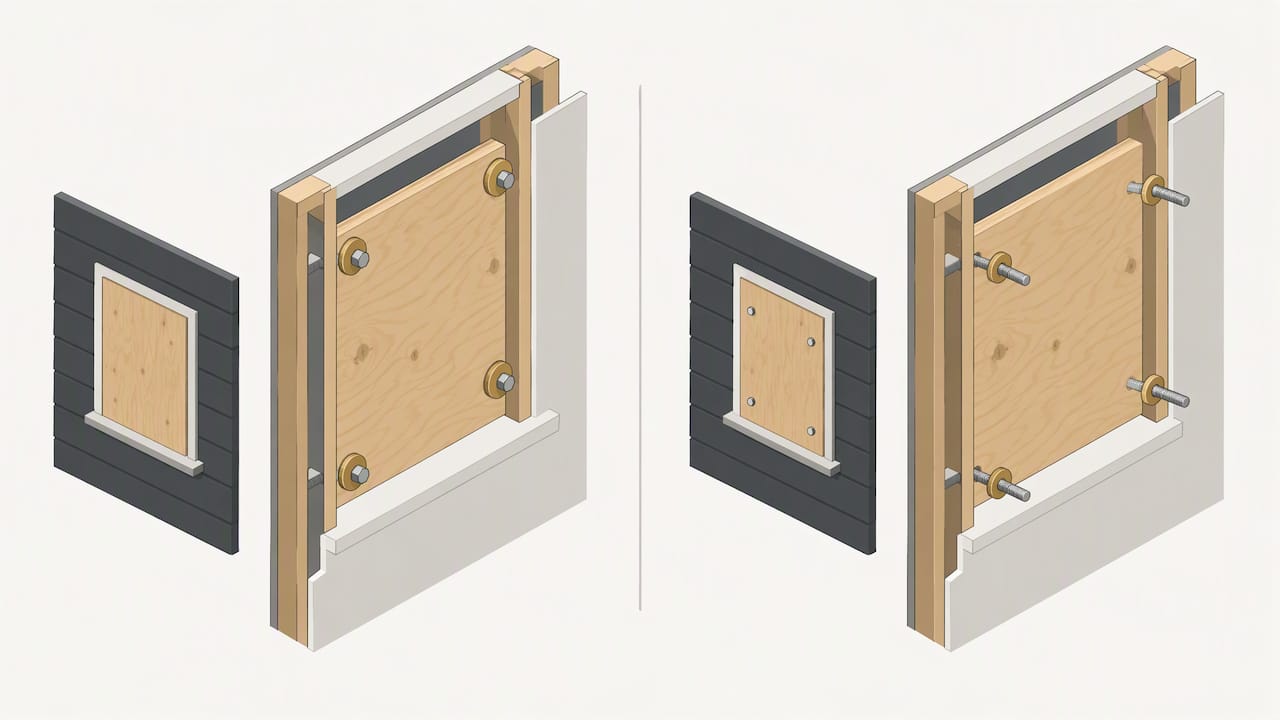
- Half-inch exterior-grade CDX plywood cut to fit each opening snugly
- 2×4 lumber braces fitted on both the interior and exterior sides of windows and doors
- 3/8-inch by 12-inch carriage bolts with washers, run through the plywood and braces
- Ring-shank nails or 3-inch deck screws where bolts are not practical
The installation itself follows a deliberate sequence. Crews fit the plywood snugly into the opening, sometimes removing a stop bead first, then sandwich it between interior and exterior braces. The carriage bolt’s rounded head stays on the exterior side, with the nut tightened from inside the house, which compresses the assembly and removes any gap a crowbar could use as a pry point. When bolts are not possible because of the opening’s condition, crews pre-assemble brace units and fasten them with deck screws spaced roughly every 4 inches for the same tamper resistance.
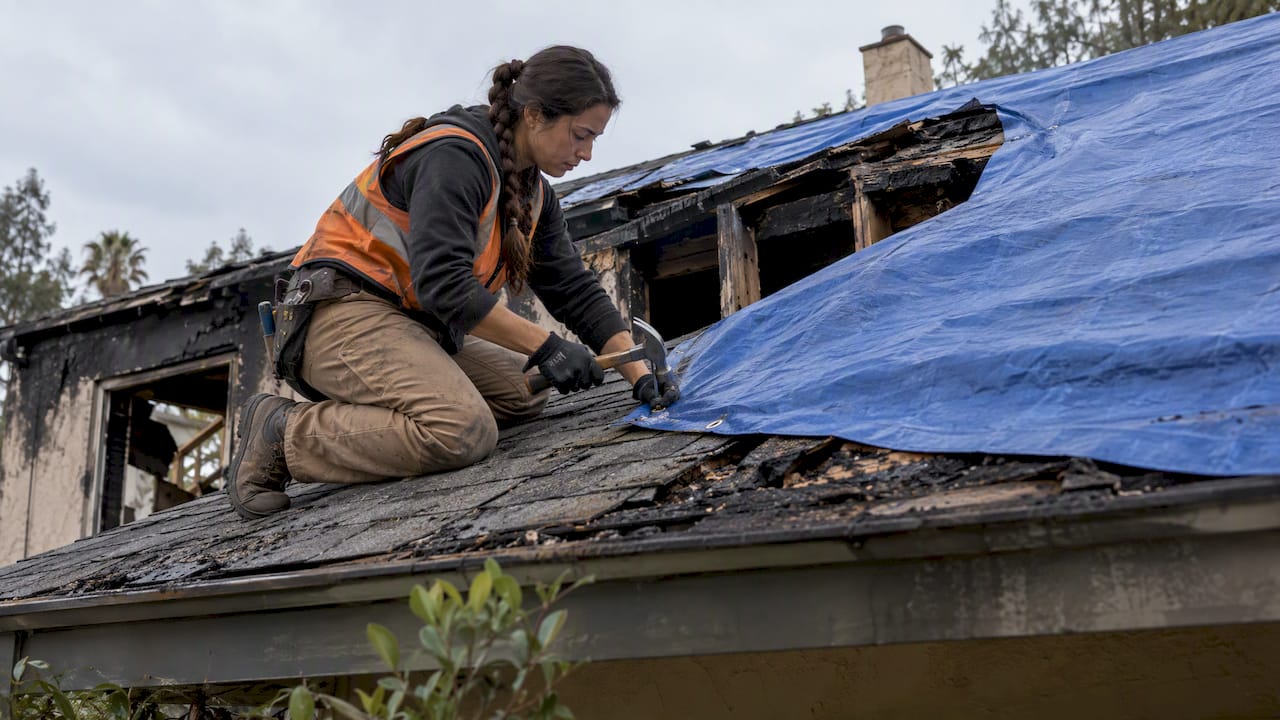
Larger openings, like a hole punched through a roof, get tarped rather than boarded, using methods that avoid putting extra weight on already-weakened framing. Once the work is finished, a “No Trespassing” sign goes up, and photos of the finished boarding go into the file your contractor keeps for your insurance adjuster.
Pro Tip: Ask your contractor whether bolts were tightened from the inside. If you see exposed bolt heads on the outside of the board, the install is backward and easier to pry loose.
Safe steps you can take while you wait for help
There is a narrow window between the fire department leaving and a contractor arriving where a few careful actions make a real difference, as long as you stay within clear limits.
- Wait for the fire department’s explicit clearance before stepping inside, no exceptions
- Wear a NIOSH-rated N95 or P100 respirator and avoid stirring up settled ash, since EPA guidance on ash exposure recommends wet cleanup methods over dry sweeping
- Cover small, accessible openings with plastic sheeting only if it is safe to reach them without climbing on damaged structure
- Tarp small roof openings if you can do so from a stable ladder on solid ground
- Remove small valuables only if accompanied by fire officials or law enforcement, never alone
Some items need a specialist, not a homeowner with gloves on. The EPA’s wildfire cleanup program specifically flags lithium-ion batteries and propane tanks as hazards that require trained removal crews, since damaged batteries can reignite without warning. If you see a battery pack, an e-bike, or a propane cylinder in the debris, leave it exactly where it is and tell whoever handles your cleanup.
What board-up costs and how long it takes
Emergency board-up is a same-day service in most cases, especially when a restoration company is already handling your fire damage. The boarding stays in place as a temporary barrier until permanent repairs, like replacing windows, doors, or roof sections, are scheduled and approved.
Cost depends on a handful of factors:
- Number and size of openings that need covering
- Whether roof tarping or structural bracing is involved
- Whether hazardous materials like damaged batteries or chemicals complicate access
- After-hours or emergency labor rates for same-day response
Keep every receipt and ask for a written estimate before work begins. Share both with your adjuster, since the North Carolina Department of Insurance notes that temporary repairs should stay temporary until the adjuster has documented the damage and approved next steps.
Why we treat board-up as the first job, not an afterthought
When we get a call about a house fire, the first thing we ask is whether the fire department has cleared the scene. Everything else waits until that answer is yes. I started this company because too many homeowners were getting rushed into decisions by contractors chasing a quick signature, and board-up is exactly the kind of job where rushing causes problems later with your claim.
Once we arrive, we run through a simple checklist: confirm the structure is safe to approach, secure every accessible opening with proper bracing and hardware, photograph everything for your insurance file, and walk you through what comes next. We never push permanent repairs before your adjuster has had a chance to document the damage, because that timing protects your claim more than it protects our schedule.
— Ernie M
How we help after a fire: board-up and restoration
We offer emergency board-up and fire restoration as part of our direct response for homeowners and property managers, backed by years of construction and HVAC experience. Our crews are licensed, insured, and available, and we provide an estimate before any work starts, not a surprise invoice after.

When you call, have your address, confirmation that the fire department has cleared the property, and a brief description of the damage ready. That lets us dispatch the right crew with the right materials the first time.
| What we handle | Why it matters |
|---|---|
| Emergency board-up | Secures openings same day to limit weather and theft damage |
| Roof tarping | Protects framing and interior spaces from rain until repairs begin |
| Fire restoration | Coordinates with your insurance timeline for permanent repairs |
| emergency response | Gets a crew moving as soon as you are cleared to call |
- Teams handle both the emergency board-up and the rebuild that follows
- We provide pricing details before work starts, which helps when you document for your adjuster
- Our HVAC repair and construction teams coordinate so your home’s systems and structure get addressed together
If you are dealing with fire damage right now, reach out and tell us what you are seeing. We will walk you through the fastest safe path to a secured property.
FAQ
How do you board up a house after a fire?
Wait for the fire department to confirm the home is safe to approach, then cover accessible windows and doors with half-inch exterior-grade plywood braced with 2×4 lumber and secured using carriage bolts or deck screws, following standard board-up procedures. Larger roof openings typically get tarped instead of boarded.
What is cleanup after a fire called?
The process is usually called fire damage restoration, and it covers everything from board-up and debris removal to smoke odor treatment and structural repair. Restoration work generally follows the safety and documentation steps outlined by the U.S. Fire Administration, including contacting your insurer early.
How much does a board-up cost?
Board-up pricing depends on the number of openings, whether roof tarping or hazardous material handling is involved, and whether the work happens after hours. Get a written estimate before work starts and keep every receipt for your insurance adjuster, since state insurance guidance recommends documenting temporary repair costs separately from permanent ones.
What should you do immediately after a fire?
Stay out of the home until the fire department says it is safe to enter, then contact your insurance agent for guidance and restoration referrals. Once you are cleared to approach, board accessible openings the same day when possible and avoid disturbing damaged batteries, propane tanks, or other hazardous materials, which the EPA notes require specialist removal.
Should I hire a restoration company or sell a fire-damaged house?
Many homeowners restore the property with a licensed contractor, but some choose to sell instead, and guidance on selling fire-damaged homes outlines paths for owners who prefer that route. Either way, the property needs to be secured and documented for insurance before any major decision gets made.