
- What qualifies as a true HVAC emergency after hours?
- How to make an effective after-hours HVAC service request
- What to expect during an after-hours emergency HVAC repair
- Cost considerations for after-hours HVAC service
- Key Takeaways
- What I have learned from 15 years of after-hours calls
- Upright Construction & HVAC is ready when you need us most
- FAQ
- Recommended
TL;DR:
- After-hours HVAC emergencies involve urgent safety or health risks, such as gas leaks or system failures during extreme weather. Calling a live dispatcher directly and providing detailed system information ensure faster, more effective service. Proper maintenance and early warning signs can prevent many emergencies, reducing the need for costly after-hours repairs.
An after-hours HVAC service request is a call for urgent heating or cooling repairs outside normal business hours that addresses immediate risks to safety, health, or property. Most homeowners only realize they need this service at the worst possible moment: midnight in july when the AC dies, or a freezing january night with no heat. Knowing what qualifies as a true emergency, how to communicate your situation clearly, and what to expect from a technician can mean the difference between a fast fix and hours of unnecessary suffering. Upright Construction & HVAC has handled hundreds of these calls across Los Angeles, and the patterns are consistent.
What qualifies as a true HVAC emergency after hours?
Not every HVAC problem at 11 p.m. is a genuine emergency. Knowing the difference saves you money and gets real emergencies handled faster.
Professional guidelines define a true HVAC emergency by specific thresholds. No heat when outdoor temperatures drop below 35°F qualifies. So does no air conditioning when indoor temperatures climb above 80°F in a home with elderly residents, infants, or people with medical conditions. These are health and safety risks, not inconveniences.
The following situations always warrant an immediate after-hours call:
- Gas smell in or near your HVAC system. This is not an HVAC call first. Evacuate immediately, call your gas utility company, then call 911. Only contact an HVAC contractor after emergency services have cleared the scene.
- Carbon monoxide alarm triggered. Same protocol as a gas leak. Get everyone out of the house before anything else.
- Burning smell or visible smoke coming from your furnace, air handler, or any HVAC component.
- Complete heating failure during a cold snap with vulnerable household members present.
- AC failure during a heat advisory when indoor temps are rising fast.
Issues that can wait until morning include a single room that feels warmer than others, a thermostat that reads slightly off, or a system that cycles on and off more than usual. These are real problems worth fixing, but they are not emergencies.
Pro Tip: Take a photo of your thermostat reading and note the outdoor temperature when you call. This gives the dispatcher concrete data to assess urgency and prioritize your request correctly.
How to make an effective after-hours HVAC service request
Speed and clarity during your call directly affect how fast a technician reaches your door. The way you communicate your situation shapes everything that follows.

Call directly rather than submitting a contact form for any after-hours emergency. Online forms can sit unread for hours. A live dispatcher can assess your situation in real time, ask follow-up questions, and get a technician moving immediately. This single step is the most common mistake homeowners make when they are stressed and looking for the easiest option.
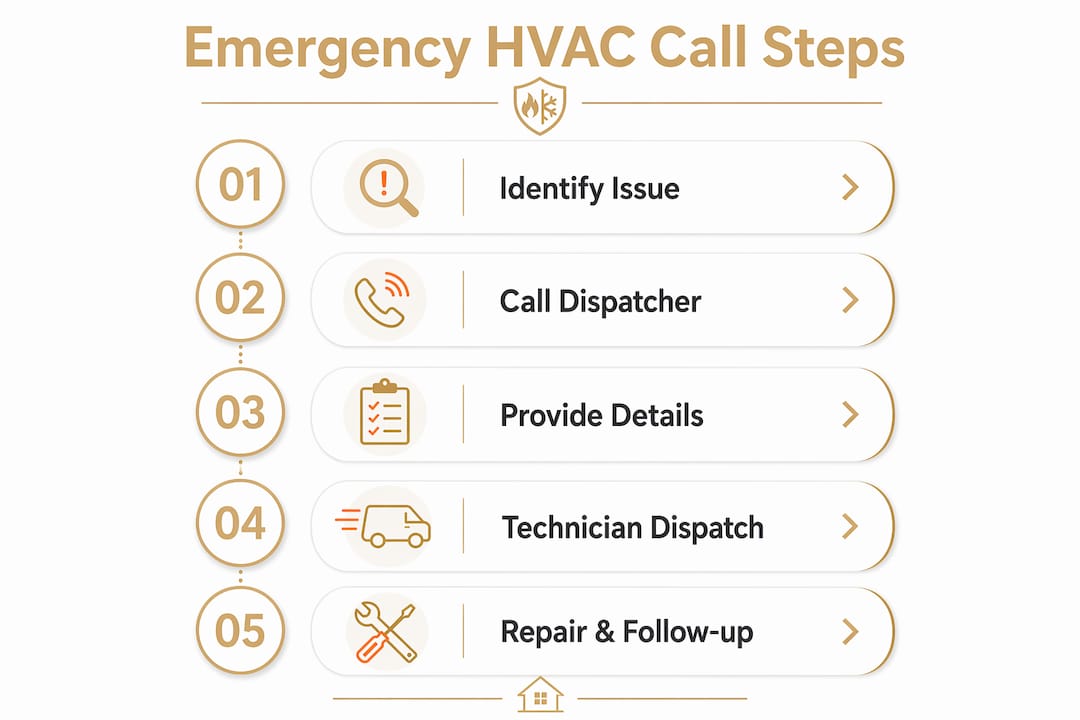
When you reach a dispatcher, provide this information in order:
- Your full address including any gate codes or access instructions.
- System type and age. Central AC, heat pump, furnace, mini-split. If you know the brand and model, say it.
- Symptoms. What is the system doing or not doing? Strange sounds, smells, error codes on the thermostat display.
- Household vulnerabilities. Infants, elderly residents, or anyone with a medical condition that makes temperature extremes dangerous.
- How long the problem has been happening and whether anything changed before it started (power outage, filter change, unusual weather).
Detailed context during the initial call helps dispatchers prioritize your request and prepare the technician before arrival. A technician who knows your system is a 10-year-old Carrier gas furnace showing an ignition fault will arrive with the right parts. One who only knows “the heat isn’t working” may need to make a second trip.
Pro Tip: Keep a simple note on your phone or refrigerator with your HVAC system’s brand, model number, and the date of its last service. You will be glad you have it at 2 a.m.
If you want a structured checklist to work through before calling, the emergency AC repair checklist from Upright Construction & HVAC covers exactly what to verify and communicate.
What to expect during an after-hours emergency HVAC repair
Understanding the typical process removes a lot of the stress from an already difficult situation.
Emergency response times in metropolitan areas average 2–4 hours, though weather events and high-demand periods can push that window. Los Angeles traffic and the density of service calls on extreme weather days both factor in. A reputable provider gives you an honest estimate when you call, not a vague “as soon as possible.”
When the technician arrives, the first priority is always safety. They check for gas leaks, electrical hazards, and refrigerant issues before touching any components. This is not a formality. It protects both you and the technician.
| Phase | What happens | Typical duration |
|---|---|---|
| Safety assessment | Gas, electrical, and refrigerant checks on arrival | 10–15 minutes |
| Diagnostics | System inspection, error code review, component testing | 20–40 minutes |
| Repair | Parts replacement or system correction | 30–90 minutes |
| Test run | System operated through a full cycle to confirm fix | 10–20 minutes |
| Follow-up plan | Written notes on any deferred work or parts to order | 5–10 minutes |
Technicians typically arrive with fully stocked trucks carrying common replacement parts. This means most emergency repairs are completed in a single visit. Capacitors, contactors, igniters, and basic sensors are standard truck stock. Major components like compressors or heat exchangers may require a follow-up appointment, but the technician will stabilize the system and give you a clear timeline.
If the repair cannot be completed that night, a good technician will tell you exactly why, what the next step is, and whether the system is safe to run in a limited capacity until the part arrives. You should never leave an emergency visit without a written summary of what was found and what was done.
The role of an emergency HVAC technician goes well beyond turning wrenches. They are diagnosing under pressure, often in the dark, with a stressed homeowner watching. Preparation and experience make all the difference.
Cost considerations for after-hours HVAC service
After-hours emergency service costs more than a standard daytime call. That is a fact, and any provider who pretends otherwise is not being straight with you.
After-hours fees commonly run around $175 compared to $75 for standard service during regular business hours. That gap reflects real costs: technicians on call overnight, higher labor rates for off-hours work, and the logistical overhead of maintaining 24/7 availability. Weekend and holiday HVAC service typically carries similar premiums.
Here is what to watch for when discussing costs:
- Upfront fee disclosure. A trustworthy provider tells you the after-hours rate before any work begins. Transparent pricing with no hidden costs is the standard you should expect.
- Diagnostic fee vs. repair fee. Some providers charge a separate diagnostic fee on top of the repair cost. Ask specifically whether the service call fee is credited toward the repair.
- Service plan benefits. Homeowners with maintenance contracts often receive priority scheduling and reduced after-hours rates. This is one of the most overlooked advantages of a service agreement.
- Parts markup. Ask whether parts are billed at cost plus a stated markup, or at a flat rate. Either is acceptable. Vague answers are not.
The HVAC emergency cost factors that drive your final bill include system complexity, parts availability, and how long the repair takes. Understanding these before the technician arrives puts you in a much stronger position. If you want to know how to discuss pricing without creating conflict, the guide on negotiating emergency HVAC costs walks through that conversation step by step.
HVAC service contracts are worth serious consideration if you have had more than one emergency call in the past two years. The math usually favors the contract.
Key Takeaways
A fast, effective after-hours HVAC service request depends on knowing your emergency criteria, calling a live dispatcher directly, and giving technicians the system details they need to arrive prepared.
| Point | Details |
|---|---|
| Know true emergencies | No heat below 35°F outdoors or no AC above 80°F indoors with vulnerable residents always qualifies. |
| Call, do not click | Live phone calls reach dispatchers immediately; contact forms can delay emergency response by hours. |
| Prepare your system info | Have your HVAC brand, model, and last service date ready before you call to speed technician prep. |
| Expect 2–4 hour response | Metropolitan emergency response averages 2–4 hours; get an honest estimate when you call. |
| Understand after-hours pricing | After-hours rates are higher by design; ask for full fee disclosure before any work begins. |
What I have learned from 15 years of after-hours calls
After more than 15 years running Upright Construction & HVAC in Los Angeles, I have taken a lot of emergency calls. And I will tell you something that most HVAC articles will not: the majority of after-hours emergencies I have seen were preventable.
Not all of them. Systems fail. Parts wear out at inconvenient times. But a large share of the midnight calls I receive involve systems that had been showing warning signs for weeks. A filter that had not been changed in a year. A tune-up that got skipped because “it seemed fine.” Regular maintenance genuinely reduces how often you end up in a crisis at the worst possible hour.
The other thing I notice is how much the quality of the initial call affects the outcome. Homeowners who stay calm, give me clear information, and ask direct questions get better service. Not because we work harder for them, but because we can prepare better. A technician who knows what they are walking into solves the problem faster.
My honest advice: do not wait for a crisis to find out who your HVAC provider is. Know the number before you need it. Have your system information written down somewhere you can find it at midnight. And if you have not had a tune-up in the past year, schedule one now. The cost of a maintenance visit is a fraction of what an after-hours emergency call runs.
— Ernie M
Upright Construction & HVAC is ready when you need us most
When your heating or cooling fails at midnight on a weekend, you need a team that picks up the phone and shows up prepared. Upright Construction & HVAC has served Los Angeles homeowners for over 15 years with 24/7 emergency HVAC repair, transparent pricing, and technicians who arrive with the parts and knowledge to fix problems in a single visit.

Whether you are dealing with a furnace that stopped working or an AC that gave out during a heat wave, our team is ready to respond. We explain every cost before we start work, and we do not leave until your system is running safely. If you want to understand the common HVAC repair challenges that lead to emergency calls, that resource is a good place to start. For immediate help, call Upright Construction & HVAC directly.
FAQ
What counts as an after-hours HVAC emergency?
A true emergency involves a safety or health risk: no heat when outdoor temperatures fall below 35°F, no AC when indoor temps exceed 80°F with vulnerable residents, or any gas or carbon monoxide alarm. Issues like uneven room temperatures or minor thermostat errors can wait until morning.
Should I call or submit a form for an urgent HVAC repair request?
Always call directly. Live calls reach dispatchers immediately while online forms can go unread for hours during an emergency.
How long does an after-hours HVAC technician take to arrive?
Emergency response times average 2–4 hours in metropolitan areas, depending on weather conditions and call volume. Ask for a specific estimate when you call.
How much more does after-hours HVAC service cost?
After-hours rates are typically higher than standard daytime rates. One common example is $175 for after-hours service versus $75 for a regular call. Homeowners with service contracts often receive reduced rates and priority scheduling.
What should I do if I smell gas before calling an HVAC technician?
Evacuate your home immediately, call your gas utility company, and then call 911. Do not contact an HVAC contractor until emergency services have cleared the scene and confirmed it is safe to return.