
- 1. What are the AC emergency warning signs you should never ignore?
- 2. Burning smells and electrical odors
- 3. Loud or unusual noises that signal mechanical failure
- 4. Water leaks and pooling near your indoor unit
- 5. Refrigerant leaks and ice buildup on coils
- 6. Complete cooling failure during extreme heat
- 7. Carbon monoxide and gas alarms sounding near HVAC equipment
- Key Takeaways
- What I’ve learned after 15 years of emergency HVAC calls
- When Upright Construction & HVAC can help
- FAQ
- Recommended
TL;DR:
- Recognizing AC emergency warning signs helps prevent costly repairs and health risks. Burning smells, loud noises, water leaks, ice buildup, and heat failure require immediate action. Early detection and proper response protect homes and loved ones from dangerous situations.
An AC emergency warning sign is any sensory or operational alert from your cooling system that signals an immediate risk to your health, home, or the unit itself. According to 2026 HVAC safety standards, indoor temps above 85–90°F with infants, elderly, or medically vulnerable people present qualify as a health emergency. Knowing these signals before a crisis hits is the difference between a $250 repair and a $2,500 compressor replacement. At Upright Construction & HVAC, we’ve seen firsthand how fast a minor issue becomes a dangerous situation when homeowners don’t know what to look for.
1. What are the AC emergency warning signs you should never ignore?
The most dangerous AC emergency warning signs are burning smells, loud mechanical noises, visible water pooling, ice on coils, and complete cooling failure during extreme heat. Each one points to a specific failure mode with its own urgency level and required response. Recognizing them early protects your family and your wallet. The sections below break down each sign in detail so you know exactly what to do.
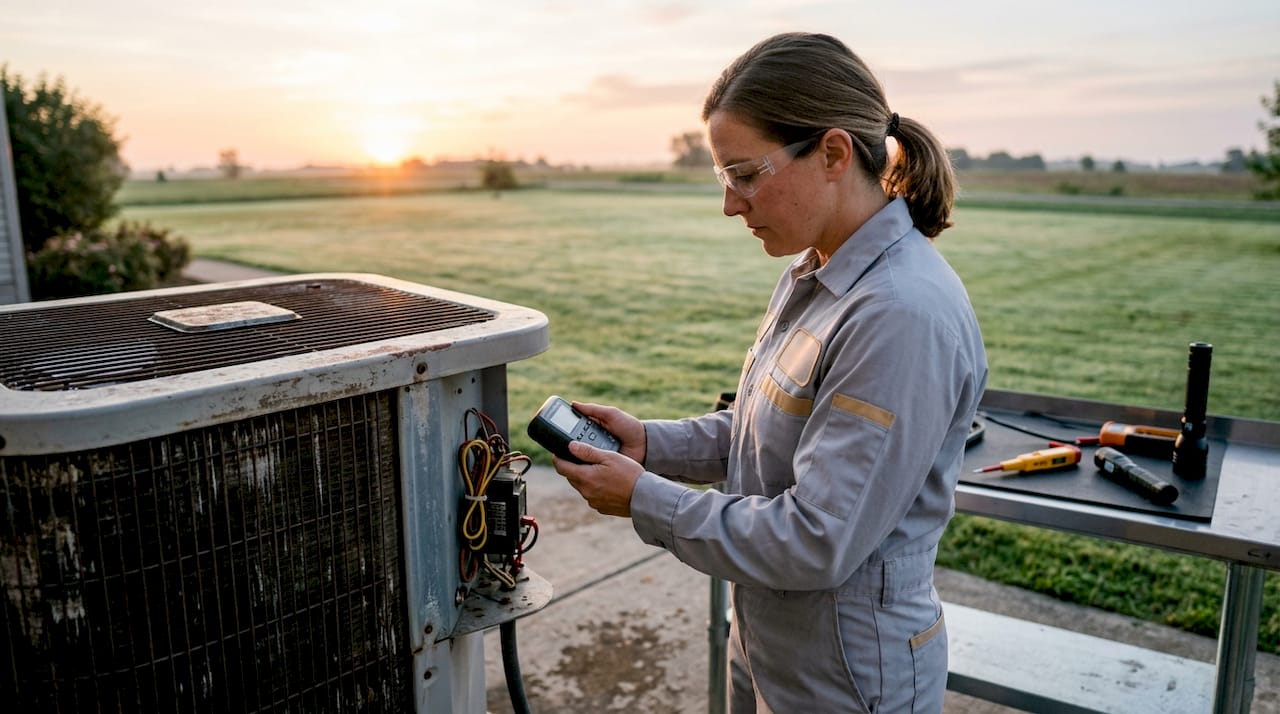
2. Burning smells and electrical odors
A persistent burning smell from your AC unit is a critical electrical emergency, not a minor inconvenience. Burning odors signal overheated motors, melting wire insulation, or a failed capacitor. Any of these can start a fire if the system keeps running.
There is one exception worth knowing. A faint dust smell on the first startup of the season is normal. Dust burns off the heat exchanger and disappears within a few minutes. If the smell persists, intensifies, or smells like burning plastic or chemicals, that is a different situation entirely.
What to do immediately:
- Turn off the system at the thermostat first.
- Flip the breaker for the AC unit at your electrical panel.
- Do not restart the system under any circumstances.
- Call an emergency HVAC technician or licensed electrician before turning power back on.
Pro Tip: Label your breaker panel now, before an emergency. Knowing exactly which breaker controls your AC saves critical minutes when smoke or burning smells appear.
The indoor service switch near your air handler, the outdoor disconnect box, and your main breaker panel are the three shut-off points every homeowner should locate and label today.
3. Loud or unusual noises that signal mechanical failure
Specific sounds from your AC unit map directly to specific mechanical failures, and some require faster action than others. Grinding and screeching are the most urgent. Grinding or screeching noises point to failing bearings, worn belts, or a compressor on the verge of seizing. Running the system through these sounds turns a $300 bearing replacement into a $1,500 compressor job.
| Sound | Likely cause | Urgency level |
|---|---|---|
| Grinding | Failing motor bearings | Shut off immediately |
| Screeching | Worn belt or bearing | Shut off immediately |
| Banging or clanking | Loose or broken component | Shut off immediately |
| Rattling | Loose panel or debris | Monitor, schedule soon |
| Clicking at startup | Normal relay operation | No action needed |
Banging and clanking sounds mean a component has broken loose inside the unit. A loose fan blade or broken connecting rod can destroy surrounding parts within minutes of continued operation. Rattling is lower urgency but still worth a service call within a few days.
Pro Tip: Record a short video of the noise on your phone before shutting the system off. Technicians can often diagnose the problem faster from audio, which speeds up parts ordering and cuts your repair time.
4. Water leaks and pooling near your indoor unit
Visible water pooling around your indoor air handler is a sign of severe drainage failure or a mechanical problem, not normal condensation. Rapid water leaks near electrical components create a real risk of short circuits, and standing water promotes mold growth within 24–48 hours. Both outcomes are expensive and avoidable with fast action.
Normal operation produces a small amount of condensate that drains through a dedicated line. A clogged drain line, a cracked drain pan, or a frozen coil that thaws suddenly can all produce enough water to damage ceilings, walls, and flooring.
Steps to take right now:
- Cut power to the unit at the thermostat and breaker.
- Place towels or a bucket to contain standing water.
- Do not use the system until the source of the leak is identified.
- Check your emergency AC repair checklist to document the situation before the technician arrives.
- Call for emergency service if water is near any electrical outlet or panel.
Early detection of minor leaks can prevent expensive system failures that run into thousands of dollars. A small drip caught today is a $150 drain line flush. Left alone for a week, it becomes water damage, mold remediation, and a failed blower motor.
5. Refrigerant leaks and ice buildup on coils
Ice on your evaporator coils is not the root problem. It is a symptom of either blocked airflow or a refrigerant leak, and repeated freezing after a filter change signals a high-pressure refrigerant leak requiring emergency repair. Ignoring it leads directly to compressor failure, which is the most expensive single repair in any AC system.
Refrigerant leaks also produce their own warning signs beyond ice:
- A hissing or bubbling sound near the refrigerant lines or outdoor unit.
- A faint sweet or chemical odor near the vents or unit.
- Noticeably reduced cooling even with the system running constantly.
- Ice visible on the copper lines or the indoor coil.
What to do: Turn the system off and switch the fan to “on” mode at the thermostat to help the ice thaw without running the compressor. Do not chip or scrape the ice. Call a licensed technician, because refrigerant handling requires EPA Section 608 certification. Attempting to add refrigerant yourself is illegal and dangerous.
6. Complete cooling failure during extreme heat
A total loss of cooling during a heatwave is a life-safety emergency, not just a comfort problem. Indoor temperatures above 85–90°F with infants, elderly adults, or people with chronic illness present require the same urgency as a medical emergency. Heat stroke can develop in under an hour in those conditions.
If your system stops cooling entirely, take these steps while waiting for help:
- Move vulnerable family members to the coolest room in the house or a neighbor’s home.
- Use fans to create airflow, but understand that ceiling fans only cool people directly and do not lower room temperature. They are a short-term comfort measure, not a substitute for AC.
- Close blinds and curtains on sun-facing windows to reduce heat gain.
- Stay hydrated and watch for signs of heat exhaustion: heavy sweating, weakness, and nausea.
- Locate a nearby public cooling center if indoor temps continue to rise.
Emergency HVAC diagnostics typically cost $80–$200, with repairs ranging from $150 to $1,500 depending on the component involved. Knowing emergency repair costs in advance helps you make faster decisions without the stress of financial surprise.
7. Carbon monoxide and gas alarms sounding near HVAC equipment
A CO or gas alarm near your HVAC system is the one warning sign that overrides every other step in this article. Immediate evacuation is required when a carbon monoxide or gas detector sounds. Do not stop to investigate, gather belongings, or turn off the system. Get everyone out of the house and call 911 from outside.
Carbon monoxide is odorless and colorless. Symptoms of exposure include headache, dizziness, and confusion, which are easy to mistake for heat exhaustion. A cracked heat exchanger in a gas furnace connected to your HVAC system is the most common residential source. This is why annual HVAC inspections matter year-round, not just before summer.
Key Takeaways
Recognizing AC emergency warning signs early prevents the most dangerous and costly outcomes, from house fires and compressor failure to heat-related illness.
| Point | Details |
|---|---|
| Burning smells require shutdown | Cut power at the thermostat and breaker immediately; do not restart without inspection. |
| Mechanical noises signal failure | Grinding and screeching mean shut off now; rattling means schedule service soon. |
| Water leaks cause compounding damage | Standing water near electrical components creates short-circuit and mold risk within 24 hours. |
| Ice on coils signals refrigerant issues | Repeated freezing after a filter change points to a refrigerant leak needing licensed repair. |
| Heat emergencies are life-safety events | Temps above 85–90°F with vulnerable occupants require urgent service and immediate cooling measures. |
What I’ve learned after 15 years of emergency HVAC calls
I’ve responded to hundreds of emergency calls in the Los Angeles area, and the pattern is almost always the same. The homeowner noticed something odd days or even weeks before the crisis. A faint smell. A new noise. A small puddle they wiped up and forgot about. They waited because they weren’t sure it was serious enough to call.
The single most useful thing you can do right now is walk to your air handler and locate the indoor service switch. Then find the outdoor disconnect. Then check your breaker panel and confirm the AC breaker is labeled correctly. That three-minute task has saved my clients real money and real stress, because when something goes wrong at 10 PM on a Friday, they know exactly what to do before I arrive.
The other thing I tell every homeowner: scheduling AC maintenance in spring before the first heatwave is the most cost-effective decision you can make. Emergency rates are higher, wait times are longer, and parts are harder to source in peak summer. A $150 tune-up in april regularly prevents a $900 emergency call in july.
I also want to be direct about one misconception I hear constantly. Fans do not cool a room. They cool the person sitting in front of them. If your AC fails during a heatwave and you have elderly parents or young children in the house, fans are a temporary bridge, not a solution. Get those family members to a cooler location while you wait for service.
The homeowners who fare best in emergencies are the ones who know their system, know their shut-off points, and call for help without hesitation. There is no award for toughing it out with a failing AC in 100-degree heat.
— Ernie M
When Upright Construction & HVAC can help
Upright Construction & HVAC provides 24/7 emergency HVAC service across the Los Angeles area, with technicians trained to diagnose and repair the exact warning signs covered here. Whether you’re dealing with a burning smell at midnight or a system that stopped cooling during a heatwave, the team responds fast and explains every step before any work begins.

Transparent pricing means you know the diagnostic cost ($80–$200) and the likely repair range before work starts. For homeowners who want to be prepared, the common HVAC repair challenges guide covers what to expect from the most frequent system failures. If you’re unsure whether your situation needs emergency service or a scheduled visit, the emergency AC repair page walks you through how to decide and how to reach the team fast.
FAQ
What qualifies as an AC emergency?
An AC emergency is any condition that poses an immediate risk to health, safety, or property. This includes burning smells, visible smoke, indoor temps above 85–90°F with vulnerable occupants, water near electrical components, and CO alarm activation.
Should I turn off my AC if I smell something burning?
Yes. Cut power at the thermostat first, then flip the breaker. Do not restart the system until a licensed technician has inspected it for overheated motors, melted wiring, or capacitor failure.
Is ice on my AC coils an emergency?
Ice on evaporator coils signals either blocked airflow or a refrigerant leak. Turn the system off, switch the fan to “on” to thaw the ice, and call a technician. Repeated freezing after a filter change points to a refrigerant leak requiring emergency repair.
How much does emergency AC repair cost?
Emergency HVAC diagnostics typically run $80–$200. Repairs range from $150 to $1,500 depending on the component. Catching problems early, such as a clogged drain line versus a failed compressor, makes a significant difference in total cost.
What should I do if my AC fails during a heatwave?
Move vulnerable family members to a cooler location, close sun-facing blinds, stay hydrated, and call for emergency service. Fans provide temporary comfort but do not lower room temperature. If indoor temps exceed 85–90°F with infants or elderly present, treat it as a medical emergency.