
Our Services
Why a Heating Retrofit Makes Sense for Your Home
Discover how a heating retrofit can lower costs, improve comfort, and enhance energy efficiency for your home. Upgrade today!
- CSLB C-20 Licensed
- NATE Certified
- EPA 608 Certified
- Licensed & Insured
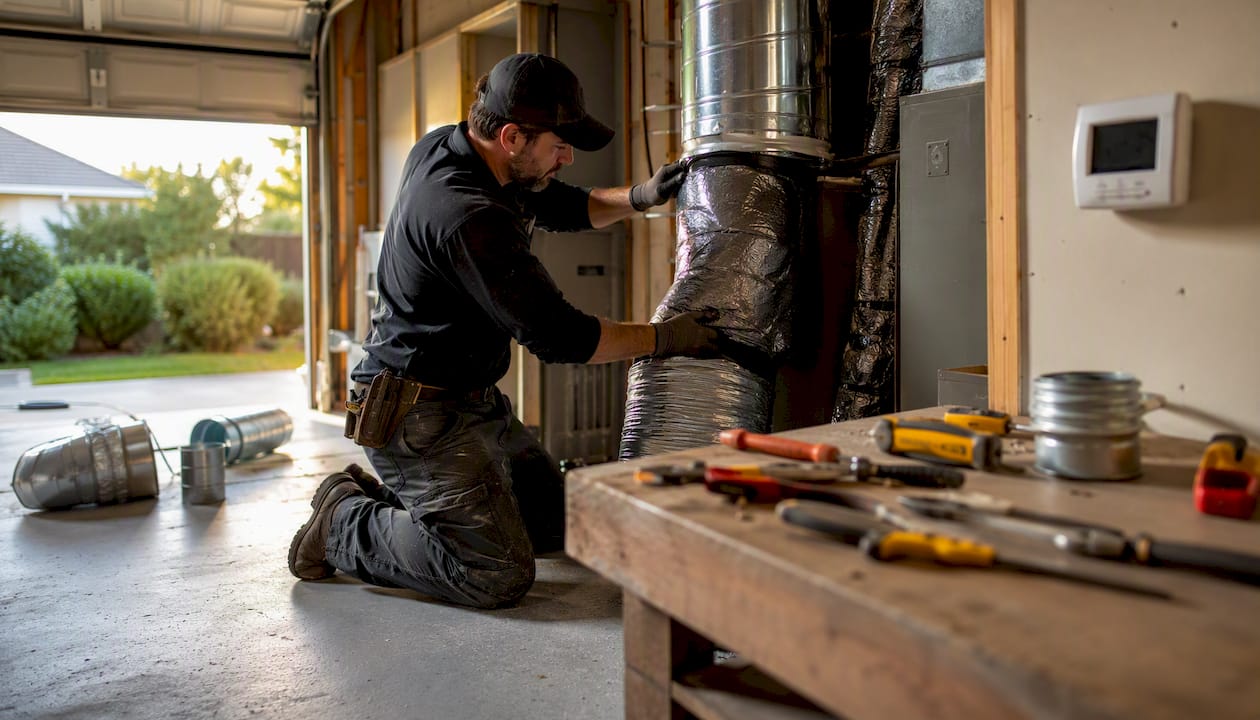
A heating retrofit makes sense when your equipment is past its useful life, your energy bills keep climbing, or you’re dealing with rooms that never quite reach the right temperature. The U.S. Department of Energy, ENERGY STAR, and our team at Upright Construction & HVAC all point to the same core logic: replacing an aging, inefficient system with a properly sized heat pump or hydronic solution typically costs less to run, lasts longer, and makes your home noticeably more comfortable. A formal Manual J load calculation is the starting point that separates a retrofit that performs from one that disappoints.
Here’s the short version of why homeowners and building managers pursue heating system upgrades:
- Lower operating costs through higher-efficiency equipment and, in many cases, lower fuel costs when switching from gas or propane to electricity
- Improved comfort with more even temperatures, better humidity control, and quieter operation
- Reduced emissions by cutting or eliminating combustion inside the home
- Increased property value as buyers increasingly factor in energy costs and electrification readiness
Key Takeaways
A heating retrofit makes the most financial and practical sense when equipment is aging, energy bills are rising, or comfort problems point to a system mismatch with the home’s actual load.
| Point | Details |
|---|---|
| Age and efficiency are the triggers | A furnace or boiler past 15–20 years is a strong candidate; degraded efficiency compounds operating costs annually. |
| Manual J is non-negotiable | Require a written load calculation before signing any retrofit contract to prevent oversizing and short-cycling. |
| Incentives materially shorten payback | Federal 25C credits, LADWP/SoCal Edison rebates, and TECH Clean California can reduce net cost significantly. |
| Envelope work comes first | Insulation and air sealing gaps should be addressed before or alongside new equipment to avoid undersizing errors. |
| Upright Construction & HVAC | Provides full retrofit assessments in Los Angeles: Manual J sizing, electrical review, duct evaluation, and commissioning documentation. |
Why does a heating retrofit make sense for your property?
The clearest signal is age. A gas furnace or boiler that’s 15 years old is approaching or past its design life. At that point, you’re not just paying for repairs — you’re paying to keep an inefficient system running a little longer. That money is better spent on a replacement that will serve you for 15–20 more years at a fraction of the operating cost.
Rising or unpredictable energy bills are the second signal most homeowners notice. If your heating costs have climbed year over year without a clear explanation, the equipment is likely losing efficiency. Older systems that once ran at high efficiency often degrade significantly in their final years.
Comfort complaints matter too. Cold spots, rooms that never warm up, or a system that cycles constantly without reaching setpoint are signs of a mismatch between your equipment and your home’s actual load. These problems don’t fix themselves with a tune-up.
A retrofit also makes strong financial sense in these situations:
- You’re planning a major renovation (kitchen, addition, ADU) and the existing system can’t serve the new square footage
- You want to switch fuels — moving off propane or oil, where costs are high and volatile
- Your local utility or municipality has decarbonization incentives that reduce upfront cost significantly
- You have central AC that’s also aging, making a combined ASHP swap more cost-effective than replacing each system separately
When a retrofit is probably not the right move right now: your existing system is under 8 years old and performing well, you have significant insulation or air-sealing deficiencies with no budget to address them, or the issue is a minor repair rather than a systemic failure.
Pro Tip: Before you accept any retrofit quote, ask the contractor to provide a formal Manual J load calculation. This is the industry-standard sizing method, and any contractor who skips it is guessing at equipment size — which leads to short-cycling, poor comfort, and wasted money. Our guide on HVAC load calculations explains exactly what to look for.
What real benefits can you expect from a heating upgrade?
The most immediate benefit most homeowners notice is comfort, not the utility bill. A properly sized heat pump delivers steady, even warmth rather than the blast-and-coast cycle of an oversized furnace. Rooms that used to run cold stay within a degree or two of setpoint all day.
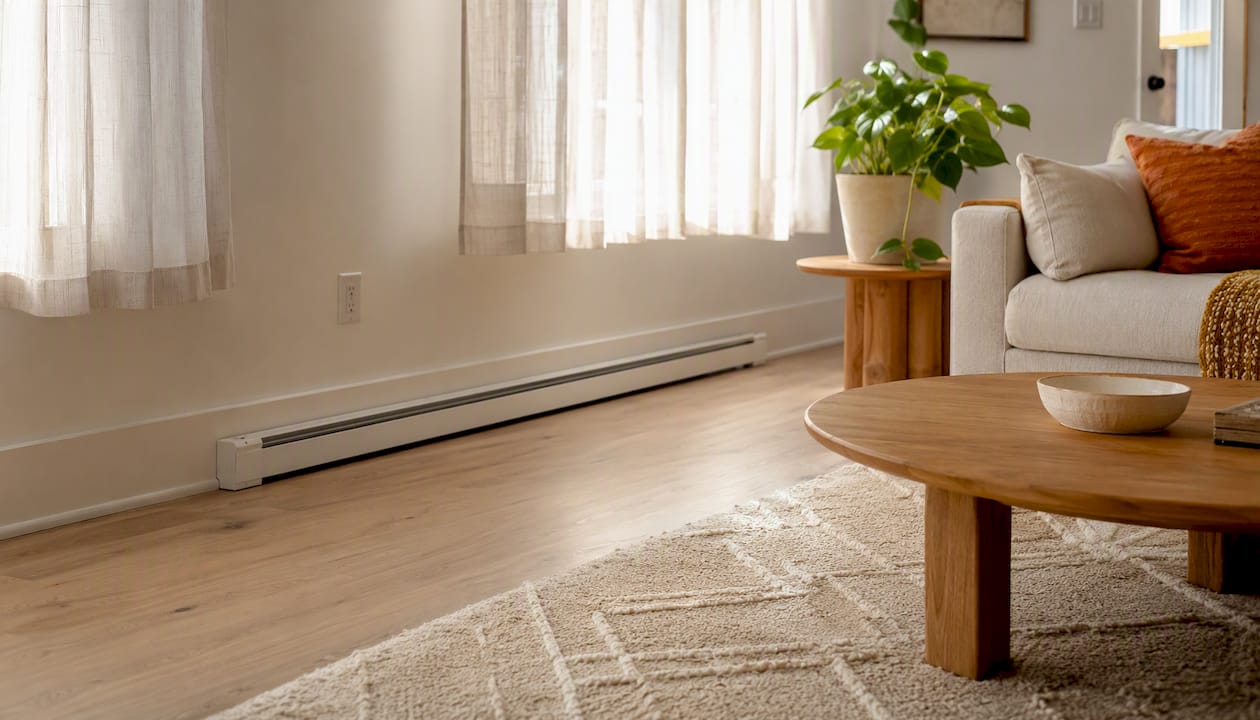
On the cost side, RMI’s analysis of California households found that single-family homes switching to an air-source heat pump (ASHP) combined with a heat pump water heater (HPWH) saw average annual bill savings for households replacing gas, with higher savings for those replacing propane or electric-resistance heating. Those numbers are sensitive to your local electric rate and whether your utility offers a specialized electrification tariff, so treat them as a floor rather than a ceiling for Los Angeles homeowners.
ENERGY STAR’s project economics resources reinforce the same point: the economic case for efficiency upgrades strengthens considerably when you account for the full lifecycle rather than just the first-year bill.
Beyond bills, the benefits of a heating retrofit stack up in ways that don’t always show up on a spreadsheet:
- Indoor air quality improves when you eliminate combustion inside the home. No more nitrogen dioxide or carbon monoxide risk from a gas furnace.
- Quieter operation — modern heat pumps run at lower sound levels than older forced-air furnaces, especially at partial load.
- Lower maintenance costs over time. Heat pumps have fewer combustion components to service, and routine maintenance is generally simpler and less expensive than furnace tune-ups.
- Resilience — a heat pump that also provides cooling means one system handles both seasons, reducing the number of failure points.
Property value is a real factor too. Electrification readiness is increasingly on buyers’ radar in California, and a recently retrofitted, high-efficiency system is a tangible selling point.
What retrofit options actually fit your building?
The right path depends on what you already have — ductwork, radiators, or nothing — and how much disruption you can tolerate. Here’s how the main options map to typical building types.
Ducted air-source heat pumps
The most common retrofit for homes with existing forced-air ductwork. A ducted ASHP replaces your furnace and outdoor AC unit with a single system that heats and cools. It’s the lowest-disruption path when ducts are in reasonable condition. The main companion requirement is a duct leakage test and sealing — leaky ducts can cut system efficiency by 20–30%.
Ductless mini-splits
The right answer for homes without ductwork, for additions, or for zonal control in specific rooms. Each indoor unit handles its own zone independently, which means you can heat the rooms you use without conditioning the whole house. Installation is less invasive than running new ducts, but the upfront cost per zone adds up quickly in larger homes.
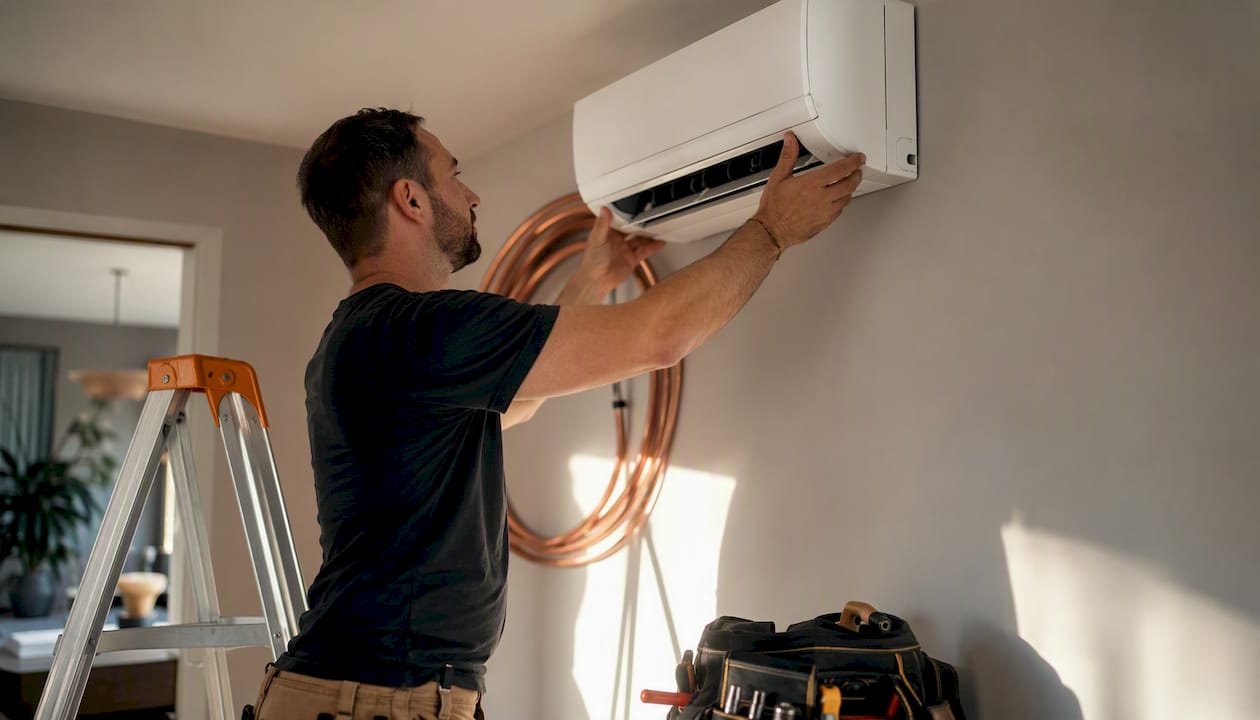
Hydronic and radiant floor upgrades
For homes with existing hot-water radiators or in-floor tubing, a boiler-to-heat-pump swap is a natural retrofit path. Hydronic radiant retrofits deliver excellent comfort — radiant heat is quiet, even, and doesn’t dry out the air. The trade-off is complexity: older radiators and microbore pipework often need upsizing to work efficiently at the lower flow temperatures heat pumps prefer, and a power flush of the existing system is typically required before connecting new equipment.
Heat pump water heaters (HPWHs)
Often overlooked, HPWHs are one of the most cost-effective single measures in a retrofit package. They use the same refrigeration cycle as a space-heating heat pump to move heat into the water tank rather than generating it directly. In a Los Angeles home, where water heating is a significant share of total energy use, adding an HPWH alongside a space-heating upgrade compounds the savings.
Hybrid systems
A hybrid pairs a heat pump with a gas furnace as a backup. The heat pump handles most of the load at moderate temperatures, and the furnace kicks in only during the coldest days. For homeowners not ready to fully electrify, a hybrid is a lower-risk entry point that still captures most of the efficiency gains.
Comparison of common retrofit paths:
| Retrofit type | Best fit | Disruption level | Key requirement |
|---|---|---|---|
| Ducted ASHP | Homes with existing ducts | Low to moderate | Duct leakage test and sealing |
| Ductless mini-split | No ducts, additions, zonal | Low | Electrical circuit per zone |
| Hydronic heat pump | Existing radiator/radiant systems | Moderate to high | Emitter sizing, power flush |
| HPWH | Any home with water heater | Low | Adequate space and ventilation |
| Hybrid ASHP + gas | Cold climates, partial electrification | Low | Existing gas line retained |
Controls upgrades — a smart thermostat or hydronic zone controller — are a routine companion to any of these options and often pay for themselves within a year through better scheduling and setpoint management.
What do retrofits cost, and when do you break even?
Upfront costs vary widely depending on what the building already has and what needs upgrading. A straightforward ducted ASHP swap in a home with serviceable ductwork typically runs several thousand to over ten thousand dollars installed. Add a panel upgrade (often needed when moving from gas to electric), ductwork repairs, or a hydronic emitter upgrade, and the total can reach $up to several tens of thousands of dollars for a full system overhaul.
The biggest cost drivers are:
- Electrical panel capacity — many older homes have 100A panels that need upgrading to 200A to support a heat pump plus EV charging or other loads
- Ductwork condition — significant leakage or undersized ducts require repair or replacement before a new system performs as designed
- Insulation and air sealing — a leaky envelope forces any heating system to work harder; fixing it before sizing new equipment reduces the required capacity and improves payback
Payback example (conservative assumptions, Los Angeles):
A homeowner replacing a 20-year-old gas furnace and aging central AC with a ducted ASHP, with no panel upgrade needed:
- Installed cost: around twelve thousand dollars
- Federal tax credit (25C): up to thirty percent of qualifying costs, subject to current IRS limits — verify current limits at IRS.gov.
- Utility rebate (SoCal Edison or LADWP, where applicable): several hundred to over a thousand dollars
- Net cost after incentives: approximately $8,500–$9,500
- Estimated annual savings vs. gas furnace + separate AC: several hundred dollars depending on usage and rate schedule
- Simple payback: a payback period of roughly a decade or more on first cost alone, shorter when you factor in avoided AC replacement cost and lifecycle savings
That range shifts materially if you’re replacing propane or electric resistance — savings can be two to three times higher. It also shifts if your utility offers a time-of-use or electrification rate, which can cut the effective cost of running a heat pump significantly.
Key incentive sources to check:
- Federal 25C tax credit for heat pumps and HPWHs (check current IRS guidance for annual caps)
- LADWP and SoCal Edison rebate programs for qualifying heat pump equipment
- TECH Clean California program for additional statewide incentives
- Inflation Reduction Act provisions — point-of-sale rebates through the HEEHRA program when funded in California
ENERGY STAR’s economics resources are a good starting point for modeling project-level savings before you talk to a contractor.
What do you need to check before signing a retrofit contract?
Skipping prechecks is the single most common reason retrofits underperform. Here’s the checklist we walk through with every homeowner before we scope a project.
-
Manual J load calculation. This is non-negotiable. It determines the correct equipment capacity for your specific home — square footage, insulation levels, window area, orientation, and local climate data. Contractors who size by rule of thumb (“one ton per 500 square feet”) routinely oversize equipment, which causes short-cycling and poor dehumidification. Our load calculation guide walks through what the process involves.
-
Electrical panel capacity. A heat pump typically draws roughly thirty to fifty amps at standard residential voltage. If your panel is already near capacity or is a 100A service, budget for an upgrade. Ask for a written electrical scope before you commit.
-
Duct leakage test (for ducted systems). A blower door or duct blaster test quantifies how much conditioned air is escaping. The DOE’s retrofit guidance recommends this as a standard pre-installation step.
-
Radiator and pipework assessment (for hydronic systems). Older radiators sized for high-temperature boiler water often can’t deliver enough heat at the lower flow temperatures heat pumps prefer. Undersized emitters are a primary cause of comfort complaints after hydronic retrofits, as CCR Magazine documents.
-
Insulation and air sealing review. A leaky, under-insulated home will make any heating system work harder. Addressing the envelope before or alongside the equipment upgrade reduces required capacity and improves payback. Simple envelope improvements like door and window sealing can reduce heat loss meaningfully before you spend a dollar on new equipment.
-
Permits. HVAC replacements in Los Angeles require permits. Any contractor who suggests skipping them is a red flag — see our list of HVAC contractor red flags for more warning signs.
Pro Tip: Require commissioning and a written handover document as contract deliverables. This should include confirmed setpoints, a walkthrough of the controls, and a post-installation performance check. PNNL’s measurement and verification methods give contractors a practical framework for documenting post-install performance.
What are the common pitfalls, and how do you avoid them?
Most retrofit problems are predictable — and preventable with the right scope upfront.
-
Insufficient insulation or air sealing. A heat pump installed in a leaky home will run constantly and still leave rooms cold. Fix the envelope first, or at minimum factor it into the load calculation. Older buildings are especially vulnerable to this problem.
-
Undersized radiators or pipework in hydronic systems. Heat pumps operate most efficiently at lower flow temperatures (around 120°F vs. 160–180°F for a boiler). If your existing radiators were sized for boiler temperatures, they may not emit enough heat at heat pump temperatures. The fix is either upsizing radiators or accepting a slightly lower efficiency operating point — both of which need to be in the design scope.
-
Short-cycling. An oversized heat pump that reaches setpoint quickly and shuts off repeatedly runs inefficiently and wears out faster. This is a direct consequence of skipping the Manual J. Require it in writing.
-
Lack of commissioning. A system that’s installed but never properly commissioned — verified airflow, refrigerant charge, controls calibration — will underperform from day one. CIBSE’s analysis identifies inconsistent installer capability and missing commissioning as primary causes of variable retrofit outcomes.
-
Homeowners running heat pumps like furnaces. Heat pumps work best at steady setpoints. Aggressive temperature setbacks (dropping the thermostat 10°F overnight) force the system to recover using backup electric resistance heat, which is expensive. This is a training issue, not a technology issue — and it’s why handover documentation matters.
-
Opaque incentive rules. Rebate programs have eligibility requirements, equipment lists, and application windows that change. Confirm program rules before you purchase equipment, not after.
How long does a retrofit project take?
The timeline depends heavily on the retrofit type and whether pre-upgrades (panel, insulation, ductwork) are needed.
| Retrofit scenario | Assessment and design | Permitting | Equipment lead time | Installation and commissioning | Total typical range |
|---|---|---|---|---|---|
| Like-for-like AC to ducted ASHP | 1–2 days | 1–2 weeks | 1–3 weeks | 1–3 days | 3–6 weeks |
| Hydronic radiator upgrades | 2–5 days | 2–3 weeks | 2–4 weeks | 3 days | 6–10 weeks |
| Full boiler-to-heat-pump conversion | 3 days | 2–4 weeks | 3–6 weeks | 5–10 days | 8 weeks |
A few disruption notes worth planning around:
- Noisy work windows — refrigerant line installation and ductwork repairs generate noise for 1–3 days; coordinate with tenants in advance
- Heat or hot-water downtime — plan for 1–3 days without heat during switchover; schedule in mild weather when possible or arrange temporary electric space heaters
- Flooring disruption — radiant floor retrofits require floor access and can take significantly longer if flooring needs to be removed and replaced
- Staging for occupied buildings — in multi-unit properties, work zone by zone to keep at least partial heating available at all times
For building managers with tenants, a staged approach — completing one zone or floor at a time — reduces complaints and keeps critical heating online throughout the project.
How Upright Construction & HVAC approaches every retrofit
Our process is built around one principle: no surprises. Here’s the field checklist we follow on every retrofit job.
Site survey and Manual J load calculation. We measure the home, document insulation levels, window types, and orientation, and run a full Manual J before we recommend any equipment. Equipment size follows the math, not a rule of thumb.
Electrical scope. We check panel capacity and existing wiring before we quote. If an upgrade is needed, it’s in the scope with a line-item price — not a change order after you’ve already signed.
Duct or radiator assessment. For ducted systems, we test for leakage and document duct condition. For hydronic systems, we assess radiator sizing against the heat pump’s expected flow temperature and flag any emitters that need upsizing.
Insulation and envelope review. We note any obvious air sealing or insulation gaps that would affect system sizing or comfort, and we flag them for the homeowner before finalizing the scope.
Installation and commissioning. After installation, we verify airflow, refrigerant charge, and controls calibration before we call the job complete. We use measurement and verification methods consistent with PNNL’s commissioning guidance to document post-install performance.
Homeowner handover. Every customer gets a written handover document covering setpoints, operating instructions, filter schedules, and what to watch for in the first heating season. We walk through the controls in person.
To request Upright’s retrofit pre-assessment, call our Los Angeles office or use the contact form at Uprightch.
What I’ve learned from 15 years of retrofit work
A perspective from Ernie M, owner of Upright Construction & HVAC
The thing I keep coming back to is this: the technology is not the hard part. Modern heat pumps are reliable, efficient, and well-proven. The hard part is the whole-system design — making sure the equipment, the ductwork or emitters, the electrical, and the envelope all work together as a unit.
I’ve seen retrofits that looked great on paper fail because nobody checked the duct leakage. I’ve seen homeowners blame their heat pump for high bills when the real problem was a 10°F overnight setback triggering backup heat every morning.
What actually protects homeowners is a transparent, itemized scope — one that shows exactly what’s being installed, what’s being checked, and what the commissioning process looks like. If a contractor can’t hand you that document, walk away. The CIBSE research on why heat pump retrofits underperform consistently points to installer capability and missing commissioning as the root causes — not the equipment itself.
My recommendation: treat the retrofit as a system project, not an equipment purchase. Get the load calc. Get the itemized scope. Require commissioning documentation at handover. Those three things will protect your investment better than any brand name on the equipment.
Ready for a retrofit assessment in Los Angeles?
If your heating system is aging, your bills are climbing, or you’re planning a renovation that changes your home’s load, a retrofit assessment is the logical next step. Upright Construction & HVAC serves homeowners and building managers across Los Angeles, including Burbank, Beverly Hills, Van Nuys, and Reseda, with same-day and scheduled HVAC service.

Our retrofit assessments cover Manual J sizing, electrical panel review, duct or hydronic system evaluation, and a written scope with itemized pricing. No vague estimates, no change-order surprises. We also handle permit filing and can coordinate panel upgrades, insulation work, and controls installation as part of a single project scope.
To get started, contact us through Uprightch or call our Los Angeles office to schedule your retrofit pre-assessment. Bring your last 12 months of utility bills — it’s the fastest way to give us a baseline before we arrive.
Useful resources
These are the sources worth bookmarking before you start talking to contractors.
- Energy — DOE’s best-practice steps for assessment, equipment selection, and commissioning. The authoritative technical reference for retrofit planning.
- RMI: Heat pumps and California bill savings — detailed analysis of bill impacts by fuel type and utility rate, with California-specific data.
- PNNL measurement and verification — national lab methods for commissioning and post-install performance validation.
- TECH Clean California (search “TECH Clean California” at energyupgradeca.org) — statewide program for heat pump incentives and contractor vetting.
- Your utility’s rebate portal — LADWP and SoCal Edison both maintain current rebate lists; check before purchasing equipment, as eligible models and amounts change.
Cross-check program eligibility requirements before you buy equipment. Record program IDs and approval numbers at the time of application — rebate claims without documentation are routinely denied.
Sources
- Energy
- Heat pumps can lower energy bills for Californians today - RMI
- PNNL technical report on retrofit measurement and verification
FAQ
What are the main downsides of retrofitting a heating system?
The primary downsides are upfront cost, potential need for pre-upgrades (electrical panel, insulation, ductwork or radiators), and the disruption of installation. Homes with poor insulation or outdated infrastructure often require additional work before a new system performs as expected.
Is retrofitting worth it for older homes?
Usually yes, provided the envelope and electrical infrastructure are addressed as part of the project. Older homes with aging furnaces or boilers, high energy bills, and comfort problems typically see the strongest payback from a retrofit, especially when incentives reduce the net cost.
What are the biggest challenges in a heating retrofit?
The most common challenges are undersized emitters in hydronic systems, duct leakage in forced-air systems, insufficient insulation, and missing commissioning. Requiring a Manual J load calculation and a written commissioning report from your contractor addresses most of these before they become problems.
How do I know if my home needs a heating retrofit or just a repair?
If your system is under 10 years old and the issue is a single component failure, a repair usually makes more sense. If the system is 15 or more years old, repairs are recurring, or comfort and efficiency have declined noticeably, a retrofit assessment is worth scheduling.
Can Upright Construction & HVAC handle the full retrofit scope?
Yes. Upright Construction & HVAC manages the complete retrofit process in Los Angeles, including Manual J sizing, electrical upgrades, duct evaluation, heat pump and hydronic installation, permit filing, and commissioning with a written handover document.
Recommended
Ready to get started?
Licensed, insured & available 24/7 across Los Angeles and the San Fernando Valley.